Eviqo Hardwired vs Plug In Which Is Better? 40A vs 48A Explained
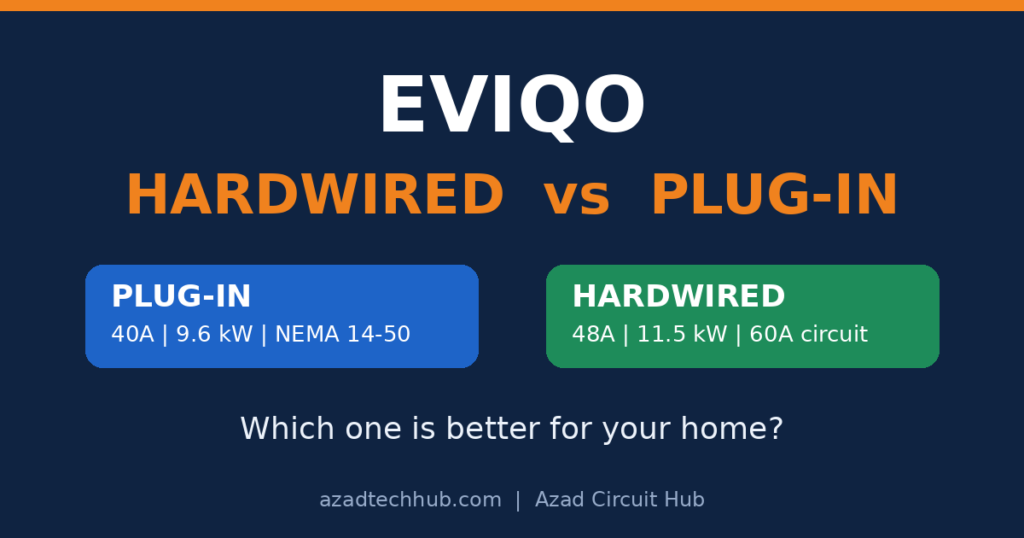
Eviqo hardwired vs plug in which is better comes down to one number: how many amps your car and your panel can actually use. The plug-in Eviqo runs at 40A (9.6 kW) from a NEMA 14-50 outlet, while the hardwired Eviqo runs at 48A (11.5 kW) from a 60A circuit.
That is a 20 percent speed gap, but it only matters if your EV can accept it. I’m an electrical engineer with 15+ years in power systems, protection and control, and renewable energy EPC projects, so I look at this the way I would on a project: circuit rating first, connector second, convenience third. Below you will find the answer, the specs, a speed chart, and a wiring checklist.
Quick Answer: Hardwired or Plug-In?
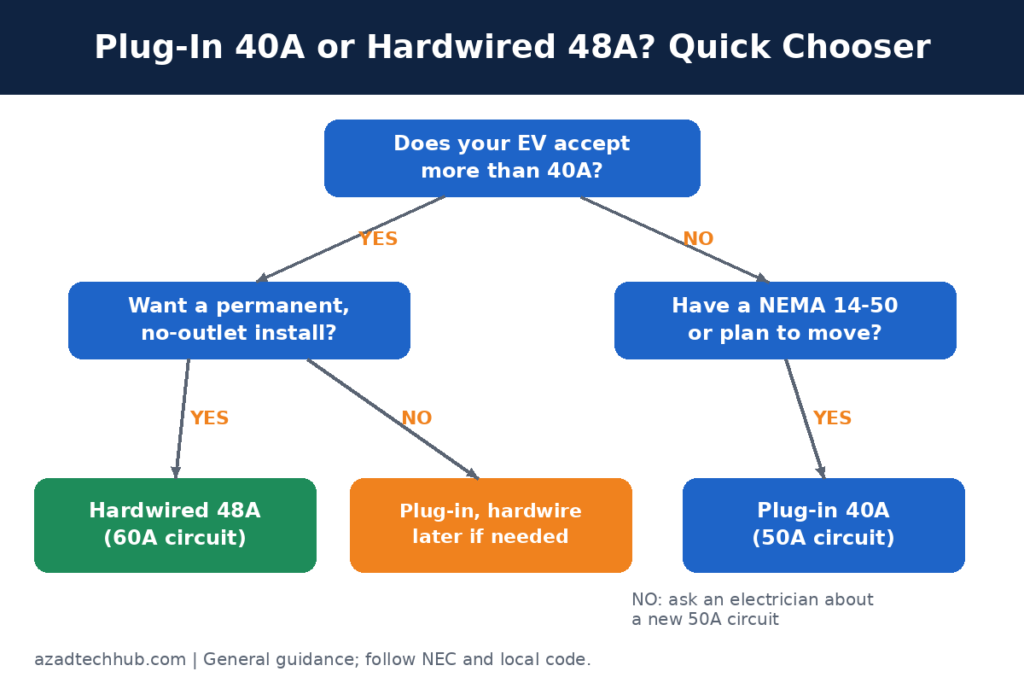
- Choose plug-in (40A) if you already have a NEMA 14-50 outlet, rent, may move, or want the lowest install cost.
- Choose hardwired (48A) if you want the fastest speed, a clean permanent install, and no outlet to wear out, and your EV accepts more than 40A.


Is a Hardwired EV Charger Better Than a Plug-In?
On speed and permanence, yes. The National Electrical Code treats EV charging as a continuous load, so a 50A outlet circuit supports only 40A of charging, while a 60A hardwired circuit supports 48A. Hardwiring also removes the plug and receptacle, which are the parts that heat up and wear over thousands of cycles.
On flexibility and cost, plug-in wins: you can unplug it, take it with you, and skip the electrician if the outlet already exists. If you have read the eviqo hardwired vs plug in which is better reddit threads, you will notice most arguments are really about those two trade-offs.
Eviqo Hardwired vs Plug In Which Is Better? Specs Compared
Eviqo sells both versions, so this is a clean comparison from one brand.
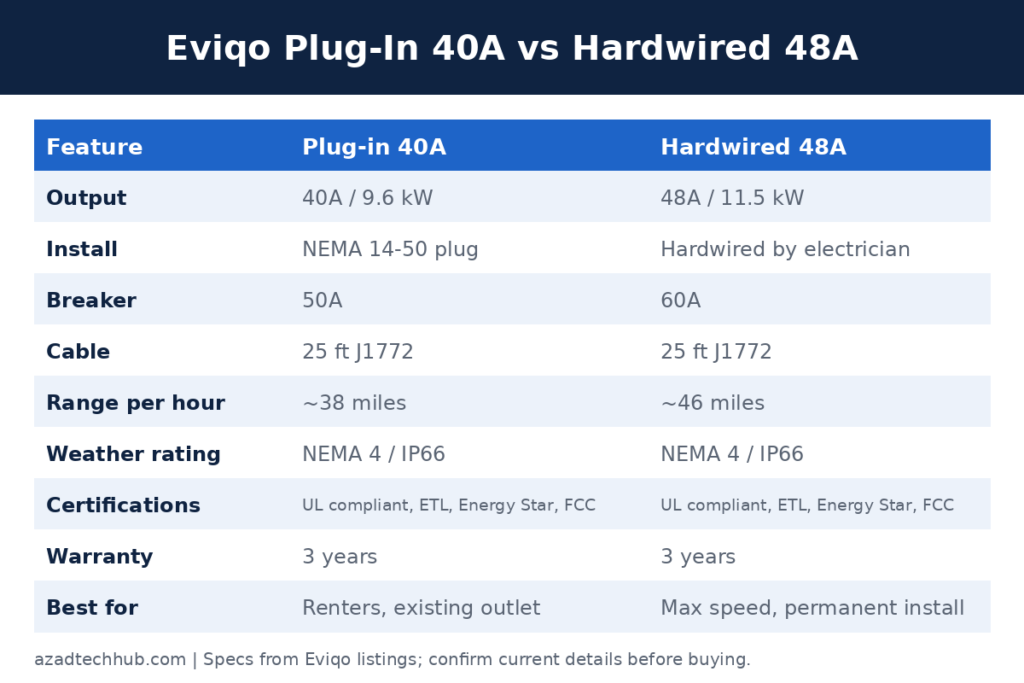
| Feature | EVIQO plug-in 40A | EVIQO hardwired 48A |
|---|---|---|
| Output | 40A / 9.6 kW | 48A / 11.5 kW |
| Connector | J1772 (NACS version sold separately) | J1772 (NACS version sold separately) |
| Installation | NEMA 14-50 plug, no electrician if outlet exists | Hardwired, licensed electrician |
| Circuit needed | 50A breaker | 60A breaker |
| Output cable | 25 ft | 25 ft |
| Range per hour (Eviqo figure) | About 38 miles | About 46 miles |
| Certifications | UL compliant, ETL, Energy Star, FCC | UL compliant, ETL, Energy Star, FCC |
| Weather rating | NEMA 4 and IP66 | NEMA 4 and IP66 |
| Warranty | 3 years | 3 years |
One detail many buyers miss: Eviqo’s own listing and FAQ say the plug-in unit can be hardwired by removing the plug cable, which lets it run at 48A. That makes the plug-in model the flexible buy if you may upgrade the circuit later. Confirm this with your electrician and keep it within the label and local code.
How Many Amps Do You Need for an EV Charger?
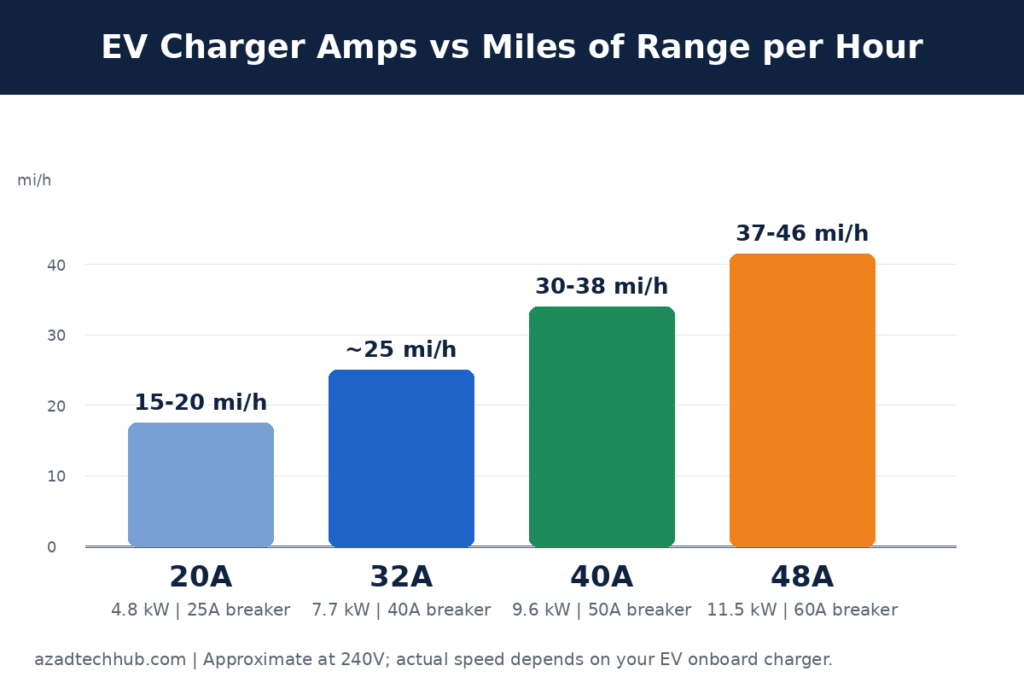
For most homes, 40A is the sweet spot. It adds roughly 30 to 38 miles of range per hour, which recovers a typical daily commute in about two hours. Go to 48A only if your car’s onboard charger accepts it. Many popular EVs accept 32A or 40A, so a 48A charger will not make them charge faster.
The 40 amp vs 50 amp EV charger confusion is simple: 50A is the breaker, 40A is the charger. A 40A charger needs a 50A circuit because of the 125 percent continuous-load rule.
| Charger setting | Power at 240V | Breaker | Approx. miles per hour |
|---|---|---|---|
| 20A | 4.8 kW | 25A | 15 to 20 |
| 32A | 7.7 kW | 40A | 25 |
| 40A | 9.6 kW | 50A | 30 to 38 |
| 48A | 11.5 kW | 60A | 37 to 46 |
A 20 amp EV charging setup is slow but fine for plug-in hybrids and low daily mileage. On the 48 amp EV charger speed question, expect about 11.5 kW at the charger, then whatever your car’s onboard charger allows.
Can I Plug My EV Directly Into a 240V Outlet?
No. An electric vehicle needs an EV supply equipment unit (the charger) between the outlet and the car. That unit handles the safety handshake, ground-fault protection, and current limit. A plug-in charger such as the Eviqo does exactly this and simply uses the outlet as its power source. For a cheaper option, see our Raylix Level 1 and 2 charger review.
Best Home EV Charger 2026 and Best Hardwired EV Charger for Home
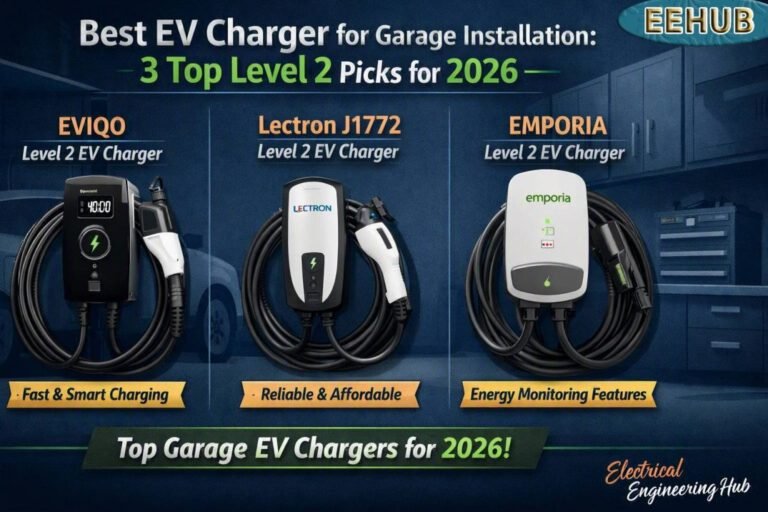
There is no single winner, but these are the strongest hardwired options we cover:
- Wallbox Pulsar Plus 48A hardwired review for a compact smart charger.
- DEWALT 48A Level 2 EV charger review for a tool-brand build.
- WOLFBOX 48 Amp Level 2 charger review for features per dollar.
- Emporia Pro Level 2 review for load management.
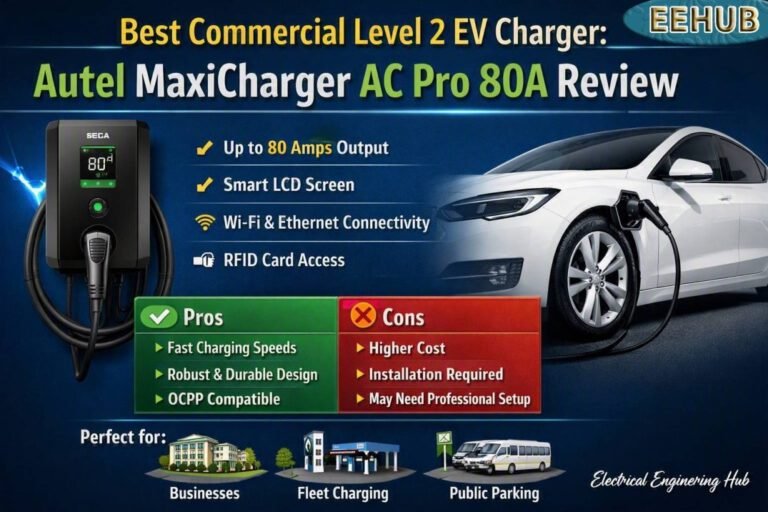
- Autel MaxiCharger Home review for 50A power.
For a wider shortlist, use our best J1772 EV chargers buyer’s guide and the EV Charger Reviews hub. If Eviqo and ChargePoint are on your list, our Autel MaxiCharger vs ChargePoint Home Flex article shows a similar budget-versus-polish trade-off.
Best Solar EV Charger
For solar homes, look for a charger that reacts to solar production. Our Enphase IQ 50 review covers a charger built around home energy systems, and the Emporia charger with a Vue monitor can follow excess solar, as covered in Emporia Classic vs Emporia Pro. Size the array with our solar panel size calculator by load before you add a 9.6 to 11.5 kW charging load.
Check the Enphase IQ 50 on Amazon] | Check Emporia Classic and Vue bundle
Engineer’s Checklist Before You Choose
This is where an engineering review beats a spec sheet, because the circuit decides what you can safely run.
- Breaker: 50A for a 40A plug-in, 60A for a 48A hardwired charger.
- Wire: commonly 6 AWG copper for these circuits, but confirm by run length, temperature rating, and local code. Use our EV charger cable size calculator for voltage drop.
- Outdoor outlets: need GFCI protection and an in-use cover.
- Panel capacity: run a load calculation before adding 48A to your service.
- Permit: most US areas require one and a licensed electrician for hardwiring.
FAQ
Is it better to hardwire or plug in?
Hardwire for maximum speed and permanence. Plug in for flexibility, renting, and lower install cost.
Eviqo hardwired vs plug in which is better for most people?
The 40A plug-in is better for most people because the speed difference is small and install costs less. The 48A hardwired model is better if your EV accepts 48A.
What is the best hardwired EV charger for home?
It depends on features. Compare the reviews above, then match amperage to your car.
Does a 48A charger charge any EV faster?
No. The car’s onboard charger sets the ceiling.
Final Verdict: Eviqo Hardwired vs Plug In Which Is Better?
Eviqo hardwired vs plug in which is better has a practical answer. Buy the 40A plug-in if you have or want a NEMA 14-50 outlet and value flexibility. Buy the 48A hardwired version if you want the most power and your car can use it. Either way, size the breaker and wire first, because the circuit matters more than the brand.
Get the EVIQO 40A plug-in on Amazon | Get the EVIQO 48A hardwired on Amazon
Affiliate disclosure: As an Amazon Associate, Azad Circuit Hub earns from qualifying purchases at no extra cost to you. See our affiliate disclosure.
Related Reading
- Wallbox Pulsar Plus NACS review 48A
- DEWALT 40A Level 2 EV charger review
- Grizzl-E Level 2 EV charger review
- Tesla Wall Connector review
Get new guides in your feed. Follow Electrical Insights on LinkedIn for new electrical standards guides, calculators and design tips from Azad Circuit Hub.