48-Amp EV Charger Breaker Size, Wire Gauge & Circuit Requirements
Installing a 48-Amp EV Charger requires more than choosing a fast charger. The electrical circuit must meet National Electrical Code (NEC) requirements to ensure safety, charging performance, and long-term reliability. Selecting the correct breaker size, wire gauge, and installation method prevents overheating, nuisance breaker trips, and expensive repairs.
This guide explains everything you need to know about a 48-Amp EV Charger, including breaker sizing, wire selection, circuit requirements, and why the EVIQO Level 2 EV Charger is a practical example for residential installations.
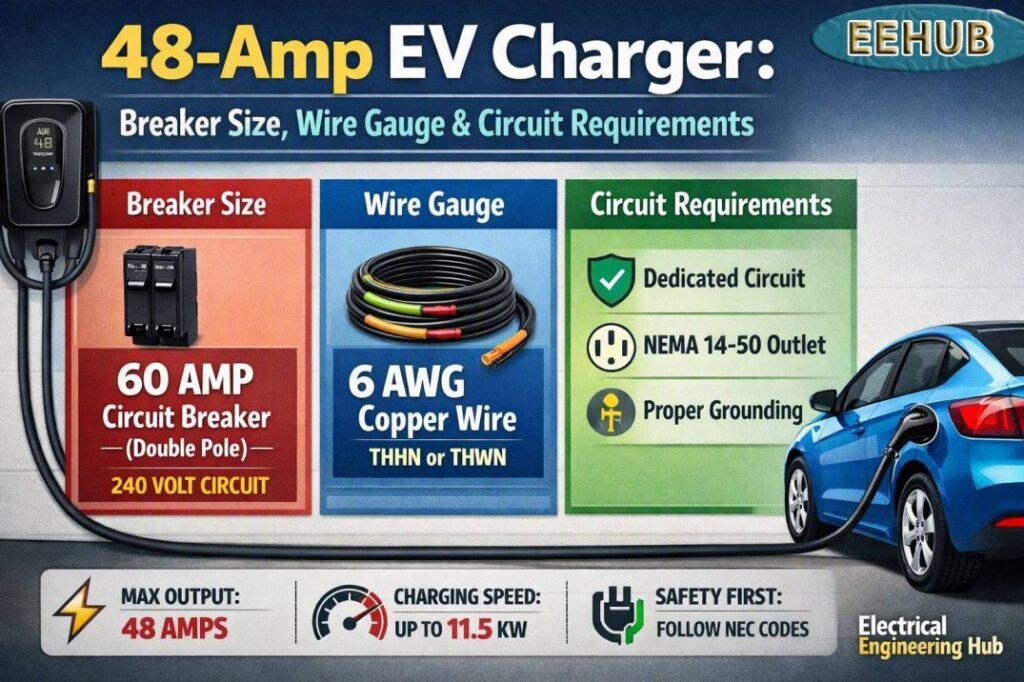
Table of Contents
Table of Contents
48-Amp EV Charger Quick Specifications
| Specification | Recommended Value |
|---|---|
| Charger Output | 48 Amps |
| Input Voltage | 240V AC |
| Minimum Breaker Size | 60 Amp Double-Pole |
| Recommended Wire | 6 AWG Copper |
| Installation Type | Hardwired |
| Continuous Load | Yes |
| NEC 80% Rule | Applies |
| Suitable for Home Charging | Yes |
Breaker and Wire Size Chart
| EV Charger Output | Minimum Breaker | Recommended Copper Wire |
|---|---|---|
| 32A | 40A | 8 AWG |
| 40A | 50A | 6 AWG |
| 48A | 60A | 6 AWG |
| 50A | 70A (where required by manufacturer) | 4–6 AWG |
What Is a 48-Amp EV Charger?
A 48-Amp EV Charger is a Level 2 charging station designed to deliver up to 48 amps continuously at 240 volts. It provides significantly faster charging than a standard Level 1 charger and is commonly installed in residential garages, commercial buildings, and workplaces.
Since EV charging is considered a continuous electrical load under the NEC, the branch circuit must be sized at 125% of the charger’s rated current. That is why a 48-amp charger requires a dedicated 60-amp circuit instead of a 50-amp breaker.
Many modern electric vehicles can fully utilize this charging capacity, making it a future-ready solution for homeowners planning long-term EV ownership.
Why Does a 48-Amp EV Charger Need a 60-Amp Breaker?
The NEC defines EV charging as a continuous load because charging often lasts more than three hours.
The required breaker size is calculated as follows:
| Calculation | Result |
|---|---|
| Charger Current | 48A |
| Continuous Load Factor | × 125% |
| Required Circuit Capacity | 60A |
Formula:
60A = 48A × 1.25
This calculation ensures the breaker and wiring operate within safe temperature limits during extended charging sessions.
Installing a 50-amp breaker with a 48-amp charger does not comply with NEC requirements and can lead to repeated breaker trips or unsafe operating conditions.
Choosing the correct breaker is only part of a safe installation. Use our EV Charger Cable Size Calculator to determine the right wire gauge based on your charger amperage, cable length, and voltage.
Wire Gauge Requirements
Choosing the correct conductor size is equally important.
For most residential installations, electricians recommend:
| Wire Material | Recommended Size |
|---|---|
| Copper | 6 AWG |
| Aluminum | 4 AWG (depending on local code) |
Several factors influence the final wire size:
- Cable length
- Ambient temperature
- Conduit fill
- Voltage drop
- Local electrical code
- Manufacturer instructions
Longer cable runs may require upsizing the conductor to reduce voltage drop and improve charging efficiency.
Hardwired vs Plug-In Installation
Most 48-amp charging stations are designed for hardwired installation.
| Feature | Hardwired | Plug-In |
|---|---|---|
| Supports 48A Output | Yes | Usually No |
| NEC Compliance | Excellent | Limited |
| Reliability | High | Moderate |
| Voltage Drop | Lower | Slightly Higher |
| Future Expansion | Better | Limited |
Hardwired installations eliminate the additional resistance introduced by receptacles and provide a more secure electrical connection.
For this reason, manufacturers typically recommend hardwiring when operating at 48 amps.
EVIQO Level 2 EV Charger Example
The EVIQO Level 2 EV Charger is a good real-world example of proper circuit sizing.
Its standard configuration delivers 48 amps for fast residential charging. However, the charger also includes an internal DIP switch that allows qualified installers to configure the output up to 50 amps where installation conditions and local electrical requirements permit.
Regardless of the selected charging current, the branch circuit must always match the configured output according to NEC requirements and the manufacturer’s installation instructions.
Key Features
| Feature | Specification |
|---|---|
| Maximum Standard Output | 48A |
| Adjustable Charging | Yes |
| DIP Switch Configuration | Up to 50A |
| Wi-Fi Connectivity | Yes |
| Smart App Control | Yes |
| Indoor/Outdoor Rated | Yes |
| Hardwired Installation | Recommended |
Pros
- Fast Level 2 charging
- Smart scheduling through mobile app
- Durable weather-resistant enclosure
- Adjustable charging current
- Compatible with most electric vehicles
Cons
- Professional installation recommended
- Hardwired setup may increase installation cost
Learn More About EVIQO
If you’re considering this charger, read our complete EVIQO Level 2 EV Charger Review to explore installation, smart features, charging performance, pricing, and real-world testing before making your purchase. You can also check the latest Amazon price and available discounts.
Circuit Requirements for a 48-Amp EV Charger
A dedicated branch circuit is required for safe EV charging.
The installation should include:
- Dedicated 240V circuit
- 60-amp double-pole breaker
- Proper equipment grounding conductor
- Hardwired connection
- Correct conductor sizing
- Electrical permit where required
- Installation by a qualified electrician
Sharing the circuit with dryers, ranges, or other large appliances is not recommended.
Voltage Drop Considerations
Voltage drop becomes important as cable length increases.
| Distance | Recommendation |
|---|---|
| Under 75 ft | 6 AWG Copper |
| 75–125 ft | Evaluate voltage drop |
| Over 125 ft | Consider larger conductors |
Maintaining voltage drop below approximately 3% improves charging efficiency and reduces heat generation.
Common Installation Mistakes
Avoid these common problems when installing a 48-Amp EV Charger:
- Using a 50A breaker for a 48A charger
- Installing undersized conductors
- Sharing the circuit with other appliances
- Ignoring local electrical codes
- Skipping voltage drop calculations
- Using indoor-rated equipment outdoors
- Not tightening electrical connections to manufacturer torque specifications
Correct installation protects both the charger and the vehicle.
Can You Install a 48-Amp EV Charger on an Existing Panel?
It depends on the available electrical capacity.
Before installation, an electrician should verify:
| Inspection Item | Why It Matters |
|---|---|
| Main Service Rating | Confirms available capacity |
| Existing Load | Prevents overload |
| Spare Breaker Space | Required for new circuit |
| Panel Condition | Ensures safe installation |
| Local Code Compliance | Required for approval |
If the service panel lacks sufficient capacity, a load calculation or panel upgrade may be necessary.
Cost of Installing a 48-Amp EV Charger
Installation costs vary depending on the electrical system.
| Item | Typical Cost |
|---|---|
| Charger | $400–$800 |
| Breaker and Wiring | $200–$600 |
| Professional Installation | $400–$1,500 |
| Permit (if required) | Varies by location |
Projects requiring longer cable runs or electrical panel upgrades will cost more.
Is a 48-Amp EV Charger Worth It?
For homeowners who drive daily or own electric vehicles with larger battery packs, a 48-Amp EV Charger offers an excellent balance between charging speed and residential electrical requirements.
Compared to lower-powered chargers, it reduces charging time while remaining compatible with standard 240V residential electrical systems. When installed on a properly sized 60-amp circuit with the correct wire gauge, it delivers reliable performance for many years.
If you want faster overnight charging, smart scheduling features, and future-ready charging capacity, a 48-Amp EV Charger is one of the best choices available for home installation.
Related Guides & Tools
- EVIQO Level 2 EV Charger Review
- EV Charger Cable Size Calculator
- EV Charger Load Calculation Tool
- 40A vs 50A vs 60A Circuit for EV Charger
Frequently Asked Questions
What breaker size is required for a 48-Amp EV Charger?
A 48-Amp EV Charger requires a dedicated 60-amp double-pole breaker because EV charging is classified as a continuous load under the National Electrical Code.
What wire size should I use for a 48-Amp EV Charger?
Most residential installations use 6 AWG copper wire. Longer cable runs or special installation conditions may require a larger conductor.
Can I use a 50-amp breaker with a 48-Amp EV Charger?
No. A 50-amp breaker does not satisfy the NEC requirement for a continuous 48-amp load. A 60-amp breaker is the standard recommendation.
Is hardwiring better than using a plug?
Yes. Hardwired installation provides a more secure electrical connection, supports higher charging currents, and is recommended for most 48-amp charging stations.
Can the EVIQO charger be adjusted?
Yes. The EVIQO Level 2 EV Charger operates at a standard 48-amp output and includes a DIP switch that allows qualified installers to configure the charger up to 50 amps where appropriate, following manufacturer instructions and local electrical codes.
Get new guides in your feed. Follow Electrical Insights on LinkedIn for new electrical standards guides, calculators and design tips from Azad Circuit Hub.
48AmpEVCharger, #EVChargerInstallation, #BreakerSize, #WireGauge, #CircuitRequirements, #Level2EVCharger, #NECCode, #HomeEVCharging, #ElectricVehicle, #EVChargingGuide