
Best EV Charger for Garage Installation: 3 Top Level 2 Picks for 2026
Installing an EV charger in a garage is one of the best ways to make home charging faster, safer, and more convenient. Unlike a basic 120V portable charger, a Level 2 EV charger uses a 240V circuit and can add substantially more driving range overnight.
As an electrical engineer with 15 years of experience in electrical systems maintenance, I look at home EV chargers from an installation and electrical-safety perspective, not just charging speed. The right unit should match your vehicle, electrical panel, circuit capacity, cable routing, connector type, and daily charging needs.
For most homeowners, the best EV charger for garage installation should offer dependable Level 2 charging, suitable amperage, good cable management, safety protections, and an installation method that works with the existing electrical system.
Best EV Chargers for Garage Installation
Charging output depends on the specific model, vehicle acceptance rate, circuit rating, and installation configuration.
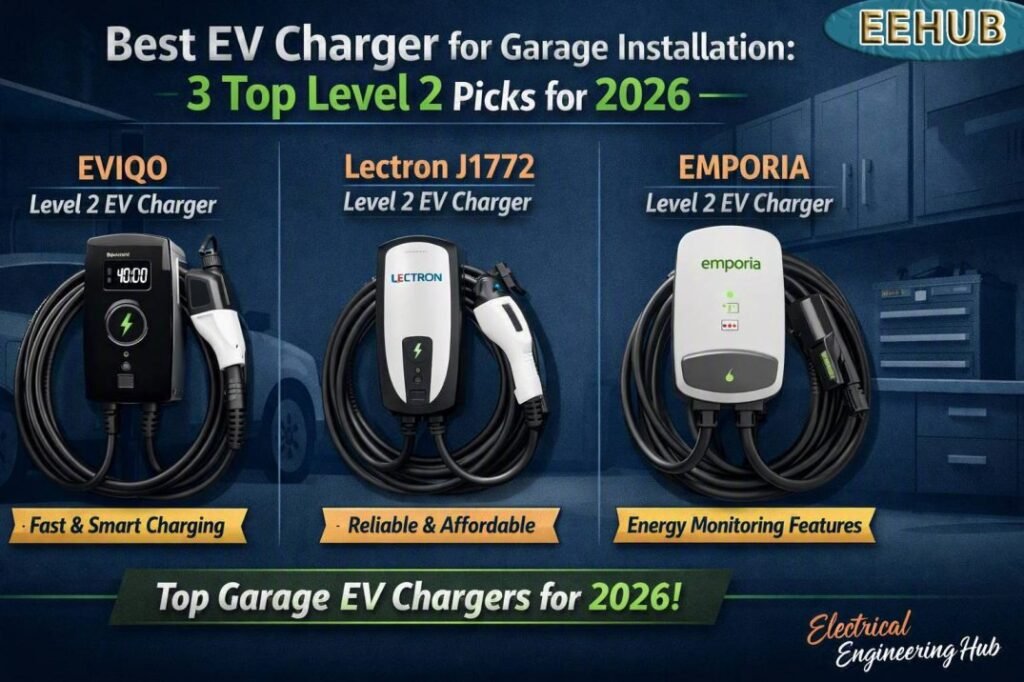
Our Top Picks
Best overall: EVIQO Level 2 EV Charger
A strong option for homeowners who want high-power Level 2 charging and a dedicated garage installation.
Best alternative: Lectron J1772 Level 2 EV Charger
A practical choice for drivers looking for a powerful J1772 charger with a straightforward home setup.
Best smart option: EMPORIA Level 2 EV Charger
A compelling choice if energy monitoring and smart charging controls are important to you.
1. EVIQO Level 2 EV Charger
The EVIQO Level 2 EV Charger is my first choice for homeowners who prioritize charging speed and a permanent garage setup. It is designed around a 240V electrical supply and can deliver up to 48 amps when installed on a properly sized circuit.
For a garage, hardwiring can provide a clean installation without relying on a standard wall receptacle. However, the circuit must be designed according to the charger's continuous-load requirements and applicable electrical code.
The EVIQO is particularly attractive for EV owners who drive frequently and want to recover range quickly between trips. Read complete review on EVIQO Level 2 EV Charger here.
EVIQO Highlights
- Up to 48A Level 2 charging
- J1772 connector
- Designed for 240V home charging
- Suitable for permanent installation
- Built-in electrical protection features
- Useful for daily EV charging
- Good fit for garages with an appropriate dedicated circuit
Check the current EVIQO price on Amazon before purchasing because model specifications, promotions, and availability can change.
From an installation standpoint, I would have the electrician verify the available panel capacity before ordering a high-amperage charger. A 48A continuous EV load generally requires a 60A circuit under the NEC 80% continuous-load rule.
2. Lectron J1772 Level 2 EV Charger
Lectron makes several EV charging products, and its J1772 Level 2 charger is worth considering when you want a higher-output home charging solution for a compatible vehicle.
The J1772 connector is widely used by non-Tesla EVs and plug-in hybrid vehicles. Tesla vehicles can generally use J1772 equipment with the appropriate adapter.
For garage installation, the main consideration is matching the charger configuration with the branch circuit. A charger capable of high current does not mean every vehicle will actually receive that full output. The vehicle's onboard charger sets its own maximum AC charging rate.
Lectron Features at a Glance
| Feature | Lectron J1772 Level 2 |
|---|---|
| Charging level | Level 2 |
| Supply | 240V |
| Connector | J1772 |
| High-current capability | Up to 48A on applicable model |
| Typical use | Home and garage charging |
| Best advantage | Fast AC charging |
| Compatibility | J1772 EVs and PHEVs |
See the Lectron J1772 Level 2 EV Charger on Amazon to check the latest price, cable length, configuration, and customer reviews before buying.
One advantage of choosing a Level 2 charger for a garage is that you can often schedule charging during off-peak electricity periods. This can be useful where the local utility offers time-of-use rates.
3. EMPORIA Level 2 EV Charger
The EMPORIA Level 2 EV Charger with J1772 connector is another strong option, particularly for homeowners who want charging alongside energy monitoring and smart-home features.
EMPORIA has built its product ecosystem around home energy management, making this charger interesting for households with solar panels, energy monitoring equipment, or other high electrical loads.
The charger can provide up to 48A on an appropriately configured circuit. As with any EVSE, actual charging speed depends on the vehicle, electrical installation, and charger settings. Read complete Emporia EV Charger Review here.
Why Consider EMPORIA?
- Up to 48A Level 2 charging
- J1772 connector
- 240V AC charging
- Smart charging capabilities
- Energy monitoring features
- Suitable for residential garage use
- Useful for homeowners managing multiple electrical loads
Check the EMPORIA EV Charger on Amazon for current availability and pricing.
If you already monitor household electricity consumption, EMPORIA can be especially appealing because charging becomes part of a broader energy-management strategy rather than a standalone appliance.
How to Choose the Best EV Charger for Garage Installation
The best EV charger for garage installation depends on more than maximum amperage. Before buying, check these five factors.
1. Electrical Panel Capacity
Start with your service panel. A 48A EV charger can require a 60A branch circuit when operating at its maximum continuous output. If your panel is already heavily loaded, an electrician may recommend load management or a service/panel upgrade.
2. Vehicle Charging Rate
Check your vehicle's onboard AC charger. Installing a 48A EVSE will not make a vehicle charge at 48A if the car accepts only 32A or another lower current.
3. Hardwired vs. Plug-In Installation
Hardwired EV chargers are often preferred for high-current permanent installations. Plug-in models can provide flexibility, but the receptacle, circuit, enclosure, and installation must all be rated appropriately.
4. Cable Length and Location
Measure the distance between the proposed charger location and your vehicle's charging port. A longer cable can be useful in a two-car garage, but unnecessary cable length can create clutter.
5. Outdoor or Damp Conditions
Even when the charger is mounted inside a garage, consider moisture, temperature, physical damage, and cable storage. Follow the manufacturer's mounting and environmental requirements.
Which Garage EV Charger Should You Buy?
For most homeowners, the EVIQO is my preferred option when the priority is high-power charging and a dedicated installation. The Lectron is a strong alternative for J1772-equipped vehicles, while EMPORIA stands out for buyers interested in energy monitoring and smart charging.
If charging speed is your main concern, compare these models with our guide to the fastest level 2 charger for home before making your final decision.
The key is not simply choosing the charger with the highest amp rating. The electrical panel, branch circuit, vehicle, cable run, and installation location must all work together.
Installation Tips for a Garage EV Charger
A professional installation is recommended for a permanently wired high-current EV charger. Before installation:
- Confirm the charger's voltage and maximum current.
- Check the home's service and panel capacity.
- Select a dedicated branch circuit.
- Verify conductor and overcurrent protection requirements.
- Plan the charger location to minimize cable strain.
- Keep the charging cable away from vehicle tires and walking paths.
- Follow the manufacturer's installation instructions.
- Have the completed installation inspected where required.
Never select a breaker simply because its rating matches the charger's maximum current. EV charging is a continuous load, so conductor sizing, breaker selection, terminations, and equipment ratings all matter.
For homeowners comparing high-output options, our fastest level 2 charger for home guide can also help narrow down chargers based on charging power and installation requirements.
Level 2 EV Charger vs. Standard 120V Charging
A Level 2 charger is considerably more practical for many daily EV drivers than standard Level 1 charging.
| Charging Type | Typical Supply | Charging Speed | Best Use |
|---|---|---|---|
| Level 1 | 120V | Slow | Low daily mileage |
| Level 2 | 208/240V | Much faster | Daily home charging |
| DC Fast Charging | High-voltage commercial supply | Very fast | Road trips and public charging |
Level 2 charging is usually the sweet spot for residential garages because it offers much faster charging without requiring the specialized infrastructure of DC fast charging.
Frequently Asked Questions
Is a 48A EV charger suitable for a garage?
Yes, provided the home's electrical system can support it. A 48A charger typically requires a properly sized 60A circuit when operated at its maximum continuous output under NEC continuous-load rules.
Do I need an electrician to install an EV charger?
For a hardwired 240V Level 2 charger, professional installation is strongly recommended. The electrician can evaluate panel capacity, install the appropriate circuit, verify conductor sizing, and ensure the installation complies with applicable electrical requirements.
Can I install a Level 2 charger in a garage?
Yes. A garage is one of the most common locations for residential EV charging. The charger should be mounted according to manufacturer instructions, with suitable protection from physical damage and environmental conditions.
Will a 48A charger charge every EV at 48 amps?
No. The vehicle's onboard AC charger determines how much current it can accept. A high-output EVSE provides the available capacity, but the vehicle may draw less.
Which charger is best for a smart home?
The EMPORIA Level 2 EV Charger is particularly attractive for homeowners who want energy monitoring and smart charging features. However, EVIQO and Lectron are strong choices when charging performance and straightforward Level 2 charging are the main priorities.
Final Verdict
Choosing the best EV charger for garage installation starts with the electrical system and ends with the charger's features. EVIQO is my top pick for high-power residential charging, Lectron is a solid J1772 alternative, and EMPORIA is especially appealing for energy-conscious homeowners.
Before purchasing, verify the exact model's amperage, installation method, connector, cable length, and vehicle compatibility. Also confirm that your electrical panel and branch circuit can safely support the intended charging load.
For a broader comparison of high-output residential charging equipment, visit our fastest level 2 charger for home guide to compare charging speed, features, and installation considerations.
Related Guides
- Grizzl E Level 2 EV Charger Review
- Hardwired vs Plug In EV Charger
- Level 1 vs Level 2 EV Charger
- Best EV Charger Under $300
Get new guides in your feed. Follow Electrical Insights on LinkedIn for new electrical standards guides, calculators and design tips from Azad Circuit Hub.
#EVCharger, #GarageEVCharger, #Level2EVCharger, #HomeEVCharging, #ElectricVehicle, #EVChargingStation, #EVChargerInstallation, #EVCharging, #EVCharger2026, #HomeEVCharger
