DEWALT 40A Level 2 EV Charger Review: Features, Specs & Buying Guide
The DEWALT 40A Level 2 EV Charger is aimed at EV owners who want faster home charging without moving immediately to a higher-current 48A or 60A charging station. A 40A Level 2 charger can provide approximately 9.6 kW at 240V, making it a practical choice for overnight charging and regular daily driving.
As an electrical engineer with more than 15 years of field experience in electrical panels, power systems, industrial equipment, and troubleshooting, I look at an EV charger from both the product and installation sides. The charger needs to match the vehicle, branch circuit, breaker, wiring, and available electrical service.
DEWALT 40A Level 2 EV Charger at a Glance
| Feature | DEWALT 40A EV Charger |
|---|---|
| Charging level | Level 2 |
| Maximum current | 40A |
| Typical voltage | 240V |
| Approx. power | 9.6 kW |
| Installation | Residential / commercial applications |
| Best use | Daily home EV charging |
| Connector | Check exact model |
| Charging type | AC |
| Recommended buyers | EV owners needing faster home charging |
At 40A, the charger offers a useful middle ground between lower-output 32A equipment and high-current 48A EV chargers.
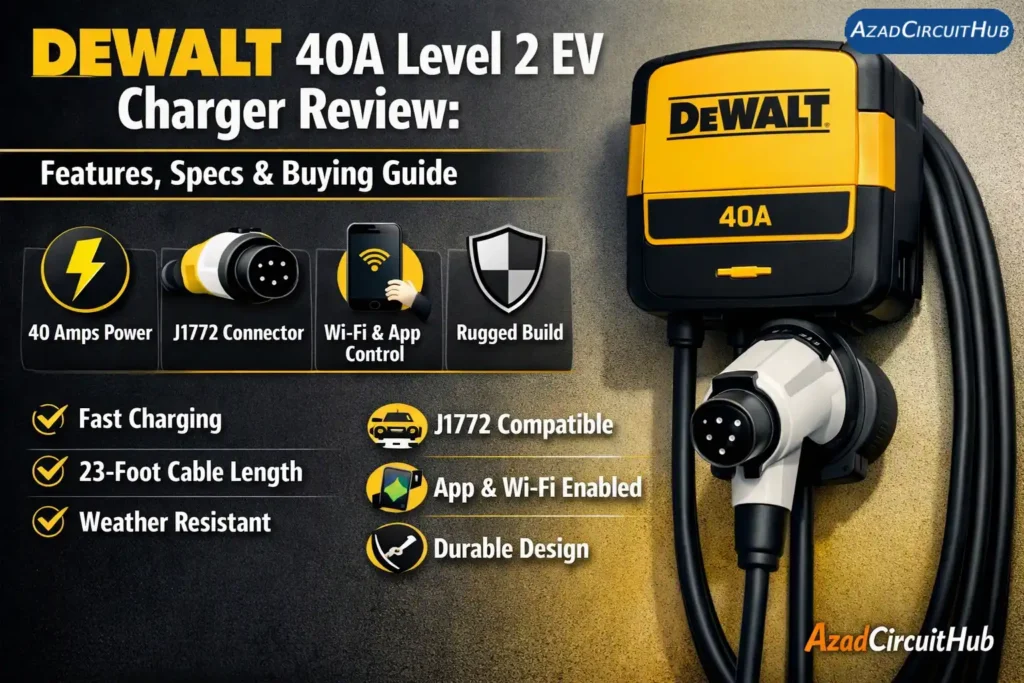
Table of Contents
Table of Contents
40A Charging Performance
At a nominal 240V supply, 40A produces approximately 9.6 kW of AC charging power. Actual charging performance depends on the EV's onboard charger, battery state, temperature, and other vehicle controls.
For a driver who returns home with a partially depleted battery, 40A charging can restore a substantial amount of range overnight. It is also a good option for households that do not need the maximum output available from larger EV charging stations.
The DEWALT 40A Level 2 EV Charger therefore makes sense for buyers who want a faster charging setup while keeping the electrical demand below a typical 48A installation.
Buy the DEWALT 40A Level 2 EV Charger on Amazon: DEWALT 40A Level 2 EV Charger
For a broader look at the manufacturer's EV charging lineup, see my DEWALT EV Charger Review.
Installation and Electrical Requirements
The 40A rating should not be confused with the required branch-circuit rating. EV charging is generally treated as a continuous load, so the circuit must be sized according to applicable electrical requirements.
For a 40A continuous charging load, a properly sized 50A branch circuit is commonly required under NEC-based installations, subject to the specific equipment instructions and local requirements.
Before installation, check:
- Electrical panel capacity
- Breaker rating
- Conductor size
- Voltage at the installation point
- Grounding and protection
- Charger installation instructions
- Indoor or outdoor mounting requirements
- Local electrical code
I would also check the voltage drop if the charger is installed a long distance from the main panel. A technically adequate breaker does not automatically mean the complete circuit is properly designed.
Is 40A Enough for Home EV Charging?
For many EV owners, yes. A 40A charger can provide enough overnight energy for typical daily driving.
| Charger Output | Approx. Power at 240V | Typical Position |
|---|---|---|
| 32A | 7.7 kW | Standard home Level 2 |
| 40A | 9.6 kW | Faster daily charging |
| 48A | 11.5 kW | High-output home charging |
| 60A | 14.4 kW | Higher-capacity installations |
However, the vehicle also determines the maximum charging rate. If an EV's onboard AC charger cannot accept the full output, installing a higher-rated EVSE will not necessarily make it charge faster.
If you are comparing different charging levels, my best level 2 ev charger guide covers other options for home charging.
Features Worth Checking Before Buying
When considering this DEWALT charger, do not judge it only by its 40A rating. Look at the complete specification sheet.
Important factors include:
- Maximum charging current
- Connector compatibility
- Cable length
- Weather resistance
- Mounting arrangement
- Safety protections
- Operating temperature
- Warranty
- Vehicle compatibility
- Smart charging features, if included
A durable enclosure and suitable environmental rating are particularly important when the EVSE will be mounted outside.
DEWALT 40A vs 48A Level 2 Charger
The main difference is charging capacity. A 40A charger can deliver about 9.6 kW at 240V, while a 48A unit can reach approximately 11.5 kW.
That additional capacity can reduce charging time, but it also increases the electrical requirements. The vehicle must support the higher AC input, and the home's electrical system must have adequate capacity.
If you are considering moving up in charging power, see my DEWALT 48A Level 2 EV Charger Review before selecting a higher-current model.
Who Should Buy the DEWALT 40A Charger?
The DEWALT 40A Level 2 EV Charger is worth considering for:
- Daily EV commuters
- Homeowners upgrading from Level 1 charging
- Drivers who want overnight Level 2 charging
- Garages with suitable 240V electrical capacity
- Buyers who do not need a 48A or higher charger
It may be less suitable if your EV already has a lower AC charging limit or if you need the maximum possible charging speed from a high-capacity onboard charger.
Frequently Asked Questions
How fast is a 40A Level 2 EV charger?
At 240V, a 40A charger can provide approximately 9.6 kW of AC charging power. Actual vehicle charging speed varies by EV model and its onboard AC charger.
What breaker is needed for a 40A EV charger?
Because EV charging is typically a continuous load, a 40A charger commonly requires a 50A branch circuit under NEC-based installations. Always follow the manufacturer's instructions and local electrical requirements.
Is 40A enough for overnight EV charging?
For many drivers, yes. A 40A Level 2 charger can provide substantially more charging power than a standard Level 1 outlet and can replenish a useful amount of battery capacity overnight.
Can I install a 40A EV charger myself?
Installation involves a high-current 240V circuit and should be performed by a qualified electrician unless you are appropriately licensed and permitted to perform the work. Local requirements also vary.
Is a 48A charger better than a 40A charger?
Not automatically. A 48A charger provides more potential charging power, but the EV must be able to use it and the home's electrical system must support the larger circuit. For many households, 40A is already sufficient.
Final Verdict
The DEWALT 40A Level 2 EV Charger is positioned in a useful part of the residential EV charging market. Its approximately 9.6 kW output at 240V can provide a substantial improvement over Level 1 charging without requiring the higher electrical capacity associated with some 48A installations.
From an electrical engineering perspective, I would choose the charger only after checking the EV's onboard charging limit, panel capacity, circuit requirements, connector compatibility, and installation location.
For readers comparing the full DEWALT range, my DEWALT EV Charger Review provides a broader starting point, while the 48A model deserves consideration if your vehicle and electrical service can support higher charging power.
Check the current Amazon price and availability: DEWALT 40A Level 2 EV Charger
Get new guides in your feed. Follow Electrical Insights on LinkedIn for new electrical standards guides, calculators and design tips from Azad Circuit Hub.
#DEWALT40AEVCharger, #DEWALTEVCharger, #EVChargerReview, #Level2EVCharger, #40AEVCharger, #HomeEVCharging, #EVCharging, #ElectricVehicle, #EVChargerGuide, #EVSE