Wallbox Pulsar Plus 48A Hardwired Review: Specs, Features & Charging Performance
The Wallbox Pulsar Plus 48A is a compact Level 2 EV charger designed for homeowners who want faster AC charging without installing a large charging station on the wall. In this Wallbox Pulsar Plus 48A Hardwired Review, I look at its charging capacity, installation, cable length, indoor and outdoor use, and practical electrical requirements.
I have spent more than 15 years working as an electrical engineer across electrical panels, industrial automation, PLCs, SCADA systems, and power equipment. When I evaluate an EV charger, I pay close attention to the electrical installation as much as the advertised charging speed. A 48A charger can be useful, but only when the EV and residential electrical service can support it.
Wallbox Pulsar Plus 48A Hardwired Specifications
| Feature | Wallbox Pulsar Plus 48A |
|---|---|
| Charger type | Level 2 EVSE |
| Maximum current | 48A |
| Charging voltage | 208–240V AC |
| Maximum power | About 11.5 kW at 240V |
| Connector | J1772 |
| Installation | Hardwired |
| Cable length | 25 ft |
| Indoor/outdoor | Yes |
| Solar compatibility | Yes, with suitable system configuration |
| Primary use | Home EV charging |
| Circuit consideration | Dedicated circuit sized for continuous EV load |
The 48A rating is one of the main reasons to consider this model. At 240V, 48A provides approximately 11.5 kW of theoretical charging power. Actual charging speed will depend on the vehicle's onboard AC charger and other system limitations.
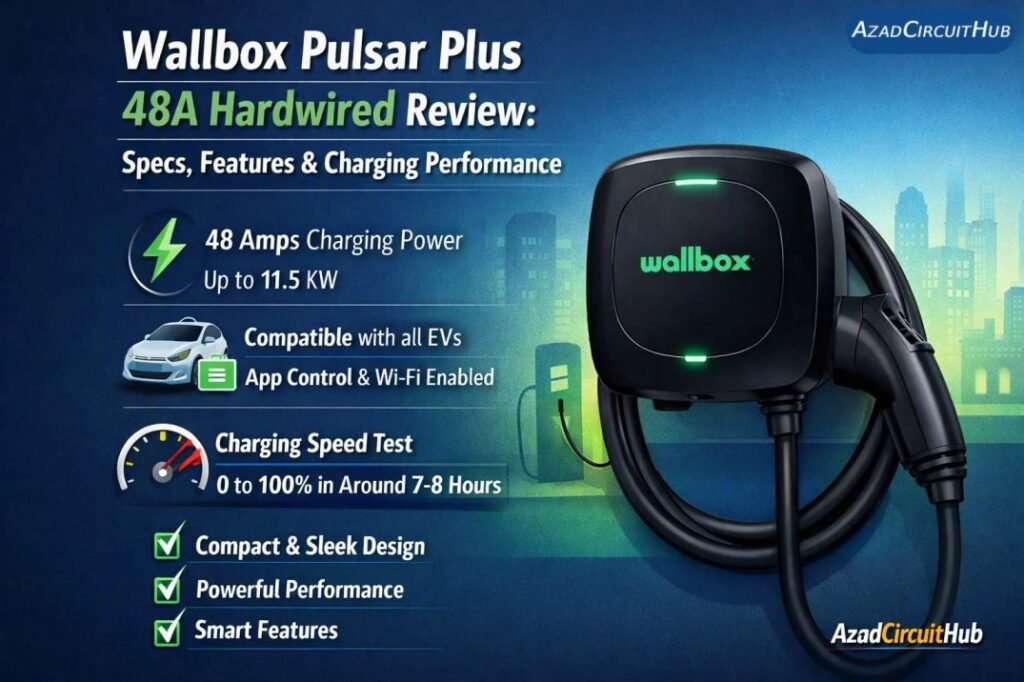
Table of Contents
Table of Contents
48A Charging Performance
The biggest advantage of the Pulsar Plus 48A is its ability to deliver more charging power than common 32A and 40A Level 2 chargers.
At 240V:
240V × 48A = 11,520W
That is approximately 11.5 kW.
For an EV capable of accepting the full charging output, this can provide a substantial amount of range during an overnight charging session. However, buying a 48A EVSE does not automatically mean your vehicle will charge at 11.5 kW.
The vehicle's onboard AC charger controls how much power it accepts.
This is one of the first things I recommend checking before purchasing a high-current home EV charger. If your EV is limited to 7.2 kW or another lower AC charging rate, a 48A charger will not increase the vehicle's maximum charging speed.
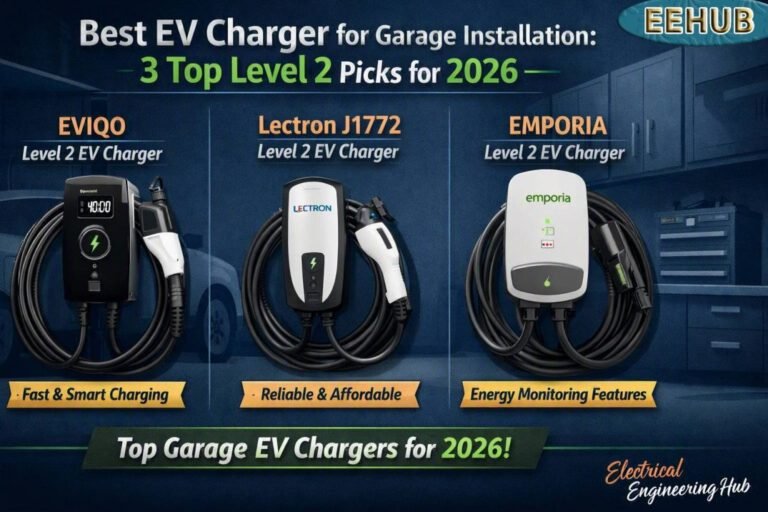
For a wider comparison of residential charging options, see my guide to the best level 2 ev charger choices for different vehicle and electrical requirements.
Hardwired Installation and Electrical Requirements
The hardwired design is an important feature of this Pulsar Plus configuration. Unlike a plug-in EV charger, it does not use a NEMA 14-50 receptacle.
A 48A continuous EV charging load requires careful circuit design. In a typical North American installation, EV charging is treated as a continuous load, so the branch circuit must be sized accordingly under the applicable electrical requirements.
The installation should include:
- Correctly sized conductors
- Proper overcurrent protection
- Suitable grounding
- Appropriate disconnecting means where required
- Adequate panel capacity
- Correct conduit and wiring methods
- Installation according to local electrical code
I would not choose this charger solely because the panel has an unused breaker position. Available breaker space and available electrical capacity are two different things.
25-Foot Cable for Home Charging
The included 25-foot charging cable is useful for residential garages and driveways where the parking position is not directly beside the charger.
Cable length becomes more important when the charging station is mounted on a side wall, near the garage entrance, or positioned to serve more than one parking location.
A longer cable can reduce the need to reposition the vehicle, but it should still be routed carefully to prevent vehicle traffic from damaging the cable.
The Pulsar Plus is also suitable for indoor and outdoor installations, making mounting location more flexible.
Indoor and Outdoor EV Charging
For homeowners without an enclosed garage, outdoor compatibility is an important consideration.
The Pulsar Plus can be used for indoor or outdoor charging when installed according to the manufacturer's requirements. Outdoor installations need extra attention to mounting, weather exposure, cable routing, and the electrical enclosure.
I recommend choosing a location where the connector and cable can be stored securely when not charging. Avoid placing the cable where vehicles can drive over it or where it can become a trip hazard.
If you are comparing this unit with other Wallbox models, my broader Wallbox Pulsar Plus EV Charger Reviews guide provides a useful starting point for comparing different configurations.
Solar Energy Compatibility
One interesting feature for homeowners with solar PV is the ability to integrate EV charging with an energy-management strategy.
Solar-powered EV charging can make sense when the home produces excess daytime electricity and the vehicle is available for charging during those hours. However, the actual benefit depends on the solar inverter, energy-management equipment, utility rules, battery storage, and charging schedule.
A charger being described as solar compatible does not mean it operates directly from solar panels. The EV charger still needs a suitable AC electrical supply.
For homeowners building a solar-plus-EV setup, it is useful to compare charging power with the home's solar production and service capacity rather than sizing the charger independently.
Smart Charging and Everyday Use
The Pulsar Plus family is known for smart charging functionality, which can be useful when managing charging schedules and monitoring energy consumption.
For daily driving, scheduled charging can help homeowners avoid charging at inconvenient times and make better use of available electricity.
The practical value of smart charging depends on your home's electricity tariff, solar generation pattern, vehicle usage, and available Wallbox ecosystem features.
This is also where a connected EV charger can offer more value than a basic Level 2 EVSE. Instead of simply supplying power whenever the vehicle is plugged in, smart charging features can help make charging part of a broader home energy routine.
Wallbox Pulsar Plus 48A Build and Size
One reason the Pulsar Plus is attractive for residential installations is its compact design.
A smaller charger can be easier to mount in a garage where wall space is limited. It also looks less industrial than some larger commercial-style EV charging stations.
For a home installation, I would still leave enough clearance around the equipment for access, cable management, inspection, and maintenance.
The charger should also be mounted at a practical height that makes connecting and disconnecting the J1772 handle easy.
Is the Wallbox Pulsar Plus 48A Worth Buying?
The 48A Pulsar Plus makes the most sense for EV owners who can actually use its higher charging capacity.
It is particularly worth considering if you have:
- A vehicle capable of high-power AC charging
- Adequate residential electrical service
- A suitable location for hardwired installation
- A need for faster overnight charging
- Indoor or outdoor installation requirements
- Interest in smart charging
- A longer 25-foot charging cable
If your daily driving is modest, a 32A or 40A charger may already provide enough overnight range. In that situation, the additional capacity of a 48A charger may not provide much practical benefit.
You can also compare alternatives through my wallbox pulsar plus review guide before deciding which Wallbox configuration fits your installation.
Where to Buy the Wallbox Pulsar Plus 48A
If you have confirmed that your EV supports the required AC charging rate and your electrical installation can handle the load, the Wallbox Pulsar Plus 48A is worth checking for current Amazon pricing.
Check Wallbox Pulsar Plus 48A Hardwired price on Amazon
Before ordering, verify that the listing specifically identifies the 48A hardwired J1772 model. Product listings can contain multiple amperage and installation configurations, and the specifications should match your planned installation.
For more alternatives across different amperage levels, see my best level 2 ev charger guide before making the final purchase.
Wallbox Pulsar Plus 48A Pros and Cons
| Pros | Considerations |
|---|---|
| 48A maximum charging current | Requires suitable electrical capacity |
| Up to about 11.5 kW at 240V | Vehicle must support higher AC charging |
| Hardwired installation | Less portable than plug-in models |
| 25-foot cable | Cable needs proper storage |
| Indoor and outdoor use | Installation location matters |
| Compact residential design | Professional installation is recommended |
| Smart charging features | Some functions depend on the connected ecosystem |
| Solar-compatible applications | Solar integration requires suitable system design |
Who Should Buy the Wallbox Pulsar Plus 48A?
This charger is a strong match for homeowners who want a permanent, high-current Level 2 charging station and have enough electrical capacity for the installation.
It is less attractive for someone who needs a portable EV charger or wants to move the charging equipment between locations.
The 48A output is also unnecessary if the vehicle itself cannot accept the additional AC power. In that case, a lower-current charger can deliver essentially the same vehicle charging speed while placing a smaller load on the electrical system.
If you are comparing several residential models, my Wallbox Pulsar Plus EV Charger Reviews resource can help you evaluate the lineup before selecting a specific amperage.
Frequently Asked Questions
How fast is the Wallbox Pulsar Plus 48A?
At 240V and 48A, the charger can provide approximately 11.5 kW of AC charging power. The actual vehicle charging rate depends on the EV's onboard AC charger and charging limits.
Does the Wallbox Pulsar Plus 48A need to be hardwired?
The 48A configuration covered in this review is a hardwired EV charger. It should be connected to a properly designed branch circuit by a qualified electrician.
What breaker is needed for a 48A EV charger?
EV charging is normally treated as a continuous load, so the branch circuit must be sized according to applicable electrical requirements. A qualified electrician should determine the appropriate breaker, conductor size, and installation method for the specific installation.
Does the Wallbox Pulsar Plus 48A work outdoors?
The Pulsar Plus is designed for indoor and outdoor residential charging when installed according to the manufacturer's requirements. Outdoor mounting should account for weather exposure, cable management, and local electrical requirements.
Is the Wallbox Pulsar Plus 48A compatible with J1772 EVs?
Yes. The product covered here uses a J1772 charging connector, making it suitable for compatible EVs using the J1772 AC charging inlet.
Final Verdict
The Wallbox Pulsar Plus 48A is a high-output residential Level 2 EV charger aimed at homeowners who want faster AC charging in a compact hardwired package. Its 48A output can provide about 11.5 kW at 240V, while the 25-foot cable adds useful flexibility for garage and driveway installations.
From my electrical engineering perspective, the most important consideration is not simply the 48A rating. Your vehicle must be able to accept the available power, and your home's electrical service must have enough capacity for the continuous EV charging load.
If those requirements are satisfied, the Pulsar Plus 48A offers a practical combination of charging power, smart functionality, long cable reach, and indoor/outdoor installation flexibility.
For additional model comparisons, continue with my Wallbox Pulsar Plus EV Charger Reviews guide and compare this 48A hardwired unit with other Level 2 EV charging options.
Get new guides in your feed. Follow Electrical Insights on LinkedIn for new electrical standards guides, calculators and design tips from Azad Circuit Hub.
#WallboxPulsarPlus, #WallboxPulsarPlus48A, #WallboxPulsarPlusReview, #EVChargerReview, #Level2EVCharger, #HardwiredEVCharger, #HomeEVCharging, #EVCharging, #ElectricVehicle, #EVCharger