NexCyber Level 2 EV Charger Review: 48A WiFi Home EV Charging Station
Choosing a home EV charger is no longer just about finding the highest amperage. Cable length, connector type, installation requirements, safety certification, smart features, and everyday convenience all matter. The NexCyber Level 2 EV Charger combines several features that home EV owners commonly look for, including 48A charging, a NEMA 14-50P plug, WiFi app connectivity, a 25-foot cable, and an ETL-certified design.
As an electrical engineer with hands-on experience in electrical systems, power distribution, and equipment installation, I look beyond the advertised amperage when reviewing EVSE equipment. A charger must work well with the home’s electrical capacity and installation method, not simply look powerful on paper.
For homeowners who want a plug-in Level 2 EVSE with a long cable and smart connectivity, this model deserves a closer look.
NexCyber Level 2 EV Charger Specifications
| Feature | Specification |
|---|---|
| Charger type | Level 2 EVSE |
| Maximum rated current | 48A |
| Plug | NEMA 14-50P |
| Vehicle connector | J1772 |
| Cable length | 25 ft |
| Connectivity | WiFi / app |
| Certification | ETL Certified |
| Installation style | Plug-and-play |
| Application | Home EV charging |
| Amazon listing | Available |
The combination of a NEMA 14-50P plug and 25-foot charging cable makes this unit particularly interesting for garages where the electrical outlet is not directly beside the vehicle.
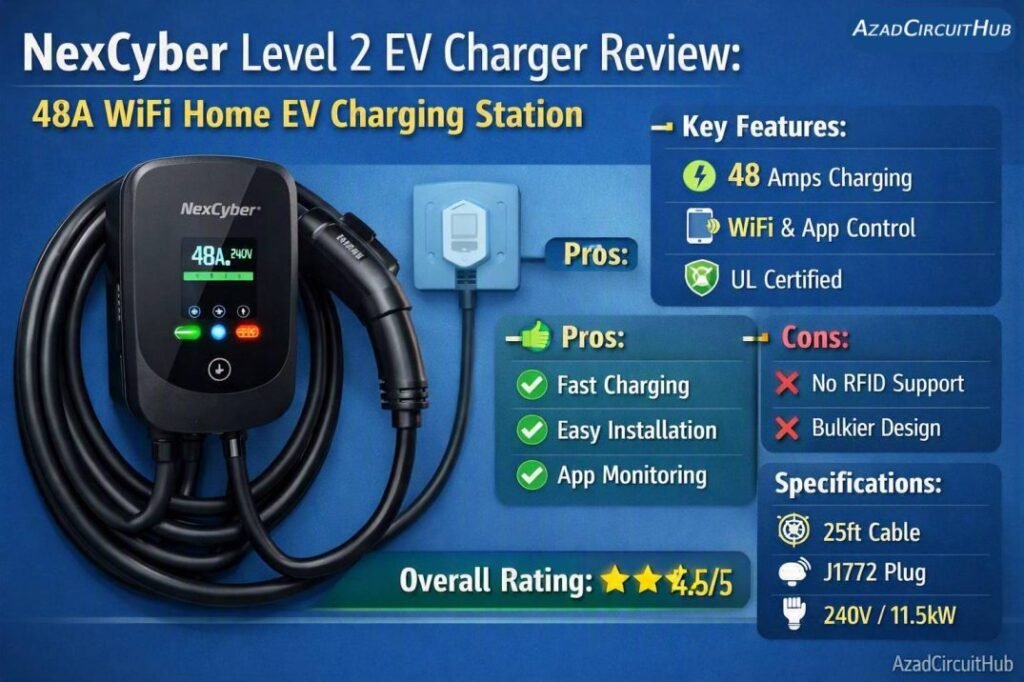
Table of Contents
Table of Contents
What Makes This EV Charger Worth Considering?
The biggest attraction is the balance between charging capability and installation convenience. A 48A Level 2 EVSE can provide substantially faster charging than a typical household Level 1 charger, provided the vehicle accepts the available power and the home's electrical installation is designed for the load.
The plug-in design can also simplify installation compared with a permanently hardwired station. However, plug-and-play should not be interpreted as "plug it into any outlet." A 48A EV charger represents a significant continuous electrical load, so the branch circuit, receptacle, conductors, overcurrent protection, and installation method should be properly assessed.
For a compatible vehicle and suitable electrical circuit, the NexCyber Level 2 EV Charger offers a practical home charging setup without requiring the charger itself to be hardwired.
48A Charging Capability
The advertised 48A rating is one of the strongest selling points of this EVSE. It gives the charger a higher current capacity than many entry-level home charging stations.
However, EV charging is a continuous load. The actual circuit design should account for the applicable electrical code requirements and continuous-load rules. In installations following NEC principles, EV charging equipment is generally treated as a continuous load, so simply matching a breaker size to the charger's maximum current is not sufficient.
The vehicle's onboard AC charger also determines how much power it can actually accept. Therefore, a 48A charger does not automatically mean every EV will charge at 48A.
NEMA 14-50P Plug for Home Installation
The NEMA 14-50P connection is a familiar option for residential EV charging. It can be convenient for homeowners who already have an appropriate 14-50 receptacle installed in the garage.
Before using the charger, verify that the receptacle is correctly rated, properly wired, and suitable for sustained EV charging. Older or general-purpose receptacles may not be ideal for the continuous mechanical and thermal demands associated with frequent EV charging.
If a new circuit is required, have a qualified electrician evaluate the panel capacity, conductor sizing, breaker, grounding, receptacle, and installation environment.
25-Foot Cable: A Major Practical Advantage
Cable reach can make a surprising difference in daily use. A 25-foot cable provides considerably more flexibility than a short charging lead.
For example, the vehicle may need to park on either side of a garage, or the charging outlet may be installed on a wall several feet away from the vehicle's charging port.
| Cable consideration | Why it matters |
|---|---|
| 25-ft length | More parking flexibility |
| J1772 connector | Supports vehicles using J1772 charging connection |
| Longer reach | Useful for larger garages |
| Cable management | Reduces trip and storage issues |
| Outdoor routing | Requires careful protection from damage and weather |
A longer cable can also reduce the need to reposition the vehicle simply to reach the EVSE.
WiFi and App Connectivity
Smart charging is another useful feature for homeowners who want more control over their charging routine. The listing identifies WiFi and app functionality, which can make an EVSE more convenient than a basic charger.
Depending on the supported app and configuration, smart EV chargers can offer functions such as charging status monitoring, scheduling, energy information, or remote control. Buyers should verify the exact functions supported by the current Amazon listing and app before purchasing because software features can change over time.
For users who prefer straightforward charging without connected features, the smart functionality is not necessarily essential. For others, smartphone connectivity can make home EV charging easier to monitor.
ETL Certification and Safety
ETL certification is an important point when evaluating electrical equipment. A recognized safety certification provides additional confidence that the product has undergone applicable testing by an accredited testing organization.
Still, certification does not replace proper installation. The electrical circuit must be appropriate for the charger's rated load, and the equipment should be used according to the manufacturer's instructions.
From an electrical engineering perspective, I would pay particular attention to the receptacle condition, termination quality, conductor ampacity, grounding, breaker arrangement, and panel loading before putting a high-current EVSE into regular service.
Is the NexCyber Charger Easy to Install?
The plug-and-play approach is one of the product's appealing features. If an appropriate NEMA 14-50 outlet already exists, the installation process can be simpler than installing a hardwired EV charger.
The important word is "appropriate." A homeowner should not assume that any 14-50 outlet is automatically suitable for continuous 48A EV charging.
An electrician can verify:
- Panel and service capacity
- Branch-circuit rating
- Conductor size and insulation
- Breaker suitability
- NEMA 14-50 receptacle condition
- Grounding and bonding
- Installation location
- Local electrical requirements
These checks are especially important in older homes.
Who Should Buy This EV Charger?
The NexCyber Level 2 EV Charger is a good candidate for EV owners who want a higher-current home EVSE with a long cable and smart connectivity.
It makes the most sense for buyers who:
- Have or can install a suitable NEMA 14-50 circuit
- Want a 25-foot charging cable
- Own a vehicle compatible with the J1772 connector
- Prefer app-based connectivity
- Want a plug-in rather than hardwired EVSE
- Need faster home charging than Level 1 equipment provides
It may be less suitable if your vehicle cannot accept higher AC charging power or if your home's electrical service cannot support the required circuit.
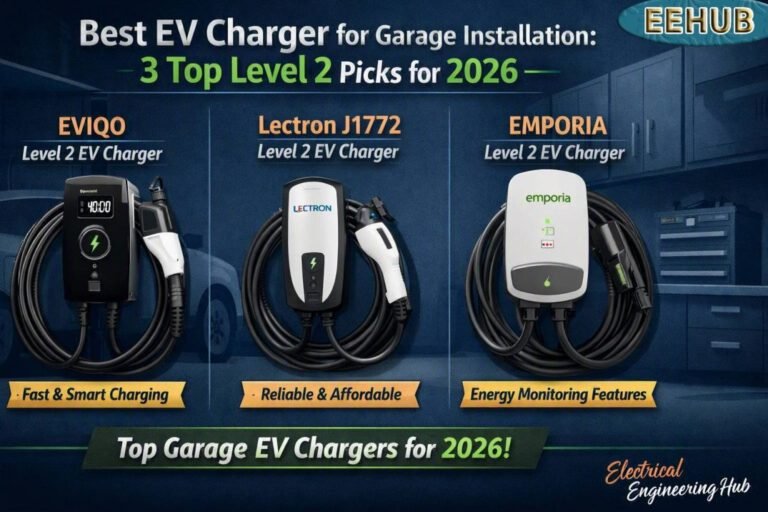
If you want to compare this model against other popular home charging stations, our guide to the best level 2 ev charger covers the key features to check, including power, connector type, installation, cable length, and smart controls.
NexCyber EV Charger Pros and Cons
| Pros | Cons |
|---|---|
| 48A rated charging capability | Requires a suitable high-current circuit |
| NEMA 14-50P plug | Installation still needs electrical assessment |
| 25-ft cable | Long cables require proper storage |
| WiFi/app connectivity | Smart features depend on app support |
| J1772 connector | Not suitable for every connector standard without an adapter |
| ETL certified | Certification does not eliminate installation requirements |
| Plug-and-play design | Existing receptacle must be suitable |
Where to Buy the NexCyber EV Charger
For buyers interested in the combination of 48A charging, WiFi connectivity, a NEMA 14-50P plug, and a 25-foot J1772 cable, the Amazon listing is the easiest place to check the current price, availability, customer reviews, and seller information.
Check the NexCyber 48A Level 2 EV Charger on Amazon
Before ordering, confirm the connector, plug configuration, electrical requirements, and current product specifications against your vehicle and home installation.
If you are comparing this unit with other high-output residential EVSE options, our guide to the fastest level 2 charger can help you compare charging capability and installation considerations.
Final Verdict
The NexCyber Level 2 EV Charger stands out because it combines a 48A rating with a NEMA 14-50P plug, 25-foot cable, J1772 connector, WiFi/app connectivity, and ETL certification. That combination gives it strong appeal for homeowners looking for a feature-rich plug-in EV charging station.
The most important consideration is not simply the advertised 48A output. Your vehicle must be able to accept the available AC charging power, and the home's electrical infrastructure must safely support the continuous load.
For homeowners with a properly designed NEMA 14-50 circuit who want additional cable reach and smart charging functionality, this EVSE is worth considering.
For more buying guidance, compare our recommendations for the best ev charger level 2 before choosing an EVSE for your garage.
Frequently Asked Questions
Is the NexCyber Level 2 EV Charger compatible with J1772 vehicles?
Yes. The listed product uses a J1772 vehicle connector, making it designed for EVs that use the J1772 AC charging interface. Always verify your vehicle's charging connection and requirements before purchase.
How fast does a 48A Level 2 EV charger charge an EV?
Charging speed depends on the vehicle's onboard AC charger, battery capacity, state of charge, and electrical supply. A 48A rating indicates the EVSE's maximum advertised current, but the vehicle may draw less.
Can I plug this EV charger into any NEMA 14-50 outlet?
No. The outlet and branch circuit must be suitable for the charger's electrical load and continuous EV charging. Have the installation checked by a qualified electrician, particularly if the existing receptacle was not specifically installed for EV charging.
Is a 25-foot EV charging cable useful?
Yes. A 25-foot cable provides greater flexibility when the charging outlet is not close to the vehicle's charging port. It can also make the charger more convenient when parking positions vary.
Does the NexCyber charger work with a smartphone app?
The supplied product listing identifies WiFi and app functionality. Buyers should check the current Amazon listing and manufacturer's app information for the exact supported features, connectivity requirements, and available controls before purchasing.
Related Guides
- WOLFBOX 48A hardwired review
- EVIQO Level 2 EV Charger Review
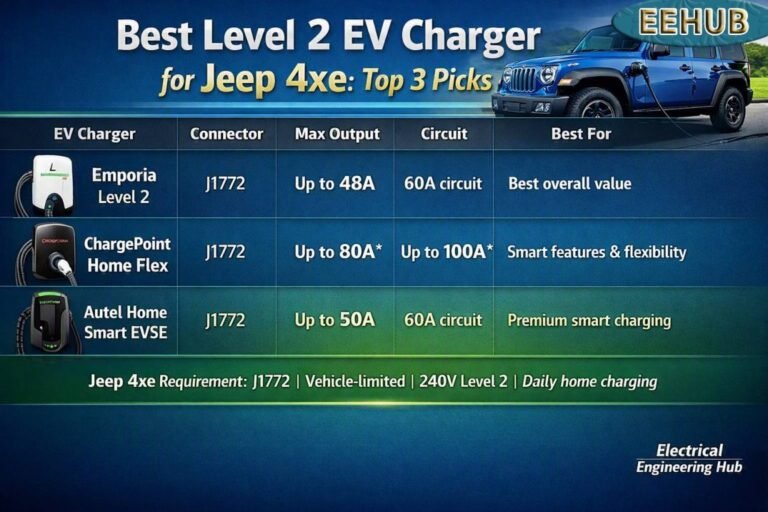
- EVIQO vs ChargePoint Home Flex vs Emporia
Get new guides in your feed. Follow Electrical Insights on LinkedIn for new electrical standards guides, calculators and design tips from Azad Circuit Hub.
#NexCyberLevel2EVCharger, #Level2EVCharger, #EVChargerReview, #HomeEVCharging, #48AEVCharger, #SmartEVCharger, #WiFiEVCharger, #ElectricVehicleCharging, #EVChargingStation, #HomeCharger