Rooftop Solar Insurance Cost: Best 2026 Guide for Homeowners
The rooftop solar insurance cost has become a key consideration for homeowners shifting toward renewable energy in 2026. As solar adoption grows, so does the need to understand how insurance companies treat solar panel systems, what they cover, and how much extra protection might add to your yearly budget.
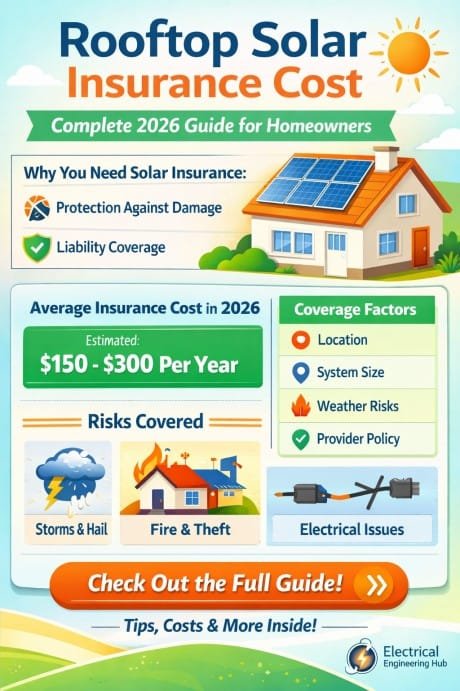
Table of Contents
In most cases, solar panels are treated as a home improvement, which means they can influence your insurance premium, replacement value, and even liability coverage. However, the actual increase varies widely depending on system size, location, and policy type. For many homeowners, the rooftop solar insurance cost is still relatively modest compared to the long-term savings from solar energy.
This guide breaks down everything in simple terms so you can estimate your insurance needs accurately before or after installing solar panels.
Know more about How Much Does Solar Panel Insurance Cost?
Does Homeowners Insurance Cover Rooftop Solar Panels?
Most standard homeowners insurance policies do include coverage for rooftop solar systems, but the extent depends on how your insurer classifies them and the type of policy you have.
In many cases, the rooftop solar insurance cost is not a separate charge but is indirectly included in your dwelling coverage. Still, understanding how this works is important to avoid underinsurance.
How panels are classified (permanent fixtures)
Insurance companies typically classify rooftop solar panels as permanent fixtures attached to your home. This means they are considered part of the structure, just like a roof, chimney, or built-in HVAC system.
Because of this classification, solar panels usually fall under dwelling protection rather than personal property coverage. This directly influences the rooftop solar insurance cost since the value of your home increases after installation.
What’s covered under dwelling Coverage A
Dwelling Coverage A is the part of your policy that protects the physical structure of your home. When solar panels are included, this coverage typically protects against:
- Fire and smoke damage
- Storm and wind damage
- Hail impact
- Theft or vandalism (in many policies)
Use our free online tool here Solar Panel Insurance Cost Calculator
| Coverage Type | What It Includes | Impact on Solar Panels |
|---|---|---|
| Dwelling Coverage A | Structure of home | Fully includes rooftop solar systems |
| Personal Property | Items inside home | Usually not applicable |
| Liability Coverage | Injury/property damage | Indirect protection |
Because solar panels increase your home’s rebuild value, insurers may slightly adjust the rooftop solar insurance cost after installation.
How Much Does Rooftop Solar Insurance Cost?
The rooftop solar insurance cost varies depending on whether your system is added to an existing homeowners policy or covered through a separate solar insurance plan. In most residential cases, the increase is moderate, but it depends heavily on system size and region.
Premium increase: $15–$300/year explained
For most homeowners, adding rooftop solar panels results in a small annual increase in insurance premiums. On average, this increase ranges between $15 and $300 per year.
The reason is simple: solar panels raise the replacement cost of your home. More expensive homes require higher coverage limits, which directly affects insurance pricing.
In some cases, the rooftop solar insurance cost remains almost unchanged, especially if the system is small or already included in your policy’s rebuild estimate.
Use our free online tool solar insurance premium calculator
Standalone solar insurance: $100–$1,000/year
If your standard policy does not fully cover solar equipment, insurers or third-party providers may offer standalone protection. This is more common for large systems or commercial-scale rooftop installations.
| Type of Coverage | Average Annual Cost | Best For |
|---|---|---|
| Homeowners policy adjustment | $15–$300 | Small to medium rooftop systems |
| Standalone solar insurance policy | $100–$1,000 | Large or high-value systems |
In such cases, the rooftop solar insurance cost is higher but provides broader protection, including mechanical breakdowns and extended warranty-style coverage.
5 Factors That Affect Your Solar Insurance Premium
Several key factors influence how insurers calculate your premium after solar installation. Understanding these helps you estimate your long-term rooftop solar insurance cost more accurately.
System size and value
Larger solar systems cost more to replace, which increases insurance risk exposure. A 10 kW system will naturally have a higher premium impact than a 3 kW system.
The higher the installation cost, the more your rooftop solar insurance cost may increase annually.
Use our online free tool Solar Panel Installation Cost Calculator
Location and weather risk
Where you live plays a major role. Areas with frequent hailstorms, hurricanes, or heavy snowfall tend to have higher insurance premiums.
For example, homes in high-risk weather zones may see a noticeable rise in rooftop solar insurance cost compared to regions with mild climates.
Roof type and installation method
The type of roof and how panels are mounted also affect risk levels. Properly integrated systems on strong roofing structures are considered lower risk.
| Factor | Low Risk Impact | High Risk Impact |
|---|---|---|
| Roof material | Concrete, metal | Old asphalt shingles |
| Installation type | Flush mounted | Poorly anchored systems |
| Maintenance access | Easy access | Difficult access |
Poor installation can significantly increase rooftop solar insurance cost due to higher chances of damage or detachment.
When You Need a Separate Solar Insurance Policy
In some situations, homeowners insurance is not enough to fully protect a solar system. That’s when a separate solar insurance policy becomes necessary.
Ground-mounted systems
Ground-mounted solar arrays are often excluded from standard homeowners coverage because they are not attached to the structure. In such cases, the rooftop solar insurance cost is replaced by a standalone policy requirement.
Know more about How to Test Solar Panel With Multimeter
High-risk weather areas
Homes located in storm-prone or hail-heavy regions may need additional protection beyond basic coverage. Insurers may limit payouts unless a separate policy is purchased.
Leased vs. owned solar panels
Ownership status changes everything. If you lease your solar system, the provider often maintains insurance, but homeowners may still need liability coverage.
| Ownership Type | Insurance Responsibility |
|---|---|
| Owned system | Homeowner’s policy or standalone insurance |
| Leased system | Provider + partial homeowner coverage |
| PPA agreement | Usually covered by provider |
Understanding ownership is crucial because it directly affects the rooftop solar insurance cost and coverage responsibility.
How to Update Your Coverage After Installing Solar
Once solar panels are installed, you must update your insurance policy to avoid underinsurance issues.
Notify your insurer within 30 days
Most insurers require notification within 30 days of installation. This ensures your policy reflects the updated replacement value, keeping your rooftop solar insurance cost accurate and valid.
Failing to report may result in claim delays or reduced payouts.
Use our online tool Solar Inverter Sizing Calculator
Raise your dwelling coverage limit
Since solar panels increase your home’s value, you may need to increase your dwelling coverage limit. This ensures full replacement in case of damage.
Adjusting coverage may slightly increase the rooftop solar insurance cost, but it protects your long-term investment.
What Solar Panel Insurance Does NOT Cover
Even comprehensive policies have exclusions. Solar insurance typically does not cover:
- Gradual wear and tear
- Manufacturer defects (covered by warranty instead)
- Improper installation issues
- Negligence or lack of maintenance
- Performance degradation over time
Understanding exclusions helps you avoid confusion when evaluating your rooftop solar insurance cost versus actual coverage value.
Solar Warranty vs. Solar Insurance: Key Differences
Many homeowners confuse warranties with insurance, but they serve different purposes.
| Feature | Solar Warranty | Solar Insurance |
|---|---|---|
| Covers | Product defects, performance | Physical damage, theft, disasters |
| Provider | Manufacturer | Insurance company |
| Cost | Included in purchase | Adds to rooftop solar insurance cost |
| Duration | 10–25 years | Annual policy |
A warranty does not reduce your rooftop solar insurance cost, as both work independently to protect different risks.
Use our online tool for free Solar Performance Ratio Calculator – Measure Solar System Efficiency Accurately
Frequently Asked Questions
Does solar increase my home insurance premium?
Yes, but usually only slightly. In most cases, the rooftop solar insurance cost increases by $15–$300 per year depending on system size and location. Some policies may not increase at all if coverage already includes structural upgrades.
Is leased solar covered by homeowners insurance?
Leased systems are generally covered by the leasing company’s insurance. However, homeowners may still need liability protection. This arrangement usually keeps rooftop solar insurance cost minimal for the homeowner.
Does insurance cover hail damage to solar panels?
Yes, most standard policies cover hail damage since solar panels are part of the dwelling structure. However, coverage limits vary, and higher-risk regions may affect rooftop solar insurance cost due to increased claims probability.
Use our online tool for free Solar Panel Size Calculator by Load – Find the Right System for Your Power Needs
Get new guides in your feed. Follow Electrical Insights on LinkedIn for new electrical standards guides, calculators and design tips from Azad Circuit Hub.
#RooftopSolarInsuranceCost,#SolarInsurance2026,#HomeInsuranceSolar,#SolarPanelCoverage,#RenewableEnergyInsurance,#SolarHomeProtection,#SolarInsuranceGuide,#GreenEnergyInsurance,#SolarSystemSafety,#HomeownersSolarCost