
How to Test Solar Panel With Multimeter | Step-by-Step Voltage & Current Testing Guide
Solar panels are designed to deliver reliable power for many years, but regular testing is important to ensure they are working efficiently. If your solar system is producing less energy than expected, a simple multimeter can help identify the problem. Learning how to test solar panel with multimeter is useful for homeowners, technicians, farmers, and anyone using solar energy systems.
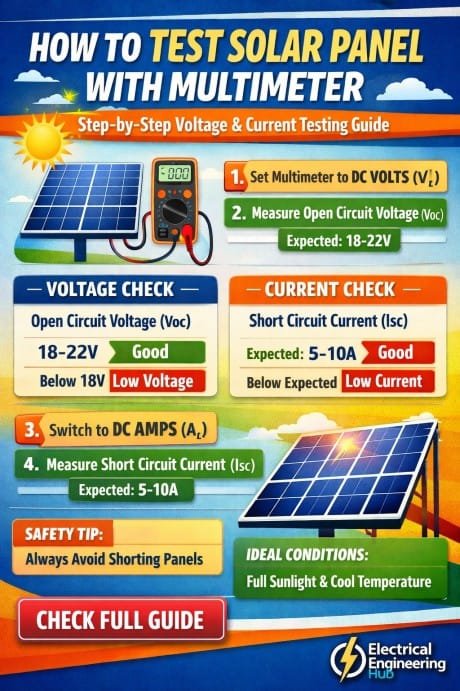
Table of Contents
A digital multimeter allows you to check voltage, current, continuity, and resistance. These readings help determine whether a solar panel is healthy, underperforming, or damaged. With the correct testing method, you can quickly diagnose wiring faults, low output, shading issues, and panel degradation.
This guide explains every step in detail so you can safely measure solar panel voltage and current using a multimeter.
Use our online tool for free Solar Performance Ratio Calculator – Measure Solar System Efficiency Accurately
Why You Should Test a Solar Panel
Solar panels are exposed to sunlight, rain, dust, and temperature changes every day. Over time, these factors can reduce performance. Testing helps you:
- Check whether the panel is generating power
- Detect faulty wiring or loose connections
- Verify open circuit voltage and current output
- Monitor solar panel efficiency
- Identify damaged cells or connectors
- Prevent energy loss in off-grid and on-grid systems
Routine testing can increase the lifespan of your solar setup and improve energy production.
Tools Required for Solar Panel Testing
Before you begin, gather the following equipment:
| Tool | Purpose |
|---|---|
| Digital Multimeter | Measures voltage and current |
| Solar Panel | The panel being tested |
| MC4 Connectors | Connect panel output cables |
| Safety Gloves | Protection during testing |
| Notebook or Mobile | Record readings |
| Sunlight Exposure | Required for accurate results |
For best results, test the panel during peak sunlight hours between 11 AM and 2 PM.
Use our online tool for free Solar Panel Tilt Angle Calculator – Find the Perfect Angle for Maximum Solar Power
Safety Precautions Before Testing
Safety should always come first while working with electrical systems.
Follow these precautions before you test solar panel with multimeter:
- Never touch bare wires with wet hands
- Use insulated tools when possible
- Keep the multimeter settings correct
- Disconnect the solar panel from the inverter before testing
- Avoid testing during rain or cloudy weather
- Wear protective gloves and safety glasses
Even small solar panels can produce dangerous current under strong sunlight.
Understanding Solar Panel Voltage and Current
Before testing, it is important to understand two basic electrical terms.
Open Circuit Voltage (Voc)
Open circuit voltage is the voltage produced by the solar panel when nothing is connected to it. This reading shows the maximum voltage output.
For example:
| Solar Panel Type | Expected Voc |
|---|---|
| 12V Solar Panel | 18V to 22V |
| 24V Solar Panel | 36V to 44V |
Use our online tool for free Solar Panel Size Calculator by Load – Find the Right System for Your Power Needs
Short Circuit Current (Isc)
Short circuit current is the maximum current generated when the positive and negative terminals are connected through the multimeter.
This value depends on sunlight intensity and panel size.
If you need a budget-friendly electrical testing tool, don’t miss our detailed review of the Best Multimeter Under $50 available today.
How to Test Solar Panel Voltage With Multimeter
Voltage testing is the easiest and safest method. It helps verify whether the panel is producing electricity.
Step 1: Set the Multimeter to DC Voltage
Turn on the digital multimeter and set it to DC voltage mode. Most multimeters display this as “VDC” or “DCV”.
Choose a voltage range higher than the panel rating.
For example:
- Use 20V or 200V range for a 12V panel
- Use 200V range for larger systems
Step 2: Place the Solar Panel in Sunlight
Position the panel under direct sunlight without shadows. Dirty surfaces or shade can reduce the reading.
Step 3: Connect the Multimeter Probes
Connect the probes correctly:
- Red probe to positive terminal
- Black probe to negative terminal
Most solar panels use MC4 connectors marked with plus and minus signs.
Looking for a dependable meter for photovoltaic maintenance? Explore our review of the Best Multimeter for Solar Panels before making a purchase.
Step 4: Read the Voltage
Check the display on the multimeter.
A healthy 12V panel should show around 18V to 22V in full sunlight. Lower readings may indicate:
- Dirty solar panel surface
- Weak sunlight
- Damaged cells
- Faulty wiring
Use our online tool for free Solar Panels kWh Calculator UK: Instantly Estimate Output, Savings & Payback
Solar Voltage Reading Table
| Panel Rating | Normal Voltage Reading |
|---|---|
| 10W Panel | 18V to 21V |
| 100W Panel | 19V to 22V |
| 330W Panel | 37V to 45V |
If the voltage is near zero, inspect the cables and connectors carefully.
How to Test Solar Panel With Multimeter (Current)
Current testing confirms whether the panel is delivering proper amperage.
This process requires extra caution because the multimeter becomes part of the circuit.
Step 1: Switch Multimeter to DC Current
Set the multimeter to DC current mode. It may appear as “A” or “ADC”.
Move the red probe to the current input port if required.
Step 2: Select the Correct Amp Range
Choose a current range slightly above the expected output.
Example:
| Panel Size | Expected Current |
|---|---|
| 20W Panel | 1A to 1.5A |
| 100W Panel | 5A to 6A |
| 400W Panel | 10A to 13A |
Know more about Hybrid Solar Inverter Working Principle with Circuit Diagram
Step 3: Connect the Multimeter in Series
Attach the probes directly to the solar panel terminals:
- Red probe to positive
- Black probe to negative
The multimeter temporarily creates a short circuit to measure current.
Step 4: Check the Current Reading
Observe the reading on the display.
If the measured current is close to the panel’s rated short circuit current, the panel is operating correctly.
Low current may result from:
- Weak sunlight
- Dust accumulation
- Internal cell damage
- Loose connectors
How to Check Solar Panel Continuity
Continuity testing helps identify broken wires or damaged connections.
Steps for Continuity Test
- Disconnect the solar panel completely
- Set the multimeter to continuity mode
- Touch probes to both ends of the cable
- Listen for the beep sound
A beep indicates the wire is continuous and functioning properly.
Common Solar Panel Problems Found During Testing
Testing can reveal several issues that reduce solar performance.
| Problem | Possible Cause |
|---|---|
| Low Voltage | Shading or damaged cells |
| No Current | Broken connector or fuse |
| Fluctuating Output | Loose wiring |
| Zero Reading | Faulty panel or reversed probes |
| Low Efficiency | Dirt or aging panel |
Regular inspections can prevent expensive repairs later.
Use our online tool Solar Inverter Sizing Calculator
Tips for Accurate Solar Panel Testing
To get reliable results while you test solar panel with multimeter, follow these practical tips:
- Clean the solar panel surface before testing
- Test during strong sunlight hours
- Avoid partial shading
- Use a quality digital multimeter
- Compare readings with manufacturer specifications
- Check connectors for corrosion
Consistent testing helps monitor system health over time.
When a Solar Panel May Need Replacement
A solar panel may require replacement if:
- Voltage remains very low in full sunlight
- Output drops significantly below rated values
- Visible cracks appear on the panel
- Burn marks are present near junction boxes
- Current readings stay unstable
Most quality panels last 20 to 25 years, but environmental conditions can shorten lifespan.
Find more about Anti Islanding Protection in Solar Inverter
Final Thoughts
Knowing how to test solar panel with multimeter is an essential skill for maintaining solar energy systems. A simple multimeter can help detect voltage issues, current loss, damaged wiring, and reduced efficiency within minutes.
By following the correct testing procedures, you can keep your solar panels operating safely and efficiently. Regular voltage and current checks also help identify small problems before they become major system failures.
Whether you use solar power for a home, farm, RV, or commercial setup, proper testing ensures maximum energy production and longer equipment life.
Find more about Best Medium Voltage Transformers for Solar Plants
Get new guides in your feed. Follow Electrical Insights on LinkedIn for new electrical standards guides, calculators and design tips from Azad Circuit Hub.
#HowToTestSolarPanelWithMultimeter,#SolarPanelTesting,#SolarMaintenance,#MultimeterTesting,#SolarEnergy,#SolarPanelVoltage,#SolarSystem,#RenewableEnergy,#ElectricalTesting,#SolarTips
