
NEC Code for Hot Tub Disconnect: Location and GFCI Rules (2026)
NEC code for hot tub disconnect explained: the 5 ft rule, within-sight distance, GFCI protection, emergency switch and wiring layouts.
Practical guides to the electrical codes and standards engineers, installers, and students use most: the US NEC, IEC standards, UK BS 7671, and IEEE/ANSI design practice. Start with the guides below, or browse every article underneath.
NEC (NFPA 70) governs most electrical installations in the United States and is adopted state by state, so check which edition your jurisdiction enforces. IEC standards (such as IEC 60364 and IEC 60664) are the basis for national codes in much of Europe, Asia, and the Middle East. BS 7671 is the UK wiring regulation, built on IEC principles. IEEE and ANSI standards cover utility and substation design practice. When a project crosses regions, always confirm the code adopted by the local authority.

NEC code for hot tub disconnect explained: the 5 ft rule, within-sight distance, GFCI protection, emergency switch and wiring layouts.
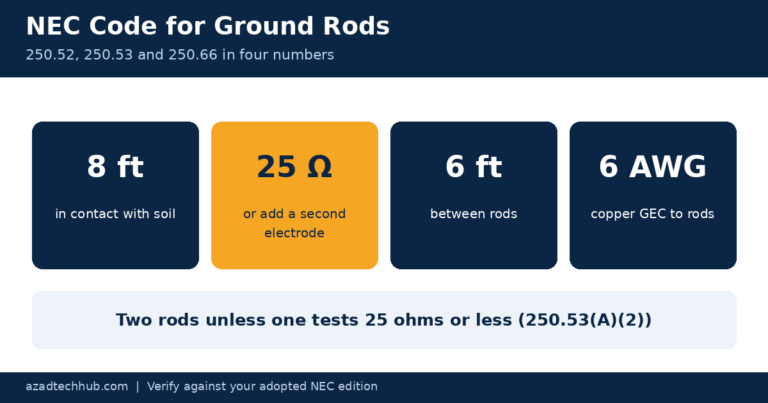
NEC code for ground rods explained: 8 ft depth, the 25 ohm rule, when two rods are needed, GEC wire size, spacing and subpanel rules.

NEC code for EV chargers explained: Article 625 rules, 125% sizing, GFCI, Romex limits, Tesla, California and a free PDF cheat sheet.
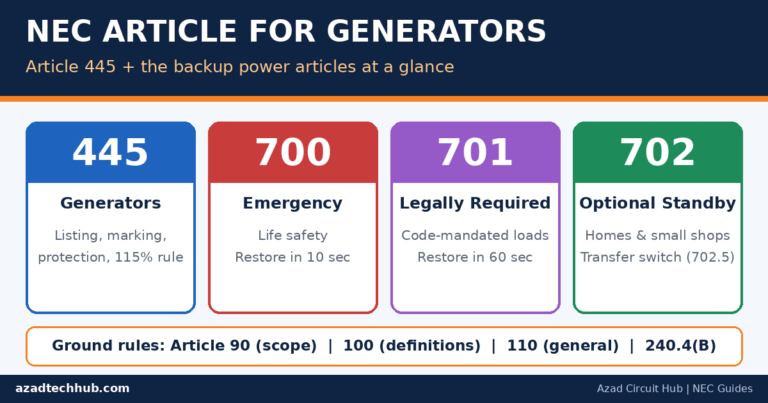
NEC article for generators is Article 445, with 700, 701 and 702 for backup power. See clearances, 240.4(B), home rules and a free PDF.
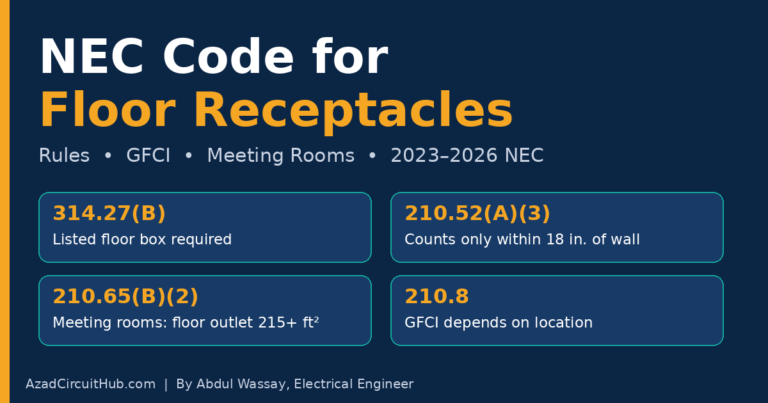
NEC code for floor receptacles explained: 18-inch wall rule, listed floor boxes, meeting room outlets (210.65), GFCI and 2020 to 2026 changes.
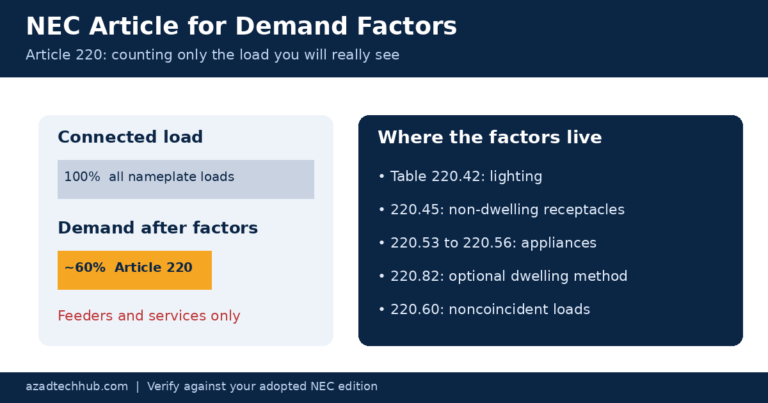
NEC article for demand factors is Article 220. See Table 220.42, 220.45, dryer and range factors, a worked example and a free PDF cheat sheet.
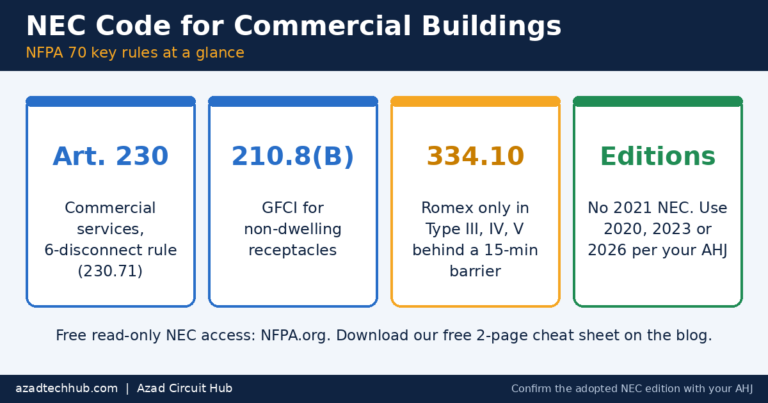
NEC code for commercial buildings explained: services, GFCI, Romex rules, 2020 vs 2026 editions, free NEC access and a free 2-page PDF cheat sheet.
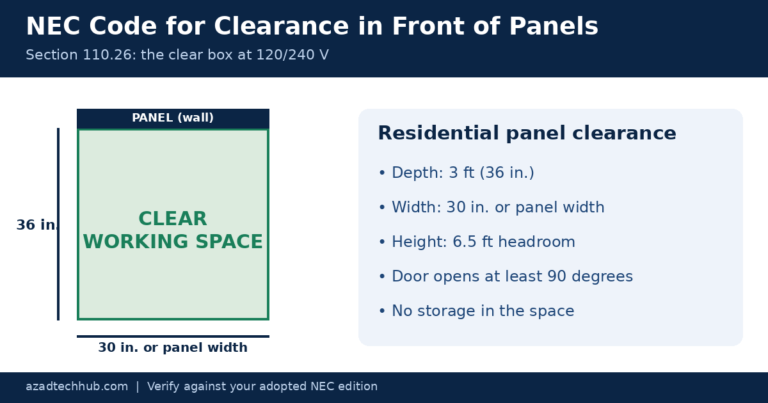
NEC code for clearance in front of panels explained: 110.26 working space table, 36 in. residential rule, exceptions, OSHA and a free PDF.
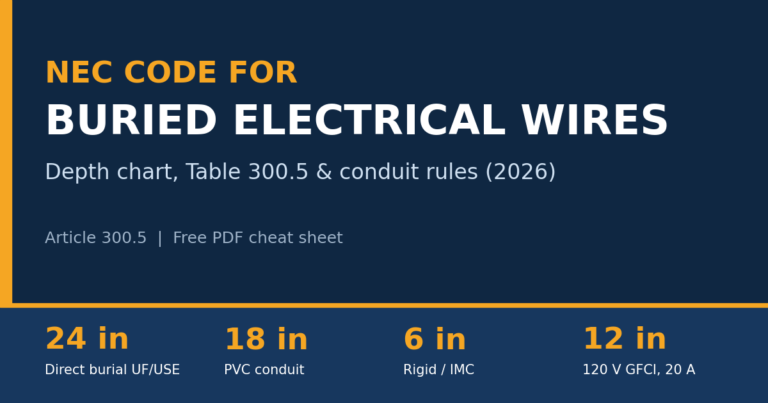
NEC code for buried electrical wires explained: burial depth chart, Table 300.5, conduit rules, 12/2 Romex answers and a free PDF cheat sheet.
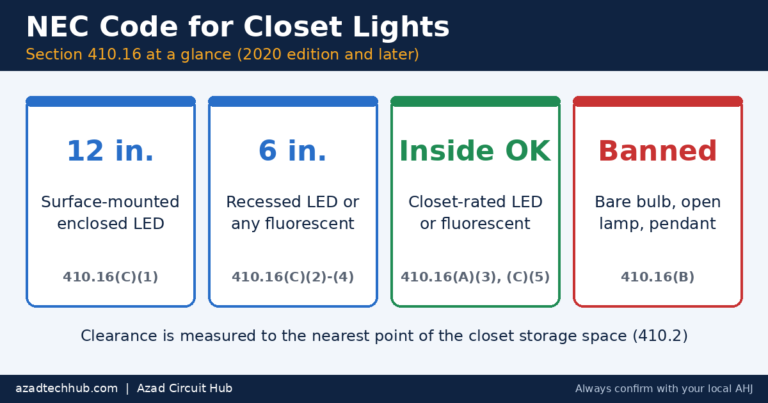
NEC code for closet lights explained: 410.16 spacing, which fixtures are allowed or banned, and when LED closet lights pass inspection. Updated 2026.
NEC code for bathroom outlets explained: 3-ft basin rule, GFCI, 20-amp circuit, height and tub zone limits under the 2020, 2023 and California codes.
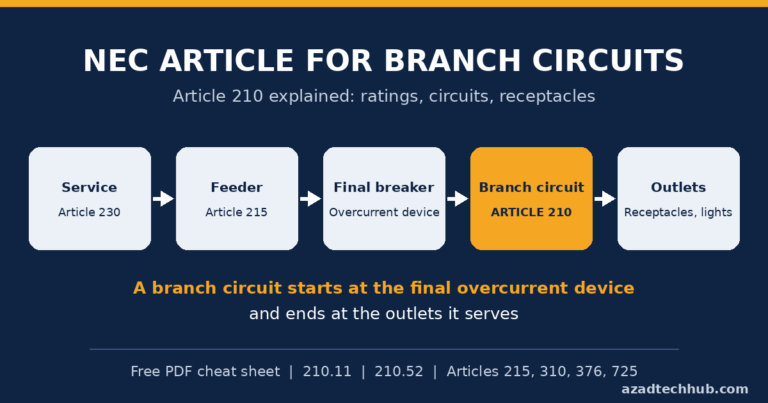
The NEC article for branch circuits is Article 210. Learn 210.11, 210.52, ratings, Articles 215, 310, 376, 725 and get a free PDF cheat sheet.

NEC code for bonding bushings explained: where 250.92 and 250.97 require them, bonding vs grounding bushings, jumper sizing and a free PDF.
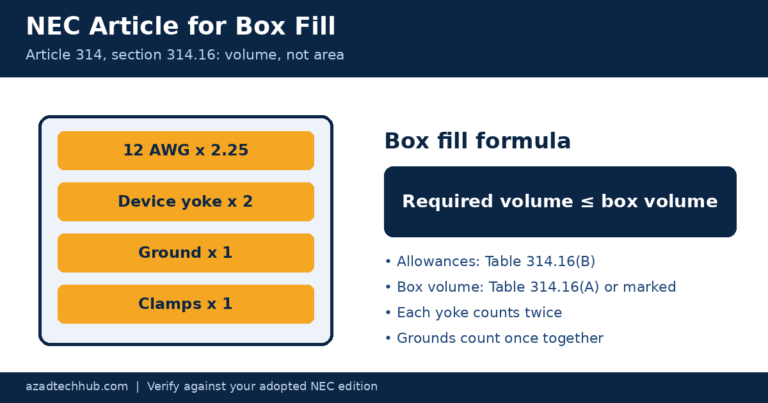
NEC article for box fill explained: Article 314.16 formula, volume allowance table, box volumes, worked example and a free PDF worksheet.
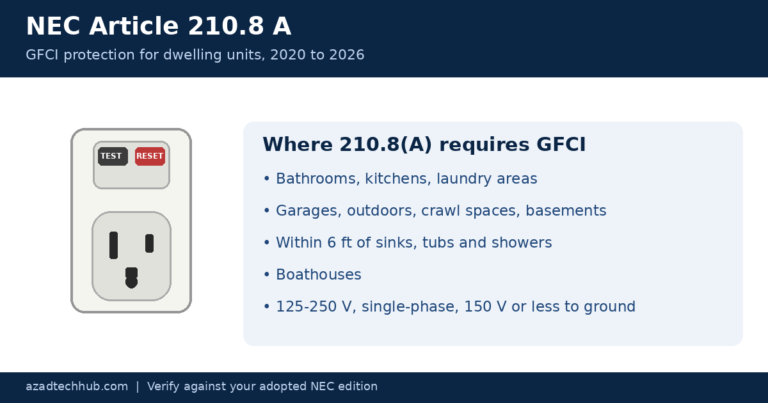
NEC article 210.8 A lists where dwelling units need GFCI protection. See locations, 2020 to 2026 changes, 210.8(C) and (D), and a free PDF.
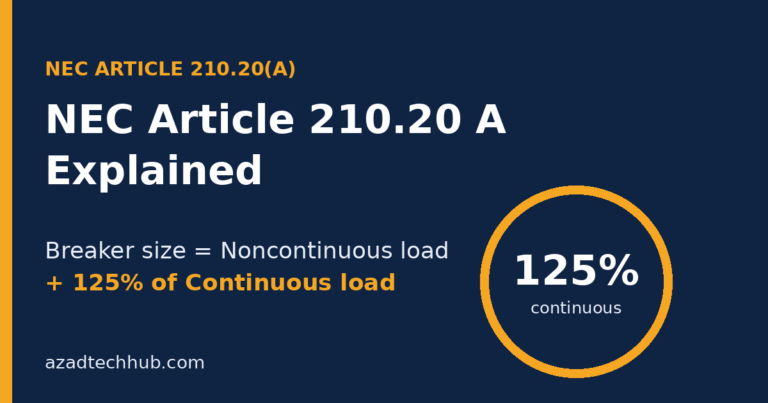
NEC Article 210.20 A explained: size breakers at 125% of continuous load. Worked examples, breaker table, free PDF, and Articles 215, 225, 240.
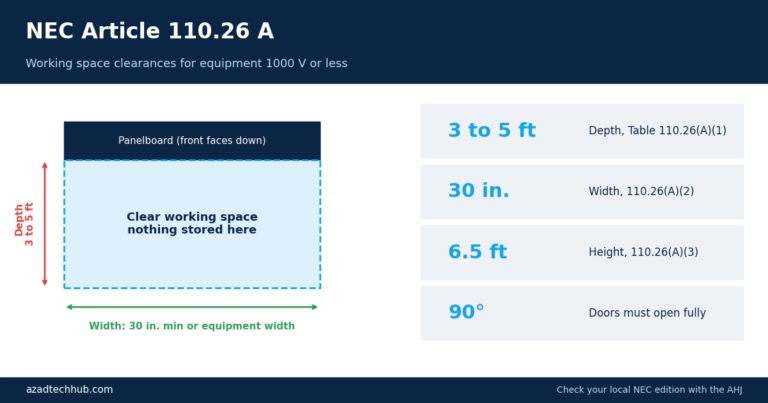
NEC Article 110.26 A explained: working space depth, width and height, the three conditions, exceptions, 110.26(B) and free NEC access. Free PDF cheat sheet.
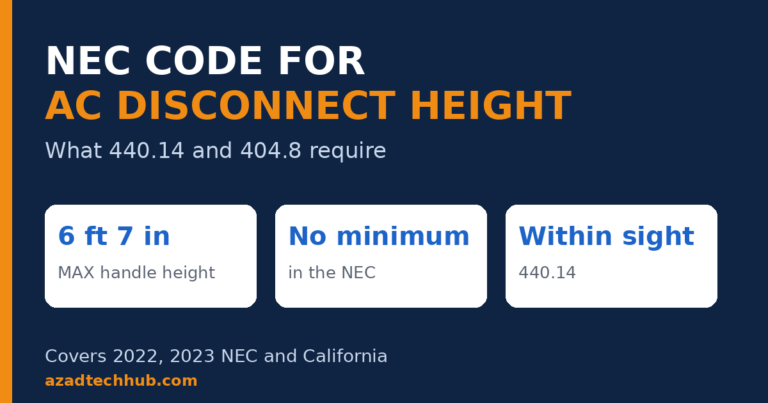
NEC code for AC disconnect height explained: 6 ft 7 in maximum, 440.14 placement, 2022 and California rules, working space and FAQs.
NEC code for arc fault breakers explained: which rooms need AFCI, where they are not required, and what changed in the 2017, 2020, 2023 and 2026 NEC.
NEC article for overcurrent protection explained: Article 240, 240.4(D) small conductor limits, a breaker sizing chart, and Articles 230, 245, and 100.
The NEC article for grounding and bonding is Article 250. Learn what 250.4 covers, sizing Tables 250.66 and 250.122, plus Articles 200 and 517.
IEC vs AS/NZS Testing Standards explained with key differences, testing requirements, compliance rules, electrical safety, and certification guidance.
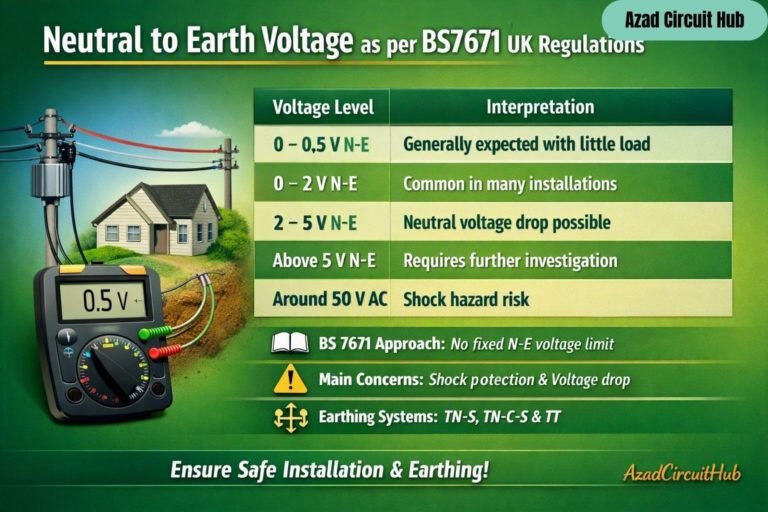
Neutral to Earth Voltage as per BS7671 explained with acceptable voltage levels, causes, testing methods, fault diagnosis, and UK wiring guidance.
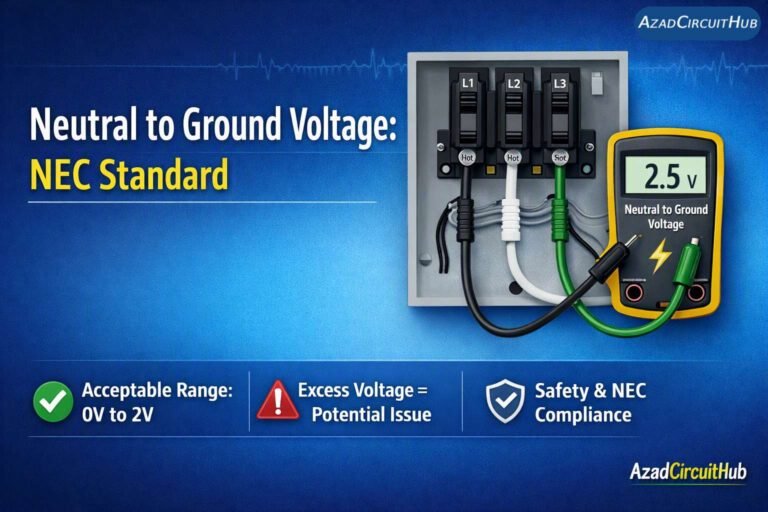
Neutral to Ground Voltage: NEC Standard explained with acceptable voltage limits, causes of voltage drop, NEC requirements, testing methods, and troubleshooting tips.
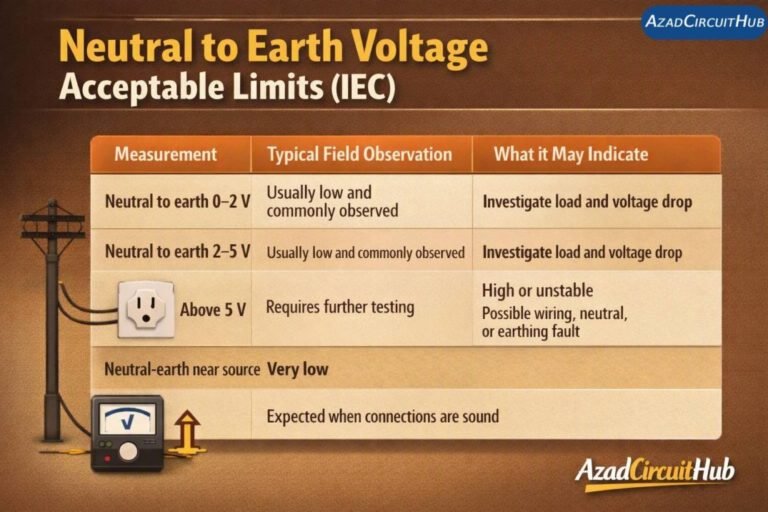
Neutral to Earth Voltage Acceptable Limits (IEC) explained with safe voltage ranges, causes of high N-E voltage, testing methods, and troubleshooting tips.
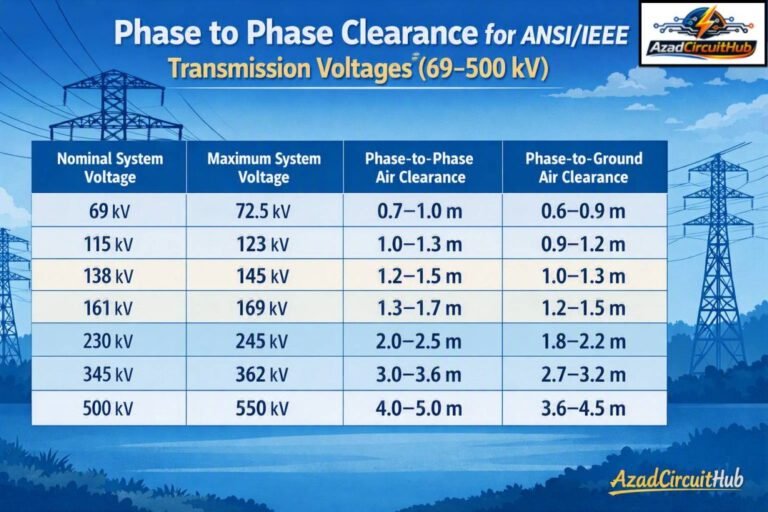
Phase to Phase Clearance for ANSI/IEEE Transmission Voltages (69–500 kV), with voltage-wise clearance values, transmission line spacing, and safety standards.
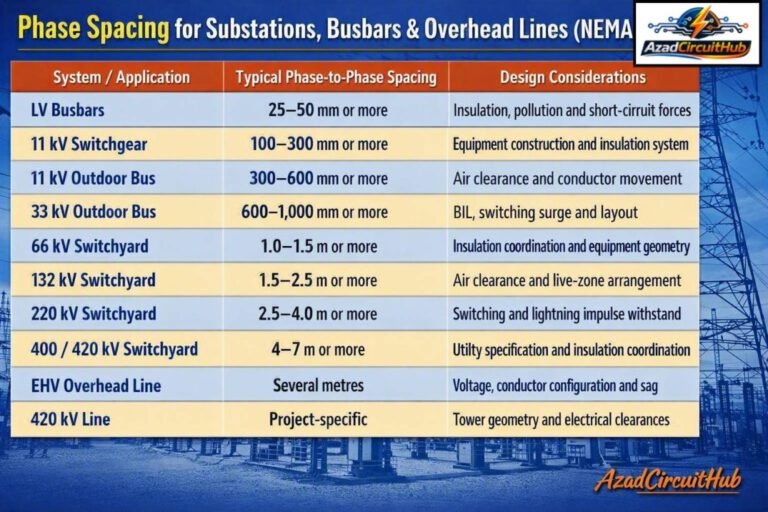
Phase spacing is a critical design parameter in substations, switchyards, busbar…
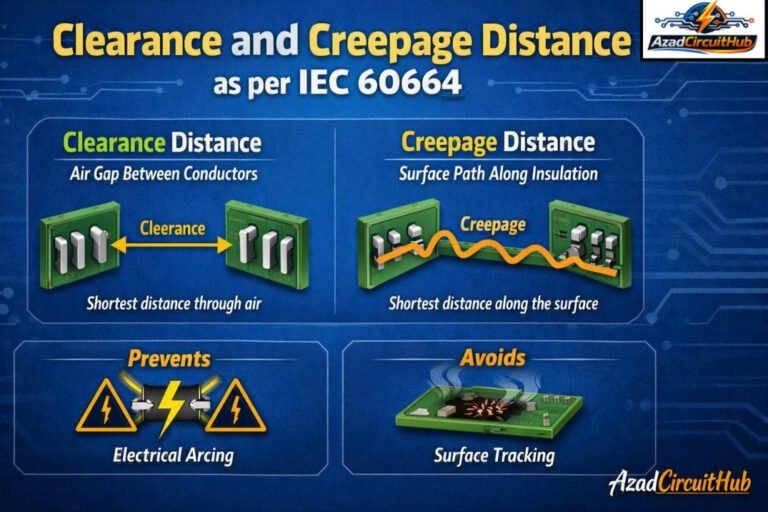
Clearance and Creepage Distance as per IEC 60664: Learn insulation distances, pollution degree, voltage ratings, and PCB safety requirements.
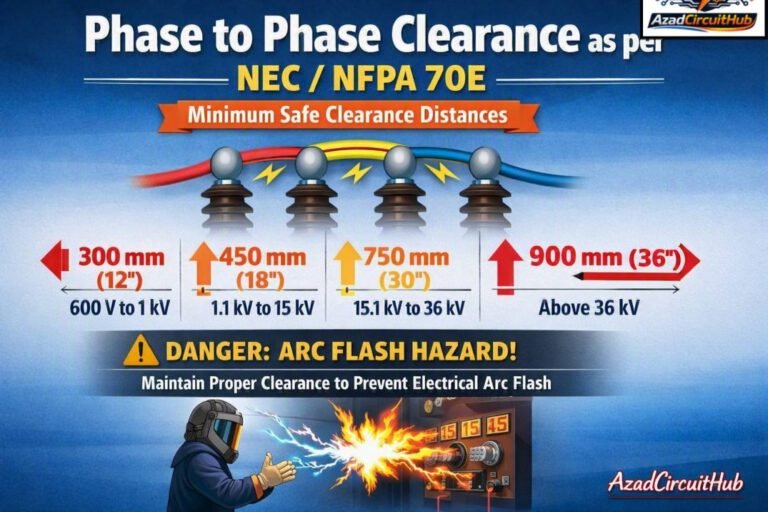
Phase to Phase Clearance as per NEC / NFPA 70E explained with electrical spacing, voltage clearance, safe working distances, and code guidance.
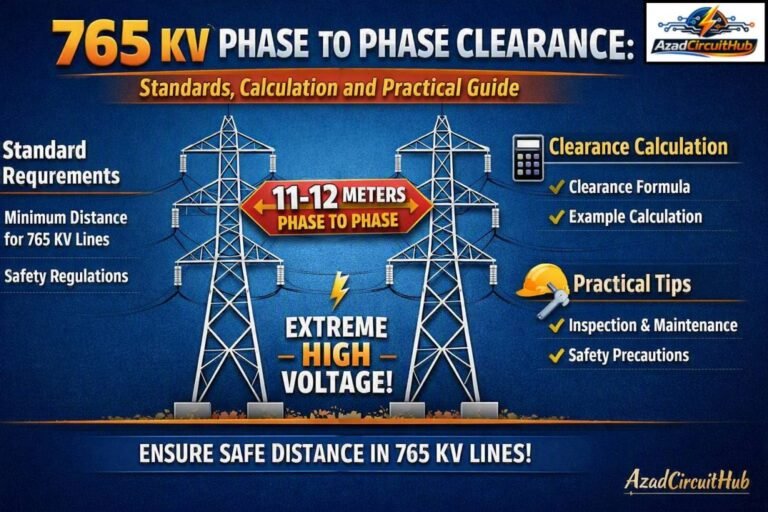
765 KV phase to phase clearance explained with standards, calculation methods, safety distances, and practical high-voltage transmission guidelines.