IEC vs AS/NZS Testing Standards: Best Guide
Electrical testing standards provide the framework for checking whether equipment, wiring systems, switchgear, cables, and installations are safe and suitable for service. When working across international projects, one common question is how IEC requirements compare with Australian and New Zealand standards.
The IEC vs AS/NZS Testing Standards comparison matters because AS/NZS standards often adopt, modify, or supplement international IEC requirements for local conditions. The two systems can therefore be closely related without being identical.
For engineers, contractors, manufacturers, and inspectors, understanding these differences helps prevent incorrect test procedures, documentation gaps, and non-compliant installations.
Table of Contents
Table of Contents
IEC vs AS/NZS Testing Standards at a Glance
| Factor | IEC Standards | AS/NZS Standards |
|---|---|---|
| Main organizations | International Electrotechnical Commission | Standards Australia and Standards New Zealand |
| Primary scope | International | Australia and New Zealand |
| Geographic use | Global | Australia, New Zealand and projects referencing these standards |
| Technical basis | International consensus | Local and international technical requirements |
| Local conditions | General international framework | May include local climatic and installation conditions |
| Electrical installations | IEC 60364 series | AS/NZS 3000 and related standards |
| Testing approach | Depends on applicable IEC standard | Depends on applicable AS/NZS standard |
| Compliance authority | Depends on country and regulation | Local Australian or New Zealand regulatory framework |
| Product testing | IEC product standards | AS/NZS product standards or adopted IEC standards |
| Documentation | IEC-based test reports | AS/NZS-specific compliance documentation where required |
The key point is that an AS/NZS standard should not automatically be treated as a simple alternative name for its IEC counterpart.
What Are IEC Testing Standards?
The International Electrotechnical Commission develops international standards covering electrical, electronic, and related technologies. IEC standards are widely used for product design, electrical safety, testing, installation practices, and performance verification.
Examples include IEC standards for low-voltage installations, electrical equipment, insulation coordination, switchgear, cables, protection devices, and measurement systems.
IEC standards often provide detailed requirements for:
- Test methods
- Electrical safety
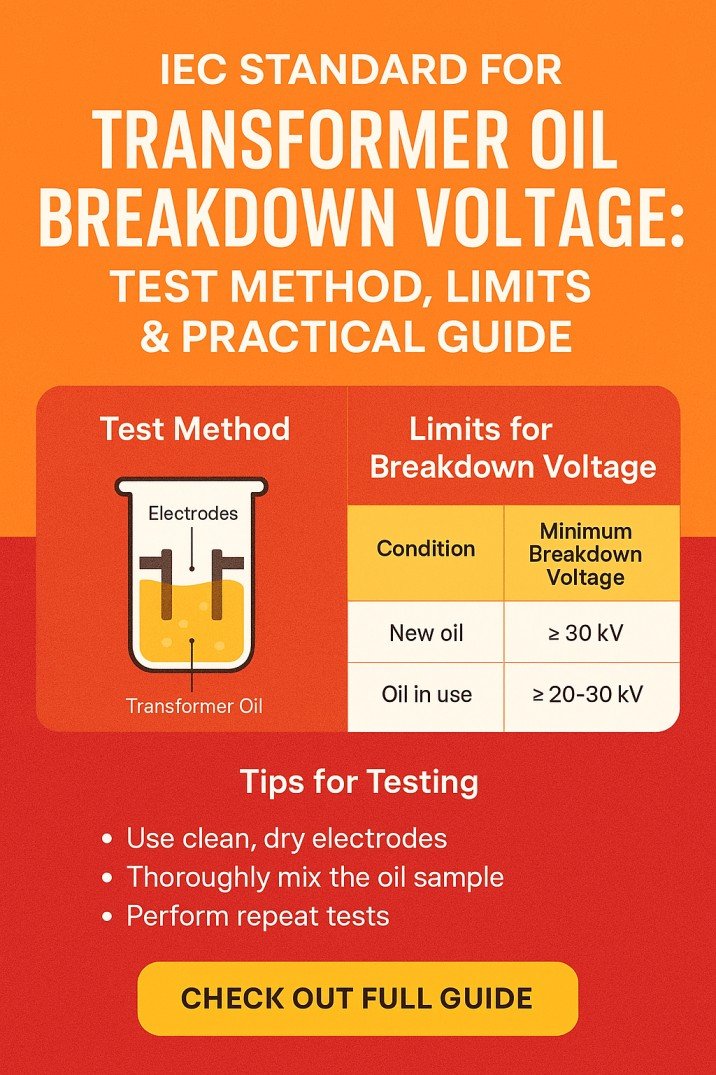
- Insulation performance
- Dielectric strength
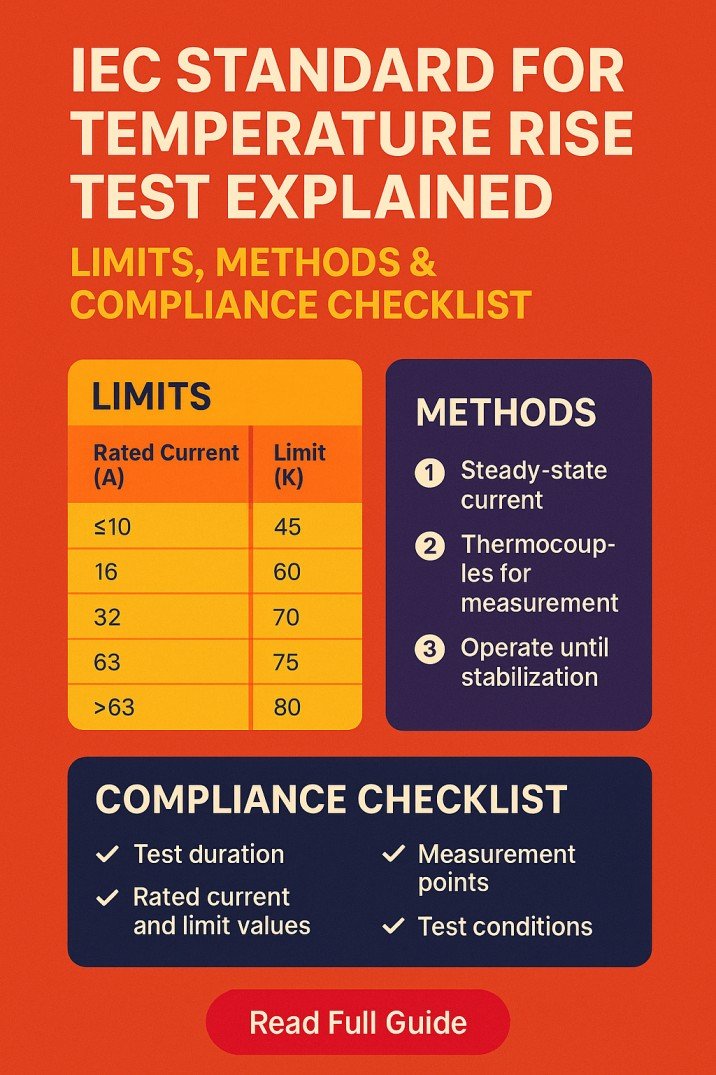
- Temperature rise
- Short-circuit performance
- Protection against electric shock
- Equipment construction
- Environmental testing
- Marking and documentation
The exact testing requirements depend on the equipment or installation being evaluated. There is no single IEC test procedure that applies to every electrical system.
For engineers working on international projects, understanding european electrical standards can also help when comparing IEC-based requirements with regional European requirements.
What Are AS/NZS Testing Standards?
AS/NZS standards are developed for Australia and New Zealand. Standards Australia and Standards New Zealand work through technical committees to develop standards that address the requirements of these markets.
Many Australian and New Zealand standards are influenced by international standards. Some directly adopt IEC documents, while others modify international requirements or contain additional provisions.
AS/NZS 3000, commonly known as the Australian/New Zealand Wiring Rules, is one of the best-known examples. It provides requirements for electrical installations and is widely referenced by electricians, electrical engineers, contractors, and inspectors.
Other AS/NZS standards address cables, switchgear, testing, protective devices, emergency systems, equipment, and specific installation types.
Key Differences Between IEC and AS/NZS Requirements
The main differences are usually related to scope, adoption, local conditions, and regulatory requirements rather than completely different engineering principles.
| Area | IEC Approach | AS/NZS Approach |
|---|---|---|
| Standard development | International technical committees | Australian and New Zealand technical committees |
| Installation rules | IEC 60364 family and related documents | AS/NZS 3000 and related standards |
| Local modifications | Not focused on one national market | May include national modifications |
| Environmental conditions | Internationally applicable framework | Can address Australian/New Zealand conditions |
| Regulatory application | Depends on national adoption | Closely connected with local regulatory requirements |
| Verification | Based on relevant IEC document | Based on relevant AS/NZS document |
| Product certification | Depends on product and market | May require local compliance or certification |
This means engineers should always check the edition and scope of the standard specified by the project.
IEC and AS/NZS Electrical Installation Testing
Electrical installation testing is one area where the distinction becomes particularly important.
Typical verification activities can include:
- Continuity of protective conductors
- Insulation resistance testing
- Polarity verification
- Earth fault loop impedance
- Verification of protective devices
- Residual current device testing
- Functional testing
- Phase sequence verification
- Earth electrode testing where applicable
IEC 60364 provides an important international framework for low-voltage electrical installations. Australia and New Zealand use AS/NZS 3000 and associated requirements for installation work.
The test itself may appear similar under both systems, but the acceptance criteria, sequence, documentation, equipment requirements, or additional verification steps can differ.
Therefore, an insulation resistance test performed correctly under one standard should not automatically be documented as compliant with another standard.
Why Local Conditions Matter
One reason national standards can differ from international standards is the operating environment.
Australia and New Zealand have diverse climatic and installation conditions. Electrical systems may operate in locations with high temperatures, moisture, dust, outdoor exposure, corrosion, agricultural conditions, or other environmental factors.
Standards can account for these conditions through specific installation requirements, equipment selection rules, protection measures, and testing provisions.
For example, cable selection cannot be based solely on nominal conductor size. Ambient temperature, grouping, installation method, thermal characteristics, voltage drop, and protective-device coordination may affect the final design.
This is why simply finding an IEC equivalent does not always establish compliance with an AS/NZS requirement.
Testing Equipment and Measurement
The measurement equipment used for electrical testing should also be appropriate for the test being performed.
Common instruments include:
| Test | Typical Instrument |
|---|---|
| Insulation resistance | Insulation resistance tester |
| Continuity | Low-resistance ohmmeter or multifunction tester |
| RCD operation | RCD tester |
| Loop impedance | Loop impedance tester |
| Earth resistance | Earth resistance tester |
| Voltage verification | Approved voltage tester or multimeter |
| Phase sequence | Phase rotation tester |
| High-voltage dielectric testing | Appropriate withstand test equipment |
The instrument should have suitable accuracy, test ranges, safety ratings, and calibration status. Test leads and accessories should also be rated for the electrical environment.
The standard used for the project determines how the measurements should be performed and recorded.
Compliance and Certification
Another important difference concerns compliance. An electrical product may satisfy an IEC product standard while still requiring additional assessment for a particular Australian or New Zealand market.
Manufacturers should identify:
- The product category.
- The applicable standard.
- The required edition.
- Any national deviations.
- Required certification or conformity documentation.
- Applicable electrical safety regulations.
- Installation requirements.
For contractors, the same principle applies to installation testing. A test report should clearly identify the installation, test equipment, test results, applicable standard, date, and person responsible for testing.
Before starting a project based on international documentation, review the relevant european electrical standards alongside the project specification when European or IEC-based equipment is being installed in another regulatory environment.
Which Standard Should Engineers Use?
The answer depends on the project location and contractual requirements.
If the project specification explicitly requires an IEC standard, follow the specified IEC document and edition. If the installation is located in Australia or New Zealand, the applicable AS/NZS requirements and local regulations must be considered.
For equipment supplied internationally, it is also important to distinguish between:
- Product design standard
- Product testing standard
- Installation standard
- Certification requirement
- Local electrical regulation
These are not always the same document.
A product can be designed and tested to an IEC standard while its installation must comply with AS/NZS requirements.
Practical Example
Consider a low-voltage distribution board manufactured using equipment tested against relevant IEC switchgear requirements.
The manufacturer may provide IEC-based test certificates for the assembly and components. Once that equipment is installed in Australia, however, the installation still needs to satisfy the applicable Australian requirements.
The contractor may need to verify conductor connections, protective measures, earthing, insulation, polarity, circuit protection, and other installation requirements.
This illustrates why IEC compliance and AS/NZS installation compliance should be considered separately.
How to Compare IEC and AS/NZS Standards Correctly
When comparing requirements, avoid relying only on similar-looking standard numbers. Instead, check the actual documents and their current editions.
A practical comparison process is:
- Identify the equipment or installation.
- Find the exact IEC standard.
- Find the relevant AS/NZS standard.
- Check whether the AS/NZS document adopts the IEC standard.
- Review national modifications and deviations.
- Compare test methods and acceptance criteria.
- Confirm certification requirements.
- Check applicable local regulations.
- Record the standard and edition in project documentation.
This approach is more reliable than assuming that two standards are equivalent because their technical subjects are similar.
Frequently Asked Questions
Are AS/NZS standards based on IEC standards?
Many AS/NZS standards use IEC standards as a technical foundation, but the relationship varies by standard. Some documents adopt international requirements with modifications, while others are developed specifically for Australian and New Zealand conditions.
Is IEC certification accepted in Australia?
IEC certification can provide useful evidence of product testing, but it does not automatically mean that every product or installation satisfies Australian requirements. Applicable Australian standards, regulations, certification schemes, and project specifications must also be checked.
What is the difference between IEC 60364 and AS/NZS 3000?
IEC 60364 is an international series covering low-voltage electrical installations. AS/NZS 3000 is the Australian and New Zealand wiring standard and contains requirements specifically applicable to those markets. The technical principles overlap in many areas, but the requirements are not interchangeable.
Do electrical testing procedures differ between IEC and AS/NZS standards?
They can. Similar tests such as insulation resistance, continuity, polarity, and protective-device verification may be required, but test methods, limits, conditions, or documentation requirements can differ depending on the applicable standard.
Should engineers follow IEC or AS/NZS standards?
Engineers should follow the standard required by the project, jurisdiction, contract, and applicable regulations. For Australian and New Zealand installations, the relevant AS/NZS requirements and local regulations should be checked even when equipment has been manufactured and tested to IEC standards.
Final Takeaway
The IEC vs AS/NZS Testing Standards comparison is important for anyone working with international electrical equipment or projects. IEC standards provide an international technical foundation, while AS/NZS standards address requirements applicable to Australia and New Zealand.
The two systems can share many technical principles, but they should not be assumed to be identical. National modifications, installation rules, environmental conditions, certification requirements, and local regulations can affect the final compliance assessment.
For engineers and contractors, the safest approach is simple: identify the exact standard, check its current edition, review any national deviations, and use the requirements specified for the actual project location. When comparing international requirements, keeping reliable references on european electrical standards can also make cross-standard engineering work easier.
Get new guides in your feed. Follow Electrical Insights on LinkedIn for new electrical standards guides, calculators and design tips from Azad Circuit Hub.
#IECStandards, #ASNZSStandards, #ElectricalTesting, #ElectricalStandards, #IECvsASNZS, #ElectricalSafety, #ComplianceTesting, #TestingStandards, #ElectricalEngineering, #StandardsCompliance