NEC Code for Bonding Bushings: When They Are Required (2026)
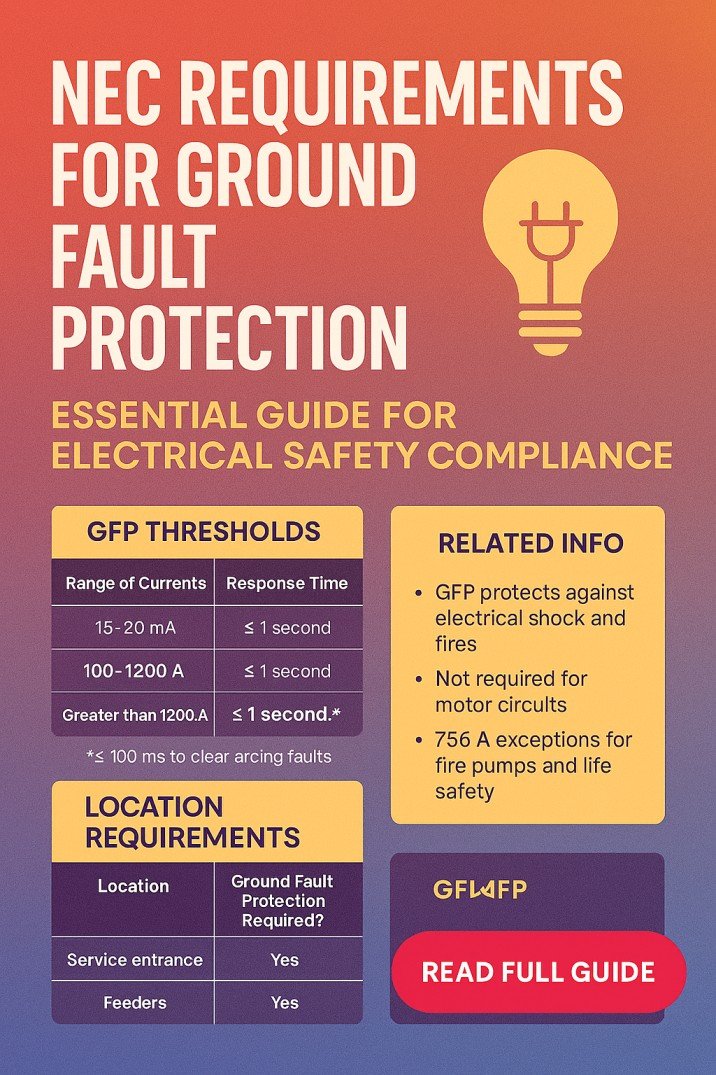
The NEC code for bonding bushings is less direct than most people expect: there is no rule that says “install a bonding bushing here.” Instead, 250.92(B) and 250.97 say the metal raceway must be bonded reliably, and a bonding bushing with a jumper is one listed way to do it. This guide explains where bonding bushings are required, how they differ from grounding bushings, which end needs one, and how to size the jumper. A free one-page PDF cheat sheet is included.
Quick answer: The NEC code for bonding bushings applies to service raceways (250.92), circuits over 250 volts to ground that enter concentric or eccentric knockouts (250.97), and raceways around a grounding electrode conductor (250.64(E)). Wire size does not decide it. A standard locknut or bushing is not enough at those points.
What Does the NEC Code for Bonding Bushings Say?
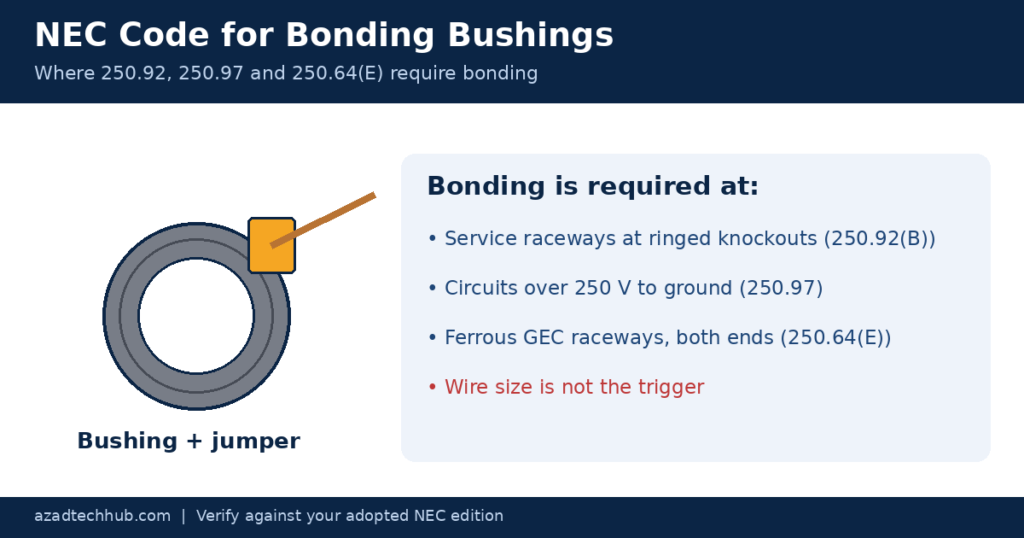
Three sections do the work. Each one is about bonding, which joins metal parts so fault current has a low-impedance path back to the source:
- 250.92(B), services: the raceway, cable armor and enclosures at the service must be bonded. A jumper is needed around impaired connections such as reducing washers and oversized, concentric or eccentric knockouts. Standard locknuts or bushings do not count as the only bond.
- 250.97, circuits over 250 volts to ground: metal raceways with any conductor other than service conductors use the same methods as services, except for (B)(1). The exception removes the extra bond where such knockouts are not present or are listed for bonding.
- 250.64(E), grounding electrode conductor raceways: a ferrous raceway around a GEC must be bonded at each end.
So the NEC code for bonding bushings is a performance rule. A bonding bushing, a bonding locknut, a bonding wedge or a threaded hub can each satisfy it, provided the fitting is listed for the job.
Where Are Bonding Bushings Required in the NEC?
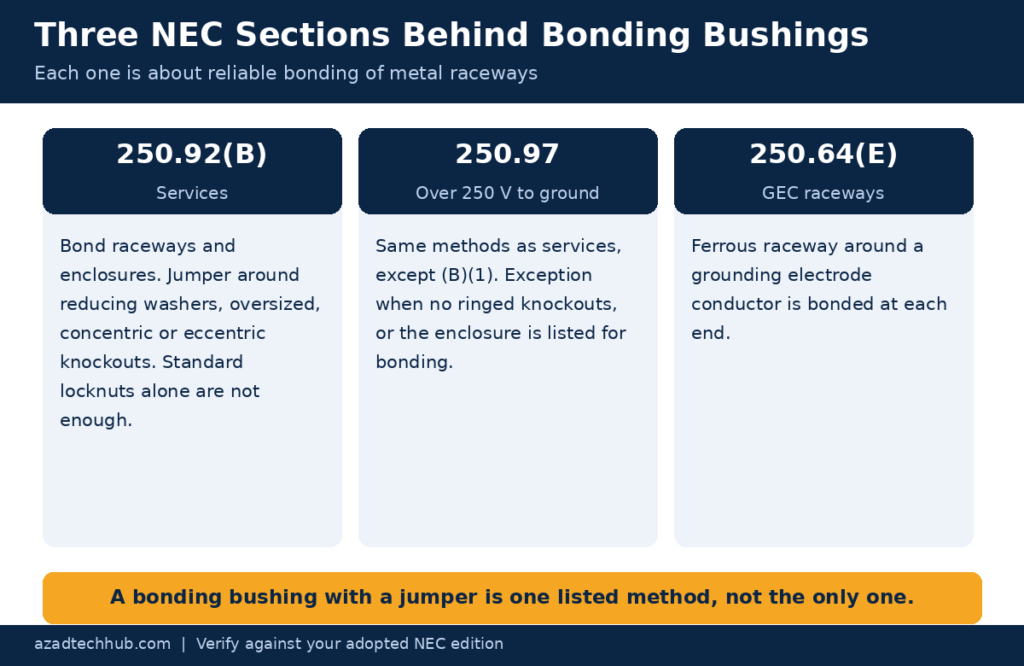
Look at the application, not the wire:
| Situation | Section | Bushing needed? |
|---|---|---|
| Service raceway into an enclosure with concentric or eccentric knockouts | 250.92(B) | Yes, or another listed bonding method |
| Reducing washer or oversized knockout at the service | 250.92(B) | Yes, bonding jumper |
| Circuit over 250 V to ground into ringed knockouts, not listed for bonding | 250.97 | Yes |
| Ferrous raceway containing a GEC | 250.64(E) | Bond at both ends |
| Branch circuit at 250 V or less to ground into clean punched knockouts | General bonding rules | Usually no |
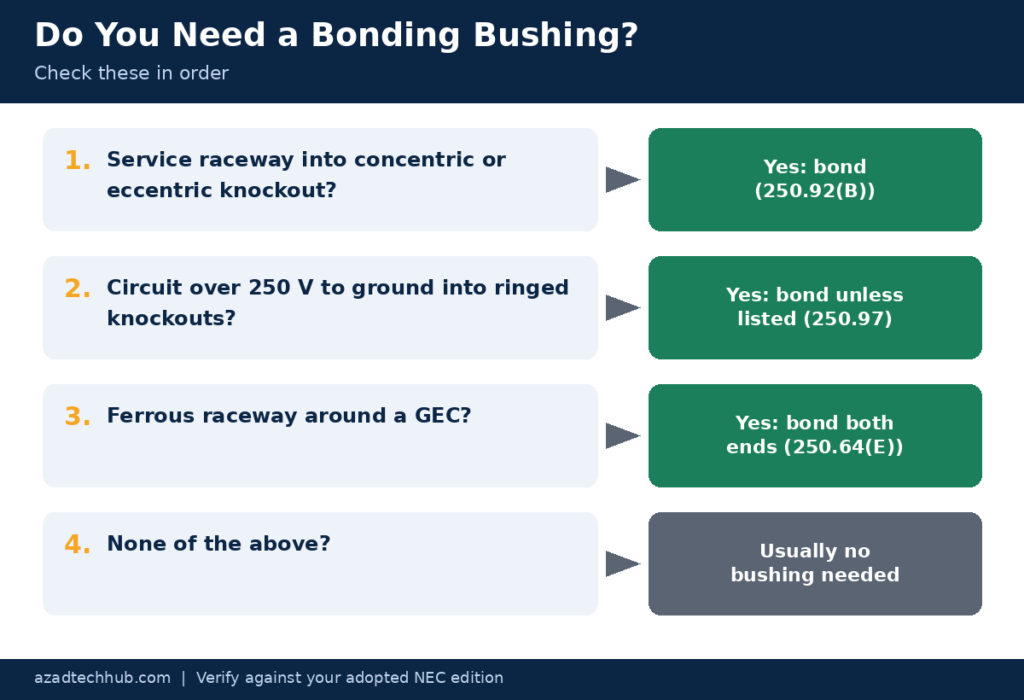
A 480Y/277 volt system is 277 volts to ground, which is over 250, so 250.97 applies there. What requires a bonding bushing under the NEC code for bonding bushings, in plain terms, is a service or high-voltage circuit passing through a knockout that cannot be trusted to carry fault current.
NEC Code for Bonding Bushings 2020 and Later Editions
The NEC code for bonding bushings 2020 edition works the same way: 250.92(B), 250.97 and 250.64(E) carry the rules, and the 2023 edition kept the same approach. The 2026 edition reorganizes some articles, so check the section numbers in the edition your jurisdiction enforces. Read the NEC free on NFPA’s free access page.
Bonding Bushing vs Grounding Bushing
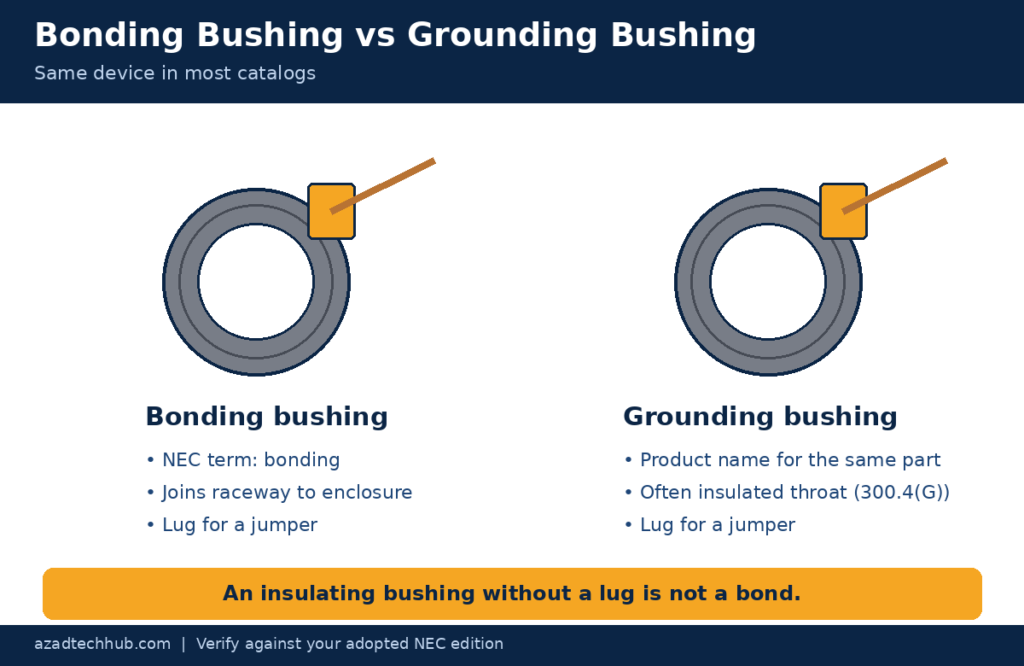
Is a bonding bushing the same as a grounding bushing? In the field, usually yes. Both are conduit bushings with a lug that accepts a jumper. The NEC uses the word bonding because the fitting joins the raceway to the enclosure. Manufacturers often sell it as a grounding bushing.
| Item | Bonding bushing | Grounding bushing |
|---|---|---|
| Typical job | Bond raceway to enclosure | Same device, sold under a different name |
| Lug for a jumper | Yes | Yes |
| Insulated throat | Often | Often |
| NEC term | Bonding | Not used as a defined term |
The throat matters separately. Under 300.4(G), conductors of 4 AWG or larger entering an enclosure need an insulating bushing or similar smooth fitting. Many bonding bushings combine both jobs, but an insulating bushing alone is not a bond.
What Size Wire Requires a Bonding Bushing?
None. In the NEC code for bonding bushings, wire size is not what triggers the requirement. The trigger is the location and voltage in the table above. Size matters in two other places:
- The jumper: at a service, the bonding jumper is sized under 250.102(C) from the largest service conductor. On load-side circuits over 250 volts it follows the equipment bonding jumper rules, based on the overcurrent device (Table 250.122).
- The throat: conductors of 4 AWG and larger need an insulated throat under 300.4(G).
For the tables, read our guides on the NEC 250.66 grounding electrode conductor table and grounding cable size as per NEC.
Do You Need a Bonding Bushing on Both Ends?
Under the NEC code for bonding bushings, it depends on the raceway:
- GEC raceway: yes. A ferrous raceway around a grounding electrode conductor is bonded at both ends under 250.64(E).
- Service raceway: bond it at the service equipment under 250.92(B). Confirm what your inspector wants at the far end, because connection methods differ.
- Over 250 volts: use a bonding method at each ringed knockout the raceway enters.
- Ordinary branch circuits: normally no bushing is needed. The jumper is not a substitute for an equipment grounding conductor.
NEC Grounding and Bonding Requirements and Article 250
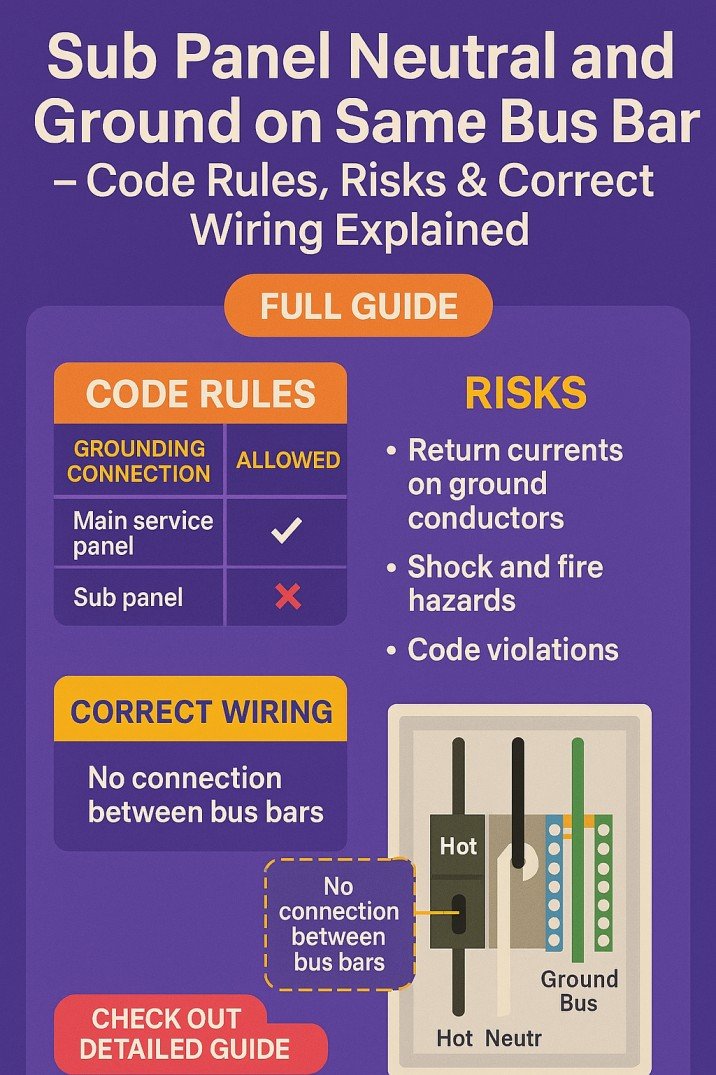
Article 250 is the NEC article for grounding and bonding. Section 250.92 sits in Part V, which covers bonding. For the whole article, including the ten parts and sizing tables, read our NEC article for grounding and bonding. If your grounding wires run in conduit, check the fill with our conduit fill calculator, because every conductor counts. For subpanels, see sub panel neutral and ground on the same bus bar, and for ground fault rules see NEC requirements for ground fault protection.
How to Install a Bonding Bushing
Installing to meet the NEC code for bonding bushings takes five steps:
- Turn the power off and confirm it with a tester.
- Thread the bushing onto the conduit end inside the enclosure and tighten it.
- Land a bonding jumper in the lug, sized as above.
- Run the jumper to the enclosure or the grounded busbar as the service layout requires.
- Keep the jumper short and tighten every lug to the manufacturer’s torque.
Free PDF: NEC Code for Bonding Bushings Cheat Sheet
The NEC is copyrighted, so we do not host its text. Download our one-page summary of the NEC code for bonding bushings in our own words, with the decision table and sizing pointers:
Tools for Bonding and Grounding Work
Once you know the NEC code for bonding bushings applies, choose listed parts. As an Amazon Associate I earn from qualifying purchases, at no extra cost to you. See our affiliate disclosure.
- Insulated grounding bushings: buy the trade size that matches your conduit.
- Bonding locknuts and wedges: a listed alternative to a bushing.
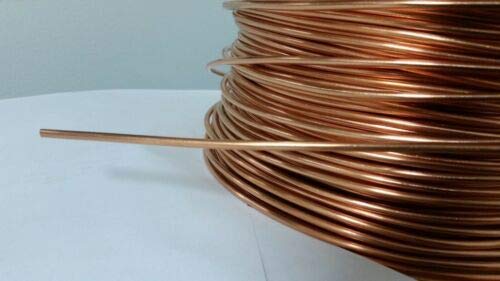
- Bare copper jumper wire: for the bond.
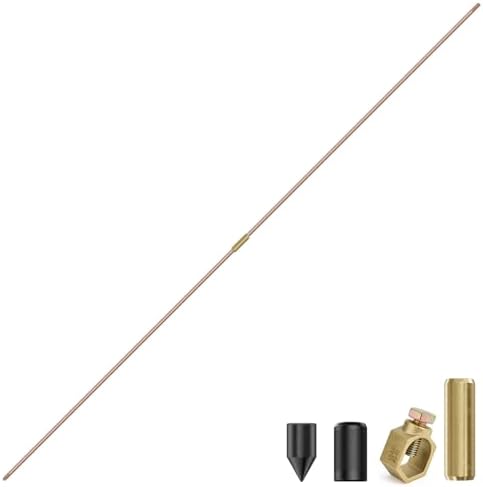
- Ground rod kit and resistance tester: the same picks as in our Article 250 guide.
- Wire strippers and testers: see our best wire strippers and voltage tester reviews.


Frequently Asked Questions
What does the NEC code for bonding bushings require?
Reliable bonding of metal raceways at services, over-250-volt circuits and GEC raceways, using a listed method such as a bonding bushing.
What requires a bonding bushing?
Service raceways at concentric or eccentric knockouts (250.92(B)), circuits over 250 volts to ground at ringed knockouts (250.97), and GEC raceways (250.64(E)).
Is a bonding bushing the same as a grounding bushing?
Usually yes: both are bushings with a lug for a jumper.
What is NEC article 250?
Grounding and bonding.
Conclusion
The NEC code for bonding bushings comes down to where fault current must cross a knockout you cannot trust: services, circuits over 250 volts to ground and GEC raceways. Use the table, size the jumper from the right table, and confirm the rule in your adopted edition. For the conduit and box side of the job, use the conduit fill calculator.
About This Guide
Written by Abdul Wassay, an electrical engineer who publishes standards-based calculators and guides on Azad Circuit Hub. This guide is educational, not a substitute for the NEC or a licensed electrician. Verify against the edition and local amendments your AHJ enforces. Spotted an error? Use our contact page.
Sources: NFPA 70, National Electrical Code (250.64, 250.92, 250.97, 250.102, 250.122, 300.4(G)).
Get new guides in your feed. Follow Electrical Insights on LinkedIn for new electrical standards guides, calculators and design tips from Azad Circuit Hub.