NEC Code for Hot Tub Disconnect: Location and GFCI Rules (2026)
The NEC code for hot tub disconnect rules sits in Article 680, and they answer three practical questions: do you need a disconnect, how far from the tub must it be, and does it need GFCI protection? In short, yes you need a maintenance disconnect, it goes at least 5 ft from the water and within sight of the tub, and the circuit needs GFCI protection. This guide explains each rule, shows the layouts that pass inspection, and points to the wiring and sizing tools on our site.
Quick answer: Under the NEC code for hot tub disconnect rules, an outdoor hot tub needs a readily accessible disconnect within sight of the tub and at least 5 ft horizontally from the inside wall, unless a barrier gives a 5 ft reach path. GFCI protection is required for the circuit under 680.44. A separate emergency switch is required only outside single-family dwellings (680.41).

Table of Contents
Table of Contents
Does a Hot Tub Need a Disconnect Switch?
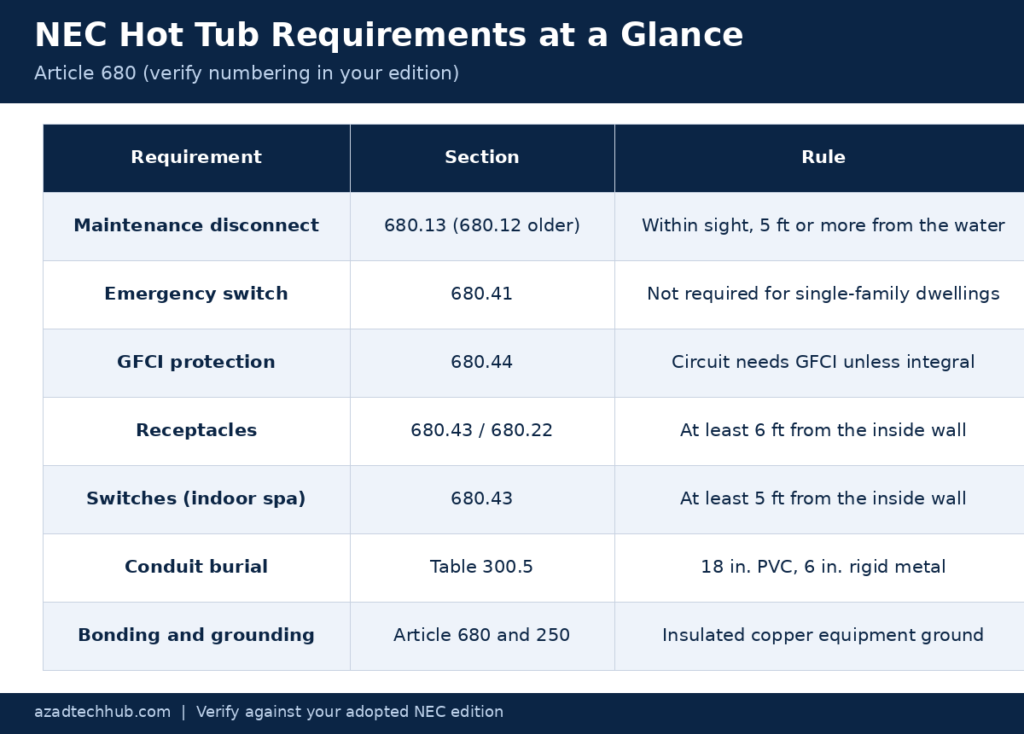
Yes. The NEC code for hot tub disconnect rules in Article 680 require a maintenance disconnecting means for permanently installed pool, outdoor spa and outdoor hot tub equipment. It lets a technician cut power at the tub, and it is separate from the breaker in the house panel. In the 2017 and later editions this rule is 680.13. In the 2014 and earlier editions it was 680.12, so cite the number from your adopted edition.
Under the NEC code for hot tub disconnect rules, the disconnect must:
- open all ungrounded conductors at the same time,
- be readily accessible, and
- be within sight of the hot tub equipment.
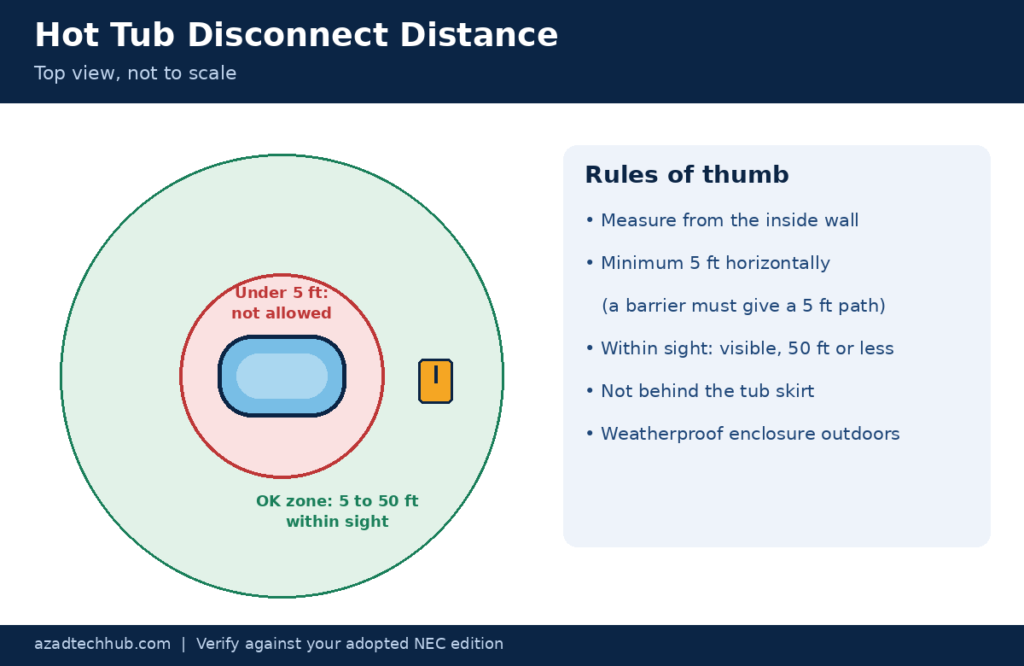
“Within sight” in the NEC means visible and not more than 50 ft away. That gives the usable window from 5 ft to 50 ft.
How Close Can a Disconnect Be to a Hot Tub?
Under the NEC code for hot tub disconnect rules, the minimum is 5 ft measured horizontally from the inside wall of the tub, following the shortest path a person would take. If a permanent barrier, such as a solid fence or wall, separates the disconnect from the water, the barrier must provide a path of at least 5 ft. Do not mount the disconnect behind the tub skirt, where a swimmer could reach it from the water.
So where does a hot tub disconnect need to be? Between 5 ft and 50 ft from the tub, with a clear line of sight, on a wall or post in an accessible spot. Use a weatherproof NEMA 3R or better enclosure when it is outdoors.
Does the Hot Tub Disconnect Need GFCI Protection?
Yes. Section 680.44 requires GFCI protection for the outlet or circuit supplying a self-contained spa, a packaged equipment assembly or a field-assembled hot tub. Because it says outlets, not just receptacles, a hardwired hot tub needs it too. The exception is a listed unit marked to show it has integral GFCI protection for all its electrical parts.
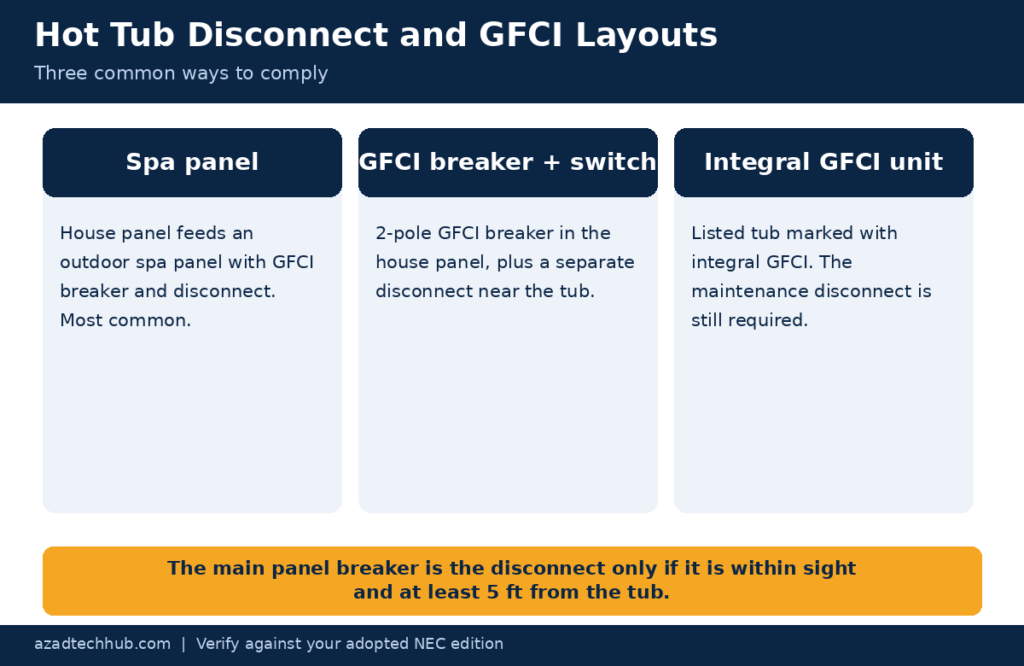
In practice, most installers use one of three layouts. The NEC code for hot tub disconnect and GFCI rules allow all of them when installed correctly:
| Layout | How it works |
|---|---|
| Spa panel | A small outdoor panel with a GFCI breaker and a disconnect, fed from the house panel |
| GFCI breaker in the house panel plus a switch | A 2-pole GFCI breaker in the main panel, with a separate non-fused disconnect near the tub |
| Tub with integral GFCI | A listed unit marked as having integral GFCI protection, still with the maintenance disconnect |
Here is the question people ask: can the GFCI breaker in the main panel be the disconnect? Only if that panel is within sight of the tub and at least 5 ft away. For most homes the answer is no, so use a spa panel or a separate switch. A nuisance trip on a GFCI breaker usually points to a wiring or moisture problem, so fix the cause. See our guide to NEC article 210.8 A for how GFCI rules work in dwellings.
Is an Emergency Switch Required Too?
The NEC code for hot tub disconnect also includes 680.41, which requires a clearly labeled emergency shutoff for the recirculation and jet system, but not for a single-family dwelling. It must be readily accessible to users, at least 5 ft from the tub, and within sight. The maintenance disconnect can serve as the emergency shutoff if it is located to meet those distances.
NEC Code for Hot Tubs: Other Requirements
The NEC code for hot tub disconnect is only part of the NEC code for hot tubs. These are the other rules that an inspector checks:
- Receptacles: keep them at least 6 ft from the inside wall, and GFCI protect those within the reach distances in Article 680.
- Switches: wall switches must be at least 5 ft horizontally from the inside wall for indoor spas.
- Bonding and grounding: metal parts and equipment must be bonded as Article 680 requires, and the circuit needs an insulated copper equipment grounding conductor. See our NEC article for grounding and bonding and grounding cable size as per NEC.
- Wiring method: use conduit outdoors. Burial depth depends on the conduit type under Table 300.5, such as 18 in. for PVC.
- Circuit size: follow the hot tub nameplate. Many tubs use a 240 volt, 40 A or 50 A circuit, often with 8 AWG or 6 AWG copper. Check your run with the AC cable size calculator.
NEC 2023 Hot Tub Requirements and Other Editions
The NEC code for hot tub disconnect in the 2023 edition (NEC 2023 hot tub requirements) keeps the same structure: a maintenance disconnect, GFCI protection under 680.44 and an emergency switch outside dwellings. Section numbers have shifted between editions, so confirm in the edition your jurisdiction uses. Read the code free on NFPA’s free access page. The 2026 edition may renumber articles, so check it too.
Wiring a Hot Tub Disconnect
Wiring a hot tub disconnect to meet the NEC code for hot tub disconnect rules takes these steps in the usual spa panel layout:
- Turn off the breaker at the house panel and confirm it is dead.
- Run conduit and a four-wire feeder (two hots, a neutral if the tub needs one, and a ground) from the house panel to the spa panel.
- Land the conductors on the spa panel’s line terminals, and the tub’s conductors on its load terminals.
- Connect the ground and bond the enclosure as required.
- Test the GFCI before energizing the tub.
Check your conduit fill with our conduit fill calculator and the NEC article for conduit fill. If your feeder is long, see our guide to the NEC article for box fill for any junction box on the way. For the load, see the NEC article for demand factors and calculating electrical service size. A hot tub is a large load, similar to an EV charger, so compare it with our EV charger load calculation tool.
Tools for a Hot Tub Disconnect Install
Once the NEC code for hot tub disconnect rules are clear, you need the right parts. As an Amazon Associate I earn from qualifying purchases, at no extra cost to you. See our affiliate disclosure.
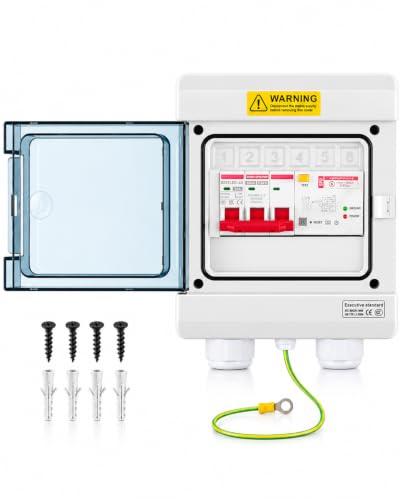
- Spa panel: a 50 A outdoor spa panel with a GFCI breaker.
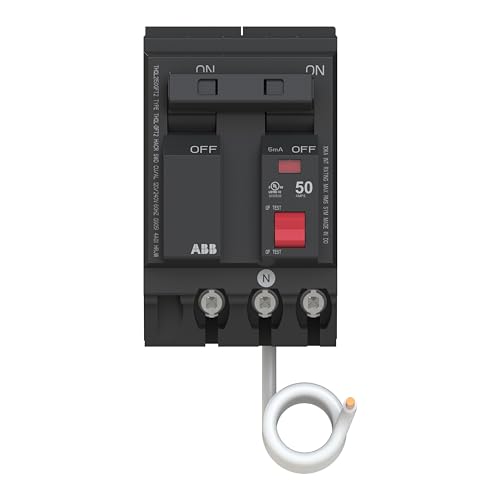
- GFCI breaker: a 2-pole 50 A GFCI breaker for the house panel.
- Conduit and fittings: PVC conduit and weatherproof fittings.
- Testers: confirm the circuit is dead. See our voltage tester reviews and best wire strippers.


Frequently Asked Questions
What does the NEC code for hot tub disconnect require?
A maintenance disconnect, GFCI protection and, outside single-family dwellings, an emergency switch.
What are the requirements for a hot tub disconnect?
A readily accessible maintenance disconnect within sight of the tub and at least 5 ft away, opening all ungrounded conductors, plus GFCI protection for the circuit.
Does a hot tub need a GFCI breaker?
Yes, the circuit needs GFCI protection under 680.44, unless the unit is listed with integral GFCI protection.
Can I use a plug and cord?
Some listed units allow it. Check the manufacturer’s instructions and 680.42 for the rules and GFCI requirements.
Conclusion
The NEC code for hot tub disconnect rules are simple to remember: put the disconnect 5 to 50 ft away within sight, protect the circuit with GFCI, and add an emergency switch where the dwelling rule does not exempt you. Check your adopted edition, hire a licensed electrician where required, and use our calculators to size the circuit and conduit.
About This Guide
Written by Abdul Wassay, an electrical engineer who publishes standards-based calculators and guides on Azad Circuit Hub. This guide is educational, not a substitute for the NEC or a licensed electrician. Hot tub wiring is dangerous: verify against the edition and local amendments your AHJ enforces, and follow the manufacturer’s instructions. Spotted an error? Use our contact page.
Sources: NFPA 70, National Electrical Code (Article 680, including 680.13 or 680.12 by edition, 680.41, 680.42, 680.43, 680.44, Table 300.5).
Get new guides in your feed. Follow Electrical Insights on LinkedIn for new electrical standards guides, calculators and design tips from Azad Circuit Hub.