Levels Of Electric Vehicle Charging: Complete Guide to Level 1, Level 2 & DC Fast Charging Explained
Electric vehicles are becoming a major part of modern transportation, and understanding how charging works is essential for every EV owner or future buyer. The growing demand for cleaner mobility has made charging infrastructure an important topic worldwide. In this guide, we will break down the Levels Of Electric Vehicle Charging in a simple and practical way so you can understand how each option works, how fast it charges, and which one fits your daily needs.
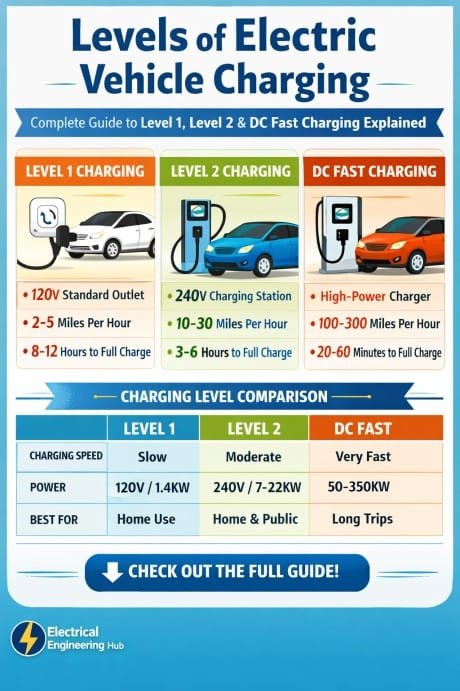
Table of Contents
The Levels Of Electric Vehicle Charging are generally divided into three categories: Level 1, Level 2, and DC Fast Charging. Each level differs in charging speed, power output, installation requirements, and real-world usability. Choosing the right option can significantly improve your driving experience and reduce downtime.
Understanding the Basics of EV Charging
The Levels Of Electric Vehicle Charging represent different methods of supplying electricity to an EV battery. These methods are designed to meet different user needs, from slow overnight home charging to ultra-fast highway charging stations.
At the core, EV charging depends on kilowatt (kW) output and voltage levels. Higher power means faster charging, but it also requires more advanced equipment and infrastructure. Many new EV users start with basic home charging before upgrading to faster solutions.
Explore everything about Electric Vehicle Battery Replacement Cost
In simple terms, the Levels Of Electric Vehicle Charging define how quickly your electric vehicle can recharge and how flexible your charging options are during daily use.
Level 1 Charging Explained
Level 1 charging is the most basic and widely accessible option. It uses a standard 120-volt household outlet and requires no special installation. This makes it ideal for beginners or users with low daily driving needs.
The Levels Of Electric Vehicle Charging begin with Level 1, which typically delivers 2 to 5 miles of range per hour of charging. While this is slow, it is highly convenient for overnight charging at home.
Key features of Level 1 charging:
- Uses standard home outlets
- No installation cost required
- Slow charging speed
- Best for plug-in hybrid vehicles or light daily usage
Level 1 Charging Overview Table
| Feature | Details |
|---|---|
| Voltage | 120V |
| Charging Speed | 2–5 miles per hour |
| Installation | Not required |
| Ideal Use | Home overnight charging |
| Cost | Very low |
For many users, the Levels Of Electric Vehicle Charging at Level 1 are enough if the vehicle is parked for long hours at home or office.
Use our online tool for free EV Charger Breaker and Wire Size Calculator
Level 2 Charging Explained
Level 2 charging is the most commonly used solution for residential and commercial EV charging. It operates on a 240-volt supply and requires a dedicated charging station installation.
The Levels Of Electric Vehicle Charging become significantly more efficient at this stage, offering much faster charging times compared to Level 1. Level 2 chargers can deliver around 10 to 60 miles of range per hour depending on the vehicle and charger capacity.
This makes Level 2 ideal for daily EV users who want faster turnaround times and more convenience.
Key features of Level 2 charging:
- Requires professional installation
- Works on 240V power supply
- Suitable for home, workplaces, and public charging stations
- Faster and more efficient than Level 1
Know more about Best 12 Electric Vehicle Charging Stations in Michigan
Level 2 Charging Overview Table
| Feature | Details |
|---|---|
| Voltage | 240V |
| Charging Speed | 10–60 miles per hour |
| Installation | Required (dedicated charger) |
| Ideal Use | Home, offices, commercial parking |
| Cost | Moderate |
Within the Levels Of Electric Vehicle Charging system, Level 2 strikes the perfect balance between cost and performance. It is currently the most widely adopted EV charging method in urban areas.
Use our online tool EV Range Calculator
DC Fast Charging Explained
DC Fast Charging represents the highest speed category in EV charging technology. Unlike Level 1 and Level 2, it supplies direct current (DC) directly to the battery, bypassing the onboard charger.
The Levels Of Electric Vehicle Charging reach their peak performance here, allowing EVs to charge up to 80% in as little as 20 to 40 minutes depending on battery size and charger capacity.
This makes DC Fast Charging ideal for highways, long-distance travel, and commercial fleet operations.
Key features of DC Fast Charging:
- Extremely fast charging speeds
- Found on highways and public charging hubs
- Requires high-power electrical infrastructure
- Not suitable for home installation
DC Fast Charging Overview Table
| Feature | Details |
|---|---|
| Voltage | 400V–800V+ |
| Charging Speed | 80% in 20–40 minutes |
| Installation | Commercial infrastructure only |
| Ideal Use | Long-distance travel |
| Cost | High per session |
In the Levels Of Electric Vehicle Charging framework, DC Fast Charging plays a critical role in reducing range anxiety and enabling long road trips.
Read in detail about how to reset chargepoint home charger
Comparison of All EV Charging Levels
Understanding differences between charging levels helps users choose the right setup based on lifestyle and driving habits.
Charging Comparison Table
| Charging Level | Speed | Best For | Installation Cost | Convenience |
|---|---|---|---|---|
| Level 1 | Slow | Light daily use | Very low | High (simple use) |
| Level 2 | Medium to Fast | Regular EV owners | Moderate | Very high |
| DC Fast Charging | Very Fast | Travel & fleets | High (public only) | High but paid |
Across all Levels Of Electric Vehicle Charging, each option serves a specific purpose. No single method is perfect for every situation, which is why most EV users rely on a combination of home and public charging.
How to Choose the Right Charging Level
Selecting the right charging option depends on driving patterns, budget, and available infrastructure. If you drive short distances daily, Level 1 may be sufficient. However, for consistent EV use, Level 2 is the most practical solution.
For long-distance drivers or commercial users, DC Fast Charging becomes essential.
Factors to consider:
- Daily driving distance
- Access to home charging
- Budget for installation
- Availability of public stations
The Levels Of Electric Vehicle Charging system is designed to provide flexibility, ensuring that every type of user has a suitable option.
Use our free tool Electric Car Charging Vs Petrol Calculator
Future of EV Charging Technology
The EV industry is evolving rapidly, and charging technology is also improving. Faster charging speeds, wireless charging systems, and smart grid integration are becoming more common.
In the coming years, the Levels Of Electric Vehicle Charging may expand further with ultra-fast charging stations capable of delivering even higher power output in just minutes.
Smart charging apps, renewable energy integration, and AI-based load management will also play a major role in improving efficiency and reducing costs.
Final Thoughts
The transition to electric mobility depends heavily on understanding charging options. Each level of charging serves a unique purpose, from slow overnight charging to rapid highway charging. By understanding the Levels Of Electric Vehicle Charging, users can make smarter decisions, reduce charging time, and improve overall vehicle efficiency.
As infrastructure continues to expand, EV ownership will become even more convenient, making electric transport a practical choice for everyday drivers and long-distance travelers alike.
Use our free tool Electric Vehicle Charging Time Calculator
Follow Us on Social:
Subscribe our Newsletter on Electrical Insights for latest updates from Electrical Engineering Hub
#ElectricVehicleCharging,#EVChargingLevels,#Level1Charging,#Level2Charging,#Level3Charging,#DCFastCharging,#EVInfrastructure,#SustainableTransport,#EVGuide,#CleanEnergyVehicles
