
Ontario Building Code Electric Vehicle Charging: Complete Installation Requirements, Compliance Guide & 2026 Standards for Homes and Buildings
Introduction
Electric mobility is expanding quickly across Canada, and building regulations are evolving to keep pace with it. The Ontario Building Code Electric Vehicle Charging framework plays a major role in shaping how residential, commercial, and multi-unit buildings prepare for the growing demand for EV infrastructure. As electric vehicles become more common, property owners and developers must understand how compliance works from planning to installation.
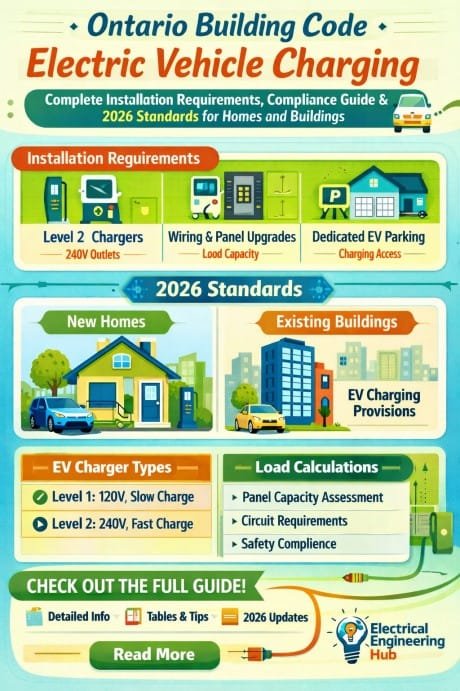
Table of Contents
The Ontario Building Code Electric Vehicle Charging requirements are not just about adding a charging station. They focus on safe electrical capacity, proper wiring methods, load management systems, and future-ready infrastructure. In 2026, updated expectations are placing stronger emphasis on pre-wiring, EV-ready parking spaces, and energy efficiency standards in new constructions.
Understanding these rules helps avoid costly retrofits and ensures buildings remain compliant for years ahead. Whether it is a single-family home or a high-rise condominium, planning for EV charging is now a core part of modern electrical design.
Understanding EV Charging Requirements in Ontario Buildings
The Ontario Building Code Electric Vehicle Charging provisions are designed to ensure electrical safety and long-term usability. These requirements vary depending on building type, occupancy load, and parking capacity.
For residential homes, the focus is on installing dedicated circuits capable of handling Level 2 charging systems. In multi-unit buildings, developers must often provide a percentage of EV-ready parking spaces. This means conduits and panel capacity are installed even if chargers are not immediately active.
Use our free tool Electric Car Charging Vs Petrol Calculator
For commercial buildings, additional considerations include demand management systems and shared charging infrastructure. Electrical engineers must calculate load distribution carefully to avoid system overload.
Key Installation Standards and Technical Requirements
When applying the Ontario Building Code Electric Vehicle Charging standards, installers must follow strict technical rules. These ensure safety, efficiency, and compliance with provincial electrical codes.
Key installation requirements include:
- Dedicated branch circuits for EV chargers
- Minimum 40-amp capacity for Level 2 charging systems
- Proper grounding and bonding of equipment
- Use of CSA-approved charging equipment
- Load calculations for electrical panels
- Compliance with Ontario Electrical Safety Code
Table 1: EV Charging Levels and Electrical Requirements
| Charging Level | Voltage | Typical Amperage | Installation Use |
|---|---|---|---|
| Level 1 | 120V | 12–15A | Basic home charging |
| Level 2 | 240V | 16–80A | Residential & commercial |
| DC Fast Charge | 400V+ | 100A+ | Public stations & highways |
These technical standards ensure that electrical systems remain stable even under continuous charging loads. The Ontario Building Code Electric Vehicle Charging framework strongly prioritizes Level 2 readiness in most new developments.
Use our free tool Electric Vehicle Charging Time Calculator
EV-Ready Parking and Infrastructure Planning
Modern construction in Ontario now requires forward-thinking design. The Ontario Building Code Electric Vehicle Charging guidelines encourage EV-ready infrastructure even in buildings where chargers are not yet installed.
EV-ready parking spaces typically include:
- Conduit pathways from electrical panels to parking spots
- Reserved breaker capacity in distribution panels
- Space allocation for future charging stations
- Cable management planning in garages and parking structures
This approach reduces future renovation costs significantly. Builders who ignore these requirements often face expensive electrical upgrades later when demand increases.
Table 2: EV Infrastructure Planning Checklist
| Component | Requirement | Purpose |
|---|---|---|
| Electrical Panel Capacity | 20–40% spare load capacity | Future expansion |
| Conduit Installation | Pre-installed pathways | Easy charger upgrades |
| Metering System | Individual or shared metering | Usage tracking |
| Parking Allocation | Minimum EV-ready ratio | Code compliance |
Compliance Process for Builders and Property Owners
Compliance with the Ontario Building Code Electric Vehicle Charging standards involves several steps during construction and inspection.
First, electrical designs must be submitted for approval before installation begins. These plans are reviewed by certified inspectors who ensure load calculations and safety measures are correctly applied.
Find all about EV Charging Station Code Requirements
Second, licensed electricians must install wiring and equipment according to approved drawings. Any deviation from the plan can result in inspection failure.
Finally, a final inspection is conducted before occupancy approval is granted. This ensures that all EV charging systems are safe, functional, and compliant with provincial rules.
Safety Measures and Electrical Protection Systems
Safety is a central part of the Ontario Building Code Electric Vehicle Charging regulations. EV systems draw high continuous loads, making proper protection essential.
Common safety requirements include:
- Ground fault circuit interrupters (GFCI)
- Overcurrent protection devices
- Surge protection systems
- Proper cable insulation and routing
- Fire-resistant installation materials in shared buildings
These safety features help reduce risks such as overheating, electrical fires, and system failures. In multi-unit residential buildings, fire separation rules also apply to EV charging zones.
Load Management and Energy Efficiency
As EV adoption increases, electrical load management becomes critical. The Ontario Building Code Electric Vehicle Charging framework supports smart load balancing systems that distribute electricity efficiently across multiple chargers.
Load management systems allow buildings to:
- Prevent overload on main electrical panels
- Prioritize charging during off-peak hours
- Share available power between multiple EV users
- Reduce infrastructure upgrade costs
Know more about ChargePoint Charging Station Cost
Energy-efficient design also supports sustainability goals by reducing unnecessary peak demand. Many new buildings are integrating smart meters and automated charging controls to meet these standards.
Inspection and Certification Requirements
Inspection plays a key role in ensuring compliance with the Ontario Building Code Electric Vehicle Charging standards. Without proper certification, EV installations cannot be legally operated in many cases.
Inspectors typically evaluate:
- Wiring quality and installation accuracy
- Panel load distribution
- Equipment certification labels
- Grounding and safety systems
- Accessibility of charging stations
Once approved, the system receives certification confirming compliance. This certification is often required for insurance coverage and property resale value.
Future Trends and 2026 Updates in EV Charging Regulations
The Ontario Building Code Electric Vehicle Charging framework continues to evolve as technology advances. In 2026, new trends are shaping how buildings integrate EV infrastructure.
Know more about Electric Vehicle Charging Station Cost
Key developments include:
- Mandatory EV-ready parking ratios in new residential projects
- Increased adoption of smart charging systems
- Integration of renewable energy sources like solar power
- Stronger emphasis on net-zero building designs
- Expansion of public charging networks in urban developments
These updates reflect Ontario’s long-term shift toward sustainable transportation and reduced carbon emissions.
Conclusion
The Ontario Building Code Electric Vehicle Charging standards are transforming how buildings are designed, constructed, and powered. From residential homes to large commercial complexes, EV readiness is now a fundamental requirement rather than an optional upgrade.
Following these guidelines ensures safe installation, long-term efficiency, and full regulatory compliance. Builders who plan early can reduce costs, improve property value, and future-proof their developments for growing electric vehicle demand.
As 2026 approaches, understanding the Ontario Building Code Electric Vehicle Charging requirements becomes even more important for anyone involved in construction or property development. Proper planning today ensures smoother adoption of electric mobility tomorrow.
Use our online tool EV Charger Load Calculation Tool
Follow Us on Social:
Subscribe our Newsletter on Electrical Insights for latest updates from Electrical Engineering Hub
#OntarioBuildingCodeElectricVehicleCharging,#OntarioEVCharging,#EVChargingOntario,#EVChargerInstallation,#ElectricVehicleInfrastructure,#EVChargingRequirements,#OntarioBuildingCode,#EVChargingStations,#SustainableTransportCanada,#GreenEnergyOntario
