GT14S Thermal Imaging Camera Review: Features, Accuracy & Buying Guide
When I inspect electrical panels, terminals, breakers, motors, or HVAC equipment, I often want to know where the heat is before I start taking anything apart. A thermal camera can make that first inspection much faster because it shows temperature differences that are difficult to identify with a normal visual inspection.
In my work as an electrical engineer, I have spent years around electrical panels, industrial automation, PLC systems, control cabinets, and troubleshooting. I have found that thermal inspection is particularly useful when a connection looks normal but is carrying an abnormal temperature rise.
The GT14S Thermal Imaging Camera is aimed at this type of practical inspection. It combines infrared imaging with a thermometer mode, a stated temperature range of 4°F to 1022°F, live temperature tracking, and an edge-enhanced display. Its lightweight 240g design also makes it suitable for carrying around a plant or service site.
GT14S Thermal Imaging Camera Features
| Feature | GT14S Specification |
|---|---|
| Temperature range | 4°F to 1022°F |
| Runtime | Up to 14 hours |
| Weight | Approximately 240g |
| Thermal function | Infrared imaging |
| Measurement mode | Thermometer mode |
| Display feature | Edge-enhanced thermal display |
| Tracking | Live temperature tracking |
| Typical applications | Electrical, HVAC, mechanical inspection |
| Form factor | Lightweight handheld camera |
The combination of thermal imaging and temperature measurement makes this camera more useful than simply looking for a bright spot on a thermal screen. For troubleshooting, being able to identify temperature changes and then investigate the physical cause is often more important than having a complicated menu system.
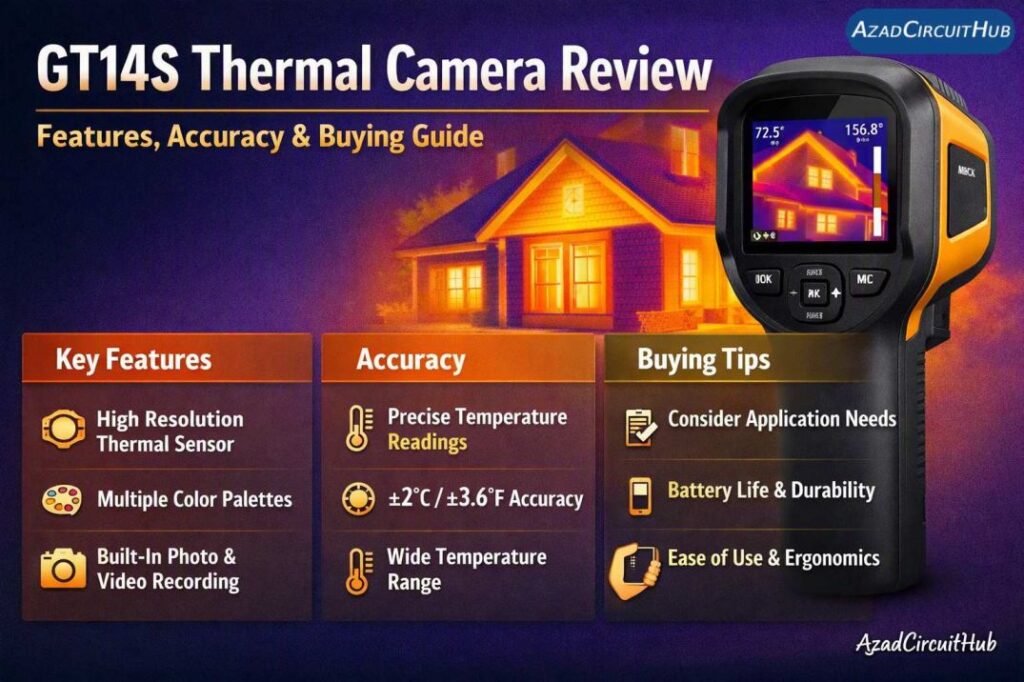
Table of Contents
Table of Contents
GT14S Thermal Imaging Camera for Electrical Inspection
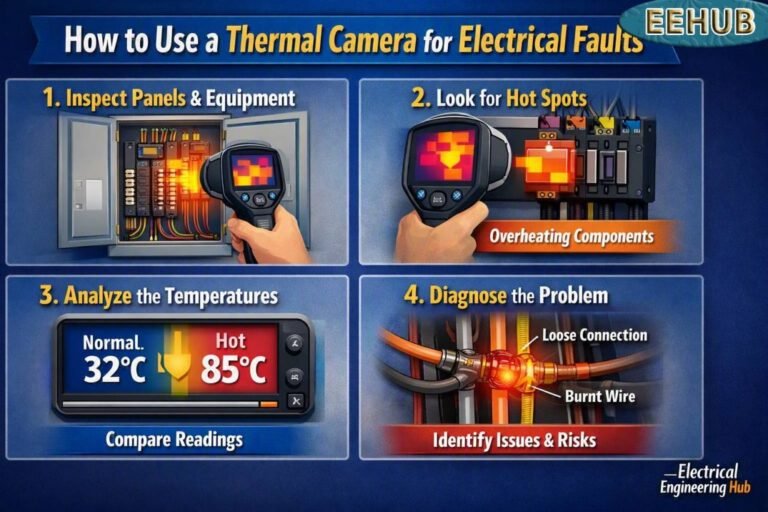
Electrical troubleshooting is one of the most practical applications for a thermal camera. Loose terminals, overloaded conductors, deteriorated connections, unbalanced loads, and failing components can produce abnormal heat.
During an inspection, I would normally compare similar components rather than judging a single temperature in isolation. For example, if three similar circuit connections are carrying comparable loads and one connection is significantly hotter, that difference deserves investigation.
A thermal camera does not prove that a component is defective. It gives you a visual temperature pattern that helps direct the next diagnostic step.
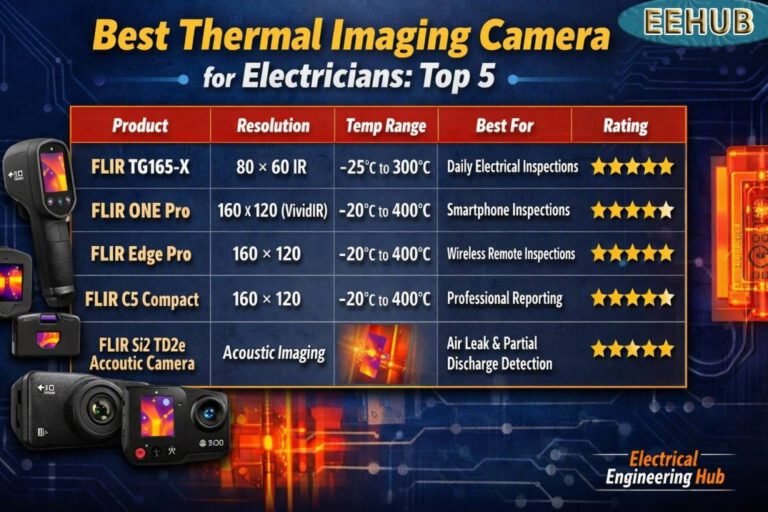
For electricians and maintenance technicians who regularly inspect panels, switchgear, disconnects, motors, and distribution equipment, this makes thermal imaging camera for electricians a useful category to explore when choosing an inspection tool.
Temperature Range and Measurement
The stated 4°F to 1022°F measurement range gives the GT14S a wide operating window for common electrical and mechanical inspection work.
For normal electrical troubleshooting, many targets will fall far below the upper end of that range. Cable terminations, breakers, contactors, busbar joints, bearings, motors, and HVAC components generally require comparison of temperature patterns rather than extreme-temperature measurement.
The thermometer mode can also be useful when you need a numerical reading rather than only a color image.
However, infrared temperature measurements depend on factors such as emissivity, viewing angle, distance, reflections, and surface condition. Shiny metal surfaces can produce misleading readings because they reflect infrared radiation from nearby objects.
Live Tracking and Edge-Enhanced Display
One useful feature of the GT14S Thermal Imaging Camera is live tracking. During troubleshooting, the hottest point can move as equipment operates or as the camera position changes.
A tracking function can help keep attention on the relevant temperature point instead of manually searching the screen.
The edge-enhanced display is also useful because thermal images can sometimes lack the physical detail found in an ordinary photograph. Highlighting edges can make it easier to understand which terminal, component, pipe, or mechanical part corresponds to a thermal anomaly.
This matters in real field work. A technician needs to know not only that one area is hotter, but exactly which physical component is producing the hot spot.
GT14S Thermal Imaging Camera for HVAC and Mechanical Work
Electrical work is not the only application. HVAC technicians can use thermal imaging to identify temperature differences across equipment, pipes, connections, and air-conditioning components.
A thermal camera can help locate unusual temperature patterns around motors, bearings, compressors, heat exchangers, ductwork, and other equipment.
Mechanical maintenance is another useful application. A bearing beginning to run hotter than comparable bearings can deserve further investigation. Similarly, a thermal difference across a component can indicate that additional testing is needed.
The important point is that infrared inspection is a screening and diagnostic aid. It should be combined with electrical measurements, mechanical inspection, manufacturer specifications, and safe isolation procedures.
Is the GT14S Lightweight Enough for Field Work?
At approximately 240g, the GT14S is relatively light for a handheld thermal inspection device. Weight becomes noticeable when you spend several hours walking around a plant or carrying a tool bag.
For field electricians, maintenance engineers, HVAC technicians, and inspectors, a lightweight thermal camera can be easier to grab for a quick inspection than a larger dedicated imaging system.
The stated 14-hour runtime is also useful for longer inspection sessions. Actual battery life can vary depending on operating conditions, display use, temperature, and other factors.
Check the current GT14S Thermal Imaging Camera price on Amazon: Buy GT14S Thermal Imaging Camera on Amazon
What Can You Inspect With the GT14S?
| Application | What to Look For |
|---|---|
| Electrical panels | Hot terminals and breakers |
| Cable connections | Abnormal temperature differences |
| Motors | Hot bearings or connections |
| HVAC | Temperature differences across components |
| Switchgear | Unusual connection heating |
| Control cabinets | Hot components and power supplies |
| Mechanical systems | Bearings and friction-related heat |
| Building inspection | Temperature anomalies |
For electrical maintenance, the most useful approach is usually comparative inspection. Compare similar phases, connections, or components under similar load conditions.
This approach can reveal an abnormal point without requiring you to guess what temperature should be considered normal for every individual component.
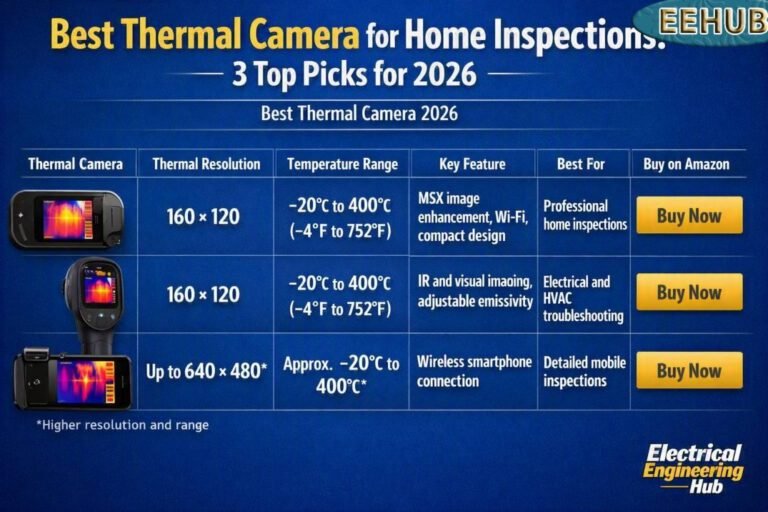
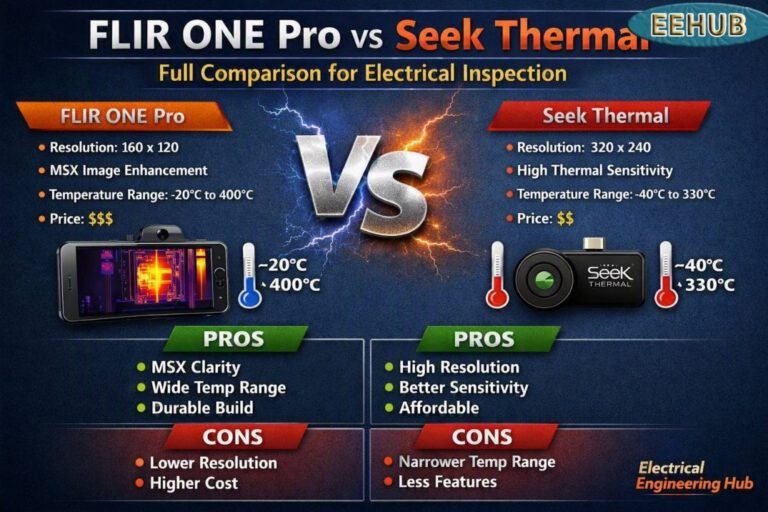
If your work involves regular electrical surveys, you can also compare this unit with other thermal cameras for electrical applications before selecting a dedicated inspection camera.
GT14S Thermal Imaging Camera Buying Considerations
A thermal camera should be selected according to the work you actually perform. Before buying, consider:
- Required temperature range
- Thermal image quality
- Temperature measurement functions
- Temperature tracking
- Battery runtime
- Camera weight
- Display visibility
- Target electrical applications
- HVAC and mechanical requirements
- Measurement accuracy
- Emissivity adjustment
- Warranty and support
One common mistake is choosing a thermal camera solely because it has a high maximum temperature rating. For electrical troubleshooting, image quality, temperature measurement, ease of use, and the ability to distinguish a real thermal anomaly can be more important.
For a technician who mainly performs electrical panel inspections, a compact camera with straightforward controls may be more useful than a complicated unit designed for specialist thermography.
How I Would Use It During an Electrical Inspection
I would start with a normal visual inspection and establish whether the equipment is operating under a meaningful load. I would then scan comparable components from a safe position and look for temperature differences.
If one connection appears substantially hotter than similar connections, I would investigate the reason using appropriate electrical testing and safe work procedures.
The thermal image should be treated as evidence for further investigation, not as a replacement for a multimeter, clamp meter, insulation tester, or other electrical test equipment.
This is where a thermal imaging camera for electrical inspection can add real value. It helps identify where to investigate before spending time testing every component individually.
GT14S Thermal Imaging Camera: Pros and Limitations
| Pros | Limitations to Consider |
|---|---|
| Lightweight 240g design | Infrared readings depend on surface conditions |
| Wide stated temperature range | Thermal imaging does not identify the fault by itself |
| Up to 14-hour stated runtime | Shiny surfaces can affect measurements |
| Thermometer mode | Results depend on correct measurement technique |
| Live temperature tracking | Vehicle or equipment load affects thermal patterns |
| Edge-enhanced display | Exact specifications should be checked before purchase |
The GT14S is therefore best viewed as a practical troubleshooting tool rather than a replacement for professional electrical test equipment.
Frequently Asked Questions
What is the temperature range of the GT14S?
The stated temperature range is 4°F to 1022°F. This gives the camera a broad measurement range for electrical, HVAC, mechanical, and general inspection applications.
Is the GT14S useful for electrical troubleshooting?
Yes, thermal imaging can help identify unusual temperature differences at electrical connections, breakers, cables, motors, and other components. Any suspected fault should then be investigated using appropriate electrical testing and safe procedures.
How long does the GT14S battery last?
The product specification states up to 14 hours of runtime. Actual operating time can vary depending on usage, display operation, environmental conditions, and other factors.
Is the GT14S suitable for HVAC inspection?
Its thermal imaging and temperature measurement functions can be useful for HVAC troubleshooting, including checking temperature patterns around equipment, pipes, motors, and other components.
Is a thermal camera better than a multimeter?
They perform different jobs. A multimeter measures electrical quantities such as voltage, current, and resistance, while a thermal camera shows temperature patterns. In electrical troubleshooting, the two tools can complement each other.
Final Verdict
The GT14S Thermal Imaging Camera is designed around a practical idea: make temperature differences easy to see while keeping the inspection tool compact enough for regular field use.
Its stated 4°F to 1022°F temperature range, thermometer mode, live tracking, edge-enhanced display, 240g weight, and up to 14-hour runtime make it relevant to electrical, HVAC, and mechanical inspection work.
For my type of electrical troubleshooting, the biggest value of a thermal camera is not simply finding a hot object. It is finding a temperature difference that gives me a reason to investigate further.
Check the latest Amazon price and availability here: Shop GT14S Thermal Imaging Camera on Amazon
If your primary work involves electrical panels, switchgear, motors, and distribution equipment, comparing several thermal imaging camera for electricians options can help you match the camera to your inspection requirements.
Related Guides
- Best Thermal Imager for HVAC Technicians
- Best Thermal Camera for Home Inspections
- How to Use a Thermal Camera for Electrical Faults
- FLIR ONE Pro vs Seek Thermal
Get new guides in your feed. Follow Electrical Insights on LinkedIn for new electrical standards guides, calculators and design tips from Azad Circuit Hub.
#GT14S, #GT14SThermalImagingCamera, #ThermalImagingCamera, #ThermalCameraReview, #InfraredCamera, #ThermalImaging, #ElectricalTesting, #HVACDiagnostics, #ElectricalInspection, #ThermalCamera