
Best Thermal Imager for HVAC Technicians: TOPDON TC004 Review
Finding hidden HVAC problems is much easier when you can see temperature differences instead of relying only on touch, gauges, or guesswork. A good thermal camera can reveal overheated electrical connections, blocked airflow, poor insulation, refrigerant-related temperature changes, and abnormal motor temperatures within seconds.
For HVAC technicians, the challenge is choosing a thermal imager that offers enough temperature range, useful image quality, simple controls, and reliable field performance without paying for features that rarely get used. In this guide, I review the TOPDON TC004 3.5″ Thermal Imaging Camera and explain where it fits for HVAC troubleshooting.
As an electrical engineer with hands-on experience evaluating electrical and energy systems, I look at thermal cameras from a practical troubleshooting perspective. For HVAC work, temperature resolution, measurement range, image clarity, and ease of use matter more than a long list of marketing features.
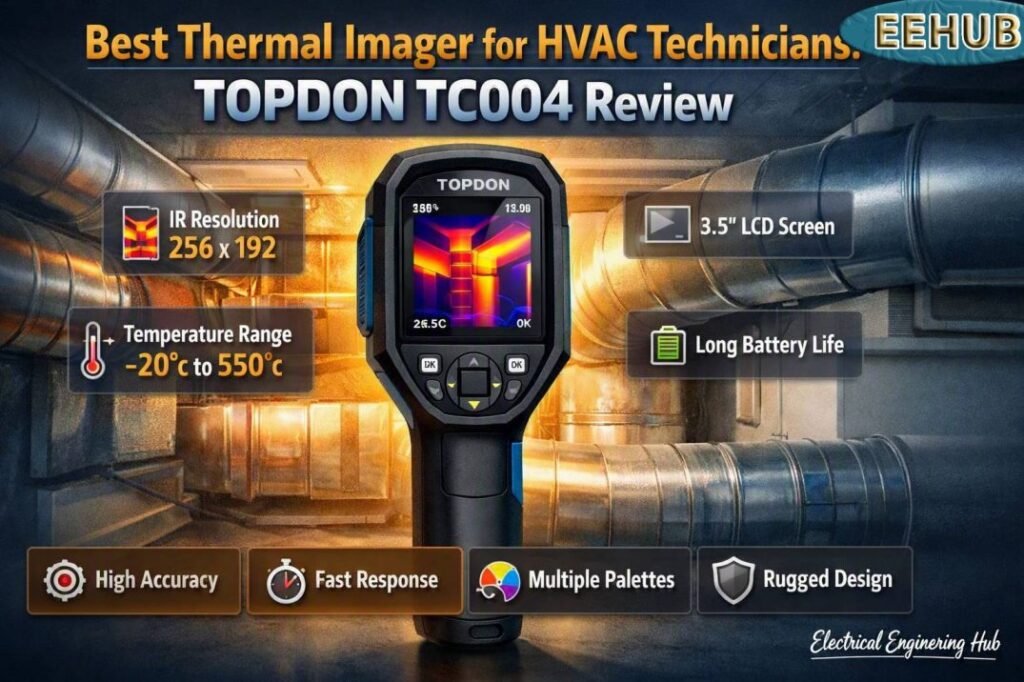
Table of Contents
Table of Contents
TOPDON TC004 at a Glance
| Feature | TOPDON TC004 |
|---|---|
| Display | 3.5-inch color screen |
| Temperature range | -4°F to 1022°F (-20°C to 550°C) |
| Thermal imaging | Infrared thermal camera |
| Main use | HVAC, electrical, automotive, building inspection |
| High-temperature capability | Yes |
| Portable design | Handheld |
| Recommended users | HVAC technicians, electricians, maintenance professionals |
| Amazon availability | Check current price and availability on Amazon |
The wide temperature range is one of the biggest advantages of this model. HVAC technicians normally work with moderate temperatures, but electrical troubleshooting can involve much hotter components. Having a camera rated up to 1022°F gives the TC004 more flexibility than a basic low-temperature inspection camera.
Why Use a Thermal Imager for HVAC Work?
A thermal imager for HVAC applications helps technicians identify temperature patterns that are difficult to see with conventional instruments.
For example, an air-conditioning system may appear to be operating normally while one section of an evaporator coil has a significantly different temperature from the rest. A thermal scan can quickly highlight that difference.
Thermal imaging can also help inspect:
- Evaporator and condenser coils
- Supply and return air ducts
- Refrigeration lines
- Compressors
- Blower motors
- Electrical panels
- Contactors and relays
- Circuit breakers
- Disconnects
- Capacitors
- HVAC control boards
- Insulation and air leaks
The key point is that the camera does not replace pressure gauges, electrical meters, temperature probes, or manufacturer testing procedures. Instead, it gives technicians another way to locate abnormal conditions quickly.
TOPDON TC004 Thermal Imaging Camera Review
The TOPDON TC004 is particularly interesting for technicians who want a dedicated handheld thermal camera rather than a smartphone attachment.
Its 3.5-inch screen gives you a practical viewing area while working around mechanical equipment. That is useful when you are standing beside an outdoor condenser or electrical cabinet and need to inspect a component without constantly repositioning a phone.
The -4°F to 1022°F temperature range also makes the TC004 suitable for a broad range of inspection work. HVAC systems themselves typically operate well below the upper limit, but the extra range becomes valuable when checking electrical components, motors, bearings, heating equipment, or other industrial equipment.
Thermal Inspection Performance
When troubleshooting HVAC equipment, you are usually looking for temperature differences rather than simply asking whether a component is hot or cold.
For instance, if two similar electrical terminals carry comparable loads but one terminal shows a noticeably higher temperature, that may indicate a loose connection, excessive resistance, corrosion, or another electrical issue.
Likewise, comparing sections of a coil or duct can help identify unusual temperature distribution.
A thermal imager for HVAC work is therefore most useful when you understand what a normal thermal pattern should look like.
Pro tip: Always compare similar components under similar operating conditions. A single hot spot is worth investigating, but temperature differences become much more meaningful when you know the equipment's normal operating pattern.
Best Features for HVAC Technicians
The TC004's broad measurement range is a strong feature for professionals who use one thermal camera across different jobs.
| HVAC Inspection | What to Look For |
|---|---|
| Evaporator coil | Uneven temperature distribution |
| Condenser coil | Blocked or abnormal hot areas |
| Compressor | Unusual external heat patterns |
| Blower motor | Excessive motor or bearing heat |
| Electrical panel | Hot terminals or connections |
| Breakers | Abnormal temperature compared with similar breakers |
| Ductwork | Heat gain, loss, or insulation problems |
| Refrigerant lines | Unexpected temperature differences |
| Air vents | Uneven supply-air temperatures |
| Control equipment | Localized overheating |
Wide Temperature Range
The -4°F to 1022°F range gives the TC004 considerable flexibility. Most residential HVAC diagnostic work does not require anything close to 1022°F, but the high ceiling is useful when the same camera is also used for electrical or industrial inspection.
Dedicated Handheld Design
A dedicated thermal camera is often easier to use during field work than a phone-based attachment. You can hold the unit, scan equipment, and review the thermal image without worrying about phone compatibility or occupying your smartphone while working.
3.5-Inch Display
The larger display is helpful when inspecting equipment in bright mechanical rooms or outdoor locations. A technician can view the thermal pattern directly and make adjustments without needing another device.
How HVAC Technicians Can Use the TC004
Start by allowing the HVAC equipment to reach its normal operating condition. A thermal scan taken immediately after startup may not provide the same information as one taken after the system has stabilized.
Scan the equipment from several angles rather than relying on one image. Pay particular attention to sudden temperature changes, isolated hot spots, and differences between similar components.
For electrical components, follow safe working practices and maintain the required approach boundaries. A thermal camera does not make an energized electrical panel safe to open or inspect.
For HVAC equipment, combine thermal findings with system pressures, electrical measurements, airflow readings, and manufacturer specifications before making a repair decision.
TOPDON TC004 vs. a Basic Thermal Camera
A basic thermal camera may be sufficient for occasional home inspection, but professional HVAC work benefits from a more capable instrument.
| Factor | Basic Thermal Camera | TOPDON TC004 |
|---|---|---|
| Dedicated handheld unit | Sometimes | Yes |
| Large operating temperature range | Limited on some models | -4°F to 1022°F |
| HVAC troubleshooting | Suitable for basic work | Well suited |
| Electrical inspection | Depends on model | Suitable for broad inspection use |
| Field portability | Usually good | Good |
| Professional maintenance work | Varies | Stronger fit |
The TC004 makes the most sense when you want one thermal inspection tool that can cover HVAC, electrical, mechanical, and general maintenance tasks.
Is the TOPDON TC004 Worth Buying?
If you regularly troubleshoot HVAC equipment and also inspect electrical or mechanical systems, the TOPDON TC004 deserves serious consideration.
Its biggest practical advantage is versatility. You are not buying a camera that is restricted to one narrow application. The wide temperature range gives you room to use it for electrical troubleshooting, machinery inspection, heating equipment, and building diagnostics as well.
The camera is especially attractive for technicians who prefer a dedicated handheld instrument instead of a smartphone thermal attachment.
Check the TOPDON TC004 Price on Amazon
If you want a dedicated handheld thermal camera for HVAC troubleshooting, Check the TOPDON TC004 3.5" Thermal Imaging Camera on Amazon to see the current price, seller, and availability before buying.
Amazon pricing can change, so checking the current listing is the best way to compare the latest deal and shipping options.
When a Thermal Camera Is Not Enough
Thermal imaging is a diagnostic aid, not a complete HVAC test instrument.
A hot compressor does not automatically mean the compressor has failed. Similarly, a cold refrigerant line does not by itself prove that refrigerant charge is correct.
Technicians should use thermal observations alongside:
- Digital multimeter measurements
- Clamp meter readings
- Refrigerant pressure measurements
- Superheat and subcooling calculations
- Airflow measurements
- Manufacturer specifications
- Electrical load measurements
This combination produces much better diagnostic results than relying on thermal images alone.
If you also work with wiring, panels, motors, and electrical equipment, you may want a visual inspection tool alongside your thermal camera. See our best inspection camera for electricians guide to compare inspection cameras for difficult-to-reach electrical and mechanical areas.
Tips for Getting Better Thermal Images
Keep the lens clean and avoid placing the camera too close to the target. Give the equipment enough time to reach a meaningful operating condition.
Also remember that shiny metal surfaces can produce misleading infrared readings because reflected infrared energy may not represent the actual surface temperature. When necessary, use an appropriate high-emissivity reference surface and compare readings carefully.
For HVAC diagnostics, consistency is more important than simply finding the highest temperature on the screen.
Final Verdict
The TOPDON TC004 is a versatile choice for technicians who need thermal inspection capability across HVAC, electrical, mechanical, and maintenance applications. Its 3.5-inch display and broad -4°F to 1022°F measurement range make it particularly useful when one camera needs to handle different types of field inspections.
For HVAC professionals, the strongest use case is fast identification of unusual temperature patterns. It can help narrow down where a problem may be located before you spend more time testing individual components.
If your work also includes electrical inspection and hard-to-reach components, check our best inspection camera for electricians guide for another useful diagnostic tool to keep alongside a thermal camera.
For buyers ready to add thermal imaging to their HVAC toolkit, View the TOPDON TC004 on Amazon and check the latest price and availability.
Frequently Asked Questions
1. Is a thermal imager useful for HVAC technicians?
Yes. A thermal imager can help identify unusual temperature patterns on coils, motors, electrical connections, ducts, compressors, and other HVAC components. It works best when combined with normal HVAC diagnostic instruments.
2. What temperature range should an HVAC thermal camera have?
For general HVAC troubleshooting, you do not normally need an extremely high temperature range. However, a wider range provides more versatility for electrical, mechanical, heating, and industrial inspections. The TOPDON TC004 covers -4°F to 1022°F.
3. Can the TOPDON TC004 detect HVAC refrigerant leaks?
Thermal imaging may help identify temperature patterns associated with HVAC problems, but it should not be treated as a dedicated refrigerant leak detector. Proper leak detection equipment and established HVAC testing procedures should be used to confirm a refrigerant leak.
4. Can I use the TOPDON TC004 for electrical troubleshooting?
Yes. Its broad temperature range makes it useful for locating abnormal heat patterns around electrical equipment. Hot terminals, overloaded components, poor connections, and unbalanced thermal patterns can be investigated with thermal imaging, subject to safe electrical work practices.
5. Is the TOPDON TC004 good for professional HVAC work?
It can be a useful professional diagnostic tool for HVAC technicians who want a dedicated handheld thermal camera. Its value is highest when thermal images are used alongside electrical measurements, airflow checks, refrigerant diagnostics, and manufacturer specifications.
Get new guides in your feed. Follow Electrical Insights on LinkedIn for new electrical standards guides, calculators and design tips from Azad Circuit Hub.
#ThermalImager, #HVACTechnicians, #TOPDONTC004, #HVACTools, #ThermalCamera, #HVACDiagnostics, #InfraredCamera, #HVACToolsReview, #ElectricalTools, #ThermalImaging
