FLIR ONE Pro Review: 480×360 Thermal Imaging Camera for Electrical Inspection
A thermal camera can reveal electrical problems that a normal multimeter cannot see. Loose connections, overloaded terminals, unbalanced loads, and failing components often produce heat before they cause a visible failure. In this FLIR ONE Pro Review, I am looking at FLIR’s smartphone-based thermal camera from the perspective of an electrical engineer who has spent more than 15 years working around electrical panels, automation systems, troubleshooting, and industrial equipment.
The FLIR ONE Pro is designed for technicians who want thermal imaging without carrying a full-size handheld thermal camera. This particular version connects to compatible iPhones through USB-C and combines a 160 × 120 native infrared sensor with FLIR’s image-processing technology to produce a higher-resolution 480 × 360 thermal image.
FLIR ONE Pro Review Features at a Glance
| Feature | FLIR ONE Pro |
|---|---|
| Native IR resolution | 160 × 120 |
| Super-resolution image | 480 × 360 |
| Connection | USB-C |
| Compatible devices | iPhone 15 and newer USB-C models |
| Camera type | Smartphone thermal camera |
| Main use | Electrical, HVAC, mechanical and building inspection |
| Image processing | FLIR MSX technology |
| Temperature measurement | Yes |
| Best for | Electricians, technicians and inspectors |
The headline specification is important, but resolution is not the only factor I consider when evaluating a thermal imaging tool. Temperature range, image quality, measurement accuracy, target size, software, ease of use, and the ability to identify a genuine thermal anomaly all matter in field work.
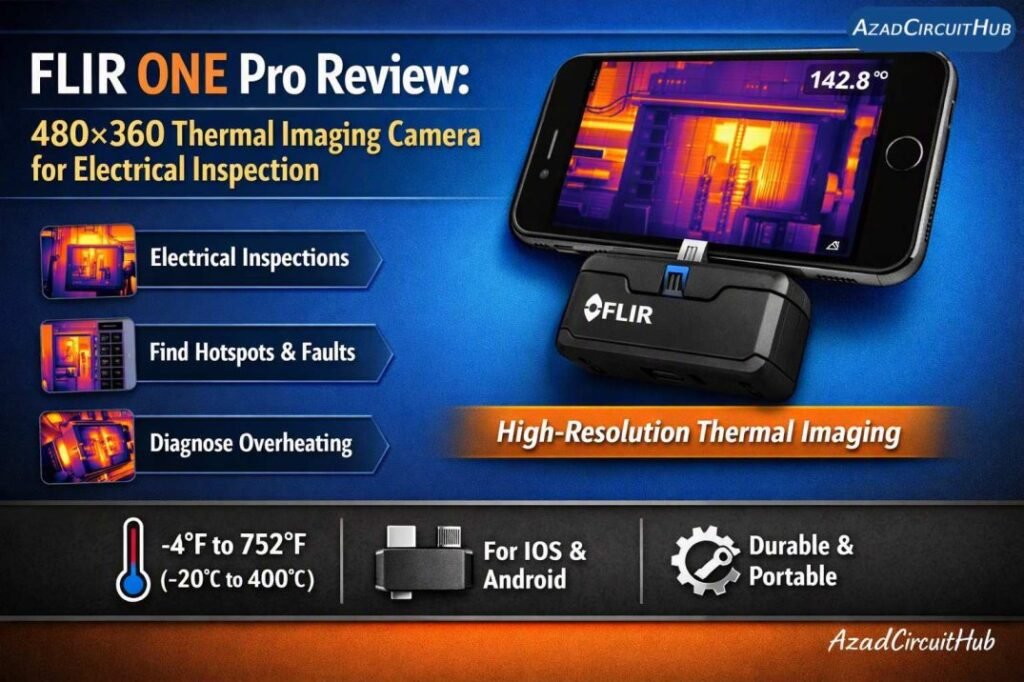
Table of Contents
Table of Contents
FLIR ONE Pro Review: Thermal Imaging Performance
The FLIR ONE Pro uses a 160 × 120 infrared detector and produces a 480 × 360 Super Resolution image. That combination makes it considerably more useful for inspection work than basic low-resolution smartphone thermal cameras.
In electrical troubleshooting, I would use it to scan distribution boards, breakers, contactors, disconnects, motor connections, cable terminations, transformers, and other components where abnormal heat can indicate a developing problem.
One important point is that a thermal camera does not directly tell you why something is hot. A high temperature may be caused by excessive current, a loose connection, poor contact pressure, ambient conditions, load imbalance, or another mechanical or electrical issue.
Looking for a reliable thermal camera for electrical inspections, troubleshooting, HVAC work, or maintenance? Check the Best Thermal Imaging Cameras on Amazon to compare popular models, features, and current options.
That is why I normally treat thermal imaging as a diagnostic screening tool and then confirm the suspected fault using appropriate electrical measurements.
FLIR ONE Pro Review: Electrical Inspection
This is where the FLIR ONE Pro becomes particularly useful for electricians and maintenance engineers.
A thermal scan can quickly show a temperature difference between similar components. For example, if three phases pass through similar terminals and one connection appears significantly hotter, that gives you a reason to investigate the circuit further.
Common inspection targets include:
- Circuit breakers
- Fuse holders
- Busbar connections
- Cable lugs
- Motor terminals
- Contactors
- Distribution panels
- Disconnect switches
- Transformers
- Electrical enclosures
- HVAC electrical connections
For routine preventive maintenance, thermal imaging can also help identify changes over time. Taking consistent images under similar load conditions makes it easier to spot developing hot spots.
If you are building an electrical inspection kit, compare it with other options in my guide to a thermal imaging camera for electrical inspection before choosing a model.
FLIR MSX Technology and Image Detail
One of the useful features of FLIR cameras is MSX image enhancement. It combines thermal information with visible-light image details to make the thermal image easier to interpret.
This matters when inspecting electrical equipment because a pure thermal image may show a hot region without making it immediately obvious which terminal, breaker, or component is responsible.
The additional visual detail can make reports and field documentation easier to understand.
However, MSX does not turn the camera into a higher-resolution infrared sensor. The native infrared resolution remains 160 × 120. The 480 × 360 Super Resolution output is created through image processing.
That distinction is worth understanding when comparing smartphone thermal cameras.
A good thermal imaging camera can help identify overheating connections, overloaded components, and hidden temperature differences before they become bigger problems. Browse the Best Thermal Imaging Cameras on Amazon to find a model suited to your inspection needs.
FLIR ONE Pro for Electricians
For electricians who already carry an iPhone, the biggest advantage is portability. Instead of adding another large instrument to the tool bag, the thermal camera connects directly to the phone.
This makes it useful for quick troubleshooting jobs and maintenance inspections.
In my electrical work, I would use a tool like this after establishing that the circuit is operating under a representative load. A lightly loaded connection may not reveal a developing resistance problem because heat generation is related to current and resistance.
The camera should therefore complement, not replace, a clamp meter, multimeter, insulation tester, or other appropriate electrical test equipment.
For more options, my guide to thermal lmaging tools for electricians covers the types of thermal equipment worth considering for field troubleshooting.
Buying Considerations for the FLIR ONE Pro
Before buying this model, check your smartphone carefully. The product listed here is the USB-C version intended for iPhone 15 and newer compatible USB-C iPhones.
| Buying Check | Why It Matters |
|---|---|
| USB-C compatibility | Prevents connector compatibility problems |
| Phone model | Not every smartphone is supported |
| IR resolution | Determines the amount of thermal detail |
| Measurement capability | Useful for temperature comparisons |
| Target distance | Affects practical inspection work |
| App compatibility | Required for camera operation |
| Battery | Important for longer inspections |
The smartphone connection is one of the product's biggest conveniences, but it is also something to verify before ordering.
Check the current FLIR ONE Pro price on Amazon: Buy FLIR ONE Pro on Amazon
FLIR ONE Pro vs Handheld Thermal Cameras
A smartphone thermal camera and a dedicated handheld thermal camera serve different users.
The FLIR ONE Pro is attractive when portability, phone integration, and quick inspections matter. A dedicated thermal camera may be preferable for technicians who spend many hours performing infrared inspections and need a purpose-built instrument with a larger screen and dedicated controls.
| Factor | FLIR ONE Pro | Dedicated Thermal Camera |
|---|---|---|
| Portability | Excellent | Varies |
| Phone integration | Yes | Usually no |
| Field convenience | High | High |
| Professional inspection | Suitable for many tasks | Depends on model |
| Screen | Smartphone | Built-in |
| Tool-bag space | Very low | Higher |
For electricians who need a compact troubleshooting tool rather than a full infrared inspection system, the smartphone format can make considerable sense.
If you are comparing more equipment for your electrical tool bag, see my guide to thermal lmaging tools for electricians for additional options.
What I Like About the FLIR ONE Pro
The strongest points are its compact design, useful infrared resolution, smartphone integration, and the practical value of thermal imaging for troubleshooting.
The 160 × 120 native infrared sensor gives the camera enough detail for many electrical maintenance tasks, while the 480 × 360 Super Resolution output makes captured images easier to inspect and document.
I also like the fact that it does not require carrying a separate display. For contractors and maintenance personnel who already use their phone for inspection photos and reports, this can simplify the workflow.
Limitations to Consider
The FLIR ONE Pro is not a replacement for a high-end industrial infrared camera.
The smartphone connection means compatibility must be checked before purchase. Its compact format is also better suited to portable inspection than continuous heavy-duty thermal survey work.
More importantly, thermal images require interpretation. A bright thermal spot is not automatically an electrical fault. Load current, emissivity, reflected infrared energy, airflow, ambient temperature, and the condition of surrounding components can all affect what the camera shows.
Not sure which thermal camera fits your work? I’ve put together an Amazon Idea List featuring Best Thermal Imaging Cameras worth considering for electrical and industrial applications. Check the list to compare practical options in one place.
For critical equipment, abnormal thermal findings should be investigated using appropriate electrical testing procedures.
Frequently Asked Questions
Is the FLIR ONE Pro good for electrical inspections?
Yes. Its compact design and thermal imaging capability make it useful for locating temperature differences around breakers, terminals, cables, motors, and other electrical equipment. It should be used alongside normal electrical test instruments.
What resolution does the FLIR ONE Pro have?
The model uses a 160 × 120 native infrared detector and provides a 480 × 360 Super Resolution image. These are different specifications and should not be treated as the same native sensor resolution.
Does FLIR ONE Pro work with iPhone 15?
The USB-C version listed here is designed for compatible iPhone 15 and newer USB-C iPhones. Always verify the exact phone and operating-system compatibility before purchasing.
Can a FLIR ONE Pro find loose electrical connections?
It can help identify abnormal heating associated with a potentially loose or high-resistance connection. However, the thermal image alone cannot confirm the cause. Further inspection and electrical testing are needed.
Is FLIR ONE Pro better than a handheld thermal camera?
It depends on the application. The FLIR ONE Pro offers excellent portability and smartphone integration, while a dedicated handheld model may be more appropriate for frequent professional infrared surveys and applications requiring dedicated controls.
Final Verdict
The FLIR ONE Pro is an appealing option for electricians, maintenance technicians, HVAC professionals, and inspectors who want thermal imaging in a compact smartphone-based package.
Its 160 × 120 native infrared sensor, 480 × 360 Super Resolution imaging, MSX image enhancement, and USB-C smartphone connection give it a practical combination of portability and inspection capability.
For electrical troubleshooting, I would consider it a useful addition to a tool kit rather than a replacement for conventional test equipment. Used correctly, thermal imaging can help you find abnormal heat quickly and decide where further testing should be performed.
Check the latest FLIR ONE Pro availability and price on Amazon: See FLIR ONE Pro on Amazon
For technicians building a broader inspection kit, a dedicated thermal imaging camera for electrical inspection may also be worth comparing based on resolution, temperature measurement, field of view, and inspection frequency.
Get new guides in your feed. Follow Electrical Insights on LinkedIn for new electrical standards guides, calculators and design tips from Azad Circuit Hub.
#FLIRONEPro, #FLIRONEProReview, #ThermalImagingCamera, #ThermalCamera, #ElectricalInspection, #InfraredCamera, #ElectricalTesting, #ThermalImaging, #FLIRThermalCamera, #ElectricalEngineer