
Thermal Fuses: Important Parameters & Selection Table
Thermal fuses, often referred to as thermal cutoffs or TCOs, are…
Your blog category
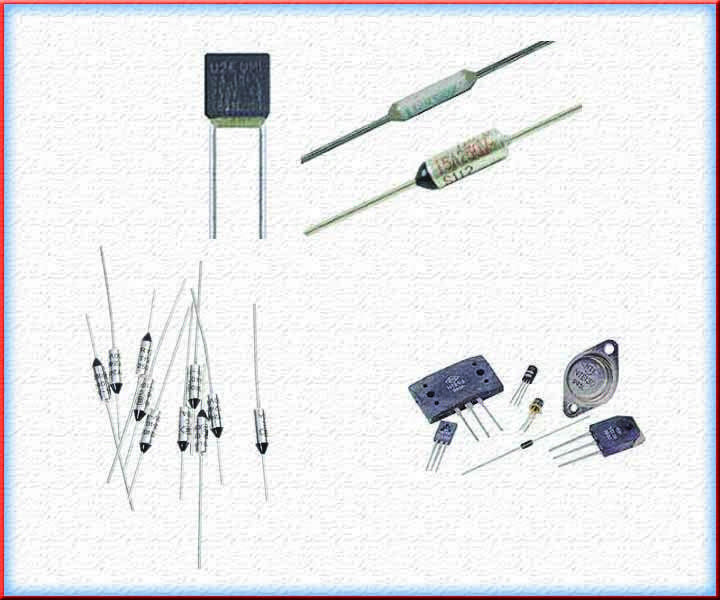
Thermal fuses, often referred to as thermal cutoffs or TCOs, are…
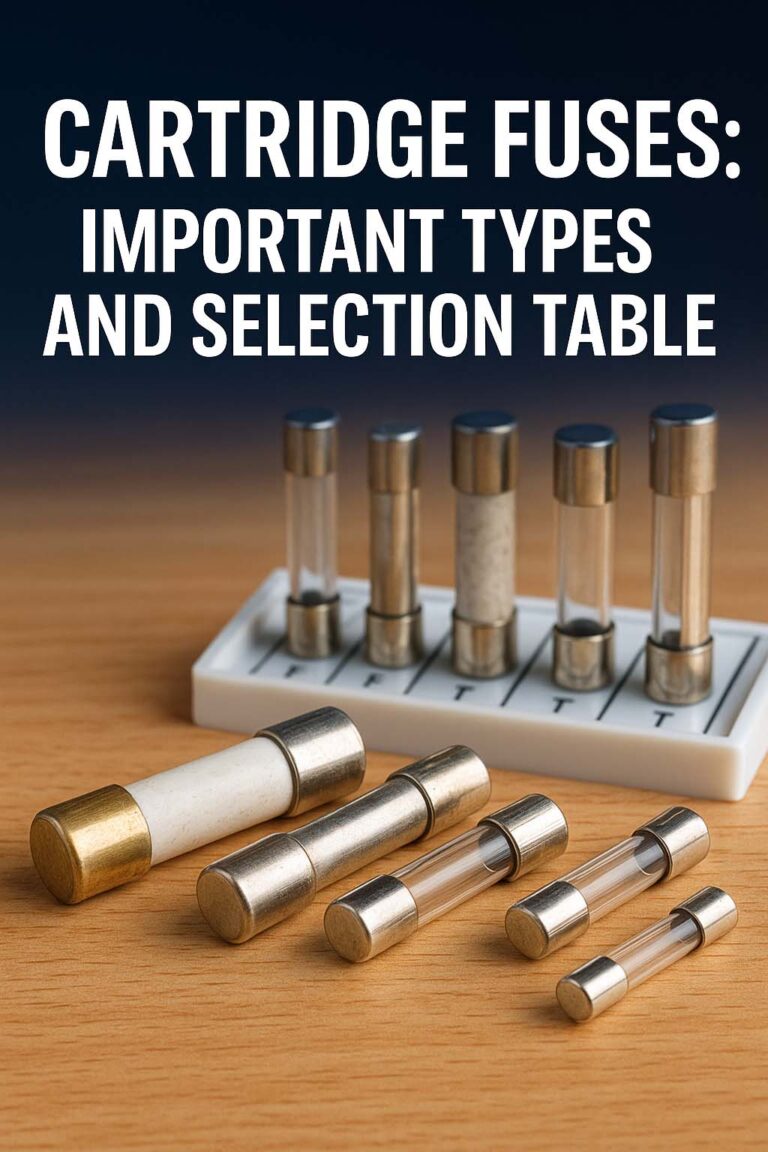
Cartridge fuses are a fundamental component in electrical systems, providing essential…
When it comes to powering motors, one of the critical aspects…
Fuses play a pivotal role in electrical systems by safeguarding circuits…
The application of HRC fuses (High Rupturing Capacity fuses) spans across…

Explore the concept of corner frequency and its crucial role in signal processing. Learn how it impacts filter design, frequency response, and overall electronic signal performance.

Fault Current Calculation made simple with practical formulas, examples, and an easy-to-use calculator. Learn how to determine short circuit current for proper equipment selection, relay coordination, and electrical system protection.
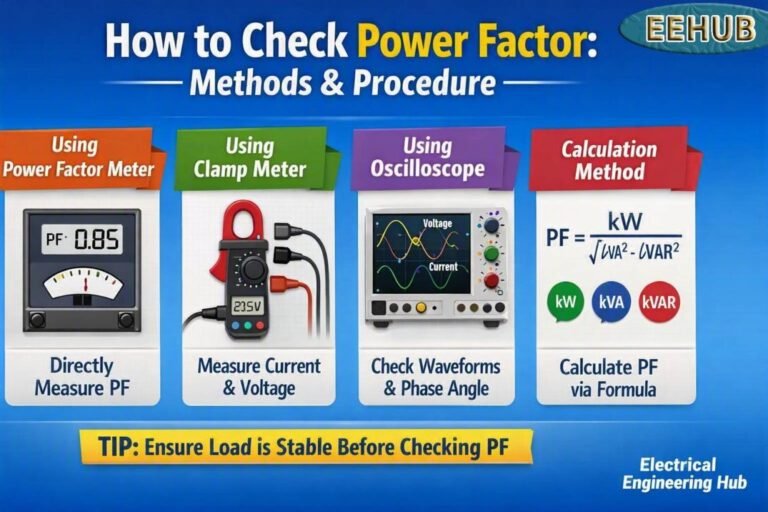
How to Check Power Factor using meters, power analyzers, and calculation methods. Learn the step-by-step procedure, formulas, readings, and practical testing tips.

What is Power Factor? Learn its meaning, formula, ideal value, types, effects on electrical systems, and practical methods to improve power factor and reduce energy losses.
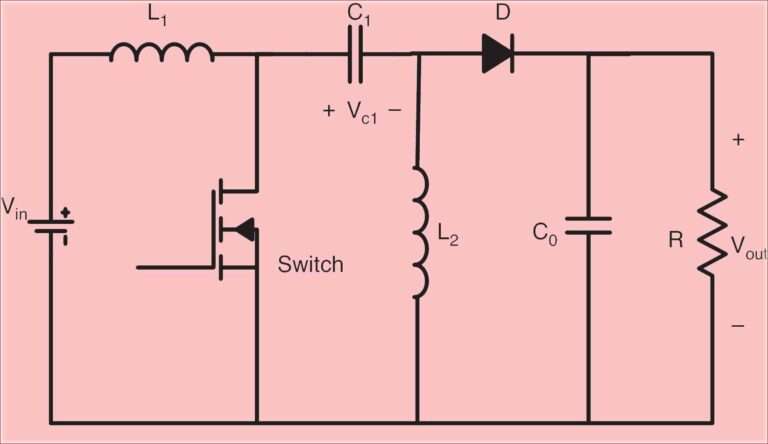
DC to DC converter types are used in power electronics to efficiently convert one DC voltage level to another. They find applications in various fields, such as power supplies, renewable energy systems, electric vehicles, and portable electronic devices.
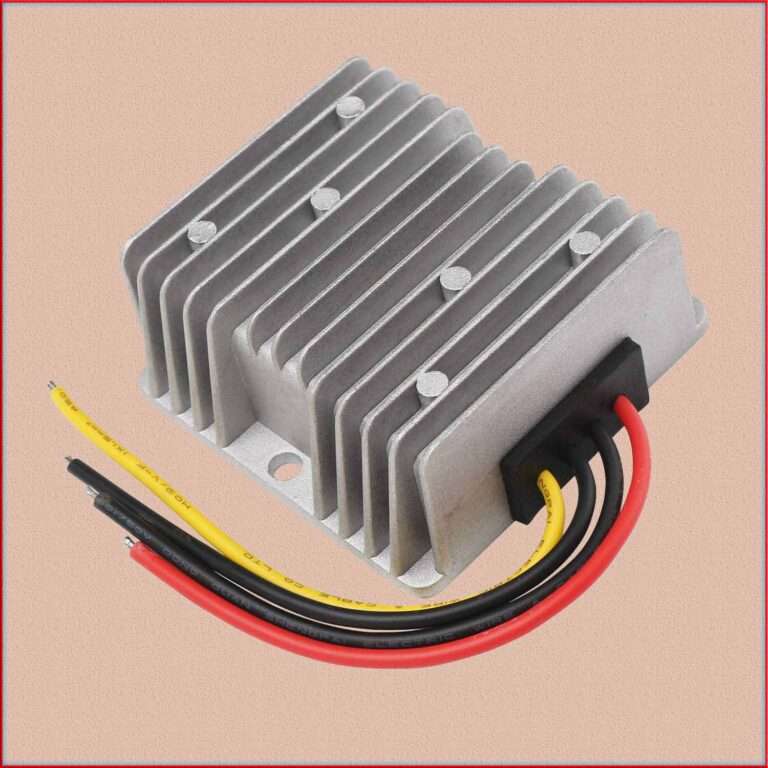
A DC to DC converter 24V to 12V is a crucial electronic device used to step down the voltage from 24 volts to a stable 12V output. This type of converter is commonly used in various applications where a lower voltage is required from a 24V power source.
DC to DC converter 48V to 12V Design involves creating an efficient and reliable circuit that steps down the higher DC voltage of 48 volts to a stable 12V output. This step-by-step guide will walk you through the design process, including calculations and an example, to achieve a well-functioning converter.

AC to DC converter design involves transforming the alternating current (AC) from the power mains into a direct current (DC) with a specific output voltage. In this step-by-step guide, we will focus on designing a full-wave bridge rectifier followed by a capacitor filter to convert AC to a stable DC voltage.

DC to DC converter design involves several steps to ensure the converter’s efficiency, stability, and proper voltage regulation. Let’s go through a step-by-step guide for designing a buck converter, which is one of the most common types of DC to DC converters.