
Wallbox EV Charger Cost and Installation: 2026
Electric vehicles are growing fast in popularity. Drivers want safe, fast, and efficient home charging solutions. One of the most reliable names in this space is the Wallbox EV Charger. It is designed to make home charging simple and effective, while giving flexibility for different vehicle types. Many homeowners in 2026 are asking not just about the price of the charger itself, but also the cost of installing it. A proper understanding of the Wallbox EV Charger will help in making an informed decision.
The EV market is expanding globally, and with that, home charging has become a top priority for convenience and cost savings. Public charging can be expensive and time-consuming, while a Wallbox EV Charger gives you the freedom to charge at home, overnight, at lower electricity rates. The upfront costs might feel high, but long-term benefits make it a worthwhile investment.
Table of Contents
Table of Contents
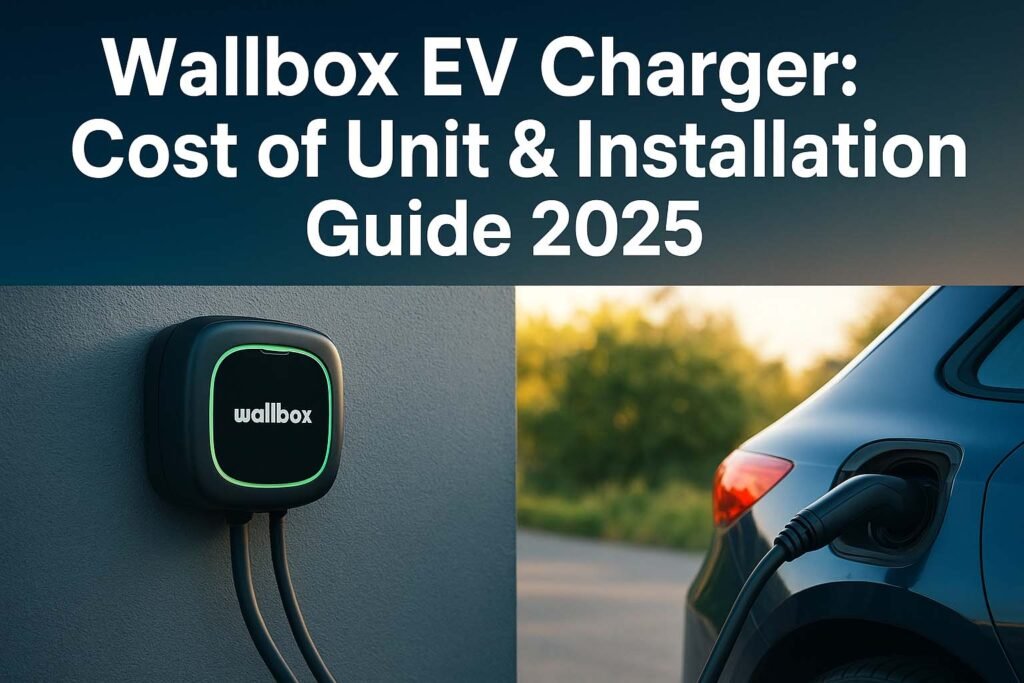
In this detailed guide, we will break down the unit cost, installation costs, influencing factors, and real-world examples. We will also compare Wallbox with other chargers so you know the value it brings. By the end, you’ll have clarity on how much you should budget in 2026 for a Wallbox EV Charger and its professional installation.
Key Takeaways
- The average cost of a Wallbox EV Charger in 2026 ranges between £550 and £1,200 ($650–$1,400) depending on model and features.
- Installation costs usually fall between £300 and £800 ($350–$1,000), influenced by wiring, location, and home setup.
- The total expense for unit plus installation typically ranges from £900 to £2,000 ($1,100–$2,400).
- Smart charging features, solar integration, and warranty coverage make Wallbox EV Chargers stand out.
- Government incentives and rebates can reduce the overall cost by up to 30%.
Understanding the Wallbox EV Charger in 2026
A Wallbox EV Charger is a compact, wall-mounted home charging unit. It connects to your home’s electrical system and supplies power directly to your electric vehicle. Wallbox offers different models such as Pulsar Plus, Commander, and Copper SB, each with varying capacities, features, and smart controls.
In 2026 , these chargers are designed not only for speed but also for energy management. For example, Wallbox chargers allow integration with solar panels, energy storage, and even dynamic load balancing. This means the charger adapts to your home’s available electricity without overloading the system.
Unlike standard 3-pin plug charging, a Wallbox EV Charger provides faster charging speeds, ranging from 7.4kW to 22kW depending on model and electrical setup. This reduces charging times significantly, often fully charging an EV overnight.
Planning a Wallbox installation? Before choosing a charger, review our guide to Level 2 EV Charger Installation Cost to understand typical equipment, electrical work, and installation expenses.
Wallbox EV Charger: Cost of Unit in 2026
The cost of a Wallbox EV Charger depends on the model, features, and power rating. Below is a breakdown of typical unit costs in 2026 .
| Wallbox Model | Power Rating | Features | Average Unit Cost (2026 ) |
|---|---|---|---|
| Wallbox Pulsar Plus | 7.4kW – 22kW | Compact, Wi-Fi, Bluetooth, smart app control | £550 – £800 ($650–$950) |
| Wallbox Copper SB | 7.4kW – 22kW | RFID access, solar integration, stylish design | £700 – £1,000 ($850–$1,200) |
| Wallbox Commander 2 | 7.4kW – 22kW | Touchscreen, multi-user management, Ethernet | £900 – £1,200 ($1,100–$1,400) |
The Pulsar Plus remains the most popular option for residential homes. It balances affordability, compact size, and smart features. For business or shared use, the Commander 2 offers advanced management and access control.
Wallbox EV Charger Installation Cost in 2026
Buying the unit is only part of the total expense. Professional installation is essential for safety, compliance, and efficiency. The cost depends on your electrical setup, the distance from your fuse box to the installation point, and whether upgrades are needed.
| Installation Scenario | Description | Estimated Cost (2026 ) |
|---|---|---|
| Standard Installation | Short cable run, modern fuse box, wall-mounted | £300 – £500 ($350–$600) |
| Complex Installation | Longer cable run, trenching, outdoor mounting | £500 – £800 ($600–$1,000) |
| Additional Upgrades | Fuse box upgrade, load management, solar integration | £200 – £500 ($250–$600) extra |
On average, most homeowners in 2026 spend £600–£1,200 ($750–$1,400) for installation when accounting for standard labor and minor upgrades.
Factors That Influence Wallbox EV Charger Cost
Several factors determine the final price you’ll pay:
Electrical Capacity of Your Home – If your home has limited supply, you may need an upgrade to handle a high-powered charger.
Location of Installation – Indoor installations near the fuse box are cheaper. Outdoor or detached garage setups often require more labor.
Smart Features – Integration with apps, Wi-Fi, and solar adds to unit cost but improves efficiency.
Local Regulations – In the UK, Part P compliance and RCD protection are required. In the US, NEC rules apply. Extra safety measures can raise cost.
Rebates and Incentives – Many regions offer EV charger grants or rebates. For example, the UK’s OZEV grant and US federal tax credits can lower upfront expense.
Wallbox pricing is only part of the total project cost. See our detailed Level 2 EV Charger Installation Cost guide for a clearer breakdown of charger installation, wiring, breakers, and other electrical expenses.
Total Cost of Wallbox EV Charger and Installation
When you combine the charger cost and installation, the total expense looks like this:
| Item | Average Cost Range (2026 ) |
|---|---|
| Wallbox Pulsar Plus + Install | £900 – £1,400 ($1,100–$1,700) |
| Wallbox Copper SB + Install | £1,100 – £1,600 ($1,300–$1,900) |
| Wallbox Commander 2 + Install | £1,400 – £2,000 ($1,700–$2,400) |
For most homeowners, budgeting around £1,200 ($1,450) ensures a quality Wallbox EV Charger and professional installation in 2026 .
Hardwired Level 2 EV Charger Installation Cost
Many homeowners choose a hardwired Wallbox charger because it offers a cleaner installation, improved reliability, and higher charging capacity than plug-in models. However, the Hardwired Level 2 EV Charger installation Cost depends on several factors, including the electrical panel capacity, circuit length, permit fees, labor rates, and whether a panel upgrade is required.
| Installation Factor | Typical Cost Range |
|---|---|
| Basic Installation | $500–$1,200 |
| Panel Upgrade (If Needed) | $1,000–$3,500 |
| Permit & Inspection | $50–$300 |
| Total Installed Cost | $700–$4,500+ |
For most Wallbox installations, a dedicated 240V circuit with the correct breaker and wire size is required to meet NEC requirements and ensure safe operation. Homes with modern electrical panels generally have lower installation costs, while older properties may require additional electrical work.
Want a detailed cost breakdown? Read our complete guide on Hardwired Level 2 EV Charger Installation Cost to explore labor charges, permit costs, panel upgrade expenses, and practical ways to reduce your installation budget before hiring an electrician.
EVIQO Unit Price vs Installation Labor Cost Comparison
If you’re comparing charger pricing with installation expenses, the EVIQO Level 2 EV Charger offers an excellent balance of affordability and premium features. In most homes, the installation labor can cost as much as—or even more than—the charger itself, depending on panel upgrades, wiring distance, and permit requirements. Choosing a reliable 48A hardwired charger helps maximize long-term value.
| Cost Item | Typical Price (USD) |
|---|---|
| EVIQO Level 2 EV Charger (48A) | $349–$449 |
| Standard Installation Labor | $400–$900 |
| Electrical Panel Upgrade (if required) | $500–$2,000+ |
*Prices may vary during promotions.
For homeowners seeking a dependable Level 2 charger with smart scheduling, Wi-Fi connectivity, and a durable weather-resistant design, the EVIQO model is a strong value.
Read our EVIQO Level 2 EV Charger Review for real-world performance, installation insights, and feature comparisons before purchasing.
CTA: Check the latest Amazon price for the EVIQO Level 2 EV Charger and see if a limited-time discount is available before you buy.
How Much to Install an EV Charger at Home?
Many homeowners ask, how much to install an EV charger at home before choosing a Wallbox charger. The total installation cost depends on your electrical panel capacity, wiring distance, labor rates, permit fees, and whether a dedicated 240V circuit is already available. Most Level 2 Wallbox installations are straightforward when the panel has sufficient capacity, while panel upgrades can increase the final cost.
| Installation Factor | Typical Cost Impact |
|---|---|
| Standard Level 2 Installation | $300–$800 |
| New 240V Circuit | $200–$600 |
| Electrical Panel Upgrade | $1,000–$3,000+ |
| Permit & Inspection | $50–$300 |
Before hiring an electrician, it helps to estimate every expense involved. Our detailed guide on how much to install an EV charger at home explains labor costs, permit requirements, panel upgrades, and regional pricing differences so you can budget accurately before purchasing your Wallbox charger.
Can You Do a DIY EV Charger Installation?
A DIY EV Charger Installation may look like a way to reduce upfront costs, but Level 2 EV chargers require proper electrical planning, circuit sizing, and safety checks. While mounting the charger and connecting app settings can be beginner-friendly, installing a dedicated 240V circuit usually requires a licensed electrician in many locations.
| Installation Task | DIY Friendly? | Notes |
|---|---|---|
| Mounting charger bracket | Yes | Requires basic tools and proper wall support |
| Running new 240V circuit | No | Requires electrical expertise and code compliance |
| Breaker and wiring selection | No | Must match charger amperage requirements |
| App setup and testing | Yes | Usually completed after installation |
Before choosing a DIY approach, check your local electrical codes, permit requirements, and warranty conditions. For a detailed guide covering tools, safety steps, and electrical requirements, see our complete guide on DIY EV Charger Installation before starting your home charging project.
40A vs 50A vs 60A Circuit for EV Chargers
Selecting the right circuit size is one of the most important decisions during a Wallbox EV charger installation. A 40A circuit typically supports a 32A charging output, making it suitable for most daily commuters. A 50A circuit allows up to 40A continuous charging, while a 60A circuit supports 48A charging for faster overnight charging, provided your electrical panel has sufficient capacity.
Choosing the correct breaker and wire size also helps ensure NEC compliance, improves safety, and prevents unnecessary installation costs.
| Circuit Breaker | Maximum Continuous Charging | Typical Use Case |
|---|---|---|
| 40A | 32A EV Charger | Standard overnight home charging |
| 50A | 40A EV Charger | Faster charging for larger EV batteries |
| 60A | 48A EV Charger | Maximum Level 2 charging for supported Wallbox units |
Before deciding, compare installation costs, electrical panel capacity, and your vehicle’s charging capability.
For a detailed comparison of breaker sizing, charging speed, wire requirements, and real-world examples, read our complete guide on 40A vs 50A vs 60A Circuit for EV Chargers to choose the most cost-effective option for your home charging setup.
Why Choose a Wallbox EV Charger in 2026?
Wallbox has become a trusted global name because of its balance between design, performance, and intelligence. Here are some key advantages:
- Fast Charging: Reduces charging time compared to a standard plug.
- Smart Control: Mobile app lets you schedule charging, track energy use, and optimize costs.
- Solar Integration: Use excess solar power to charge your EV.
- Load Balancing: Prevents overloading your home’s electrical system.
- Durability: Weatherproof designs ensure reliable outdoor use.
Compared to many generic chargers, Wallbox stands out for its innovation in energy management.
Not sure how much your home charging project may cost? Our Level 2 EV Charger Installation Cost guide explains the key expenses that can affect the final installation price, helping you plan your budget more accurately.
Government Incentives and Rebates in 2026
Governments continue to encourage EV adoption with financial support. For Wallbox EV Charger buyers, these incentives can significantly reduce costs.
- UK: OZEV EV Chargepoint Grant covers up to 75% of installation cost (maximum £350).
- US: Federal tax credit covers 30% of unit + installation cost, up to $1,000.
- EU: Many countries offer local subsidies ranging from €300 to €900 per charger.
Always check with your local energy authority or installer for updated incentive programs.
Comparison with Other EV Chargers
It helps to see how Wallbox compares with other popular chargers.
| Charger Brand | Power | Smart Features | Average Cost (Unit + Install) |
|---|---|---|---|
| Wallbox Pulsar Plus | 7.4–22kW | Wi-Fi, app, load balancing | £900–£1,400 |
| Tesla Wall Connector | 7.4–11kW | Tesla app integration | £800–£1,200 |
| Zappi Charger | 7.4–22kW | Solar optimization, eco mode | £1,000–£1,600 |
| EO Mini Pro | 7.2kW | Compact, smart features | £850–£1,300 |
Wallbox offers strong value with its mix of compact design, smart technology, and affordability compared to competitors.
Maintenance and Running Costs of Wallbox EV Charger
Once installed, a Wallbox EV Charger has very low running costs. Software updates are free, and most units carry a 3-year warranty. Occasional professional inspection ensures safety, especially if you expand your home’s electrical system. Unlike public charging, home charging is far cheaper per kWh, saving drivers hundreds annually.
Future Outlook for Wallbox EV Charger in 2026 and Beyond
Wallbox continues to innovate, moving towards bidirectional charging. This allows EV batteries to feed energy back into the home or grid, turning your car into a power storage system. Though still emerging, such features will shape the future of home charging.
Conclusion
The Wallbox EV Charger is one of the best investments EV owners can make in 2026. While the upfront cost may range between £900 and £2,000 ($1,100–$2,400) including installation, the convenience, long-term savings, and smart features make it highly worthwhile. With government incentives, the net cost can be even lower.
Home charging gives peace of mind, saves money, and maximizes the benefits of owning an electric vehicle. Whether you choose the Pulsar Plus for simple home charging or the Commander 2 for advanced management, Wallbox EV Chargers deliver reliability and future-ready technology.
Follow Us on Social:
Subscribe our Newsletter on Electrical Insights for latest updates from Electrical Engineering Hub
#WallboxEVCharger, #EVChargerCost, #EVChargingSolutions, #WallboxCharger, #EVChargerInstallation, #ElectricVehicleCharger, #HomeEVCharger, #WallboxCost2026, #EVChargingAtHome, #SmartEVCharging, #EVChargerGuide, #WallboxInstallation, #EVChargerSavings, #SustainableDriving, #EVCharger2026
