Solar Panel Installation Cost In The Philippines (2026 Guide) – System Prices, ROI, Savings & Installation Estimates
The demand for residential and commercial solar energy systems is growing rapidly across the country. Rising electricity prices, frequent power interruptions, and government support for renewable energy are encouraging more homeowners and businesses to invest in solar technology. One of the most searched questions today is the Solar Panel Installation Cost In The Philippines because buyers want to understand the actual investment, savings potential, and return on investment before switching to solar power.
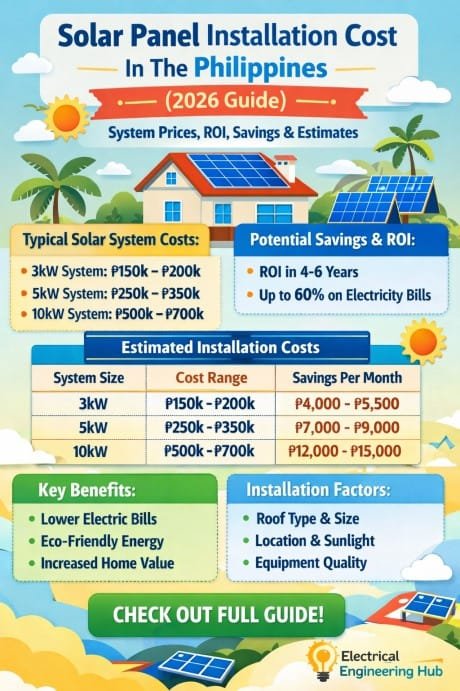
Table of Contents
In 2026, solar technology has become more efficient and affordable compared to previous years. Modern photovoltaic systems can significantly reduce monthly electricity bills while increasing property value. Whether you are planning to install a small residential setup or a larger commercial system, understanding the pricing structure is important before making a decision.
Find all about Solar Panel Installation Salary in USA
Average Solar Panel Installation Prices In The Philippines
The Solar Panel Installation Cost In The Philippines depends on several factors including system size, roof type, inverter quality, battery storage, labor charges, and location. On average, homeowners can expect the following installation estimates in 2026.
| System Size | Suitable For | Estimated Cost (PHP) | Monthly Savings |
|---|---|---|---|
| 1kW | Small homes | ₱70,000 – ₱110,000 | ₱1,200 – ₱2,000 |
| 3kW | Average household | ₱180,000 – ₱280,000 | ₱3,000 – ₱5,000 |
| 5kW | Medium to large homes | ₱280,000 – ₱420,000 | ₱5,000 – ₱8,000 |
| 10kW | Large homes or businesses | ₱550,000 – ₱850,000 | ₱10,000 – ₱16,000 |
These figures include solar panels, inverter, mounting structure, wiring, installation labor, and standard permits. Battery backup systems may increase total costs by 30% to 60%.
Factors Affecting Solar System Prices
Several key elements influence the final Solar Panel Installation Cost In The Philippines. Buyers should understand these factors to compare quotations properly.
Type of Solar Panels
Monocrystalline panels are more efficient and durable but cost slightly more than polycrystalline panels. Most installers now recommend monocrystalline modules due to better performance in limited roof space.
Inverter Quality
The inverter converts DC electricity into usable AC power. Hybrid and premium inverters cost more but provide better efficiency and monitoring features.
Know more about Solar Panel Installation Business Profit Margin
Roof Condition and Structure
Complex roof designs may require additional mounting materials and labor. Roof repairs before installation can also increase project expenses.
Battery Storage
Adding lithium-ion batteries allows homeowners to store excess electricity for nighttime use or power outages. However, batteries are one of the most expensive components in a solar setup.
Installation Location
Labor and transportation costs vary between Metro Manila, Cebu, Davao, and provincial areas. Remote locations may involve additional charges.
Residential Solar Installation Cost Breakdown
Below is a typical cost distribution for a residential 5kW solar power system.
| Component | Estimated Cost Range |
|---|---|
| Solar Panels | ₱120,000 – ₱170,000 |
| Inverter | ₱50,000 – ₱90,000 |
| Mounting System | ₱25,000 – ₱45,000 |
| Electrical Materials | ₱20,000 – ₱35,000 |
| Labor & Installation | ₱40,000 – ₱60,000 |
| Permits & Inspection | ₱10,000 – ₱20,000 |
The overall Solar Panel Installation Cost In The Philippines becomes more economical over time because solar systems typically last 25 years or more.
Use our online free tool Solar Panel Installation Cost Calculator
How Much Can You Save With Solar Energy?
Electricity rates in the Philippines remain among the highest in Southeast Asia. This makes solar power a highly attractive investment for households and businesses.
A properly sized system can reduce electric bills by 50% to 90%, depending on energy consumption and net metering arrangements. Homeowners using air conditioners, water pumps, refrigerators, and electric appliances during daytime hours usually achieve the highest savings.
Here is an example of estimated annual savings.
| Monthly Electric Bill | Recommended System | Estimated Annual Savings |
|---|---|---|
| ₱4,000 | 2kW – 3kW | ₱24,000 – ₱36,000 |
| ₱8,000 | 5kW | ₱60,000 – ₱90,000 |
| ₱15,000 | 8kW – 10kW | ₱120,000 – ₱180,000 |
These savings can increase further if electricity prices continue to rise in the coming years.
Return On Investment For Solar Systems
Many buyers consider the payback period before investing in renewable energy. The Solar Panel Installation Cost In The Philippines may seem high initially, but the long-term financial benefits are substantial.
Most residential solar systems achieve full return on investment within 4 to 7 years. Commercial installations may recover costs even faster due to higher daytime electricity consumption.
After reaching the payback period, the system continues generating nearly free electricity for many years. Since solar panels usually carry 25-year performance warranties, homeowners can enjoy long-term energy savings.
Know more about How to Test Solar Panel With Multimeter
Example ROI Calculation
| Details | Amount |
|---|---|
| System Size | 5kW |
| Installation Cost | ₱350,000 |
| Monthly Savings | ₱6,500 |
| Annual Savings | ₱78,000 |
| Estimated ROI Period | 4.5 Years |
This example demonstrates why many property owners are switching to solar energy in 2026.
Net Metering Benefits In The Philippines
Net metering allows homeowners to export excess electricity back to the utility grid. Energy credits reduce future electricity bills, improving system efficiency and savings.
The Renewable Energy Act supports net metering programs through utility providers such as Meralco and local electric cooperatives. Systems below 100kW generally qualify for residential net metering applications.
A grid-tied solar system combined with net metering provides one of the best financial returns for homeowners.
Explore details on Solar Inverter Selection
Is Battery Storage Worth It?
Battery systems are becoming increasingly popular because they provide backup power during outages. However, batteries significantly increase the Solar Panel Installation Cost In The Philippines.
For homeowners experiencing frequent blackouts, batteries may be a worthwhile investment. Lithium-ion batteries offer better lifespan and efficiency compared to older lead-acid technology.
Still, many buyers choose grid-tied systems without batteries to lower upfront expenses and maximize ROI.
Best Time To Install Solar Panels In 2026
The best time to install a solar power system is before electricity rates increase further. Solar equipment prices remain competitive in 2026 due to improved global manufacturing and strong market competition.
Many installers also offer financing plans, installment options, and zero-downpayment packages, making solar systems more accessible for Filipino households.
Government incentives and growing environmental awareness are also driving adoption across residential, agricultural, and commercial sectors.
Know more about Hybrid Solar Inverter Working Principle with Circuit Diagram
Tips To Reduce Installation Costs
Homeowners can reduce the Solar Panel Installation Cost In The Philippines by following these practical steps:
- Compare quotations from multiple certified installers
- Choose Tier-1 solar panel brands with long warranties
- Install energy-efficient appliances before sizing the system
- Consider net metering instead of expensive battery storage
- Use available financing or bank loan programs
- Schedule roof repairs before installation
These strategies help maximize long-term value and reduce unnecessary expenses.
Choosing The Right Solar Installer
Selecting an experienced installer is critical for system performance and safety. Always check the following before signing a contract:
| Checklist | Importance |
|---|---|
| PCAB License | Ensures legal operation |
| Product Warranty | Protects investment |
| Installation Experience | Reduces technical risks |
| After-Sales Support | Important for maintenance |
| Online Reviews | Shows customer satisfaction |
Professional installers also provide system design, permit processing, testing, and maintenance support.
Final Thoughts
The Solar Panel Installation Cost In The Philippines in 2026 is becoming more affordable as solar technology continues to improve. While the upfront investment may appear significant, the long-term savings, energy independence, and environmental benefits make solar power a smart financial decision.
Use our online tool for free Solar Performance Ratio Calculator – Measure Solar System Efficiency Accurately
Residential systems can dramatically reduce electricity bills while increasing property value and reducing dependence on traditional power sources. With proper installation and quality equipment, a solar system can deliver reliable performance for decades.
As energy prices continue to rise, more Filipino households and businesses are expected to invest in renewable energy solutions. Understanding system prices, ROI estimates, and savings potential helps buyers make informed decisions and choose the right solar setup for their needs.
Follow Us on Social:
Subscribe our Newsletter on Electrical Insights for latest updates from Electrical Engineering Hub
