
How Much Does a Hardwired Level 2 EV Charger Cost Installed? (2026)
Installing a hardwired Level 2 EV charger is one of the best upgrades for faster and more reliable home charging. While plug-in chargers are easier to install, many homeowners prefer a hardwired setup because it offers a permanent connection, higher amperage support, and improved electrical safety.
The average hardwired Level 2 EV charger installation cost in 2026 ranges from $900 to $2,500, depending on the charger, electrical panel capacity, wiring distance, permits, and labor charges. This guide explains every cost component so you can estimate your total investment before hiring an electrician.
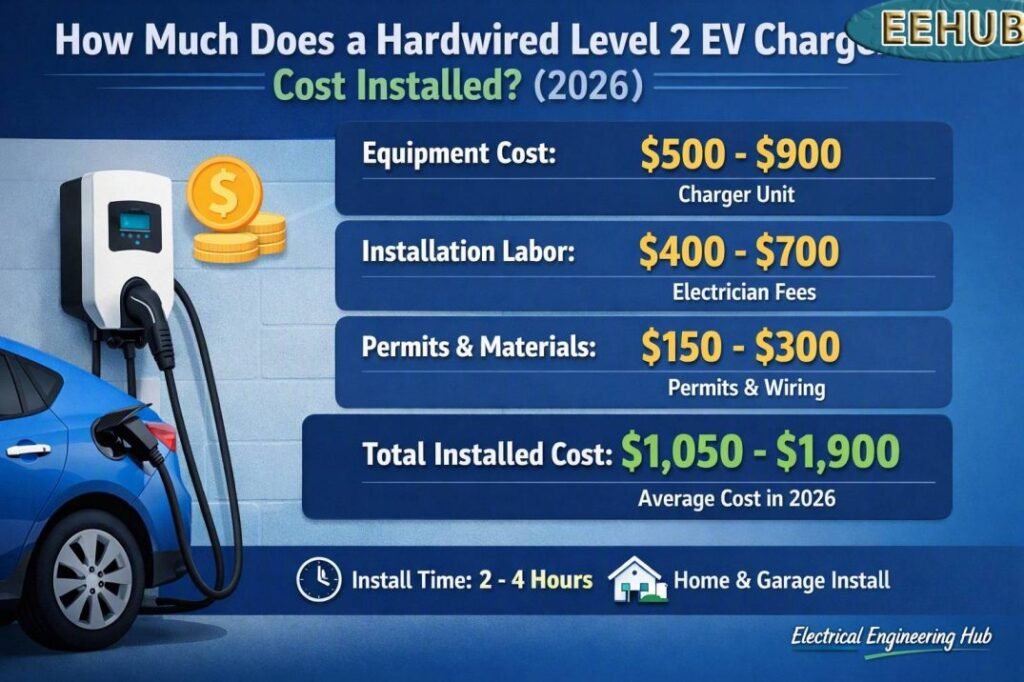
Table of Contents
Table of Contents
Hardwired Level 2 EV Charger Installation Cost at a Glance
| Item | Typical Cost (USD) |
|---|---|
| Hardwired Level 2 EV Charger | $350–$750 |
| Professional Installation | $400–$1,200 |
| Electrical Permit | $50–$250 |
| New Circuit Breaker | $60–$180 |
| Wiring & Conduit | $150–$600 |
| Panel Upgrade (If Needed) | $1,500–$4,000 |
| Total Installed Cost | $900–$2,500+ |
Quick Cost Summary
| Installation Type | Average Total Cost |
|---|---|
| Existing Circuit Available | $900–$1,300 |
| New 240V Circuit Required | $1,200–$1,900 |
| Long Cable Run | $1,500–$2,200 |
| Panel Upgrade Required | $2,500–$5,500 |
What Is a Hardwired Level 2 EV Charger?
A hardwired Level 2 EV charger connects directly to your home’s electrical panel instead of plugging into a NEMA outlet. The charger becomes a permanent part of the electrical system, reducing connection losses and eliminating outlet wear over time.
Most hardwired chargers operate on a dedicated 240-volt circuit and support charging speeds from 32A to 80A, depending on the electrical system and the charger rating.
Many electricians recommend hardwired installations because they comply with manufacturer requirements for higher charging currents and provide greater long-term reliability.
Average Hardwired Level 2 EV Charger Installation Cost in 2026
The hardwired Level 2 ev charger installation cost depends on several installation variables rather than just the charger itself.
| Cost Component | Estimated Price |
|---|---|
| Charger Unit | $350–$750 |
| Electrician Labor | $400–$1,200 |
| Materials | $150–$500 |
| Permit & Inspection | $50–$250 |
| Total | $900–$2,500 |
Homes with existing 240V circuits usually stay near the lower end of the price range. Older homes requiring electrical upgrades can exceed $4,000.
Considering a Wallbox charger for your home? Explore our complete guide on Wallbox EV Charger Cost and Installation to compare pricing, installation costs, and features before you buy.
Factors That Affect Installation Cost
Distance From the Electrical Panel
Longer cable runs require additional copper wire, conduit, fittings, and installation time.
| Distance | Typical Added Cost |
|---|---|
| Under 20 ft | Minimal |
| 20–50 ft | $150–$400 |
| Over 50 ft | $400–$900 |
Electrical Panel Capacity
Many older homes have 100A electrical service, while modern EV chargers often benefit from 200A service.
If the panel lacks sufficient capacity, an upgrade may become necessary.
Charger Amperage
Higher-powered chargers require larger conductors and breakers.
| Charger Output | Typical Breaker |
|---|---|
| 32A | 40A |
| 40A | 50A |
| 48A | 60A |
| 64A | 80A |
Larger breakers increase installation material costs.
Local Labor Rates
Electrician labor varies by region.
| Area | Average Labor Rate |
|---|---|
| Rural Areas | $65–$90/hour |
| Suburban Areas | $90–$130/hour |
| Major Cities | $130–$180+/hour |
EVIQO Level 2 EV Charger Installed Cost
The EVIQO Level 2 charger is a popular choice because it combines fast charging, smart features, and competitive pricing.
| Item | Estimated Cost |
|---|---|
| EVIQO Level 2 EV Charger (48A) | $399–$499 |
| Professional Installation | $450–$900 |
| Permit | $50–$200 |
| Total Installed Cost | $900–$1,600 |
The final price depends on the existing electrical infrastructure and installation complexity.
CTA: Read the Complete EVIQO Review
Before buying, compare charging speed, smart features, installation requirements, and long-term value in our in-depth EVIQO Level 2 EV Charger 48 Amp Review to see whether it fits your home charging needs.
Labor Cost for Hardwired Installation
Electricians typically charge between two and six hours for a standard installation.
| Installation Type | Labor Cost |
|---|---|
| Simple Installation | $400–$600 |
| Medium Complexity | $600–$900 |
| Complex Installation | $900–$1,500 |
Labor increases when the electrician must:
- Install new conduit
- Route wiring through finished walls
- Upgrade the electrical panel
- Obtain permits
- Perform utility coordination
Additional Costs You Should Consider
Besides the charger and labor, several additional expenses may affect the project budget.
| Additional Item | Typical Cost |
|---|---|
| Load Calculation | $100–$250 |
| Trenching (Detached Garage) | $500–$2,000 |
| GFCI Protection (Where Required) | $100–$250 |
| Surge Protection | $150–$400 |
| Utility Service Upgrade | $2,000–$5,000 |
These upgrades are not required for every installation but should be included in planning.
Want a complete cost breakdown for one of the most popular smart EV chargers? Read our Wallbox EV Charger Cost and Installation guide to understand equipment costs, electrician fees, and total installation expenses.
Is Hardwiring Better Than Plug-In Installation?
Both options have advantages, but hardwiring provides several long-term benefits.
| Hardwired | Plug-In |
|---|---|
| Permanent installation | Easy removal |
| Higher amperage support | Limited by outlet rating |
| Lower maintenance | Receptacle may wear over time |
| Better weather protection | Outlet requires periodic inspection |
| Preferred for 48A charging | Often limited to lower continuous current |
Many manufacturers recommend hardwiring for 48A chargers to achieve maximum charging performance. Read our complete guide on Hardwired vs Plug In EV Charger.
Ways to Reduce Installation Cost
You can reduce installation expenses without compromising safety.
- Install the charger close to the electrical panel.
- Schedule installation during other electrical work.
- Compare multiple licensed electrician quotes.
- Apply for local EV charger rebates.
- Check utility incentive programs.
- Select a charger with built-in smart load management.
Small planning decisions often save several hundred dollars.
Is a Hardwired Level 2 EV Charger Worth It?
For homeowners planning to own an electric vehicle for several years, the investment usually pays off through faster charging, improved convenience, and increased property appeal.
A professionally installed hardwired charger also minimizes maintenance concerns associated with receptacles and provides a cleaner installation.
Although the upfront investment is higher than Level 1 charging, the convenience of overnight charging often outweighs the installation cost.
CTA: Compare Before You Buy
If you’re considering a 48A home charger, read our detailed EVIQO Level 2 EV Charger 48 Amp Review. It covers charging performance, installation experience, app features, warranty, pros and cons, and whether it offers the best value compared with ChargePoint, Emporia, and Wallbox.
Related Guide & Tools
- EV Charger Load Calculation Tool
- Electric Vehicle Charging Time Calculator
- Grizzl E Level 2 EV Charger Review
- Hardwired vs Plug In EV Charger
Frequently Asked Questions
How much does a hardwired Level 2 EV charger cost installed?
Most homeowners spend between $900 and $2,500, while installations requiring panel upgrades can exceed $4,000.
Is hardwiring an EV charger cheaper than using a plug?
The installation cost is usually slightly higher, but hardwired chargers provide greater reliability and support higher charging currents.
Do I need a permit for installation?
Most municipalities require an electrical permit and inspection for a permanently installed EV charger.
Can I install a hardwired EV charger myself?
Unless you are a qualified electrician and local regulations allow it, professional installation is strongly recommended to ensure safety and code compliance.
Does a panel upgrade always increase the installation cost?
Yes. If your electrical panel lacks sufficient capacity, upgrading the service panel is often the largest additional expense in the project.
Final Thoughts
Understanding the hardwired Level 2 ev charger installation cost helps you budget accurately and avoid unexpected expenses. The total price depends on the charger you choose, labor rates, wiring distance, permits, and the condition of your home’s electrical system. In many homes, a professionally installed hardwired charger delivers faster charging, improved reliability, and better long-term value, making it a worthwhile investment for EV owners in 2026.
Follow Us on Social:
Subscribe our Newsletter on Electrical Insights for latest updates from Electrical Engineering Hub
HardwiredLevel2EVCharger, #EVChargerInstallation, #Level2EVCharger, #HomeEVCharging, #EVChargingCost, #ElectricVehicle, #EVChargingStation, #EVInstallationGuide, #SmartEVCharger, #EVCharging2026
