Underground Fiber Optic Cable Installation Standards: Best Guide
Fiber optic networks have become the backbone of modern communication systems. From internet service providers to industrial automation and smart infrastructure, underground fiber optic cables ensure reliable and high-speed data transmission. However, the success of any fiber network largely depends on following proper Underground Fiber Optic Cable Installation Standards during planning, installation, testing, and maintenance.
Adhering to recognized standards helps protect cables from mechanical damage, moisture ingress, soil movement, and accidental excavation. It also improves network reliability, reduces maintenance costs, and ensures compliance with regulatory requirements. Whether you are an electrical engineer, telecom contractor, project manager, or utility operator, understanding these standards is essential for a successful installation.
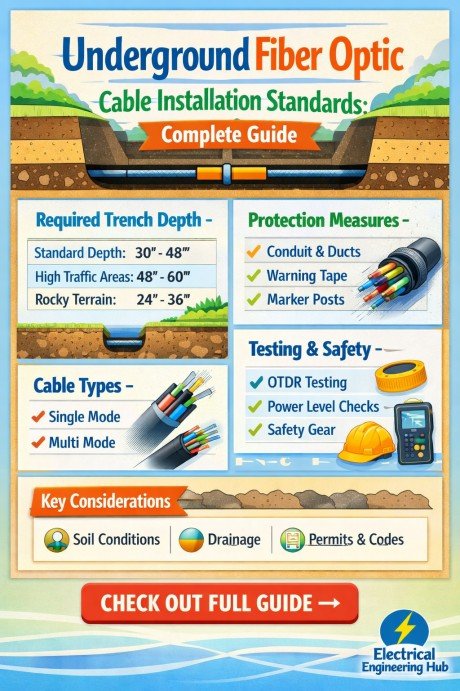
Table of Contents
Underground fiber optic systems are designed to operate for decades. Improper trenching, insufficient burial depth, poor duct installation, or inadequate cable protection can lead to network failures and expensive repairs. Therefore, industry standards establish guidelines for cable routing, conduit selection, separation distances, identification methods, and testing procedures.
For Accurate and Easy Cable Capacity, use our online tool Cable Trench Fill Calculator
Modern fiber deployments often involve direct-buried cables, duct systems, microduct networks, and utility corridors. Each installation method has specific requirements that must be followed to achieve long-term performance and compliance with local regulations.
Key Takeaways
- Proper installation standards increase fiber network reliability and lifespan.
- Minimum burial depth depends on local regulations and installation conditions.
- Protective ducts and conduits reduce the risk of cable damage.
- Route marking and warning tapes help prevent accidental excavation.
- Fiber testing and documentation are essential for quality assurance.
- Compliance with telecom and utility standards ensures safe operation.
- Regular inspections improve long-term network performance.
For a broader understanding of utility cable requirements, refer to our detailed guide on underground cable installation standards.
Learn more about earthing cable size as per iec
Why Underground Fiber Optic Cable Installation Standards Matter
Following Underground Fiber Optic Cable Installation Standards ensures network safety, performance, and regulatory compliance. Fiber optic cables carry critical communication data, making their protection a top priority.
Standardized installation practices provide several benefits:
| Benefit | Description |
|---|---|
| Improved Reliability | Reduces service interruptions and cable failures |
| Enhanced Safety | Prevents conflicts with electrical and utility systems |
| Lower Maintenance Costs | Minimizes future repair expenses |
| Regulatory Compliance | Meets telecom and utility requirements |
| Longer Service Life | Protects cables from environmental damage |
Proper compliance also simplifies future network expansions and maintenance activities.
Planning Requirements Before Installation
A successful installation begins long before trench excavation. Site surveys and route planning play a major role in ensuring compliance.
Important planning activities include:
- Conducting route surveys
- Identifying existing underground utilities
- Obtaining permits and approvals
- Assessing soil conditions
- Determining cable capacity requirements
- Selecting suitable installation methods
Engineers should also evaluate environmental factors such as flooding risks, groundwater levels, and future construction projects.
Discover everything about cable bending radius iec standard
Recommended Burial Depth Standards
One of the most important Underground Fiber Optic Cable Installation Standards is maintaining adequate burial depth.
Typical installation depths vary depending on local regulations and site conditions.
| Installation Area | Typical Burial Depth |
|---|---|
| Residential Areas | 450–600 mm |
| Road Crossings | 900–1200 mm |
| Industrial Sites | 750–1200 mm |
| Utility Corridors | 600–900 mm |
| Agricultural Areas | 900 mm or greater |
Greater burial depths may be required in areas prone to excavation activities or heavy vehicle traffic.
Trenching Requirements for Fiber Optic Cables
Trench construction directly affects cable protection and long-term reliability.
The trench should provide sufficient space for cable placement while preventing excessive bending or mechanical stress.
Common trenching recommendations include:
- Maintain uniform trench depth.
- Remove sharp rocks and debris.
- Provide proper drainage.
- Install bedding material where required.
- Ensure trench walls remain stable.
Explore our professional online tool for quick calculations Conduit Fill Calculator for Fiber Optic Cable: Important Tool
A layer of sand is often placed beneath and above the cable to protect the sheath from damage caused by soil movement or sharp objects.
Duct and Conduit Installation Standards
Many fiber optic networks use conduits instead of direct burial. Duct systems provide additional protection and simplify future cable replacement.
Common conduit materials include:
| Material | Application |
|---|---|
| HDPE | Most common for telecom networks |
| PVC | Short-distance installations |
| Steel Conduit | High-risk areas requiring extra protection |
| Microduct Systems | Fiber-to-the-home applications |
Conduits should be installed with smooth bends and adequate pull boxes to facilitate cable installation and maintenance.
Separation Distances from Other Utilities
Maintaining proper separation from other underground services is critical.
Fiber optic cables should be separated from:
- Power cables
- Water pipelines
- Gas pipelines
- Sewer systems
- Drainage infrastructure
Typical utility separation standards include horizontal and vertical clearances that reduce the risk of interference and accidental damage.
Know more about Wire Bending Radius NEC
| Utility Type | Typical Minimum Separation |
|---|---|
| Power Cables | 300–600 mm |
| Water Pipelines | 300 mm |
| Gas Pipelines | 500 mm |
| Sewer Lines | 300 mm |
Local utility regulations should always take precedence over general guidelines.
Cable Pulling and Handling Best Practices
Fiber optic cables contain delicate glass fibers that can be damaged by excessive pulling tension or improper handling.
Key installation practices include:
- Follow manufacturer pulling tension limits.
- Use approved pulling lubricants.
- Avoid excessive bending.
- Maintain minimum bend radius.
- Use cable rollers for long routes.
Exceeding recommended tension limits can create microbends that increase signal attenuation and reduce network performance.
See our comprehensive guide on cable bending radius iec standard
Warning Tape and Route Identification Requirements
Route identification is a major component of Underground Fiber Optic Cable Installation Standards.
Warning tapes are typically installed above the cable or conduit to alert excavation crews before reaching the fiber route.
Identification methods include:
- Underground warning tape
- Route marker posts
- GPS mapping records
- As-built drawings
- Utility database registration
Proper marking significantly reduces accidental cable strikes during future construction work.
Fiber Optic Cable Testing Standards
Testing verifies that installation quality meets performance requirements.
Several tests are performed before network commissioning.
| Test Type | Purpose |
|---|---|
| OTDR Testing | Detects faults and splice losses |
| Insertion Loss Testing | Measures signal attenuation |
| Continuity Testing | Verifies fiber integrity |
| End-to-End Testing | Confirms overall performance |
Comprehensive test records should be maintained for future troubleshooting and maintenance.
Know all about ieee and iec standards
Documentation and Compliance Requirements
Accurate documentation is essential for long-term asset management.
Installation records typically include:
- Cable route drawings
- GPS coordinates
- Splice diagrams
- Test reports
- Permit documentation
- Inspection records
Many telecom authorities require detailed documentation before approving network commissioning.
Compliance may involve adherence to standards from organizations such as:
- ITU-T
- TIA
- ISO
- IEC
- Local telecommunications authorities
Following these requirements helps ensure consistent quality across fiber infrastructure projects.
Dive deeper into instrument earthing iec standard
Common Installation Mistakes to Avoid
Even experienced contractors can encounter problems if standard procedures are overlooked.
Some common mistakes include:
- Insufficient burial depth
- Poor trench preparation
- Inadequate cable protection
- Improper bend radius
- Missing warning tape
- Incomplete testing
- Poor documentation
Avoiding these errors improves network reliability and reduces operational costs.
Conclusion
Underground Fiber Optic Cable Installation Standards provide a structured framework for designing, installing, testing, and maintaining reliable communication networks. Proper trenching, burial depth, conduit selection, utility separation, cable handling, testing, and documentation all contribute to long-term system performance.
Explore details on iec 61508 functional safety
Organizations that follow recognized standards benefit from improved network reliability, enhanced safety, lower maintenance costs, and regulatory compliance. As fiber optic infrastructure continues to expand worldwide, adherence to these installation standards remains essential for delivering dependable and future-ready communication services.
Frequently Asked Questions (FAQs)
What is the standard burial depth for underground fiber optic cables?
Most installations require burial depths ranging from 450 mm to 1200 mm depending on the location, traffic conditions, and local regulations.
Can fiber optic cables be directly buried without conduit?
Yes. Direct-buried fiber optic cables are specifically designed for underground installation, although conduits provide additional protection and easier maintenance.
Why is warning tape required above fiber optic cables?
Warning tape alerts excavation personnel before they reach the cable, reducing the risk of accidental damage during digging activities.
What tests are required after fiber optic cable installation?
Common tests include OTDR testing, insertion loss testing, continuity testing, and end-to-end performance verification.
Which standards apply to underground fiber optic cable installations?
Commonly referenced standards include ITU-T, TIA, IEC, ISO, and local telecommunications authority regulations governing fiber optic infrastructure deployment.
Get new guides in your feed. Follow Electrical Insights on LinkedIn for new electrical standards guides, calculators and design tips from Azad Circuit Hub.
#undergroundfiberopticcableinstallationstandards,#fiberopticcablestandards,#undergroundcableinstallation,#fiberopticnetwork,#telecominfrastructure,#cablelayingstandards,#fiberopticengineering,#networkinstallation,#telecommunicationstandards,#fiberopticconstruction