
Electric Vehicle Charging Cost Vs Gas: Complete Cost Comparison, Savings & Efficiency Guide 2026
Electric mobility is growing rapidly, and one of the biggest questions drivers ask today is how running costs compare between electricity and fuel. Understanding Electric Vehicle Charging Cost Vs Gas helps buyers make informed decisions before switching to EVs or upgrading their current vehicles. With fuel prices fluctuating and electricity tariffs changing regionally, the cost gap between both options is becoming more significant each year.
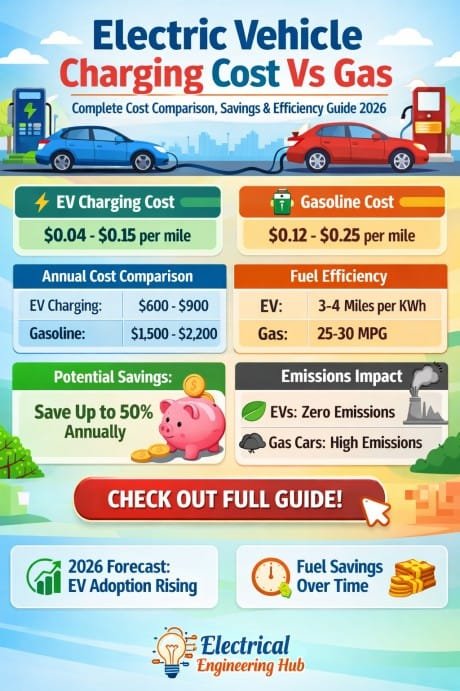
Table of Contents
In 2026, this comparison is not just about price per liter or per kilowatt-hour. It also includes efficiency, maintenance, driving patterns, and long-term savings. Many drivers are surprised when they calculate real-world expenses over a year. Electric mobility often delivers lower running costs, but the exact difference depends on usage and charging habits. That is why a detailed breakdown is essential for clarity.
Learn more about tesla insurance in florida
Overview of Electric Driving vs Fuel Driving Costs
When analyzing Electric Vehicle Charging Cost Vs Gas, the first step is understanding how energy is consumed differently. Electric vehicles use kilowatt-hours (kWh), while petrol or diesel vehicles rely on combustion efficiency measured in kilometers per liter.
EVs typically convert over 85% of electrical energy into motion, while gasoline engines only convert around 25% to 30%. This efficiency gap directly impacts running costs.
A simplified comparison shows:
| Factor | Electric Vehicle | Gasoline Vehicle |
|---|---|---|
| Energy Efficiency | 85–90% | 25–30% |
| Energy Unit Cost | per kWh | per liter |
| Maintenance Cost | Low | Higher |
| Refueling Time | Moderate (charging) | Fast (fueling) |
This comparison highlights why Electric Vehicle Charging Cost Vs Gas often favors electric mobility in long-term usage.
Cost Per Kilometer Breakdown
One of the most practical ways to evaluate Electric Vehicle Charging Cost Vs Gas is by calculating cost per kilometer.
On average:
| Vehicle Type | Energy Consumption | Cost per km (Approx.) |
|---|---|---|
| Electric Car | 15–20 kWh/100 km | Low to moderate |
| Petrol Car | 8–12 km per liter | Higher |
| Hybrid Car | Mixed usage | Moderate |
EVs usually cost 50% to 70% less per kilometer compared to petrol vehicles, depending on electricity rates and fuel prices. Home charging is significantly cheaper than public fast charging, which can slightly increase overall expenses.
Find out more about home ev charging station installation
Charging Types and Real Cost Impact
Charging methods significantly influence Electric Vehicle Charging Cost Vs Gas outcomes. Not all charging is equal, and cost varies based on infrastructure.
Common charging options include:
- Home charging (slow AC charging, lowest cost)
- Public AC charging stations
- DC fast charging hubs (higher cost but faster)
| Charging Type | Average Cost per kWh | Usage Scenario |
|---|---|---|
| Home Charging | Low | Daily charging |
| Public AC Charging | Medium | Workplace/malls |
| Fast DC Charging | High | Long-distance travel |
Drivers who rely mostly on home charging experience the most savings in Electric Vehicle Charging Cost Vs Gas comparisons.
Use our online tool ev battery degradation calculator
Gasoline Cost Breakdown in Real Usage
Fuel expenses include more than just pump price. Engine maintenance, oil changes, and efficiency loss in traffic all add to total cost.
Typical gasoline vehicle expenses include:
- Fuel cost per liter
- Engine oil replacement
- Air filter and spark plug maintenance
- Reduced mileage in traffic conditions
When calculating Electric Vehicle Charging Cost Vs Gas, fuel-based vehicles consistently show higher operational expenses, especially in urban driving where stop-and-go traffic reduces fuel efficiency.
Dive deeper into ev charger not working
Annual Savings Comparison Example
A clearer view of Electric Vehicle Charging Cost Vs Gas can be seen through annual usage.
Assume:
- Daily driving: 50 km
- Annual distance: 18,000 km
| Category | Electric Vehicle | Gasoline Vehicle |
|---|---|---|
| Energy Cost per Year | Lower | Higher |
| Maintenance | Minimal | Frequent |
| Total Annual Cost | Significantly lower | Higher |
In most cases, EV owners save a noticeable amount each year, especially when charging at home. Over 5 years, the savings can become substantial enough to offset the initial purchase difference.
Efficiency and Performance Comparison
Efficiency plays a key role in Electric Vehicle Charging Cost Vs Gas evaluation. EVs convert stored energy directly into motion, reducing waste. Gas engines lose energy through heat, friction, and exhaust.
Key differences include:
- EVs deliver instant torque and smoother acceleration
- Gas engines require gear shifts and fuel combustion cycles
- EV regenerative braking improves energy recovery
- ICE vehicles lose energy during idling
These factors contribute to lower overall cost per kilometer for EVs, especially in city driving conditions.
Read in detail about how to reset chargepoint home charger
Hidden Costs and Practical Considerations
While Electric Vehicle Charging Cost Vs Gas generally favors EVs, some hidden factors should be considered.
For EVs:
- Battery degradation over time
- Charging infrastructure availability
- Installation cost of home charger
For gas vehicles:
- Rising fuel prices
- Engine servicing frequency
- Emission-related taxes in some regions
Despite these factors, EVs still maintain a cost advantage in most urban and semi-urban driving scenarios.
Future Trends in 2026 Energy Costs
The gap in Electric Vehicle Charging Cost Vs Gas is expected to widen further in 2026 due to several trends:
- Expansion of renewable energy reducing electricity cost volatility
- Government incentives for EV charging infrastructure
- Increasing fuel taxes in many regions
- Improved EV battery efficiency and range
As charging networks expand, fast charging costs are expected to stabilize, making EV ownership even more economical in the long run.
Use our online tool EV Range Calculator
Conclusion
The complete analysis of Electric Vehicle Charging Cost Vs Gas clearly shows that electric vehicles offer a more cost-efficient and energy-effective solution for modern transportation. While upfront costs and charging infrastructure still play a role, the long-term savings, lower maintenance, and higher efficiency make EVs a strong alternative to traditional fuel-powered cars.
For drivers covering regular daily distances, the financial benefits become even more noticeable over time. As technology improves and energy systems evolve, the cost gap between electricity and fuel is likely to increase further in favor of electric mobility.
Use our online tool EV Charger Load Calculation Tool
Follow Us on Social:
Subscribe our Newsletter on Electrical Insights for latest updates from Electrical Engineering Hub
#ElectricVehicleChargingCostVsGas,#EVvsGas,#EVChargingCost,#FuelCostComparison,#ElectricVehicles,#GasPrices,#EVSavings,#CleanEnergy,#SustainableTransport,#CostPerMileEV
