
Design Of Electric Vehicle Charging System | Complete Guide for Efficient EV Infrastructure Planning, Installation & Optimization
The rapid adoption of electric vehicles has made charging infrastructure one of the most important pillars of modern energy systems. A well-planned charging network ensures reliability, reduces downtime, and supports large-scale EV integration in urban and rural environments. The Design Of Electric Vehicle Charging System plays a central role in determining how efficiently power is distributed, how safely equipment operates, and how cost-effective the entire infrastructure becomes over time.
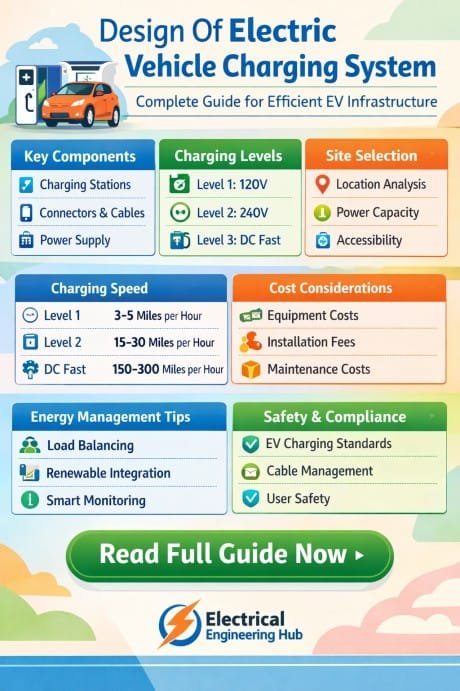
Table of Contents
In today’s energy landscape, governments, private developers, and commercial operators are investing heavily in EV infrastructure. From home chargers to highway fast-charging stations, every setup requires careful planning, load assessment, and compliance with electrical safety standards.
A properly executed system not only improves user experience but also enhances grid stability and long-term sustainability. The Design Of Electric Vehicle Charging System must therefore balance electrical engineering principles with practical usage needs such as accessibility, scalability, and smart energy management.
Explore everything about Electric Vehicle Battery Replacement Cost
System Planning and Load Assessment for EV Infrastructure
The foundation of any charging network starts with accurate load forecasting and site evaluation. Engineers analyze expected vehicle volume, charging behavior, and peak load demand before selecting hardware and grid connections. Without this step, systems may face overload issues or inefficient energy distribution.
In the Design Of Electric Vehicle Charging System, planners typically evaluate transformer capacity, distribution panel ratings, and cable sizing to ensure safe operation under full load conditions. This phase also includes selecting charging levels such as Level 1, Level 2, or DC fast charging depending on user requirements.
Key planning factors include:
- Expected number of EV users per day
- Charging duration and dwell time
- Grid capacity and backup requirements
- Environmental and physical site conditions
- Future scalability for additional chargers
Use our online tool EV Charger Load Calculation Tool
Load Distribution and Capacity Management Table
| Component | Function | Key Consideration |
|---|---|---|
| Transformer | Power supply regulation | Must handle peak load demand |
| Distribution Panel | Power allocation | Balanced phase distribution |
| Charging Units | EV energy delivery | Compatibility with EV standards |
| Cables & Wiring | Power transmission | Proper insulation & sizing |
A well-structured load assessment ensures the Design Of Electric Vehicle Charging System operates efficiently without unexpected power interruptions or overheating risks.
Use our online tool for free EV Charger Breaker and Wire Size Calculator
Charger Types, Electrical Architecture, and Grid Integration
Modern EV infrastructure includes multiple charger types, each designed for different use cases. Slow AC chargers are commonly used in residential setups, while DC fast chargers dominate commercial and highway stations due to their high-speed charging capability.
In the Design Of Electric Vehicle Charging System, electrical architecture is designed around AC-to-DC conversion efficiency, power factor correction, and harmonic control. Proper integration with the local grid is essential to avoid voltage fluctuations and maintain power quality.
Engineers also incorporate smart grid connectivity, enabling real-time monitoring and demand response features. This helps utilities balance load during peak hours and reduce energy costs for operators.
A structured approach to system architecture ensures:
- Stable voltage regulation
- Reduced energy losses
- Improved charging efficiency
- Seamless grid communication
- Compatibility with renewable energy sources
Use our online tool EV Range Calculator
The Design Of Electric Vehicle Charging System becomes more effective when integrated with solar panels or battery energy storage systems, reducing dependency on conventional grid electricity.
Installation Practices, Safety Standards, and Equipment Layout
Installation is a critical stage where theoretical planning is converted into real-world infrastructure. Proper grounding, cable routing, and protective devices are essential to ensure safe operation. Electrical safety compliance with international standards such as IEC and local electrical codes is mandatory.
In the Design Of Electric Vehicle Charging System, installation also includes physical layout planning to ensure smooth vehicle movement and user convenience. Charging stations must be positioned for easy access, proper ventilation, and minimal cable stress.
Installation Checklist Table
| Installation Step | Purpose | Safety Requirement |
|---|---|---|
| Earthing System | Prevent electric shock | Low resistance grounding |
| Cable Routing | Power distribution | Heat-resistant conduits |
| Circuit Protection | Overload prevention | MCB and RCCB installation |
| Physical Layout | User accessibility | Proper spacing between chargers |
Additional considerations include weatherproof enclosures for outdoor units and anti-theft protection for high-value charging equipment. Proper labeling and signage also enhance operational safety and user guidance.
Use our free tool Electric Car Charging Vs Petrol Calculator
Smart Charging, Energy Optimization, and Future Scalability
Modern EV infrastructure is evolving rapidly with the integration of smart technologies. Dynamic load management, mobile app control, and remote diagnostics are now standard features in advanced charging systems. These technologies allow operators to optimize energy usage and reduce operational costs.
The Design Of Electric Vehicle Charging System increasingly relies on data-driven optimization techniques. Smart charging algorithms adjust power delivery based on grid demand, electricity pricing, and battery condition of the vehicle. Know more about Electric Vehicle Charging Station Cost
Energy optimization strategies include:
- Peak shaving to reduce grid stress
- Time-of-use pricing integration
- Renewable energy prioritization
- Battery storage integration for load balancing
- Predictive maintenance using IoT sensors
Smart Charging Features Comparison Table
| Feature | Benefit | Application |
|---|---|---|
| Load Management | Prevents overload | Commercial stations |
| Remote Monitoring | Real-time control | Fleet charging hubs |
| Dynamic Pricing | Cost efficiency | Public charging networks |
| Predictive Maintenance | Reduced downtime | Large-scale EV infrastructure |
Scalability is another key factor. The Design Of Electric Vehicle Charging System must support future expansion without requiring complete redesign. Modular charging units and expandable distribution systems make upgrades easier and more cost-effective.
Use our free tool Electric Vehicle Charging Time Calculator
Cost Analysis, Maintenance Strategy, and Long-Term Performance
Financial planning plays a major role in EV infrastructure development. Initial setup costs include equipment purchase, civil works, electrical installation, and software integration. However, long-term profitability depends on efficient maintenance and operational management.
In the Design Of Electric Vehicle Charging System, maintenance strategies are built around preventive checks and real-time monitoring. Regular inspection of connectors, cooling systems, and electrical panels ensures consistent performance and reduces failure risks.
Operators must also consider:
- Energy tariffs and operational costs
- Maintenance scheduling and downtime reduction
- Equipment lifecycle and replacement planning
- Software updates and cybersecurity protection
Find all about EV Charging Station Code Requirements
A structured cost-benefit analysis ensures sustainable operations while maintaining service quality. Efficient maintenance not only extends system lifespan but also improves user satisfaction and trust in EV infrastructure.
Long-term performance is enhanced through continuous upgrades and integration of emerging technologies such as wireless charging and ultra-fast charging systems. These innovations will further redefine the Design Of Electric Vehicle Charging System in the coming years, making it more efficient, intelligent, and environmentally friendly. Know more about ChargePoint Charging Station Cost
Follow Us on Social:
Subscribe our Newsletter on Electrical Insights for latest updates from Electrical Engineering Hub
#DesignOfElectricVehicleChargingSystem,#EV,#EVCharging,#ElectricVehicle,#SmartGrid,#RenewableEnergy,#EVCharger,#SustainableEnergy,#PowerEngineering,#EVInfrastructure
