
Code Of Practice For Electric Vehicle Charging Equipment Installation: Best Guide
Electric mobility is expanding quickly, and with it comes the need for safe and reliable charging infrastructure. Proper installation is not only about connecting hardware but also about ensuring long-term safety, efficiency, and compliance with electrical standards.
The Code Of Practice For Electric Vehicle Charging Equipment Installation plays a central role in guiding engineers, electricians, and project managers to deliver installations that meet safety expectations and performance requirements. It helps reduce risks such as electric shock, fire hazards, and system failures while ensuring compatibility with modern EV systems.
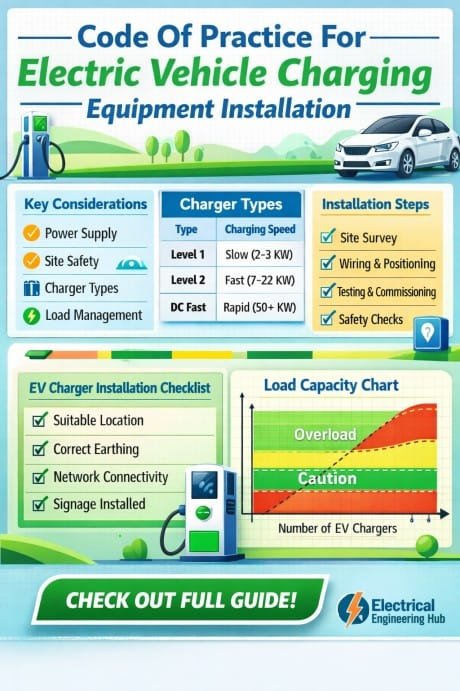
Table of Contents
As electric vehicles become more common in residential, commercial, and industrial environments, following structured guidelines is no longer optional. It ensures that every charging point operates efficiently under varying load conditions and environmental factors. Understanding this framework is essential for anyone involved in EV infrastructure development.
Use our free tool Electric Car Charging Vs Petrol Calculator
Overview of Installation Standards and Safety Framework
The Code Of Practice For Electric Vehicle Charging Equipment Installation provides a structured approach for planning, designing, and executing EV charging setups. It defines how electrical capacity should be assessed, how protection systems should be integrated, and how equipment should be tested before commissioning.
This framework is widely aligned with international electrical installation standards, including earthing systems, circuit protection, and load balancing. It also ensures that charging stations are suitable for different environments such as homes, workplaces, and public charging hubs.
Below is a simplified comparison of installation environments:
| Installation Type | Typical Power Rating | Protection Requirement | Usage Frequency |
|---|---|---|---|
| Residential Home | 3.7 kW – 7.4 kW | RCD Type A or B | Low to Medium |
| Workplace | 7.4 kW – 22 kW | Surge protection + load management | Medium |
| Public Fast Charging | 50 kW – 350 kW | High-level fault protection systems | High |
The Code Of Practice For Electric Vehicle Charging Equipment Installation ensures that each of these environments is assessed correctly before installation begins.
Use our free tool Electric Vehicle Charging Time Calculator
Key Technical Requirements for EV Charging Systems
Every EV charging system must meet specific technical requirements to ensure safety and performance. The Code Of Practice For Electric Vehicle Charging Equipment Installation outlines the need for proper cable sizing, protective devices, and correct installation of earthing systems.
Electricians must evaluate the total load demand of the property before adding charging equipment. This prevents overload on existing electrical infrastructure. In addition, dedicated circuits are recommended for EV chargers to avoid interference with other appliances.
Key technical considerations include:
- Proper conductor sizing based on load capacity
- Installation of residual current devices for shock protection
- Correct earthing and bonding practices
- Voltage drop management over long cable runs
- Surge protection devices for sensitive electronics
These requirements ensure that charging systems operate efficiently without compromising electrical safety.
Electrical Safety Standards and Risk Management
Safety is the foundation of every EV charging installation. The Code Of Practice For Electric Vehicle Charging Equipment Installation emphasizes risk assessment before any physical work begins. This includes checking existing wiring conditions, insulation resistance, and fault protection mechanisms.
Find all about EV Charging Station Code Requirements
Installers must also consider environmental conditions such as moisture, temperature variations, and exposure to dust or chemicals. Outdoor charging stations require additional protective enclosures to maintain safety and durability.
A basic safety checklist used during installation is shown below:
| Safety Step | Description | Importance Level |
|---|---|---|
| Site Inspection | Evaluate electrical infrastructure | High |
| Load Calculation | Confirm system capacity | High |
| Earthing Check | Ensure proper grounding | Critical |
| Protective Device Testing | Verify RCD functionality | Critical |
| Final Inspection | Full system validation | High |
Following these steps ensures compliance with safe installation practices and reduces long-term operational risks.
Installation Process and Practical Execution
The installation process requires careful planning and execution. The Code Of Practice For Electric Vehicle Charging Equipment Installation provides step-by-step guidance to ensure consistency across projects.
Know more about ChargePoint Charging Station Cost
The process typically includes:
- Initial site survey and electrical assessment
- Load calculation and charger selection
- Circuit design and protection planning
- Physical installation of cabling and mounting units
- Connection to distribution board
- Testing and verification of system performance
Each stage must be completed by qualified personnel to ensure compliance and safety.
Installation also involves selecting the right type of charging equipment, such as wall-mounted chargers for homes or pedestal units for public areas. Cable management is equally important to prevent wear and accidental damage.
Testing, Inspection, and Commissioning Procedures
Before any EV charging system is put into operation, thorough testing is required. The Code Of Practice For Electric Vehicle Charging Equipment Installation requires electrical continuity tests, insulation resistance checks, and functional verification of charging units.
Commissioning ensures that the system performs correctly under real load conditions. It also confirms that protective devices respond accurately in case of faults. Regular inspection schedules are recommended to maintain long-term safety and reliability.
Know more about Electric Vehicle Charging Station Cost
Testing procedures typically include:
- Earth fault loop impedance testing
- RCD trip time measurement
- Voltage stability checks
- Functional charging tests with EV simulation
These procedures help confirm that the installation is ready for safe public or private use.
Common Installation Mistakes and How to Avoid Them
Even experienced installers can make errors that compromise safety or performance. The Code Of Practice For Electric Vehicle Charging Equipment Installation highlights several common mistakes that should be avoided.
Frequent issues include undersized cables, poor earthing connections, and incorrect placement of protective devices. Another common problem is failure to consider future load expansion, which can lead to system overload.
Below is a summary of typical mistakes and solutions:
| Common Issue | Consequence | Recommended Fix |
|---|---|---|
| Undersized wiring | Overheating risk | Use correct cable sizing charts |
| Poor grounding | Electric shock hazard | Improve earthing system |
| Lack of surge protection | Equipment damage | Install SPD devices |
| Incorrect charger placement | User inconvenience | Follow accessibility guidelines |
Avoiding these mistakes improves system reliability and reduces maintenance costs over time.
Use our online tool EV Charger Load Calculation Tool
Compliance, Certification, and Future Readiness
Regulatory compliance is essential for any EV charging installation. The Code Of Practice For Electric Vehicle Charging Equipment Installation ensures that all systems meet national and international safety requirements. Certification is typically required after installation to confirm that all standards have been met.
Certified installations not only ensure safety but also improve user trust and system durability. As electric vehicle adoption grows, future-ready installations are becoming more important. This includes smart charging systems, load management integration, and compatibility with renewable energy sources.
Proper documentation, including test reports and wiring diagrams, must be maintained for audit and maintenance purposes.
Explore everything about Electric Vehicle Battery Replacement Cost
Conclusion
The growing demand for electric vehicles has made structured installation guidelines essential for safe and efficient charging infrastructure. The Code Of Practice For Electric Vehicle Charging Equipment Installation ensures that every stage, from planning to commissioning, follows strict technical and safety standards. It supports electricians and engineers in delivering reliable systems that can handle modern energy demands while maintaining user safety and regulatory compliance.
Get new guides in your feed. Follow Electrical Insights on LinkedIn for new electrical standards guides, calculators and design tips from Azad Circuit Hub.
#EVCharging,#EVInstallation,#ChargingStations,#ElectricVehicle,#EVInfrastructure,#ElectricalSafety,#EVChargerSetup,#GreenEnergy,#SustainableTransport,#EnergyCompliance
