Best 12 Electric Car Charger for Home Use – Top-Rated, Fast Charging & Smart EV Charger Reviews
As electric vehicles become more common, installing an Electric Car Charger for Home use has become one of the most practical upgrades for EV owners. Charging at home is convenient, cost-effective, and eliminates the need for frequent visits to public charging stations. A reliable home EV charging station can significantly reduce charging times while offering smart features such as scheduling, energy monitoring, and mobile app control.
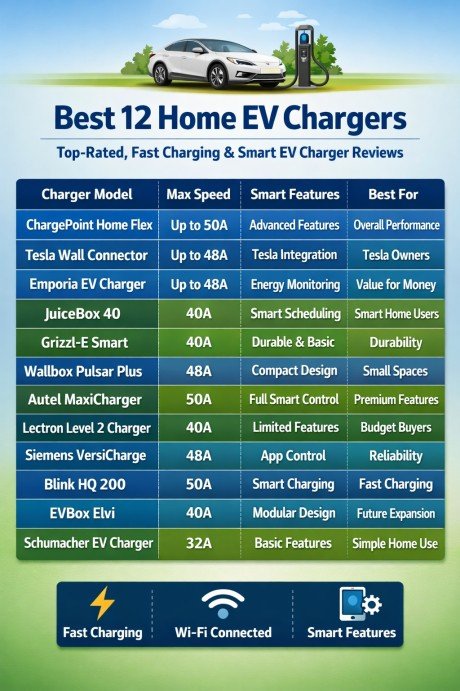
Table of Contents
Choosing the right charger can be challenging because there are many options available. Factors such as charging speed, smart connectivity, cable length, weather resistance, and compatibility with your vehicle should all be considered before making a purchase.
This guide reviews the best 12 chargers currently available and highlights their key features, pros, and ideal use cases.
Find all about Tesla Level 2 Home Charger Installation Cost
Best 12 Electric Car Charger for Home Use
Comparison Table of Best 12 Electric Car Charger for Home Use
| Charger Model | Max Charging Speed | Smart Features | Wi-Fi Connectivity | Best For |
|---|---|---|---|---|
| ChargePoint Home Flex | Up to 50A | Advanced | Yes | Overall Performance |
| Tesla Wall Connector | Up to 48A | Tesla Integration | Yes | Tesla Owners |
| Emporia EV Charger | Up to 48A | Energy Monitoring | Yes | Value for Money |
| JuiceBox 40 | 40A | Smart Scheduling | Yes | Smart Home Users |
| Grizzl-E Smart | 40A | Basic Smart Features | Yes | Durability |
| Wallbox Pulsar Plus | 48A | Compact Design | Yes | Small Spaces |
| Autel MaxiCharger | 50A | Full Smart Control | Yes | Premium Features |
| Lectron Level 2 Charger | 40A | Limited | Optional | Budget Buyers |
| Siemens VersiCharge | 48A | App Control | Yes | Reliability |
| Blink HQ 200 | 50A | Smart Charging | Yes | Fast Charging |
| EVBox Elvi | 40A | Modular Design | Yes | Future Expansion |
| Schumacher EV Charger | 32A | Basic Features | No | Simple Home Use |
Why Install a Home EV Charger?
A dedicated home charging station offers several benefits compared to using a standard wall outlet.
Key Advantages
- Faster charging than Level 1 charging
- Convenient overnight charging
- Lower electricity costs during off-peak hours
- Increased property value
- Better battery management
- Enhanced safety features
Explore all about level 2 ev charger installation price
Most modern chargers are Level 2 chargers that operate on 240 volts and can charge an EV several times faster than a regular household outlet.
Best 12 Electric Car Chargers for Home Use
1. ChargePoint Home Flex
The ChargePoint Home Flex consistently ranks among the best options for residential charging. It supports adjustable amperage settings and works with nearly every electric vehicle available today.
Features
- Up to 50 amps charging
- Mobile app integration
- Alexa compatibility
- Energy usage tracking
- Flexible installation options
Pros
- Excellent app functionality
- Fast charging performance
- Trusted brand reputation
Cons
- Higher price than some competitors
2. Tesla Wall Connector
Tesla owners often prefer the Tesla Wall Connector because it integrates seamlessly with Tesla vehicles and provides fast charging performance.
Use our free tool Electric Car Charging Vs Petrol Calculator
Features
- Up to 48 amps output
- Wi-Fi connectivity
- Automatic firmware updates
- Sleek design
Pros
- Optimized for Tesla vehicles
- Attractive appearance
- Easy installation
Cons
- Best suited for Tesla owners
3. Emporia EV Charger
Emporia has become popular because it combines smart technology with affordability. It offers exceptional value while maintaining strong performance.
Features
- 48-amp charging
- Smart energy monitoring
- Mobile app control
- Scheduled charging
Use our free tool Electric Vehicle Charging Time Calculator
Pros
- Competitive pricing
- Detailed energy reports
- Easy setup
Cons
- App interface may feel complex for some users
4. JuiceBox 40
JuiceBox has built a strong reputation among EV enthusiasts. The JuiceBox 40 provides intelligent charging and advanced scheduling options.
Features
- Smart charging schedules
- Voice assistant support
- Wi-Fi connectivity
- Energy tracking
Pros
- Strong software platform
- Reliable charging
- Useful energy analytics
Cons
- Cable management could be improved
5. Grizzl-E Smart
The Grizzl-E Smart charger is known for its rugged construction and weather-resistant design.
Features
- Heavy-duty enclosure
- Smart charging functions
- Indoor and outdoor installation
- Up to 40 amps
Pros
- Extremely durable
- Suitable for harsh climates
- Long service life
Cons
- Fewer premium app features
Find all about EV Charging Station Code Requirements
6. Wallbox Pulsar Plus
The Wallbox Pulsar Plus is one of the most compact chargers available, making it ideal for garages with limited space.
Features
- Compact design
- Wi-Fi and Bluetooth support
- Smart charging management
- Up to 48 amps
Pros
- Space-saving design
- Easy app control
- Modern appearance
Cons
- Premium pricing
7. Autel MaxiCharger
Autel’s MaxiCharger offers advanced charging controls and premium features for homeowners seeking maximum flexibility.
Features
- Up to 50 amps
- Smart load balancing
- Weather-resistant housing
- Mobile app support
Know more about ChargePoint Charging Station Cost
Pros
- Powerful charging output
- Excellent build quality
- Rich feature set
Cons
- Installation costs may be higher
8. Lectron Level 2 Charger
The Lectron Level 2 Charger provides a budget-friendly solution for EV owners who want faster home charging without spending a premium.
Features
- Portable design
- 40-amp charging
- Simple operation
- Wide compatibility
Pros
- Affordable
- User-friendly
- Good charging speed
Cons
- Limited smart features
Know more about Electric Vehicle Charging Station Cost
9. Siemens VersiCharge
Siemens brings industrial-grade reliability to residential EV charging solutions.
Features
- Smart app control
- Adjustable amperage
- Durable construction
- Up to 48 amps
Pros
- Trusted manufacturer
- Dependable operation
- Strong safety features
Cons
- Higher initial investment
10. Blink HQ 200
The Blink HQ 200 is designed for homeowners who prioritize charging speed and smart functionality.
Features
- Up to 50 amps
- Wi-Fi connectivity
- Charging schedules
- Usage reporting
Use our online tool EV Charger Load Calculation Tool
Pros
- Fast charging
- Smart controls
- Reliable performance
Cons
- Subscription features may apply in some regions
11. EVBox Elvi
The EVBox Elvi stands out because of its modular design, allowing future upgrades without replacing the entire charger.
Features
- Upgradeable hardware
- Smart charging controls
- App management
- Compact installation
Pros
- Future-proof design
- High-quality construction
- Good efficiency
Cons
- Premium cost
12. Schumacher EV Charger
Schumacher is a well-known name in battery charging equipment. This charger is ideal for users seeking simplicity and reliability.
Features
- Basic operation
- Durable design
- 32-amp charging
- Indoor installation
Read a detailed Grizzl E Level 2 EV Charger Review
Pros
- Easy to use
- Affordable
- Reliable brand
Cons
- No advanced connectivity features
Important Features to Consider Before Buying
Selecting the right Electric Car Charger for Home use requires understanding your charging needs and vehicle requirements.
Charging Speed
Higher amperage chargers can significantly reduce charging times. Most homeowners choose chargers between 40 and 50 amps for optimal performance.
Smart Connectivity
Modern EV chargers often include:
- Wi-Fi connectivity
- Mobile app management
- Charging schedules
- Energy consumption reports
- Remote monitoring
Cable Length
A longer charging cable provides more flexibility when parking your vehicle. Many chargers offer cables ranging from 18 to 25 feet.
Weather Resistance
If the charger will be installed outdoors, ensure it has a suitable weatherproof rating to withstand rain, dust, and temperature changes.
Vehicle Compatibility
Most chargers use the J1772 connector, which works with nearly all electric vehicles sold in North America. Tesla vehicles can also use these chargers with an adapter when needed.
Know more about Emporia Level 2 EV Charger vs ChargePoint
Estimated Charging Times
| Battery Size | 32A Charger | 40A Charger | 48A Charger |
|---|---|---|---|
| 40 kWh | 4-5 Hours | 3-4 Hours | 3 Hours |
| 60 kWh | 7 Hours | 5-6 Hours | 4-5 Hours |
| 75 kWh | 9 Hours | 7 Hours | 6 Hours |
| 100 kWh | 12 Hours | 9 Hours | 8 Hours |
Actual charging times may vary depending on the vehicle’s onboard charger and battery condition.
Which Home EV Charger Is Best Overall?
For most homeowners, the ChargePoint Home Flex offers the best balance of charging speed, reliability, smart features, and vehicle compatibility. Tesla owners may find the Tesla Wall Connector to be the most convenient option, while budget-conscious buyers can consider the Emporia EV Charger or Lectron Level 2 Charger.
The ideal charger depends on your vehicle, electrical capacity, installation location, and preferred smart features.
Find all about 8 Best Home EV Chargers 2026
Conclusion
Investing in an Electric Car Charger for Home use is one of the smartest decisions for any EV owner. A dedicated Level 2 charger provides faster charging, greater convenience, and improved energy management compared to standard outlets. Whether you want premium smart features, maximum charging speed, or excellent value for money, there is a suitable option available.
The ChargePoint Home Flex, Tesla Wall Connector, Emporia EV Charger, and Wallbox Pulsar Plus remain among the top choices due to their reliability, performance, and user-friendly features. By evaluating your charging habits and future EV needs, you can select a charger that will serve you efficiently for years to come.
Frequently Asked Questions
1. What is the best Electric Car Charger for Home use?
The ChargePoint Home Flex is widely considered one of the best options due to its fast charging speed, smart features, and broad vehicle compatibility.
2. Do I need a professional electrician to install a home EV charger?
Yes, most Level 2 chargers require a 240-volt circuit and should be installed by a qualified electrician to ensure safety and compliance with local electrical codes.
3. How much does a home EV charger cost?
The charger itself typically costs between $300 and $800, while installation can range from $300 to over $1,500 depending on electrical requirements.
4. Can I charge any electric vehicle with the same charger?
Most home chargers use the J1772 connector, making them compatible with nearly all electric vehicles. Tesla vehicles can also use many third-party chargers with the appropriate adapter.
5. Is it cheaper to charge an electric car at home?
Yes, home charging is generally much cheaper than using public fast-charging stations, especially when charging during off-peak electricity hours.
Follow Us on Social:
Subscribe our Newsletter on Electrical Insights for latest updates from Electrical Engineering Hub
#Best12ElectricCarChargerForHomeUse,#HomeEVCharger,#ElectricCarCharger,#Level2Charger,#EVChargingStation,#SmartEVCharger,#HomeChargingSolution,#EVOwnerGuide,#FastEVCharging,#ElectricVehicle
