Motor Control Center Lifespan Expectancy: Best Guide to MCC Service Life & Maintenance
Motor Control Center Lifespan Expectancy is one of the most important factors industries consider when planning electrical infrastructure, preventive maintenance, and equipment replacement strategies. A well-maintained motor control center can operate efficiently for decades, while neglected systems may fail much earlier and create costly downtime.
Motor control centers are widely used in manufacturing plants, water treatment facilities, oil and gas industries, commercial buildings, and power distribution systems. Since MCCs control multiple electric motors and industrial loads, their reliability directly affects operational continuity and workplace safety.
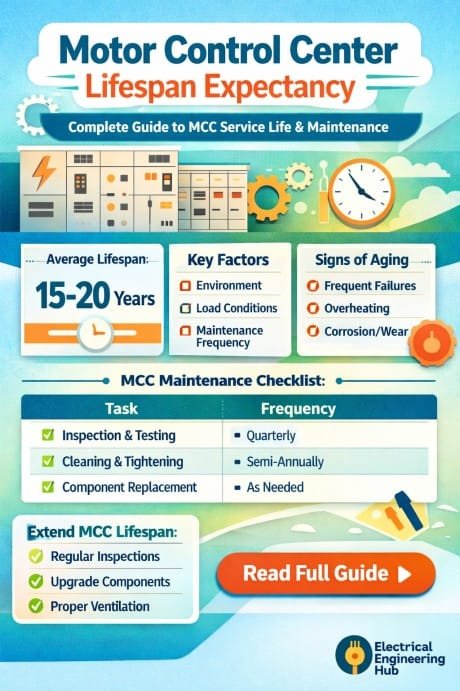
Table of Contents
Understanding how long an MCC lasts, what affects its durability, and how to extend its operational life can help businesses reduce repair costs and improve electrical system performance.
Know more about mcc panel design software
What Is a Motor Control Center?
A Motor Control Center, commonly called an MCC, is an assembly of motor starters, circuit breakers, contactors, overload relays, variable frequency drives, and protective devices installed in a centralized cabinet system. It is designed to control and protect electric motors in industrial and commercial applications.
Modern MCC panels often include:
- Motor starters
- PLC integration
- Soft starters
- VFD drives
- Busbars
- Protective relays
- Monitoring systems
- Energy management features
These components work together to ensure smooth motor operation and electrical protection.
Average Motor Control Center Lifespan Expectancy
The average Motor Control Center Lifespan Expectancy typically ranges between 20 to 40 years. However, the actual service life depends on several operating and environmental conditions.
The table below shows a general lifespan estimate for different MCC conditions.
| MCC Condition | Estimated Lifespan |
|---|---|
| Excellent maintenance environment | 35–40 years |
| Standard industrial operation | 25–30 years |
| Harsh environmental conditions | 15–20 years |
| Poor maintenance practices | 10–15 years |
In many industries, older MCC systems continue functioning beyond 30 years if regular inspections and upgrades are performed. However, aging electrical components can increase the risk of faults, overheating, and unexpected shutdowns.
Explore everything about electrical control panel design training
Factors Affecting MCC Service Life
Several key factors influence the operational lifespan of motor control centers.
Environmental Conditions
Environmental exposure plays a major role in MCC durability. Excessive dust, humidity, vibration, heat, and corrosive gases can damage internal components over time.
Industries such as fertilizer plants, textile units, and chemical processing facilities often expose MCC panels to harsh conditions that accelerate aging.
Common environmental threats include:
- High ambient temperature
- Moisture ingress
- Corrosion
- Airborne contaminants
- Water leakage
- Rodent damage
Using proper enclosure ratings and ventilation systems can significantly improve equipment reliability.
Electrical Load Conditions
Continuous overload conditions reduce the lifespan of electrical equipment. MCC panels operating near maximum capacity generate additional heat, which weakens insulation and electrical contacts.
Frequent motor starting and stopping also affects component health. High inrush current creates stress on contactors, breakers, and busbars.
Download the mcc panel design guide pdf
To maximize service life:
- Avoid continuous overloading
- Balance electrical loads properly
- Monitor current harmonics
- Maintain stable voltage levels
Quality of Installation
Improper installation is one of the leading causes of premature MCC failure. Loose cable terminations, poor grounding, and incorrect alignment create long-term reliability problems.
A professionally installed MCC system ensures:
- Proper cable routing
- Secure electrical connections
- Correct busbar spacing
- Effective earthing
- Safe ventilation clearance
Installation quality directly impacts operational stability and safety.
Maintenance Practices
Preventive maintenance is the most important factor influencing Motor Control Center Lifespan Expectancy. Routine inspections help identify hidden issues before they become major failures. Download the excel sheet for MCC panel sizing calculation
Poor maintenance often results in:
- Overheating
- Insulation breakdown
- Arc flash incidents
- Component failure
- Production downtime
Facilities with scheduled maintenance programs usually achieve significantly longer MCC service life.
Know more about What is a Motor Control Center (MCC)
Signs an MCC Is Reaching End of Life
Aging motor control centers often show visible and operational warning signs. Identifying these symptoms early can prevent expensive failures.
Common warning signs include:
| Warning Sign | Possible Cause |
|---|---|
| Frequent breaker trips | Overloaded circuits or aging breakers |
| Excessive heat generation | Loose connections or overload |
| Burning smell | Insulation deterioration |
| Corrosion inside panel | Moisture exposure |
| Difficulty finding spare parts | Obsolete equipment |
| Unusual motor shutdowns | Failing control components |
If multiple issues occur repeatedly, the MCC may require refurbishment or replacement.
Importance of Preventive Maintenance
Preventive maintenance is essential for improving MCC reliability and extending equipment lifespan. Regular servicing minimizes the chances of sudden electrical failure.
A standard preventive maintenance program includes:
- Thermal scanning
- Busbar inspection
- Tightening electrical connections
- Cleaning dust accumulation
- Insulation resistance testing
- Lubrication of moving parts
- Verification of protective settings
Infrared thermography is particularly useful for identifying hot spots before serious damage occurs.
Find all about How Does a Motor Control Center Work
Recommended MCC Maintenance Schedule
The following maintenance schedule can help improve operational performance and reduce downtime.
| Maintenance Activity | Recommended Frequency |
|---|---|
| Visual inspection | Monthly |
| Cleaning and dust removal | Quarterly |
| Thermal scanning | Every 6 months |
| Torque tightening | Annually |
| Insulation testing | Annually |
| Relay calibration | Every 2–3 years |
| Full system audit | Every 5 years |
A documented maintenance history also helps predict future replacement needs.
How to Extend MCC Lifespan
Several practical strategies can improve the durability of motor control centers.
Maintain Proper Ventilation
Heat is one of the biggest enemies of electrical equipment. Ensure MCC rooms have proper ventilation and cooling systems to maintain acceptable operating temperatures.
Use Quality Components
High-quality breakers, relays, contactors, and busbars generally offer longer operational life and better reliability.
Low-grade components may reduce initial investment costs but often increase maintenance expenses later.
Perform Routine Thermal Imaging
Thermal imaging detects loose connections and overheating components without shutting down the system. Early detection reduces the risk of electrical fires and equipment damage.
Upgrade Aging Components
Many facilities extend MCC life by replacing outdated components instead of changing the entire system.
Common retrofit upgrades include:
- Digital protective relays
- Smart monitoring systems
- Modern VFDs
- Energy-efficient starters
- Arc flash protection systems
Retrofitting improves performance while reducing replacement costs.
Know more about Motor Control Center Bucket Replacement Cost
Keep the MCC Environment Clean
Dust and moisture contamination can reduce insulation performance and create short circuits.
Maintain clean electrical rooms by:
- Installing air filters
- Preventing water leakage
- Sealing cable entries
- Controlling humidity levels
A clean operating environment greatly improves reliability.
MCC Replacement vs Refurbishment
Many industries face the decision of whether to replace or refurbish aging MCC systems.
The following comparison can help determine the best option.
| Factor | Refurbishment | Full Replacement |
|---|---|---|
| Initial cost | Lower | Higher |
| Downtime | Moderate | Higher |
| System modernization | Partial | Complete |
| Spare parts availability | Limited | Excellent |
| Long-term reliability | Moderate | High |
Refurbishment is often suitable when the MCC structure remains in good condition. Full replacement becomes necessary when safety standards, spare parts, or operational demands change significantly.
Know more about Electrical Panel Upgrade 200 Amp
Modern MCC Technologies Improving Service Life
New technologies are improving Motor Control Center Lifespan Expectancy through better monitoring and predictive maintenance capabilities.
Modern intelligent MCC systems offer:
- Remote monitoring
- Real-time diagnostics
- Predictive maintenance alerts
- Energy monitoring
- Arc flash safety systems
- Digital communication protocols
These features help maintenance teams detect problems early and optimize operational efficiency.
Safety Considerations for Aging MCCs
Older MCC panels may present increased electrical hazards if not maintained properly.
Potential risks include:
- Arc flash incidents
- Insulation failure
- Electrical fires
- Unexpected shutdowns
- Personnel safety hazards
Regular safety audits and compliance inspections are essential for maintaining safe operation.
Facilities should also ensure that protective devices are properly coordinated and tested periodically.
Find all about Electrical Panel Upgrade Cost Los Angeles
Conclusion
Motor Control Center Lifespan Expectancy depends heavily on maintenance quality, environmental conditions, load management, and installation standards. While most MCC systems can last between 20 and 40 years, proactive maintenance practices often determine whether the equipment reaches its maximum operational life.
Regular inspections, thermal scanning, proper ventilation, and timely component upgrades can significantly improve reliability and reduce costly downtime. Businesses that invest in preventive maintenance and modernization strategies not only extend MCC service life but also improve electrical safety and operational efficiency.
As industrial systems continue evolving, modern intelligent MCC technologies are making it easier to monitor equipment health and prevent unexpected failures. A well-maintained motor control center remains one of the most valuable assets in any industrial electrical distribution system.
Get new guides in your feed. Follow Electrical Insights on LinkedIn for new electrical standards guides, calculators and design tips from Azad Circuit Hub.
#MotorControlCenter,#MCCLifespan,#ElectricalMaintenance,#IndustrialAutomation,#PowerDistribution,#ElectricalEngineering,#MCCPanel,#PreventiveMaintenance,#IndustrialElectrical,#ControlPanel