Electric Motor Armature Testing | Advanced Diagnostic Solutions for Accurate Motor Performance
Introduction to Motor Armature Testing
Electric Motor Armature Testing plays a critical role in ensuring the reliability and efficiency of electric motors used across industrial, agricultural, and commercial applications. The armature is the heart of a DC motor, and any fault within it can directly impact torque, speed stability, and overall energy consumption. In modern maintenance practices, Electric Motor Armature Testing is no longer limited to basic continuity checks but has evolved into a detailed diagnostic process using advanced instruments and precision measurement techniques.
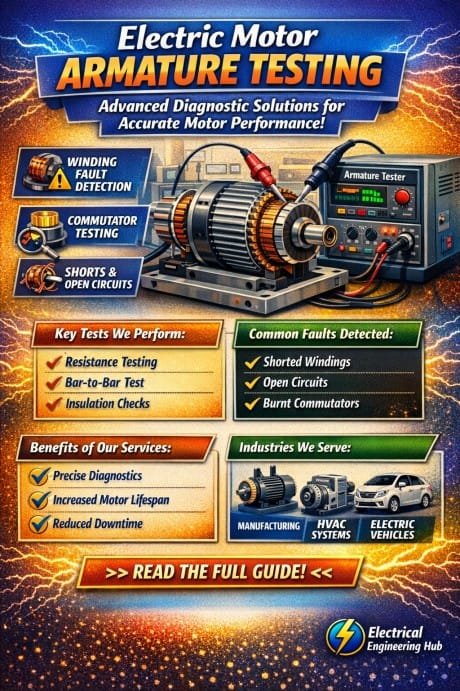
Table of Contents
With increasing demand for energy-efficient systems, technicians and engineers rely heavily on Electric Motor Armature Testing to detect hidden faults before they lead to major breakdowns. This proactive approach not only reduces downtime but also extends motor lifespan significantly.
Importance of Electric Motor Armature Testing in Modern Industry
Motor Armature Testing is essential for identifying electrical and mechanical imbalances that may not be visible during routine inspections. Industries such as manufacturing, water pumping systems, and automation heavily depend on motor performance, making early fault detection a necessity.
Uncover insights on motor generator transformer manufacturers
When motors operate under load for long hours, issues like winding deterioration, insulation breakdown, and commutator wear become common. Through Motor Armature Testing, these problems can be diagnosed early, ensuring uninterrupted performance and reduced maintenance costs.
Regular testing also helps maintain energy efficiency, as faulty armatures often lead to increased power consumption. This makes testing not only a maintenance requirement but also a cost-saving strategy for long-term operations.
Key Methods Used in Electric Motor Armature Testing
There are several techniques used in Electric Motor Armature Testing, each designed to identify specific types of faults. Technicians select methods based on motor type, operating environment, and failure symptoms.
Common testing methods include:
- Resistance measurement using a digital ohmmeter
- Growler testing for shorted windings
- Surge comparison testing for insulation faults
- High-voltage insulation resistance testing
- Commutator surface inspection
Each method provides valuable insights into motor health. For example, surge testing helps detect weak insulation that may fail under operating voltage, while growler testing identifies short-circuited coils in the armature.
The effectiveness of Motor Armature Testing depends on combining multiple diagnostic techniques to form a complete performance profile of the motor.
Access our powerful online calculator now star delta motor cable size calculator
Table: Common Testing Methods and Their Purpose
| Testing Method | Purpose of Test | Fault Detected |
|---|---|---|
| Resistance Measurement | Check coil continuity | Open or uneven windings |
| Growler Test | Detect shorted coils | Short circuits in armature |
| Surge Comparison Test | Analyze insulation strength | Weak insulation between turns |
| High Voltage Insulation Test | Measure dielectric strength | Breakdown under load conditions |
| Visual Commutator Inspection | Assess physical wear | Surface damage or burning marks |
Advanced Diagnostic Techniques in Electric Motor Armature Testing
Modern Electric Motor Armature Testing incorporates advanced diagnostic solutions that go beyond traditional tools. Digital analyzers and automated test benches now allow technicians to evaluate motor behavior under simulated load conditions.
One of the most effective advancements is waveform analysis, which detects irregular current patterns in the armature. This method helps identify issues such as uneven magnetic fields or partial winding failures that are otherwise difficult to detect.
Use our online tool for free Wire Size Calculator for Motors – Accurate Motor Cable Sizing Tool for Electric Loads
Thermal imaging is another important tool used in Electric Motor Armature Testing. It helps locate overheating zones in the armature, which often indicate resistance imbalance or insulation failure. Combined with vibration analysis, these techniques provide a complete picture of motor health and operational stability.
Common Faults Identified During Electric Motor Armature Testing
Motor Armature Testing frequently reveals a range of mechanical and electrical faults that affect motor performance. Some of the most common issues include shorted windings, open circuits, and commutator surface degradation.
Shorted windings are typically caused by overheating or insulation failure, leading to reduced torque output. Open circuits, on the other hand, result in complete loss of current flow in specific coils. Commutator wear can lead to uneven current distribution, causing sparking and reduced efficiency.
By identifying these faults early through Electric Motor Armature Testing, technicians can prevent severe motor damage and avoid costly replacements.
Maintenance Benefits of Regular Electric Motor Armature Testing
Routine Electric Motor Armature Testing ensures that motors remain in optimal working condition throughout their lifecycle. Preventive maintenance based on testing results helps reduce unexpected breakdowns and improves operational reliability.
Know more about How to Check 3 Phase Motor Winding with Multimeter
Regular testing also supports better load management. When armatures are in good condition, motors operate smoothly under varying loads without overheating or efficiency loss. This directly contributes to lower energy bills and improved system performance.
In industrial environments where motors run continuously, scheduled Electric Motor Armature Testing is a key part of maintenance planning. It allows maintenance teams to detect wear trends and replace components before failure occurs.
Conclusion
Electric Motor Armature Testing is an essential diagnostic practice for maintaining the efficiency, safety, and reliability of electric motors. With the integration of advanced testing technologies, it has become easier to detect hidden faults and improve motor performance significantly.
From resistance checks to thermal imaging and surge analysis, each method contributes to a deeper understanding of motor condition. Industries that prioritize Motor Armature Testing benefit from reduced downtime, lower maintenance costs, and extended equipment lifespan.
Know more about Top 15 Motor Control Center Manufacturers in Malaysia – Trusted MCC Brands for Industrial Power
As motor systems continue to evolve, the importance of accurate and regular Electric Motor Armature Testing will only increase, making it a cornerstone of modern electrical maintenance strategies.
Get new guides in your feed. Follow Electrical Insights on LinkedIn for new electrical standards guides, calculators and design tips from Azad Circuit Hub.
#electricmotortesting,#armaturetesting,#electricmotorrepair,#motortestingbench,#industrialmaintenance,#electricaltesting,#motorwinding,#predictivemaintenance,#electromechanical,#motorinspection