How to Test an Electric Motor Capacitor | Step-by-Step Professional Guide for Accurate Diagnosis
Electric motors are widely used in pumps, fans, compressors, and agricultural systems, and their smooth operation heavily depends on the health of the capacitor. When a motor starts struggling, hums without starting, or loses torque, one of the first checks is to test an electric motor capacitor correctly and safely. A faulty capacitor can reduce efficiency, increase power consumption, and even damage the motor windings if ignored for too long.
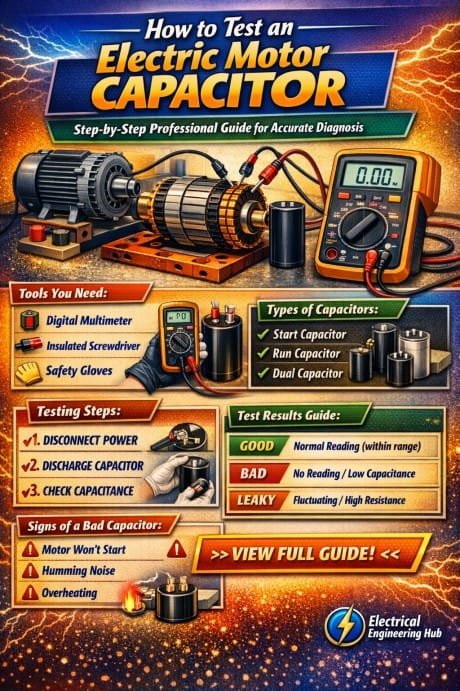
Table of Contents
In most cases, technicians and electricians rely on basic tools like a multimeter or capacitor tester to evaluate performance. However, proper diagnosis requires understanding symptoms, measurement techniques, and safety procedures. This guide explains everything in a structured and practical way so you can confidently inspect and test an electric motor capacitor without guesswork.
Understanding the Role of a Capacitor in Motor Performance
A capacitor in a single-phase motor provides the initial phase shift needed to create starting torque. Without it, the motor may fail to start or run at reduced efficiency. During routine maintenance, it is essential to test an electric motor capacitor to ensure it is delivering the correct microfarad (µF) value.
Know more about Top 15 Motor Control Center Manufacturers in Malaysia – Trusted MCC Brands for Industrial Power
Capacitors generally fall into two categories: start capacitors and run capacitors. Start capacitors give a high energy boost for a short time, while run capacitors stay active during operation to improve power factor and efficiency. Any deviation in capacitance can lead to overheating or slow motor response.
Why Capacitor Testing Is Important for Motor Health
Regular inspection helps prevent unexpected breakdowns and costly repairs. A weak capacitor may still show partial function but will fail under load conditions. This is why technicians prefer to test an electric motor capacitor before replacing the motor or other expensive components.
Common symptoms of capacitor failure include:
- Motor humming but not starting
- Reduced speed or weak torque
- Overheating during operation
- Frequent tripping of protection devices
- Visible swelling or leakage on capacitor body
Ignoring these signs can lead to complete motor failure.
Learn more about difference between servo motor and induction motor
Essential Tools Required for Testing
Before you begin any diagnostic work, gather the correct tools. Accurate measurement is only possible when proper instruments are used.
| Tool | Purpose |
|---|---|
| Digital Multimeter | Measures capacitance and resistance |
| Capacitor Tester | Provides precise µF readings |
| Insulated Screwdriver | Safe discharge of capacitor |
| Safety Gloves | Protection against electric shock |
| Clamp Meter (optional) | Checks current draw |
When you prepare properly, it becomes easier to test an electric motor capacitor with accuracy and safety.
Step-by-Step Procedure to Test a Motor Capacitor
Before starting, ensure the motor is disconnected from the power supply. Capacitors store electrical energy even after shutdown, so safety is critical.
Step 1: Visual Inspection
Begin by checking for physical damage such as bulging, cracks, or oil leakage. A damaged casing often indicates failure. At this stage, many technicians already suspect the need to test an electric motor capacitor before further analysis.
Know more about VFD vs Soft Starter: Key Differences You Must Know for Motor Control
Step 2: Discharge the Capacitor
Use an insulated screwdriver or resistor to discharge stored energy. This prevents electric shock and protects your measuring device. Never skip this step, even if the motor has been off for hours.
Step 3: Remove and Identify Ratings
Detach the capacitor from the circuit and note its rated capacitance value (for example, 25 µF or 40 µF). This value is critical when you test an electric motor capacitor using a meter for comparison.
Step 4: Multimeter Measurement
Set your multimeter to capacitance mode. Connect the probes to the capacitor terminals. A healthy capacitor will show a reading close to its rated value, typically within ±5% to ±10% tolerance.
Step 5: Compare Results
If the reading is significantly lower or shows zero, the capacitor is defective. This is one of the most reliable ways to test an electric motor capacitor and confirm performance loss.
Understanding Test Results and Their Meaning
Interpreting results correctly is as important as taking measurements. Small variations are acceptable, but large deviations indicate failure.
| Condition | Result | Interpretation |
|---|---|---|
| Within tolerance | Normal operation | Capacitor is healthy |
| Slightly low value | Weak performance | Replacement recommended soon |
| Zero reading | Open circuit | Capacitor is completely failed |
| Infinite or unstable reading | Internal damage | Immediate replacement required |
Professionals often repeat the process when results are unclear, especially when they test an electric motor capacitor under field conditions.
Know more about Motor Starter Size Chart: 7 Essential Insights for Better Selection
Common Causes of Capacitor Failure
Capacitors do not fail randomly; there are specific reasons behind their degradation. Heat is one of the biggest enemies, especially in agricultural environments where motors run continuously.
Other causes include:
- Voltage fluctuations
- Overloading of motor
- Poor ventilation
- Ageing of dielectric material
- Manufacturing defects
Understanding these factors helps improve preventive maintenance practices.
Safety Tips During Testing
Electrical safety should always be the top priority. Capacitors can retain charge even after disconnection, making them potentially dangerous.
Always follow these precautions:
- Wear insulated gloves and safety glasses
- Ensure complete power isolation before handling
- Discharge capacitor before testing
- Avoid touching terminals directly
- Use properly rated measuring instruments
Know more about Motor Starter Types: A Powerful Guide with 7 Key Options You’ll Appreciate
Following these steps reduces risk when you test an electric motor capacitor in field conditions.
When to Replace Instead of Repair
In most cases, capacitors are not repairable. Once internal dielectric layers degrade, performance cannot be restored. If readings consistently fall outside tolerance, replacement is the only practical solution.
Here is a quick decision guide:
| Condition | Action |
|---|---|
| Slight deviation | Monitor and recheck |
| Moderate drop in capacitance | Replace soon |
| Severe failure | Immediate replacement |
| Physical damage | Do not reuse |
Technicians often prefer replacement over repeated testing when they test an electric motor capacitor showing unstable results.
Know more about Motor Overload Protection Chart: Important Concepts
Final Thoughts on Proper Diagnosis
Accurate capacitor testing is essential for maintaining motor efficiency and avoiding unnecessary breakdowns. A structured approach, proper tools, and careful interpretation of results ensure reliable diagnosis every time. Whether dealing with pumps, fans, or agricultural motors, knowing how to correctly test an electric motor capacitor helps extend equipment life and improve performance consistency across all applications. Use our online tool Motor Overload Setting Calculator for Single and Three Phase Motors
Get new guides in your feed. Follow Electrical Insights on LinkedIn for new electrical standards guides, calculators and design tips from Azad Circuit Hub.
#Howtotestanlectricmotorcapacitor,#electricmotorcapacitor,#capacitortesting,#motortesting,#electricaltesting,#HVACrepair,#motordiagnostics,#industrialmaintenance,#electricalrepair,#motorservice