
Ground Mounted Solar Insurance Requirements | Best Coverage Guide for Solar Project Owners
Ground mounted solar projects are becoming a preferred choice for commercial businesses, agricultural operations, industrial facilities, and utility-scale power producers. While these systems offer long-term energy savings and reliable power generation, they also involve significant investment. Understanding Ground Mounted Solar Insurance Requirements is essential for protecting solar assets against financial losses, operational disruptions, and unforeseen risks.
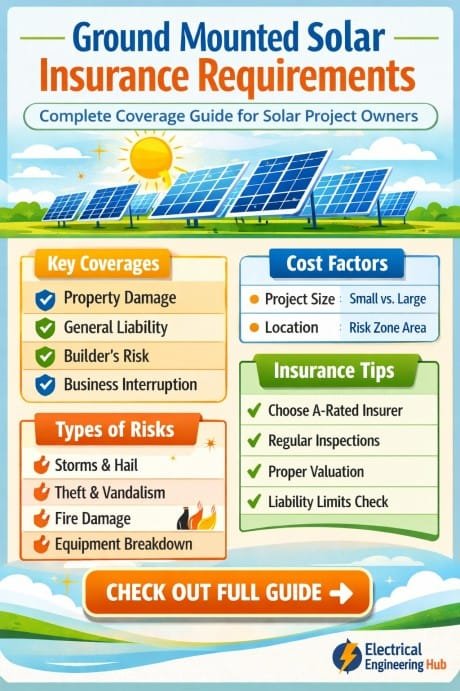
Table of Contents
Insurance coverage is not only important for project owners but is often required by lenders, investors, leasing companies, and regulatory authorities. A well-structured insurance policy helps ensure that a solar project remains financially secure throughout its lifecycle.
Why Insurance Is Important for Ground Mounted Solar Projects
Ground mounted solar installations are exposed to environmental and operational risks. Unlike rooftop systems, they occupy open land and are more vulnerable to weather events, theft, vandalism, and accidental damage.
Without proper insurance coverage, a single incident can lead to costly repairs, replacement expenses, and revenue losses. This is why Ground Mounted Solar Insurance Requirements have become a standard consideration during project planning and financing.
Know more about How Much Does Solar Panel Insurance Cost?
Some common risks include:
- Storm and wind damage
- Flooding and water intrusion
- Fire incidents
- Hailstorms
- Theft of solar equipment
- Vandalism
- Electrical faults
- Third-party liability claims
- Business interruption losses
Key Ground Mounted Solar Insurance Requirements
Project owners should understand the main insurance policies commonly required for solar installations.
| Insurance Type | Purpose | Common Requirement |
|---|---|---|
| Property Insurance | Covers physical damage to solar assets | Highly recommended |
| General Liability Insurance | Covers third-party injury or property damage | Usually mandatory |
| Business Interruption Insurance | Covers lost revenue during downtime | Recommended |
| Equipment Breakdown Insurance | Covers mechanical and electrical failures | Recommended |
| Builder’s Risk Insurance | Covers projects during construction | Required during installation |
| Environmental Liability Insurance | Covers environmental damage claims | Project-specific |
| Cyber Insurance | Protects monitoring and control systems | Increasingly important |
These policies collectively address most Ground Mounted Solar Insurance Requirements for small and large-scale projects.
Use our free online tool here Solar Panel Insurance Cost Calculator
Property Insurance Coverage
Property insurance is the foundation of solar project protection. It covers physical assets such as:
- Solar panels
- Mounting structures
- Inverters
- Transformers
- Cabling systems
- Monitoring equipment
- Energy storage components
Coverage typically includes damage caused by:
- Fire
- Lightning
- Windstorms
- Hail
- Floods (if included)
- Falling objects
- Natural disasters
Project owners should verify that replacement cost coverage is included rather than actual cash value coverage. This helps ensure sufficient compensation for damaged equipment.
Use our free online tool solar insurance premium calculator
Liability Insurance Requirements
Liability coverage protects project owners against claims from third parties.
For example, if a damaged structure causes injury to a visitor or neighboring property suffers damage due to a solar installation issue, liability insurance can cover legal expenses and compensation costs.
Typical liability policies may include:
- Bodily injury coverage
- Property damage coverage
- Legal defense costs
- Contractor liability protection
Many lenders and land lease agreements specifically require proof of liability insurance before project approval.
Construction Phase Insurance
Insurance needs begin before the solar plant starts producing electricity.
Builder’s Risk Insurance
Builder’s risk insurance protects the project during construction. It covers losses related to:
- Theft of materials
- Fire damage
- Storm-related incidents
- Equipment damage during installation
Contractor Insurance
Contractors working on the site should maintain:
- Workers’ compensation insurance
- General liability insurance
- Professional liability insurance
Verifying contractor insurance certificates is an important part of meeting Ground Mounted Solar Insurance Requirements.
Use our online free tool Solar Panel Installation Cost Calculator
Business Interruption Coverage
A solar project generates income through electricity production and energy sales. When an insured event causes downtime, business interruption insurance helps compensate for lost revenue.
Coverage may include:
- Lost energy production income
- Loan repayment obligations
- Fixed operating expenses
- Recovery costs
This protection becomes especially valuable for utility-scale and commercial solar projects where prolonged outages can create substantial financial losses. Find all about Solar Panel Installation Salary in USA
Insurance Requirements for Financed Solar Projects
Most banks and investors require specific insurance coverage before financing a solar installation.
| Requirement | Purpose |
|---|---|
| Property Insurance | Protects financed assets |
| Liability Insurance | Reduces legal exposure |
| Loss Payee Clause | Protects lender interests |
| Additional Insured Endorsement | Extends coverage to stakeholders |
| Proof of Insurance | Required before funding |
Project owners should review financing agreements carefully to ensure compliance with all insurance obligations.
Factors Affecting Insurance Premiums
Several variables influence solar insurance costs.
Project Size
Larger installations generally require higher coverage limits and premiums.
Geographic Location
Projects located in flood-prone or high-wind regions often face increased insurance rates.
Equipment Quality
Certified and reputable equipment manufacturers may help reduce perceived risk.
Security Measures
Insurance providers often favor sites with:
- Perimeter fencing
- CCTV surveillance
- Access control systems
- Remote monitoring
Know more about How to Test Solar Panel With Multimeter
Owners looking to estimate expenses can use a useful resource such as the Solar Panel Insurance Cost Calculator to better understand potential insurance costs before purchasing coverage.
How to Choose the Right Solar Insurance Policy
Selecting the right insurance policy requires more than comparing premiums.
Consider the following factors:
- Coverage limits
- Deductible amounts
- Excluded risks
- Claims process efficiency
- Insurer experience with renewable energy projects
- Business interruption options
- Replacement cost provisions
Obtaining quotes from multiple insurers can help identify the most comprehensive and cost-effective protection.
Common Mistakes to Avoid
Many solar project owners overlook important details when arranging insurance.
Common mistakes include:
- Underinsuring equipment value
- Ignoring business interruption coverage
- Failing to update policies after system expansion
- Overlooking flood and hail protection
- Not reviewing policy exclusions
- Choosing the lowest premium without assessing coverage quality
Regular policy reviews help ensure coverage remains aligned with project needs.
Know more about Top 12 Solar EPC Companies in California
Conclusion
Ground mounted solar systems represent a major investment that requires comprehensive risk management. Understanding Ground Mounted Solar Insurance Requirements allows project owners to safeguard their assets, maintain lender compliance, and protect long-term project profitability.
A combination of property insurance, liability coverage, builder’s risk protection, and business interruption insurance creates a strong financial safety net. By evaluating project-specific risks and selecting appropriate coverage, solar owners can operate with greater confidence and resilience.
FAQs
What are the main Ground Mounted Solar Insurance Requirements?
The primary requirements typically include property insurance, general liability insurance, builder’s risk coverage during construction, and business interruption insurance for operational protection.
Is insurance mandatory for ground mounted solar projects?
Insurance may not always be legally mandatory, but lenders, investors, landowners, and financing institutions often require specific coverage before approving a project.
Does solar insurance cover weather-related damage?
Most policies cover damage caused by storms, lightning, wind, hail, and fire. Coverage for floods may require a separate endorsement depending on the insurer.
How much insurance coverage should a solar project owner purchase?
Coverage should generally reflect the full replacement value of the solar installation, including panels, inverters, mounting systems, and associated infrastructure.
Can insurance cover lost income from solar system downtime?
Yes. Business interruption insurance can compensate for lost revenue and ongoing expenses when an insured event temporarily stops energy production.
Follow Us on Social:
Subscribe our Newsletter on Electrical Insights for latest updates from Electrical Engineering Hub
#groundmountedsolarinsurancerequirements,#solarinsurance,#solarfarminsurance,#groundmountedsolar,#renewableenergyinsurance,#solarprojectinsurance,#commercialsolarinsurance,#solarassetprotection,#solarinstallationinsurance,#energyriskmanagement
