Renogy Rover 40A MPPT Review: Features, Performance & Buying Guide
The Renogy Rover 40A is a popular MPPT solar charge controller for 12V and 24V battery systems. It is designed for users who want more efficient solar charging than a basic PWM controller can provide, while still keeping the installation relatively simple.
In this renogy rover 40a mppt review, I am looking at the controller from an electrical engineering perspective, focusing on charging performance, battery compatibility, solar input, installation, protection features, and practical limitations. I have more than 15 years of experience working with electrical systems, industrial automation, control panels, and renewable-energy applications, so I pay close attention to how a solar controller performs as part of the complete DC system.
Renogy Rover 40A MPPT Specifications
| Feature | Renogy Rover 40A |
|---|---|
| Controller type | MPPT |
| Rated charging current | 40A |
| Battery voltage | 12V / 24V auto recognition |
| Battery types | Lithium, Gel, Sealed, Flooded |
| Display | LCD |
| Solar charging | MPPT solar tracking |
| System voltage | 12V / 24V |
| Application | RV, off-grid, backup, solar systems |
| Communication | Compatible with Renogy accessories depending on configuration |
| Protection | Overcharge, overload, short circuit, reverse polarity and other system protections |
The 40A rating is the main reason to consider this controller. It provides enough capacity for a useful residential, RV, cabin, or small off-grid solar setup without moving into the much larger controllers used for high-power battery banks.
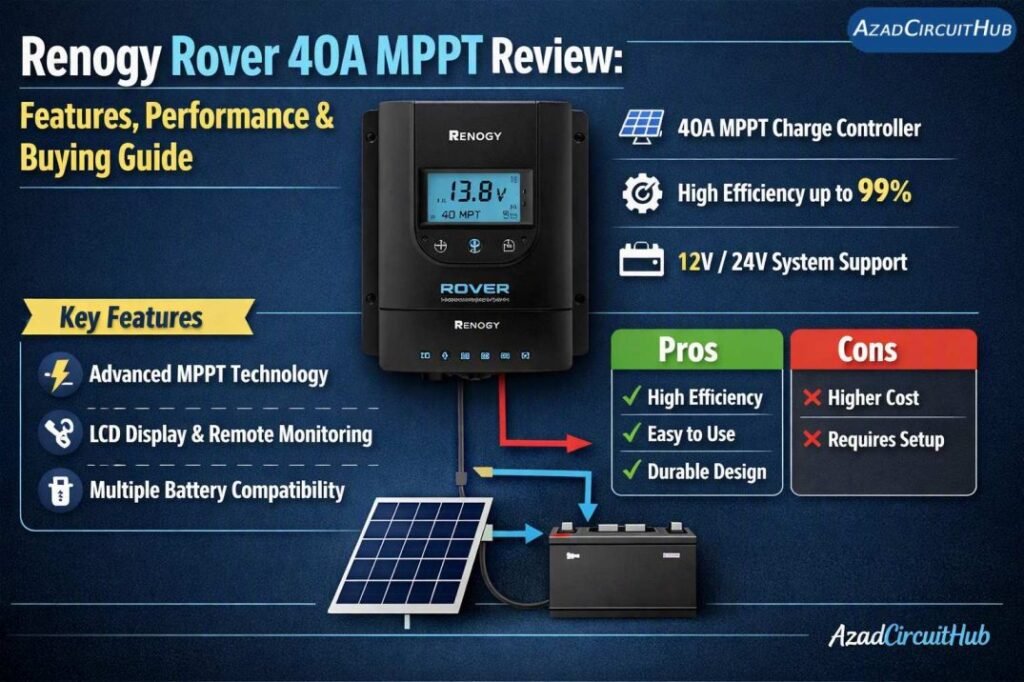
Table of Contents
Table of Contents
What Makes the Renogy Rover 40A Different?
The biggest advantage is MPPT technology. Maximum Power Point Tracking allows the controller to adjust the operating point of the solar array so it can extract useful power as conditions change.
This matters because a solar panel does not always operate at its maximum rated output. Temperature, sunlight intensity, panel voltage, wiring losses, and battery voltage all affect the actual energy available.
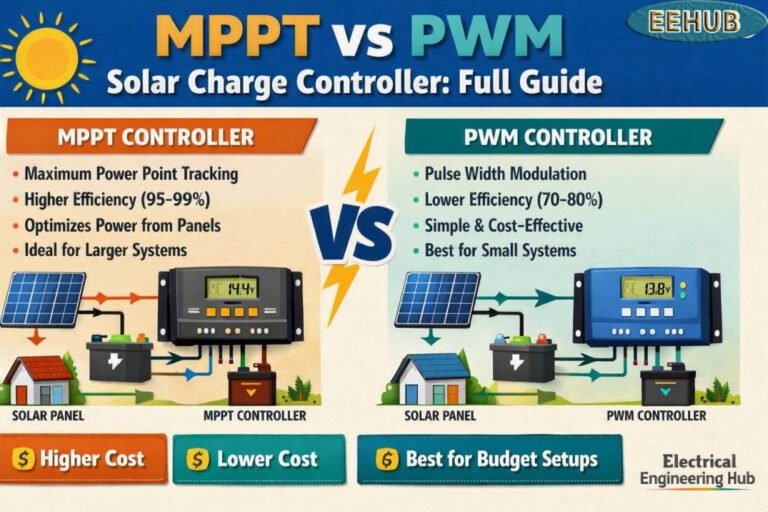
Compared with a basic PWM solar controller, an MPPT controller can make better use of the panel's available voltage. This becomes especially useful when the solar array voltage is higher than the battery charging voltage.
For homeowners and off-grid users, the LCD is another practical feature. It provides system information without requiring a separate monitoring device for basic checks.
Want to compare other MPPT controllers before buying? Check my guide to the best solar charge controller mppt.
Solar and Battery Compatibility
The Rover 40A is designed for 12V and 24V battery systems. It supports several common battery chemistries, including lithium, Gel, Sealed, and Flooded batteries.
This flexibility is useful when building or upgrading an off-grid system. However, battery settings should always match the manufacturer's recommended charging parameters.
Looking for a reliable 40A MPPT controller for your solar setup? Check our Amazon Idea List featuring the Best 40A MPPT Charge Controllers, selected for key factors such as charging performance, compatibility, and useful protection features.
For lithium batteries, the battery management system remains important. The charge controller and BMS perform different jobs. The controller manages the solar charging process, while the BMS protects the battery cells against conditions such as overcharge, over-discharge, excessive current, or temperature problems depending on the battery design.
Typical System Sizing
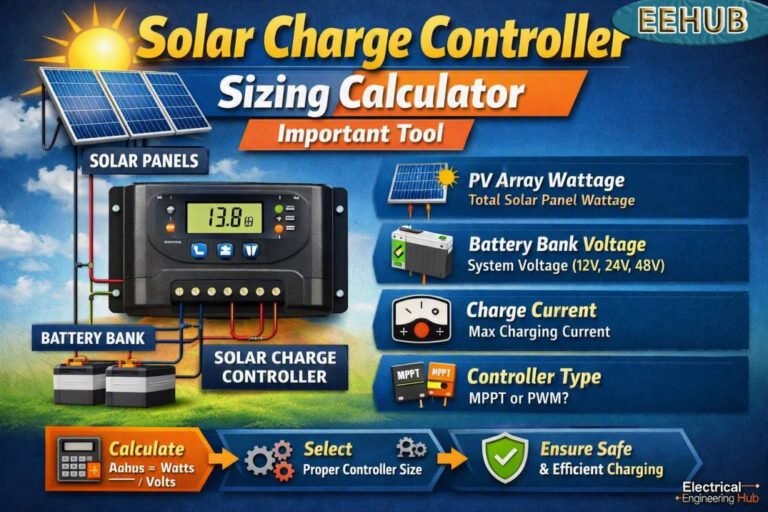
A simple way to understand the 40A rating is to estimate the charging power:
| Battery System | Approx. Nominal Charging Capacity |
|---|---|
| 12V × 40A | 480W |
| 24V × 40A | 960W |
These are simplified calculations based on nominal battery voltage. Real charging power varies with charging voltage, solar conditions, controller efficiency, and system configuration.
The solar array should also be sized according to the controller's input limits rather than simply connecting the largest possible panel array.
Renogy Rover 40A MPPT Performance
In practical use, MPPT performance is one of the strongest reasons to choose the Rover over a conventional PWM controller. The controller continuously works to find a suitable operating point for the solar panels.
For an off-grid system, this can be particularly useful during changing weather conditions. Solar output can move significantly between morning, midday, afternoon, and cloudy periods.
The controller is also designed with several protection functions intended to reduce the risk of damage from common wiring and system faults. Even with these protections, correct installation remains essential.
I would not treat built-in protection as a replacement for proper DC overcurrent protection, correctly sized conductors, disconnects, and suitable fusing.
LCD Display and Setup
The built-in LCD makes the Rover 40A relatively straightforward to monitor. Depending on the operating state, the display can provide information about battery and charging conditions.
For an installer or system owner, this is useful during commissioning. You can check whether the controller is detecting the solar array and whether the battery is charging as expected.
Ready to upgrade your solar charging system? Explore our Amazon Idea List of the Best 40A MPPT Charge Controllers to compare popular models and find an option that fits your battery voltage and solar panel configuration.
The battery type and charging parameters should be configured carefully. Using an incorrect profile can result in unsuitable charging behavior, particularly with lithium batteries.
For anyone new to solar installation, I recommend reading the controller manual before connecting the PV array or battery bank.
Installation Considerations
The Rover 40A should be installed in a suitable location with adequate ventilation and protection from moisture. The controller should be mounted securely and connected using properly sized cables.
A typical installation sequence is:
- Mount the charge controller.
- Connect the battery using correctly sized conductors.
- Confirm the controller recognizes the battery system voltage.
- Configure the battery type and charging parameters.
- Connect the solar array through the appropriate protection and disconnect equipment.
- Check charging voltage and current during operation.
The exact wiring arrangement depends on the system design. Follow Renogy's installation instructions and applicable electrical requirements.
Check the current Renogy Rover 40A price on Amazon: Buy Renogy Rover 40A MPPT on Amazon
Pros and Cons
| Pros | Cons |
|---|---|
| MPPT charging technology | 40A capacity may be limiting for larger systems |
| Supports 12V and 24V systems | Requires careful configuration |
| Supports multiple battery types | LCD is basic compared with some modern app-based controllers |
| Built-in display | Solar input must remain within controller limits |
| Useful for RV and off-grid applications | Larger systems may need a higher-capacity controller |
| Multiple protection functions | Installation still requires proper DC protection |
Who Should Buy the Rover 40A?
The Rover 40A makes the most sense for users building a small to medium off-grid solar system. It can work well for RVs, cabins, backup power systems, remote equipment, and other applications using 12V or 24V battery banks.
It is also a reasonable option when you want MPPT functionality without moving to a more complicated commercial solar controller.
However, I would not select it solely because the controller is rated at 40A. First calculate your expected PV power, battery voltage, charging current, and future expansion requirements.
Renogy Rover 40A MPPT Review: Buying Verdict
My renogy rover 40a mppt review comes down to system matching. The controller offers useful MPPT charging, support for common battery types, 12V/24V operation, and an integrated LCD.
Its 40A rating makes it suitable for many small and medium solar installations, but system sizing is critical. If your solar array or battery bank will grow substantially, choosing a controller with additional capacity may be more practical.
For a properly sized off-grid installation, the combination of MPPT tracking, battery flexibility, and straightforward monitoring makes the Rover 40A a product worth considering.
Compare more solar charging options in my guide to the best solar charge controller mppt.
Choosing the right MPPT controller can make a difference in how effectively your solar array charges the battery bank. See our Amazon Idea List of the Best 40A MPPT Charge Controllers for a practical selection of models worth considering.
Frequently Asked Questions
Is the Renogy Rover 40A an MPPT controller?
Yes. The Rover 40A uses MPPT technology to track the solar panel's maximum power point and regulate the available energy for charging the battery bank.
How many watts can a 40A MPPT charge controller handle?
The nominal calculation is approximately 480W on a 12V system and 960W on a 24V system at 40A. Actual permissible PV capacity depends on the controller's specifications, charging voltage, and solar array configuration.
Can the Rover 40A charge lithium batteries?
Yes, the listed Rover 40A model supports lithium batteries along with Gel, Sealed, and Flooded battery types. Lithium charging parameters should be set according to the battery manufacturer's specifications.
Is MPPT better than PWM for solar charging?
MPPT can extract more usable energy from a solar array by tracking its maximum power point. The benefit is particularly relevant when panel voltage is substantially higher than battery charging voltage.
Can I use the Rover 40A for a 24V solar system?
Yes. The controller is designed for automatic 12V/24V system operation. Confirm the solar input and battery specifications before installation and keep the complete PV and battery system within the controller's operating limits.
Get new guides in your feed. Follow Electrical Insights on LinkedIn for new electrical standards guides, calculators and design tips from Azad Circuit Hub.
#RenogyRover40A, #RenogyMPPT, #MPPTChargeController, #RenogyRover, #SolarChargeController, #SolarPower, #OffGridSolar, #SolarEnergy, #SolarSystem, #SolarController