Kill A Watt P4400 vs P4460: Which Electricity Usage Monitor Should You Buy?
If you are trying to decide between the P3 Kill A Watt P4400 and P4460, the differences are worth understanding before you buy. Both belong to the Kill A Watt family of plug-in electricity monitors, but availability, features, and the type of measurement you need can affect which model makes more sense.
In this kill a watt p4400 vs p4460 comparison, I will focus on the practical differences that matter when measuring appliance energy consumption. As an electrical engineer with more than 15 years of experience working with electrical systems, automation, control panels, and troubleshooting, I use power measurement tools with one question in mind: will the reading help identify how much electricity the equipment is actually using?
Kill A Watt P4400 vs P4460 at a Glance
| Feature | P4400 Kill A Watt | P4460 Kill A Watt |
|---|---|---|
| Product type | Electricity usage monitor | Electricity usage monitor |
| Plug-in measurement | Yes | Yes |
| Voltage measurement | Yes | Yes |
| Current measurement | Yes | Yes |
| Power measurement | Yes | Yes |
| Energy measurement | Yes | Yes |
| Display | Digital LCD | Digital LCD |
| Appliance testing | Yes | Yes |
| Best use | Home appliance energy testing | Expanded Kill A Watt monitoring |
| Buying consideration | Widely available | Check current availability and specifications |
The P4400 is the model I would consider first for basic appliance energy monitoring because it is straightforward to use and widely recognized. If your goal is to measure watts, volts, amps, power factor, and accumulated energy consumption, it can be a useful tool for home and light-duty electrical testing.
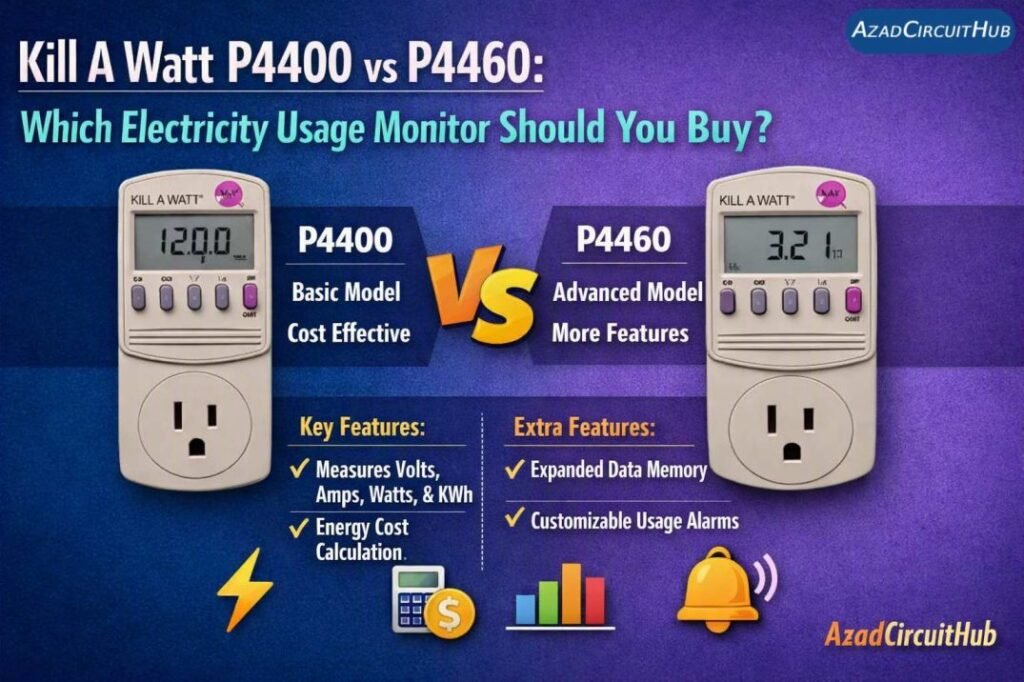
Table of Contents
Table of Contents
What Is the Kill A Watt P4400?
The P4400 is a plug-in electricity usage monitor designed to show electrical measurements from equipment connected through the meter.
Instead of estimating appliance consumption from a nameplate rating, you can plug the equipment into the Kill A Watt and observe its actual electrical behavior.
Depending on the measurement being displayed, you can check values such as:
- Voltage
- Current
- Watts
- Volt-amperes
- Frequency
- Power factor
- Kilowatt-hours
- Elapsed time
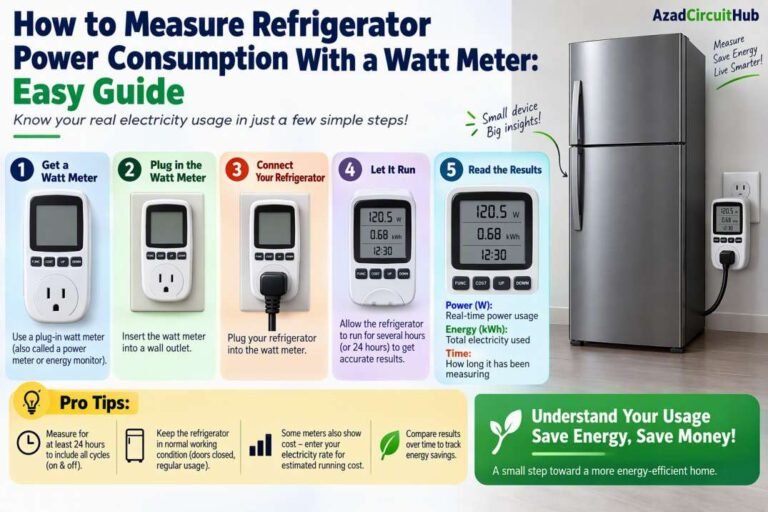
This makes the P4400 useful for appliances with changing loads. A refrigerator, for example, may have a very different average consumption from its compressor's running wattage because it cycles on and off.
Check the current P3 P4400 price on Amazon: Buy P3 P4400 Kill A Watt on Amazon
P4400 vs P4460: What Is the Real Difference?
The most important point in this kill a watt p4400 vs p4460 comparison is that buyers should not select a model based only on the number printed on the front.
The P4400 is the familiar plug-in Kill A Watt electricity monitor used for checking individual appliances and electronic equipment. It is especially useful when you want a quick measurement without installing a permanent energy meter.
The P4460 belongs to the same broader family but should be checked carefully for its exact configuration and current manufacturer specifications before purchase. Product listings can vary, and older or discontinued models may still appear through marketplace sellers.
For a simple appliance energy audit, the P4400 is often the easier purchase because it is commonly available and has a long history of consumer use.
Measurement Features That Matter
A useful electricity monitor should provide more than just wattage. Different loads can behave very differently even when their rated power appears similar.
| Measurement | Why It Matters |
|---|---|
| Volts | Shows supply voltage at the connected load |
| Amps | Shows operating current |
| Watts | Shows real power consumption |
| VA | Shows apparent power |
| Power factor | Helps identify reactive or inefficient loading |
| kWh | Measures accumulated energy use |
| Frequency | Confirms supply frequency |
For example, a motor may draw current without converting all of that apparent power into real power. Looking only at amps can therefore give an incomplete picture.
This is one reason I prefer a monitor that provides several electrical parameters instead of a simple plug-in wattmeter.
How Accurate Is the P4400?
The P4400 is intended for consumer and light-duty energy monitoring rather than laboratory-grade electrical analysis.
That distinction matters.
If you want to compare the energy consumption of a desktop computer, television, refrigerator, fan, heater, battery charger, or other plug-in appliance, the P4400 can provide useful information.
For professional electrical testing, protection studies, harmonics analysis, three-phase measurements, insulation testing, or calibrated power-quality work, I would use dedicated electrical test equipment instead.
The P4400 is best viewed as a practical energy-use monitor rather than a replacement for a professional power analyzer.
How to Use a Kill A Watt Meter
Using the P4400 is simple, which is one of its strongest advantages.
Step 1: Connect the monitor
Plug the Kill A Watt directly into a suitable wall outlet.
Step 2: Connect the appliance
Plug the appliance into the receptacle on the front of the meter.
Step 3: Select the measurement
Use the controls to cycle through voltage, current, watts, power factor, frequency, and other available readings.
Step 4: Record energy consumption
For longer tests, leave the appliance connected and monitor accumulated kilowatt-hours.
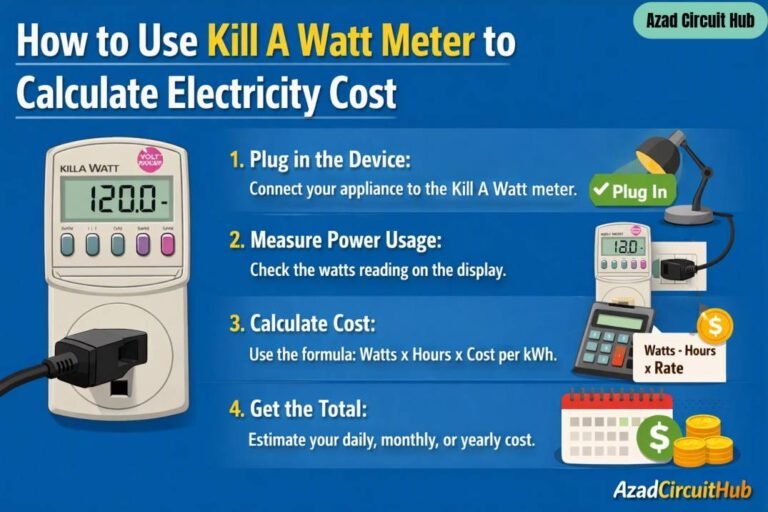
Step 5: Calculate operating cost
You can multiply measured kWh by your electricity rate to estimate the appliance's energy cost.
For example, if an appliance consumes 2 kWh during a test and your electricity rate is $0.20/kWh, the estimated energy cost is:
2 × $0.20 = $0.40
This is much more useful than relying on the wattage printed on the appliance label.
What Can You Test With the P4400?
The P4400 works particularly well for appliances and electronic equipment that connect through a standard receptacle.
Common applications include:
- Refrigerators and freezers
- Televisions
- Desktop computers
- Gaming PCs
- Network equipment
- Fans
- Space heaters
- Coffee machines
- Battery chargers
- Dehumidifiers
- Small workshop equipment
- Home-office equipment
It can also help identify standby power consumption. Some electronics continue drawing electricity even when they appear to be switched off.
P4400 or P4460: Which One Should You Buy?
For most buyers interested in straightforward plug-in energy monitoring, I would lean toward the P4400 when it is available from a reputable seller.
The reason is practical rather than simply technical. The P4400 has an established reputation as an easy-to-use appliance electricity monitor, and its measurements are useful for household energy audits and troubleshooting unusual consumption.
The P4460 may be worth considering if its particular feature set matches your requirements. However, always compare the current product specification, warranty, seller reputation, and included functions before ordering.
If the P4400 provides the measurements you need, there is little reason to overcomplicate a basic appliance energy-monitoring job.
Ready to measure your appliance's actual electricity use? Check the P3 P4400 Kill A Watt on Amazon
When a Kill A Watt Meter Is Not Enough
A plug-in energy monitor has an important limitation: it is designed around compatible plug-in loads.
It is not the right instrument for measuring an entire electrical panel, three-phase industrial equipment, permanently wired machinery, or high-current circuits that exceed its rating.
For those applications, use suitable clamp meters, power analyzers, energy meters, or permanently installed monitoring equipment.
You should also never bypass the meter's rated current or modify its wiring to accommodate a larger load.
Frequently Asked Questions
Is the P4400 better than the P4460?
For basic appliance energy monitoring, the P4400 is a practical choice when its available measurements meet your needs. Compare the current specifications of both models before buying because product versions and availability can change.
What can a Kill A Watt P4400 measure?
The P4400 can provide several electrical measurements, including voltage, current, watts, frequency, power factor, and accumulated energy, depending on the selected display function.
Can the P4400 measure kilowatt-hours?
Yes. The Kill A Watt P4400 is designed to track accumulated energy consumption, allowing you to estimate how much electricity an appliance uses over a period of time.
Can I use a Kill A Watt meter for a refrigerator?
Yes. A refrigerator is a useful application because the meter can help you observe energy consumption over an extended period. The compressor cycles make a longer measurement more meaningful than a short wattage reading.
Is the Kill A Watt P4400 suitable for professional electrical testing?
It is better suited to appliance and consumer energy monitoring. Professional electrical testing may require calibrated multimeters, clamp meters, power analyzers, or other equipment designed for the specific application.
Final Verdict
The main takeaway from this kill a watt p4400 vs p4460 comparison is simple: choose based on the measurements and application you actually need.
The P4400 remains an attractive option for homeowners, technicians, students, and DIY users who want a convenient way to measure plug-in appliance electricity consumption. It can reveal actual watts and accumulated energy use instead of relying on assumptions based on an appliance nameplate.
For buyers considering the P4460, verify the current specifications and availability before purchasing. If your requirements are basic appliance energy monitoring, the P4400 is a sensible place to start.
Check the P3 P4400 Kill A Watt Electricity Usage Monitor on Amazon to see the current price and availability.
Get new guides in your feed. Follow Electrical Insights on LinkedIn for new electrical standards guides, calculators and design tips from Azad Circuit Hub.
#KillAWatt, #KillAWattP4400, #KillAWattP4460, #ElectricityUsageMonitor, #EnergyMonitor, #PowerMeter, #EnergyMeter, #ElectricityMonitor, #EnergyMonitoring, #ElectricalTesting