Best Energy Monitor for Whole House Without Electrician
Finding the best energy monitor for whole house without electrician can help you track electricity use, identify power-hungry appliances, and reduce wasted energy. However, not every whole-home monitor is safe or suitable for a true DIY installation. Some models require access to the main electrical panel, while others use a plug-in design that avoids panel wiring.
My preferred option for homeowners who want detailed energy data is the Emporia Vue 3 Home Energy Monitor. It tracks whole-home electricity use and supports circuit-level monitoring with compatible sensors. Before buying, you should understand its installation requirements, monitoring features, and limitations.
As an electrical engineer with practical experience in electrical panels, power systems, and troubleshooting, I assess energy monitors by their measurement accuracy, sensor setup, safety requirements, and usefulness in real homes. A good monitor should help you understand where electricity goes without encouraging unsafe work around live electrical equipment.
Best Energy Monitor for Whole House Without Electrician

| Product | Monitoring Method | Installation | Best For |
|---|---|---|---|
| Emporia Vue 3 | Panel sensors and current transformers | Electrical panel access | Whole-home and circuit monitoring |
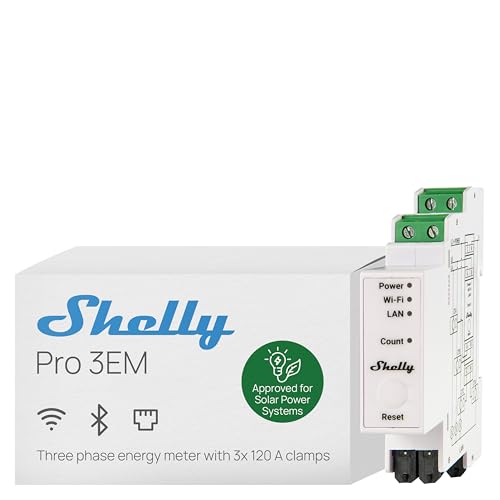
| Shelly Pro 3EM | Current transformers and meter wiring | Electrical installation required | Three-phase or multi-circuit monitoring, depending on setup |
| TP-Link Tapo P110M | Plug-in energy monitoring | Plug into outlet | Individual appliances |
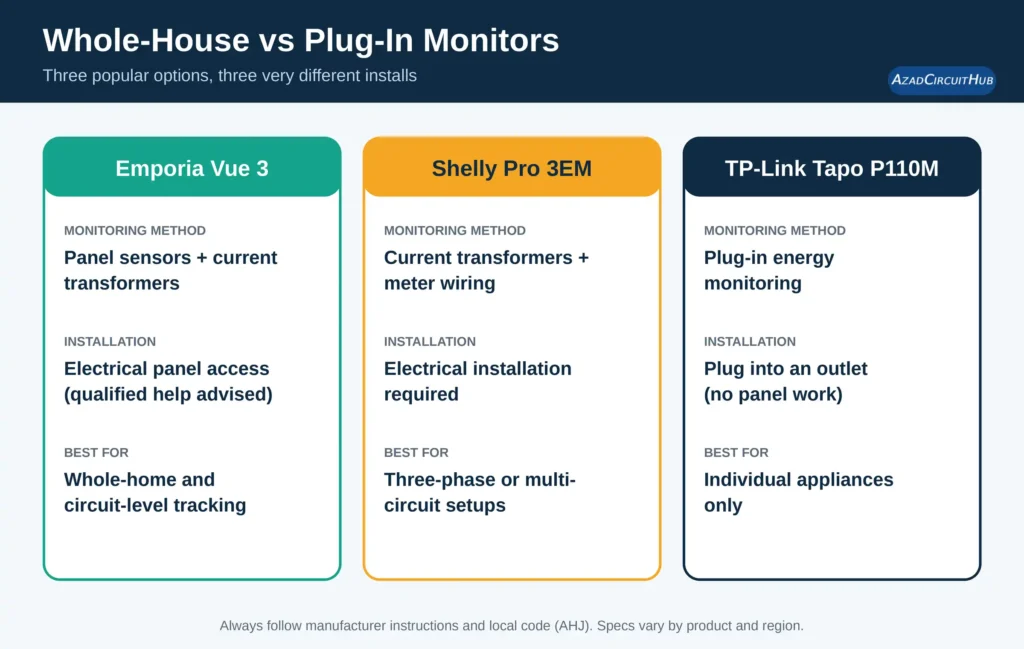
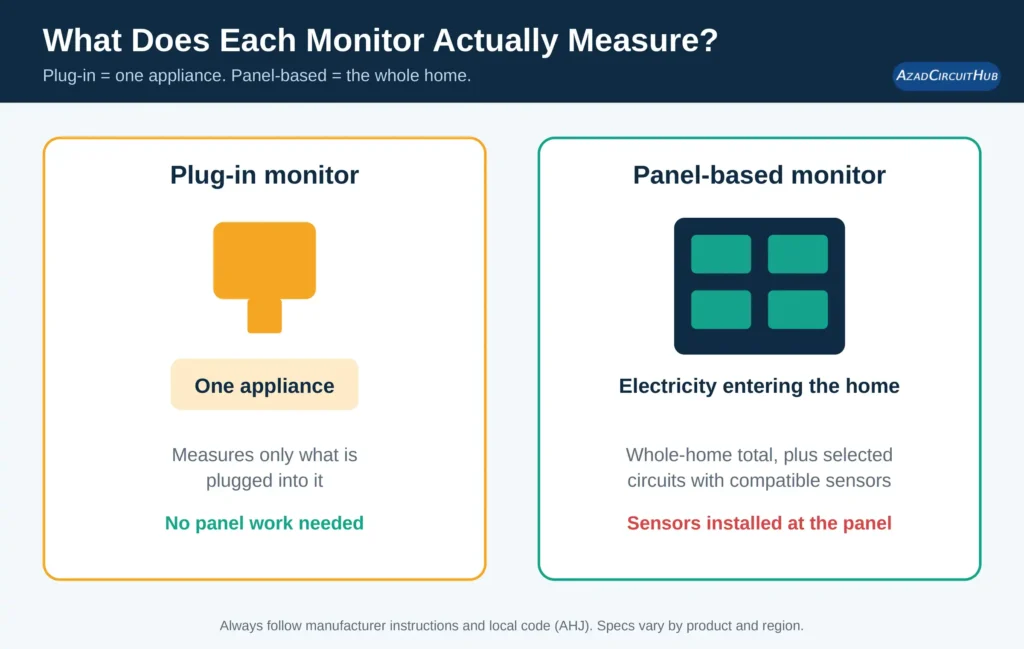
These products do not all provide the same level of monitoring. A plug-in energy monitor measures the appliance connected to it, while a whole-home monitor measures electricity entering the home. Check each product’s current specifications, regional version, voltage rating, and safety certifications before purchasing.
Emporia Vue 3 Review: Best for Detailed Home Energy Tracking
The Emporia Vue 3 is my leading choice for homeowners who want a detailed view of household electricity consumption. It is designed to monitor whole-home usage and can also track selected individual circuits when compatible sensors are installed.
Its main advantages include real-time energy data, historical usage tracking, app-based monitoring, and support for solar and net-metering applications in compatible installations.
The important limitation is installation. The Vue 3 uses sensors connected inside the electrical panel. Installing those sensors may require opening the panel and working near hazardous electrical components. It is not a completely tool-free or universally electrician-free product.
If you want accurate data for your whole home, the Emporia Vue 3 offers more useful information than a basic smart plug.
Amazon buying recommendation: Emporia Vue 3 Home Energy Monitor
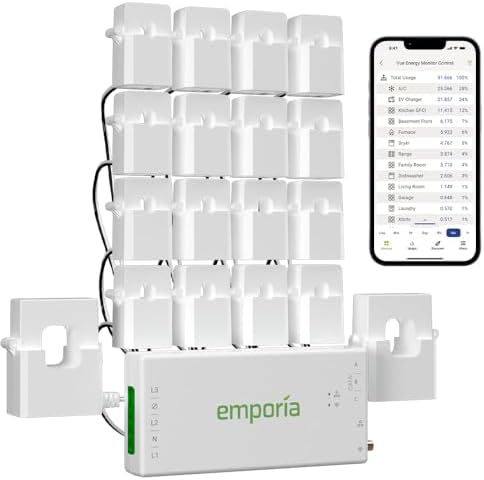
- SAFETY YOU CAN TRUST WITH UL CERTIFICATION: With Emporia Energy, your home energy monitoring is safe, reliable, and cert…
Can You Install a Whole-House Energy Monitor Without an Electrician?
The answer depends on the monitor and your home’s wiring.
A plug-in energy monitor can usually be installed by plugging it into a suitable outlet. However, it only measures the connected appliance, not your entire house.
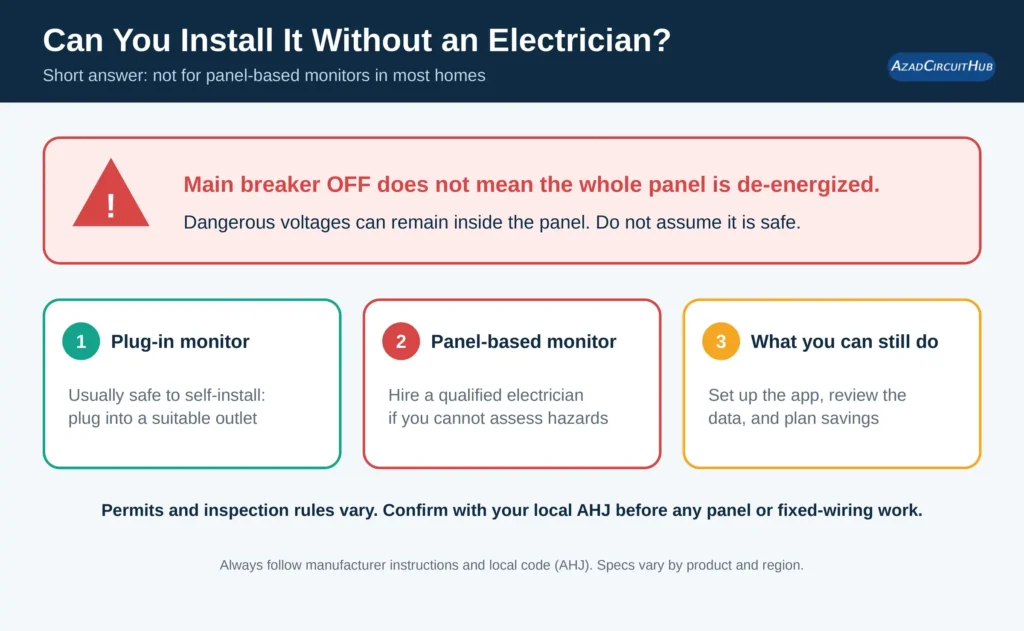
A panel-based monitor, such as the Emporia Vue 3, needs sensors installed at the electrical panel. Even when the manufacturer provides a DIY installation guide, opening a panel can expose dangerous voltages. Turning off the main breaker may not de-energize every component inside the panel.
For that reason, do not assume that switching off the main breaker makes the panel safe to work in. If you are not trained to assess electrical hazards and install the equipment safely, hire a qualified electrician for the panel work. You can still configure the app and review energy data yourself.
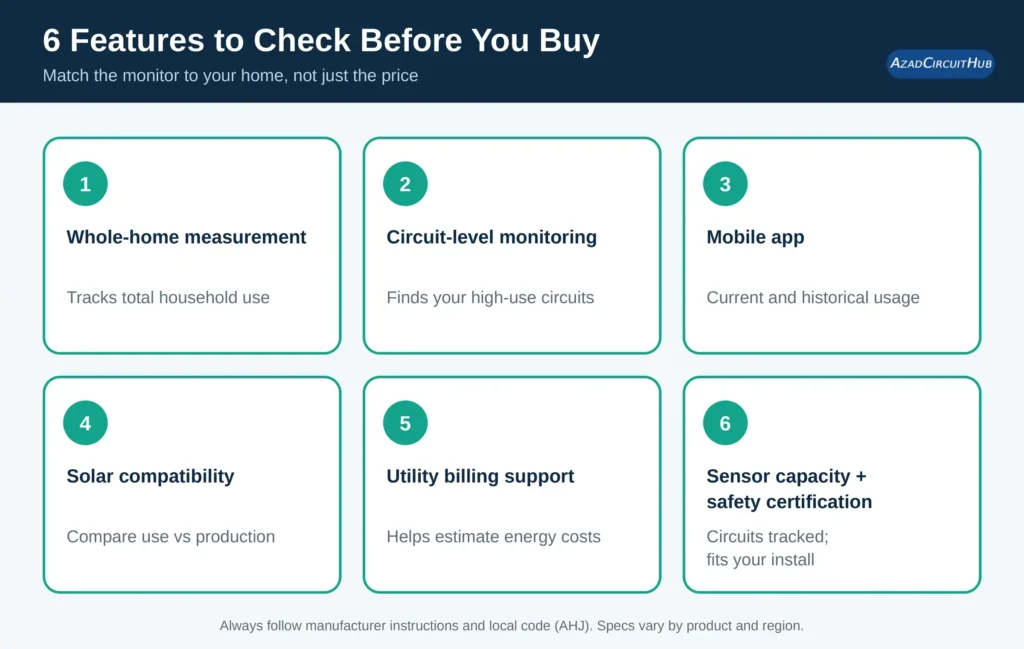
Features to Check Before Buying
| Feature | Why It Matters |
|---|---|
| Whole-home measurement | Tracks total household electricity use |
| Circuit-level monitoring | Identifies high-use circuits |
| Mobile app | Displays current and historical usage |
| Solar compatibility | Helps compare consumption and solar production |
| Utility billing support | Helps estimate energy costs |
| Sensor capacity | Determines how many circuits can be tracked |
| Safety certification | Helps verify suitability for the intended installation |
For homeowners who use a generator during outages, energy monitoring can also help identify the loads that matter most. Read my generator backup power guide to understand how household loads affect backup planning.
US Electrical Safety: What Homeowners Should Know
Most US homes use a 120/240V split-phase electrical service. Branch circuits commonly use 14 AWG copper conductors for 15A circuits and 12 AWG copper conductors for 20A circuits, subject to the applicable wiring method, installation conditions, and code requirements.
Do not use these wire examples to size energy-monitor wiring automatically. Follow the monitor manufacturer’s instructions for the supplied sensors, leads, voltage connections, and overcurrent protection.
The applicable NEC edition depends on the state and local jurisdiction. Some areas use the 2020, 2023, or another adopted edition, often with local amendments. Confirm the current requirements with your local authority having jurisdiction (AHJ) before starting electrical work.
Permits and inspection rules vary. A plug-in monitor may not require an electrical permit, but work involving a panel or fixed wiring may be subject to local rules. Verify before installation.
Also check the product’s stated electrical ratings and measurement category. A CAT rating applies to measurement equipment designed and rated for specified electrical environments; do not assume that every energy monitor or included sensor has a CAT rating suitable for every panel location.
How to Get More Value From Your Energy Monitor
Once the monitor is installed safely, use the data to identify avoidable energy costs.
- Record your home’s normal daily consumption.
- Compare weekday and weekend usage.
- Review high-use circuits and appliances.
- Check consumption overnight when major appliances are idle.
- Compare solar production and household consumption, if supported.
- Review changes after adjusting appliance schedules.
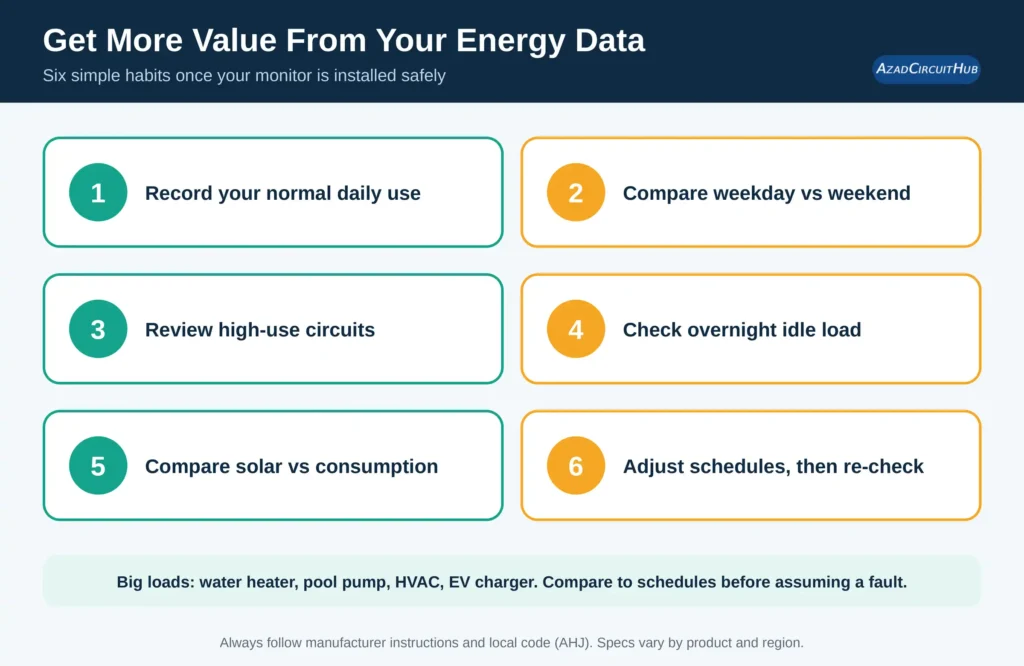
For example, a monitor may reveal that an electric water heater, pool pump, HVAC system, or EV charger contributes a large share of household usage. The next step is to compare that consumption with operating schedules and equipment ratings rather than assuming every high reading indicates a fault.
If you plan to run essential loads during an outage, read my home backup power guide for generators.
Frequently Asked Questions
What is the best energy monitor for a whole house?
The Emporia Vue 3 is a strong option for detailed whole-home and selected circuit monitoring. Its suitability depends on your electrical panel, installation needs, and desired features.
Can I install the Emporia Vue 3 myself?
The manufacturer provides installation instructions, but the device requires panel-mounted sensors and electrical connections. If you are not qualified to work safely inside the panel, use a licensed or otherwise locally qualified electrician.
Can a smart plug monitor my entire house?
No. A smart plug normally measures only the appliance connected to it. Whole-home monitoring requires a suitable meter or sensors installed at the home’s incoming electrical supply.
Will a whole-home energy monitor reduce my electricity bill?
Not directly. It measures consumption and helps you find opportunities to save. Your bill may fall if you use that information to reduce unnecessary energy use.
Does the Emporia Vue 3 work with solar panels?
The product supports solar and net-metering monitoring in compatible configurations. Check the current manufacturer documentation for the required sensors, installation arrangement, and supported system type.
Final Verdict
The Emporia Vue 3 is a strong choice for homeowners who want real-time electricity data, circuit-level insights, and solar monitoring support. However, it is not a true no-electrician installation for every home because its sensors connect inside the electrical panel.
If you want to avoid panel work entirely, choose plug-in energy monitors for individual appliances. If you need complete household data, prioritize safe installation, correct sensor placement, and compatibility with your electrical system.
Check the Emporia Vue 3 Home Energy Monitor on Amazon before buying, and confirm the included sensors, supported circuits, and installation requirements for your home.
Get new guides in your feed. Follow Electrical Insights on LinkedIn for new electrical standards guides, calculators and design tips from Azad Circuit Hub.