IEC 61386-24 Standard: Complete Guide to Underground Conduit Systems, Requirements & Compliance
Underground electrical installations require strong mechanical protection, long service life, and compliance with recognized international standards. One of the most important standards governing conduit systems used below ground is IEC 61386-24. This standard provides the requirements and testing procedures for conduit systems specifically designed for buried electrical installations.
Whether you are an electrical engineer, contractor, utility professional, or project consultant, understanding IEC 61386-24 is essential for designing safe and durable underground cable networks. Proper compliance helps prevent cable damage, minimizes maintenance costs, and improves the reliability of electrical infrastructure.
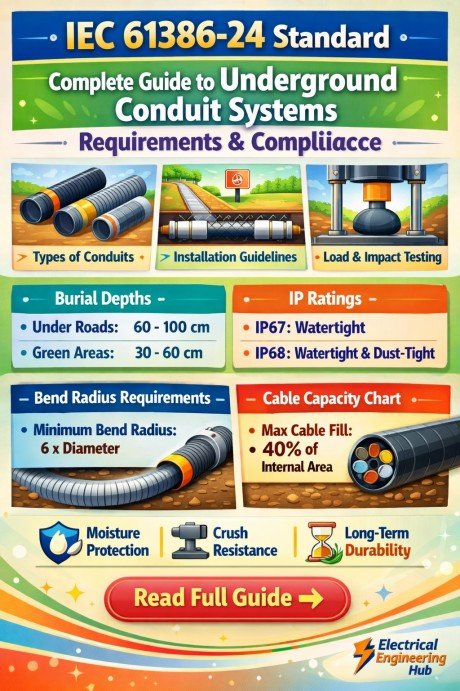
Table of Contents
Modern infrastructure projects such as power distribution networks, solar farms, industrial facilities, road lighting systems, and telecommunication installations rely heavily on underground conduit systems. Following IEC 61386-24 ensures that these conduit systems can withstand external mechanical forces, soil pressure, moisture, and environmental conditions throughout their service life.
Key Takeaways
- IEC 61386-24 specifies requirements for conduit systems intended for underground installation.
- The standard focuses on mechanical protection, durability, and performance testing.
- Compliance helps protect power and communication cables from external damage.
- The standard applies to both rigid and flexible underground conduit systems.
- Proper selection of conduit classification is critical for long-term reliability.
- Engineers frequently use IEC 61386-24 alongside cable installation and electrical safety standards.
What is IEC 61386-24?
IEC 61386-24 is a part of the IEC 61386 series developed by the International Electrotechnical Commission (IEC). It specifically addresses conduit systems buried underground and intended to provide protection for insulated conductors and cables.
The standard establishes performance requirements and testing methods for conduits exposed to underground conditions. Unlike surface-mounted conduit systems, underground installations face additional challenges such as soil movement, traffic loads, moisture ingress, and compression forces.
Know more about Phase to Phase Clearance as per IEC 61439
The primary objective of IEC 61386-24 is to ensure that conduit systems maintain their structural integrity while protecting the cables they contain.
Scope of IEC 61386-24
The standard applies to conduit systems installed below ground level for electrical and communication cable protection.
It covers:
- Rigid conduit systems
- Flexible conduit systems
- Plastic conduits
- Metallic conduits
- Composite conduit systems
- Underground cable protection systems
The requirements focus on mechanical performance rather than the electrical characteristics of the cables installed inside the conduit.
Why IEC 61386-24 is Important
Underground cables are difficult and expensive to repair once installed. A damaged conduit can lead to cable failures, service interruptions, and costly excavation work.
Use our online tool Creepage Distance Calculator
Compliance with IEC 61386-24 offers several benefits:
| Benefit | Description |
|---|---|
| Improved Cable Protection | Shields cables from physical damage |
| Longer Service Life | Reduces deterioration caused by soil and moisture |
| Lower Maintenance Costs | Minimizes repair and replacement work |
| Enhanced Safety | Reduces risks associated with damaged cables |
| Regulatory Compliance | Supports international project requirements |
| Better Reliability | Improves continuity of electrical supply |
These advantages make the standard highly relevant for infrastructure and utility projects.
Classification of Underground Conduit Systems
IEC 61386-24 classifies conduit systems according to their mechanical characteristics and intended application.
The classification typically considers:
Compression Resistance
Compression resistance measures the ability of a conduit to withstand external loads without deformation.
Find all about Phase to Phase Clearance in 132 kV
Common sources of loading include:
- Soil pressure
- Vehicle traffic
- Construction equipment
- Structural loads
Impact Resistance
Underground conduit systems must resist impacts during transportation, installation, and backfilling operations.
Impact resistance testing verifies that the conduit maintains its protective function after mechanical shocks.
Flexibility
Certain underground installations require flexible conduit systems to accommodate:
- Ground settlement
- Directional changes
- Complex cable routing
Flexible systems provide easier installation while maintaining adequate protection.
Know in detail about 33kV Phase to Phase Clearance
Key Requirements of IEC 61386-24
Several technical requirements must be satisfied to achieve compliance.
Mechanical Strength
Conduits must withstand external pressure and environmental forces throughout their operational life.
Mechanical strength testing evaluates:
- Compression performance
- Impact resistance
- Structural integrity
Resistance to Corrosion
For metallic conduit systems, corrosion resistance is critical.
Protective measures may include:
- Galvanized coatings
- Protective finishes
- Corrosion-resistant materials
Durability
The conduit system must maintain performance over extended periods under underground conditions.
Factors affecting durability include:
- Soil chemistry
- Moisture exposure
- Temperature variations
- Mechanical stress
Know more about IEC Standard for Busbar Clearance
Internal Surface Quality
The internal surface should allow cable installation without causing damage to cable insulation.
Smooth internal walls help reduce pulling tension during cable installation.
Testing Methods Under IEC 61386-24
The standard defines various tests to verify compliance.
| Test Type | Purpose |
|---|---|
| Compression Test | Verifies load-bearing capability |
| Impact Test | Assesses resistance to mechanical shocks |
| Dimensional Check | Confirms physical dimensions |
| Corrosion Test | Evaluates resistance to environmental degradation |
| Durability Assessment | Measures long-term performance |
| Flexibility Test | Determines suitability for bending applications |
Manufacturers must demonstrate compliance through these standardized testing procedures.
See our comprehensive guide on cable bending radius iec standard
Applications of IEC 61386-24 Conduit Systems
Conduits compliant with IEC 61386-24 are widely used in many sectors.
Utility Power Networks
Electric utilities install underground conduits to protect medium-voltage and low-voltage cables from external damage.
Solar Power Projects
Large-scale solar farms often use underground cable routes connecting inverters, transformers, and switchgear equipment.
Telecommunications
Fiber optic and communication cables benefit from conduit protection against excavation damage and environmental exposure.
Street Lighting Systems
Municipal lighting projects frequently rely on underground conduit systems to ensure reliable cable protection.
Industrial Facilities
Factories and industrial plants use underground conduits to route power and control cables safely throughout the site.
Find all about 11kV Cable Bending Radius
Relationship with Underground Cable Installation Standards
While IEC 61386-24 focuses on conduit system performance, engineers must also follow cable installation practices and trenching requirements.
For a deeper understanding of cable routing, trench dimensions, burial depth, and installation methods, refer to our comprehensive guide on underground cable laying standards.
Combining proper conduit selection with correct cable installation practices ensures maximum reliability and safety.
Best Practices for Compliance
Organizations can improve compliance by following proven installation practices.
Select the Correct Conduit Class
Choose a conduit classification suitable for expected loads and environmental conditions.
Inspect Materials Before Installation
Verify that conduits meet project specifications and certification requirements.
Use this tool if you are trying to calculate cable size for underground cables. Try here Underground Cable Size Calculator – Find Correct Wire Size for Long Distance Runs
Use Proper Backfilling Techniques
Improper backfilling can create excessive stress on conduit systems.
Recommended practices include:
- Removing sharp stones
- Using suitable bedding material
- Compacting soil correctly
Follow Manufacturer Guidelines
Manufacturers provide installation instructions based on tested performance characteristics.
Following these recommendations helps maintain compliance with IEC 61386-24.
Common Challenges in Underground Conduit Installations
Several issues can affect system performance.
| Challenge | Impact |
|---|---|
| Poor Backfilling | Conduit deformation |
| Excessive Traffic Load | Structural damage |
| Water Ingress | Accelerated deterioration |
| Improper Conduit Selection | Reduced service life |
| Installation Errors | Cable damage |
| Ground Movement | Conduit displacement |
Addressing these risks during design and installation improves overall system reliability.
Know more about Types of Transmission Lines Explained: Overhead vs Underground with Important Applications
Conclusion
IEC 61386-24 plays a critical role in ensuring the safety, durability, and reliability of underground conduit systems. The standard establishes clear requirements for conduit performance, mechanical strength, impact resistance, and long-term durability under buried conditions.
Engineers, contractors, and project owners who follow IEC 61386-24 can significantly reduce cable failures, improve asset protection, and achieve compliance with international best practices. As underground infrastructure continues to expand across power, industrial, renewable energy, and telecommunications sectors, adherence to this standard remains essential for successful project execution.
Explore details on iec standard for underground cable laying
Frequently Asked Questions (FAQs)
What is IEC 61386-24 used for?
IEC 61386-24 specifies requirements for conduit systems installed underground to protect electrical and communication cables from mechanical and environmental damage.
Does IEC 61386-24 apply to plastic conduits?
Yes. The standard applies to plastic, metallic, and composite conduit systems intended for underground installation.
Why is compression resistance important in IEC 61386-24?
Compression resistance ensures that underground conduits can withstand soil pressure, vehicle loads, and other external forces without collapsing.
Is IEC 61386-24 mandatory worldwide?
The standard itself is not universally mandatory, but many countries, utilities, consultants, and project specifications reference it as a compliance requirement.
What industries commonly use IEC 61386-24 compliant conduits?
Industries including electrical utilities, solar energy, telecommunications, municipal infrastructure, transportation, and industrial manufacturing frequently use conduit systems compliant with IEC 61386-24.
Get new guides in your feed. Follow Electrical Insights on LinkedIn for new electrical standards guides, calculators and design tips from Azad Circuit Hub.
#IEC6138624,#UndergroundConduit,#ElectricalStandards,#IECStandards,#ConduitSystems,#ElectricalInstallation,#CableProtection,#ElectricalEngineering,#ComplianceStandards,#PowerDistribution
