IEC 60364-6: Complete Electrical Installation Verification & Testing Guide
Electrical installations must be verified before they are put into service. This process ensures that wiring systems, protective devices, and electrical equipment comply with safety requirements and perform as intended. IEC 60364-6 is the international standard that defines the procedures for inspection, testing, and verification of low-voltage electrical installations.
The purpose of IEC 60364-6 is to confirm that an electrical installation is safe for operation and complies with the design requirements specified during planning and construction. Proper verification helps identify wiring defects, insulation failures, incorrect connections, and protective device issues before they can create hazards.
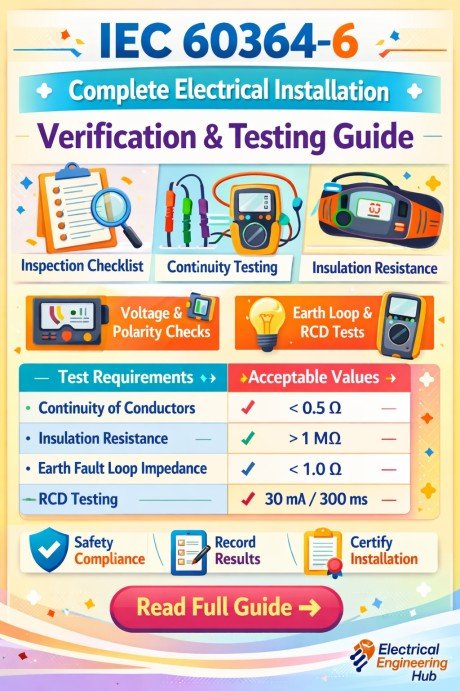
Table of Contents
Whether you are an electrical engineer, contractor, inspector, or maintenance professional, understanding IEC 60364-6 is essential for ensuring electrical safety, regulatory compliance, and reliable system performance. The standard provides a structured approach for initial verification and periodic verification throughout the life cycle of an installation.
Key Takeaways
- IEC 60364-6 defines requirements for inspection and testing of low-voltage electrical installations.
- The standard covers both initial verification and periodic verification.
- Visual inspection is performed before electrical testing.
- Testing includes continuity, insulation resistance, polarity, earth fault loop impedance, and RCD verification.
- Proper documentation is required to demonstrate compliance and safety.
- Regular verification improves system reliability and reduces electrical hazards.
Explore details on table 250.122 nec
What Is IEC 60364-6?
IEC 60364-6 is a part of the IEC 60364 series that focuses specifically on verification of electrical installations. It establishes procedures to determine whether an installation complies with the relevant safety requirements before energization and during operation.
The standard applies to low-voltage electrical installations in residential, commercial, industrial, and public facilities. It requires a combination of visual inspection and electrical testing to ensure that all components are correctly selected, installed, and functioning safely.
Verification under IEC 60364-6 consists of two major activities:
| Verification Activity | Purpose |
|---|---|
| Inspection | Confirm correct selection and installation of equipment |
| Testing | Verify electrical performance and protective measures |
Objectives of Electrical Verification
The main objective of IEC 60364-6 is to ensure protection against:
- Electric shock
- Thermal effects
- Fire hazards
- Overcurrent conditions
- Fault currents
- Voltage disturbances
Verification also confirms that electrical installations meet design specifications and operational requirements.
Know all the basics about earth conductor size calculation
Types of Verification Covered in IEC 60364-6
Initial Verification
Initial verification is performed after installation and before energizing the system.
This process confirms that:
- Equipment is correctly installed
- Wiring complies with design requirements
- Protective measures are effective
- Test results are within acceptable limits
No installation should be placed into service without successful initial verification.
Periodic Verification
Periodic verification is conducted during the operational life of the installation.
The purpose is to identify:
- Deterioration of insulation
- Mechanical damage
- Unauthorized modifications
- Aging of protective devices
- Environmental impacts
The frequency of periodic verification depends on the installation type, operating conditions, and local regulations.
Find all about substation earthing design
Sequence of Verification According to IEC 60364-6
The standard recommends a logical sequence to ensure efficient testing and accurate results.
| Step | Verification Activity |
|---|---|
| 1 | Visual inspection |
| 2 | Continuity testing |
| 3 | Insulation resistance testing |
| 4 | Protection by SELV and PELV verification |
| 5 | Floor and wall resistance testing (where applicable) |
| 6 | Polarity testing |
| 7 | Earth electrode resistance measurement |
| 8 | Earth fault loop impedance testing |
| 9 | Functional testing |
| 10 | Voltage drop verification |
Following this sequence minimizes errors and prevents equipment damage during testing.
Visual Inspection Requirements
Visual inspection is the first step in IEC 60364-6 verification.
Inspectors must verify:
- Correct cable sizing
- Proper conductor identification
- Equipment accessibility
- Mechanical protection of cables
- Protective device ratings
- Earthing and bonding arrangements
- Warning labels and identification markings
Visual inspection often reveals installation defects before electrical testing begins.
For a deeper understanding of grounding systems and protective conductors, refer to our comprehensive guide on iec 60364 earthing.
Dive deeper into instrument earthing iec standard
Continuity of Protective Conductors
Protective conductors play a critical role in fault current paths and shock protection.
IEC 60364-6 requires continuity testing of:
- Protective conductors (PE)
- Equipotential bonding conductors
- Earthing conductors
The objective is to confirm that fault currents can flow safely to earth without interruption.
Common testing instruments include:
- Low-resistance ohmmeters
- Multifunction installation testers
Insulation Resistance Testing
Insulation resistance testing verifies the integrity of cable insulation and electrical equipment.
The test helps identify:
- Damaged insulation
- Moisture ingress
- Manufacturing defects
- Installation damage
Typical insulation resistance values should be high enough to prevent leakage currents.
| Circuit Voltage | Test Voltage |
|---|---|
| SELV/PELV | 250 V DC |
| Up to 500 V | 500 V DC |
| Above 500 V | 1000 V DC |
Measurements below acceptable limits require investigation and corrective action.
Find more about iec grounding standards
Polarity Verification
Polarity testing ensures that:
- Switches disconnect phase conductors
- Protective devices are correctly connected
- Socket outlets have proper wiring
Incorrect polarity can create dangerous situations where equipment remains energized even when switched off.
IEC 60364-6 treats polarity verification as an essential safety requirement.
Earth Electrode Resistance Measurement
For installations using earth electrodes, resistance measurements confirm the effectiveness of the grounding system.
The measured resistance should allow sufficient fault current flow and maintain safe touch voltages.
Several methods are commonly used:
- Fall-of-potential method
- Clamp-on testing
- Selective earth testing
Accurate measurements are critical for ensuring protective devices operate correctly during faults.
Know more about European Earthing System TN-S TN-C-S TT Explained: Key Differences, Safety, and Standards
Earth Fault Loop Impedance Testing
Earth fault loop impedance testing evaluates the complete fault current path.
The test verifies that:
- Protective devices operate within required disconnection times
- Fault currents are sufficient to clear faults
- Shock protection requirements are met
The measured impedance value must remain below the maximum allowable value specified for the circuit.
Residual Current Device (RCD) Testing
RCDs provide additional protection against electric shock and fire hazards.
IEC 60364-6 requires verification of:
- Trip current
- Trip time
- Functional operation
Testing ensures that RCDs respond correctly when leakage currents occur.
Typical tests include:
- Half-rated current test
- Rated current test
- Five-times rated current test
Get instant results with our online tool earth cable size calculator
Functional Testing
Functional testing confirms that installed equipment operates as intended.
Examples include:
- Circuit breakers
- Contactors
- Control systems
- Emergency stop devices
- Transfer switches
- Lighting controls
The objective is to verify proper operation under normal conditions.
Documentation Requirements
Documentation is a key element of IEC 60364-6 compliance.
Records should include:
| Required Document | Purpose |
|---|---|
| Inspection report | Visual inspection findings |
| Test report | Electrical test results |
| Circuit schedules | Identification of circuits |
| Single-line diagrams | System representation |
| Verification certificate | Compliance confirmation |
Well-maintained records simplify maintenance, troubleshooting, and future inspections.
Know more about How Does Earth Fault Relay Protect Electrical Circuits? Complete Guide to Ground Fault Protection
Common Errors Found During Verification
During implementation of IEC 60364-6, inspectors frequently identify:
- Loose connections
- Incorrect conductor sizes
- Missing bonding conductors
- Damaged insulation
- Incorrect breaker ratings
- Reverse polarity
- Poor grounding connections
Correcting these issues before energization significantly improves safety and reliability.
Benefits of Following IEC 60364-6
Organizations that follow IEC 60364-6 gain several advantages.
These include:
- Improved electrical safety
- Reduced risk of electric shock
- Lower fire hazards
- Better regulatory compliance
- Increased equipment reliability
- Reduced downtime
- Easier maintenance planning
The standard provides a consistent framework that supports safe electrical installations worldwide.
Know more about Earth Fault Relay Testing Procedure
Conclusion
IEC 60364-6 serves as the foundation for electrical installation verification and testing. By combining detailed inspection procedures with comprehensive electrical testing, the standard ensures that installations are safe, compliant, and reliable before being placed into service. Know more about Earth Fault Relay Sensitivity Setting
From continuity and insulation resistance testing to earth fault loop impedance and RCD verification, every requirement in IEC 60364-6 contributes to reducing electrical risks and improving system performance. Proper implementation not only protects people and property but also extends the operational life of electrical systems.
Frequently Asked Questions
What is IEC 60364-6?
IEC 60364-6 is an international standard that specifies requirements for inspection, testing, and verification of low-voltage electrical installations to ensure safety and compliance.
When should verification be performed according to IEC 60364-6?
Verification should be performed before the installation is energized and periodically throughout its operational life.
What tests are required under IEC 60364-6?
The standard includes continuity testing, insulation resistance testing, polarity testing, earth fault loop impedance testing, earth electrode testing, RCD testing, and functional testing.
Why is insulation resistance testing important?
Insulation resistance testing identifies damaged insulation, moisture ingress, and leakage paths that may lead to electric shock or equipment failure. Know more about Earth Cable Size for Lightning Protection
Does IEC 60364-6 require documentation?
Yes. The standard requires inspection reports, test records, circuit schedules, diagrams, and verification certificates to demonstrate compliance and maintain installation records.
Get new guides in your feed. Follow Electrical Insights on LinkedIn for new electrical standards guides, calculators and design tips from Azad Circuit Hub.
#IEC603646,#IEC60364Testing,#ElectricalInspection,#ElectricalStandards,#InstallationVerification,#ElectricalSafety,#ComplianceTesting,#ElectricalEngineering,#WiringRegulations,#ElectricalCertification