33kV Phase to Phase Clearance: Standards, Minimum Distance Requirements & Safety Guidelines
Electrical clearance is one of the most critical design parameters in medium-voltage power systems. Proper spacing between conductors prevents flashovers, insulation failures, equipment damage, and serious safety incidents. For utilities, industrial facilities, and solar power plants operating at medium voltage, understanding 33kV Phase to Phase Clearance is essential for maintaining system reliability and ensuring compliance with electrical standards.
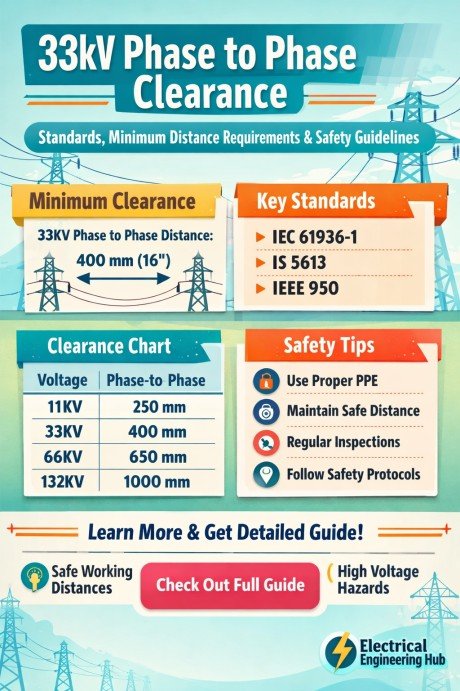
Table of Contents
Table of Contents
Whether designing a 33kV switchyard, overhead transmission line, substation, or distribution network, engineers must follow approved clearance requirements to avoid electrical breakdown between phases. This guide explains the minimum clearance requirements, applicable standards, influencing factors, and important safety recommendations.
What is 33kV Phase to Phase Clearance?
Phase-to-phase clearance refers to the minimum air distance maintained between two energized conductors carrying different phases of a three-phase electrical system.
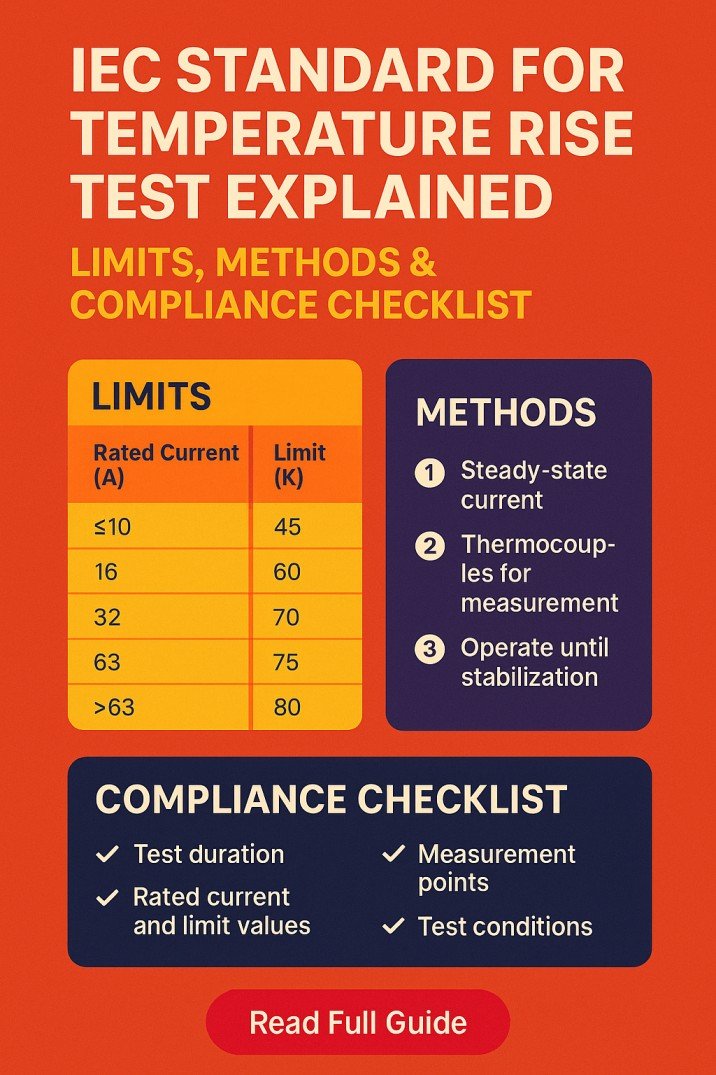
Know more about Phase to Phase Clearance as per IEC
In a 33kV network, adequate conductor spacing is required to prevent arcing, flashovers, and insulation failures during normal operation as well as transient overvoltage conditions.
The required clearance depends on several factors, including:
- System voltage
- Insulation level
- Environmental conditions
- Altitude
- Switching surges
- Lightning impulses
- Applicable standards
Understanding 33kV Phase to Phase Clearance helps engineers ensure safe operation and long-term reliability of electrical infrastructure.
Why Phase-to-Phase Clearance is Important
Insufficient clearance can result in serious operational and safety issues.
Some key reasons why proper clearance is necessary include:
- Prevention of electrical flashover
- Reduced risk of short circuits
- Improved system reliability
- Enhanced personnel safety
- Compliance with regulatory standards
- Reduced maintenance costs
- Protection against voltage surges
A properly designed 33kV installation minimizes the possibility of faults and improves equipment lifespan.
Use our online tool Creepage Distance Calculator – Calculate Safe Insulation & Clearance for PCB and High Voltage Design
Relevant Standards for 33kV Clearance Requirements
Several international and national standards define clearance requirements for medium-voltage systems.
| Standard | Description |
|---|---|
| IEC 61936-1 | Power installations exceeding 1 kV AC |
| IEC 60071 | Insulation coordination principles |
| IEEE C37 Series | Switchgear and substation standards |
| IEC 62271 | High-voltage switchgear requirements |
| IS 5613 | Indian code for transmission lines |
| NESC | National Electrical Safety Code |
These standards provide guidelines for determining safe conductor spacing under various operating conditions.
Use our free tool Phase to Phase Clearance Calculator
Typical Minimum 33kV Phase-to-Phase Clearance Requirements
The exact value may vary depending on utility specifications and environmental conditions. However, commonly accepted minimum clearances are shown below.
Air Insulated Substation (AIS)
| Equipment Type | Typical Phase-to-Phase Clearance |
|---|---|
| 33kV Busbar | 320 mm – 400 mm |
| Circuit Breaker Connections | 320 mm – 400 mm |
| Isolator Connections | 350 mm – 450 mm |
| Outdoor Equipment | 400 mm – 500 mm |
Find all about Phase to Phase Clearance in 132 kV
Overhead Line Conductors
| System Voltage | Typical Conductor Spacing |
|---|---|
| 11kV | 1.0 m – 1.2 m |
| 22kV | 1.2 m – 1.5 m |
| 33kV | 1.5 m – 2.5 m |
| 66kV | 2.0 m – 3.0 m |
Utility companies often specify larger spacing to account for conductor swing, wind loading, and maintenance requirements.
When evaluating 33kV Phase to Phase Clearance, engineers should always refer to project-specific standards and utility requirements.
Phase-to-Phase Clearance in 33kV Substations
In a 33kV substation, conductor spacing is determined using insulation coordination studies and equipment manufacturer recommendations.
The following factors are considered:
- Rated voltage
- Basic Insulation Level (BIL)
- Pollution severity
- Altitude correction factor
- Switching overvoltages
- Lightning protection design
Know more about IEC Standard for Busbar Clearance
A typical outdoor 33kV switchyard may maintain phase-to-phase clearances ranging from 350 mm to 500 mm depending on equipment arrangement.
Modern substation designs often include additional margins to improve reliability and simplify maintenance activities.
Factors Affecting 33kV Phase-to-Phase Clearance
Several environmental and operational factors influence clearance requirements.
Atmospheric Conditions
Humidity, rain, fog, and dust reduce insulation strength of air. Areas with frequent pollution or coastal environments may require increased conductor spacing.
Altitude
Air density decreases with altitude, reducing dielectric strength. High-altitude installations typically require larger clearances than installations at sea level.
Switching Surges
Circuit breaker operations can create transient overvoltages. Adequate clearance prevents flashovers during these conditions.
Know more about IEC Standard for Earthing System
Lightning Surges
Lightning strikes can generate high impulse voltages. Proper insulation coordination ensures sufficient air gaps between conductors.
Conductor Movement
Overhead conductors move due to:
- Wind pressure
- Thermal expansion
- Ice loading
- Mechanical vibrations
Additional spacing is provided to prevent phase clashing.
Insulation Coordination and Clearance Design
Insulation coordination is the process of matching equipment insulation levels with expected overvoltages.
For 33kV systems, engineers evaluate:
| Parameter | Typical Value |
|---|---|
| Rated Voltage | 33kV |
| Highest System Voltage | 36kV |
| Power Frequency Withstand Voltage | 70kV |
| Lightning Impulse Withstand Voltage | 170kV |
These values help determine safe clearances and insulation requirements throughout the system.
Know more about IEC Standard for Insulation Resistance Test
Proper insulation coordination forms an important part of 33kV Phase to Phase Clearance because it directly impacts system reliability.
Safety Guidelines for 33kV Installations
Personnel working near energized 33kV equipment must follow strict safety practices.
Maintain Safe Working Distances
Never enter restricted electrical zones without authorization and proper isolation procedures.
Use Appropriate PPE
Workers should wear:
- Arc-rated clothing
- Insulating gloves
- Safety helmets
- Face shields
- Dielectric footwear
Follow Lockout-Tagout Procedures
Before maintenance:
- De-energize equipment.
- Isolate all power sources.
- Apply lockout devices.
- Verify absence of voltage.
- Install grounding equipment.
Know more about IEC Standard for Neutral to Earth Voltage
Conduct Regular Inspections
Routine inspections should identify:
- Loose connections
- Damaged insulators
- Corrosion
- Bird nesting
- Vegetation encroachment
Verify Clearance During Modifications
Whenever new equipment is added, clearance verification should be part of the design review process.
Common Mistakes in 33kV Clearance Design
Many electrical failures can be traced back to poor clearance management.
Common mistakes include:
- Ignoring conductor swing calculations
- Using minimum values without safety margins
- Neglecting pollution effects
- Improper busbar arrangement
- Failure to consider future expansion
- Inadequate lightning protection
Avoiding these errors improves operational safety and system performance.
Find all about IEEE Standard for Short Circuit Calculation
Best Practices for Engineers
To ensure compliance and reliability, engineers should:
- Follow IEC and utility standards
- Perform insulation coordination studies
- Use manufacturer-recommended clearances
- Consider environmental conditions
- Allow maintenance access space
- Include future expansion requirements
- Conduct periodic safety audits
These practices help maintain safe operation throughout the equipment lifecycle.
Know more about IEEE Standard for Instrument Transformers
Conclusion
Proper conductor spacing is a fundamental requirement for safe and reliable medium-voltage power systems. Understanding 33kV Phase to Phase Clearance helps engineers design substations, switchyards, and overhead lines that comply with international standards while minimizing operational risks.
Although typical phase-to-phase clearances for 33kV installations range between 320 mm and 500 mm in substations and 1.5 m to 2.5 m for overhead lines, the final value should always be determined through insulation coordination studies, environmental assessments, and applicable utility requirements. By following established standards and safety guidelines, organizations can reduce faults, improve equipment reliability, and enhance personnel safety.
Find all about IEEE Standard for Insulation Resistance Test
Frequently Asked Questions (FAQs)
What is the minimum phase-to-phase clearance for a 33kV system?
In most air-insulated substations, the typical minimum phase-to-phase clearance ranges from 320 mm to 500 mm depending on equipment type and applicable standards.
What is the typical conductor spacing for 33kV overhead lines?
Most utilities maintain conductor spacing between 1.5 meters and 2.5 meters to account for wind swing, sag, and electrical safety requirements.
Which standard governs 33kV clearance requirements?
IEC 61936-1, IEC 60071, IEC 62271, IEEE standards, and local utility regulations are commonly used for determining clearance requirements.
Why is insulation coordination important for 33kV systems?
Insulation coordination ensures that equipment insulation levels and conductor clearances can withstand expected lightning and switching overvoltages without failure.
Can environmental conditions affect 33kV phase-to-phase clearance?
Yes. Factors such as humidity, pollution, altitude, wind, and lightning exposure can influence clearance requirements and may require larger conductor spacing for safe operation.
Get new guides in your feed. Follow Electrical Insights on LinkedIn for new electrical standards guides, calculators and design tips from Azad Circuit Hub.
#33kvphasetophaseclearance,#33kvclearance,#electricalengineering,#highvoltage,#powersystem,#substation,#electricalsafety,#transmissionline,#switchyard,#utilityengineering