
How to Check Power Factor: Best Methods & Procedure
How to Check Power Factor using meters, power analyzers, and calculation methods. Learn the step-by-step procedure, formulas, readings, and practical testing tips.
Uncover the fundamentals of electrical engineering with our comprehensive collection of electrical concepts on Electrical Hub. From circuit basics to advanced principles, explore a wealth of knowledge to enhance your understanding of electricity. Dive into the world of electrical concepts and empower your expertise.
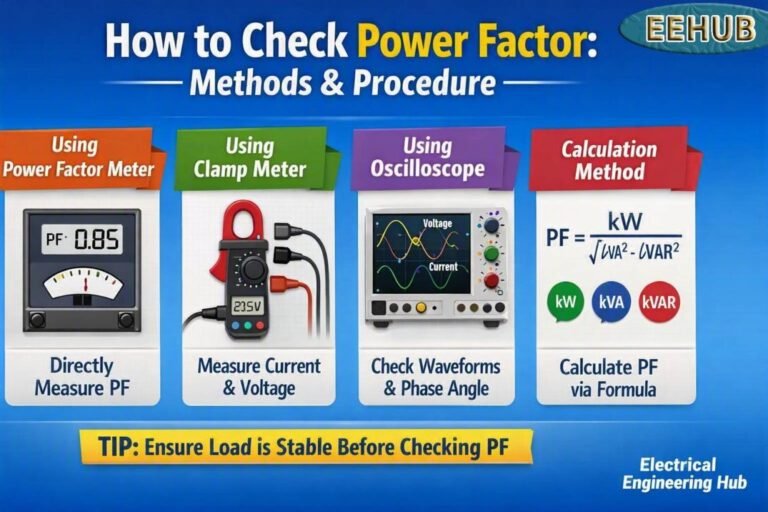
How to Check Power Factor using meters, power analyzers, and calculation methods. Learn the step-by-step procedure, formulas, readings, and practical testing tips.
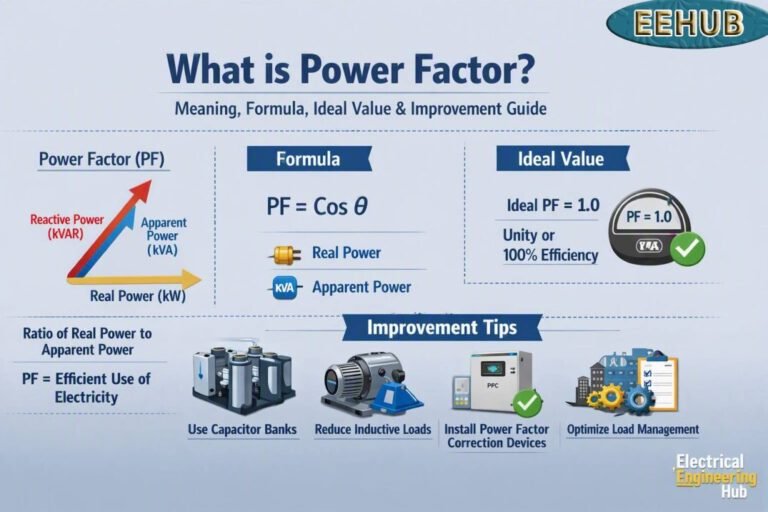
What is Power Factor? Learn its meaning, formula, ideal value, types, effects on electrical systems, and practical methods to improve power factor and reduce energy losses.
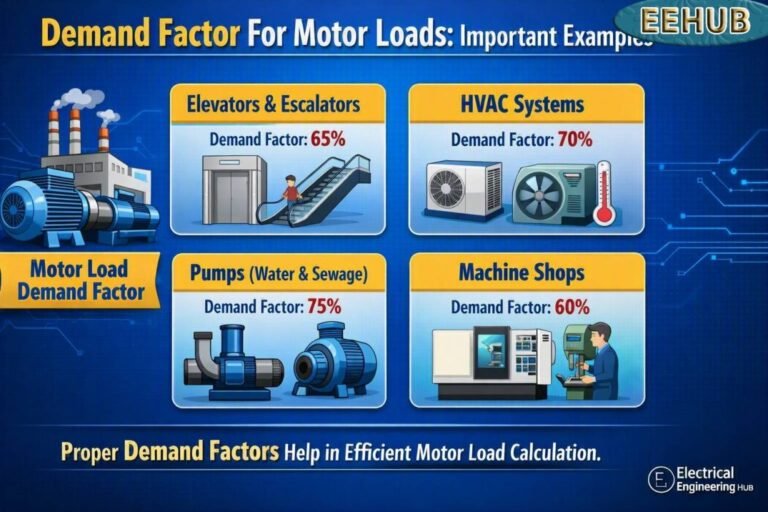
Learn Demand Factor For Motor Loads with practical examples, calculation methods, and electrical design guidance to accurately determine motor load requirements and improve system sizing.
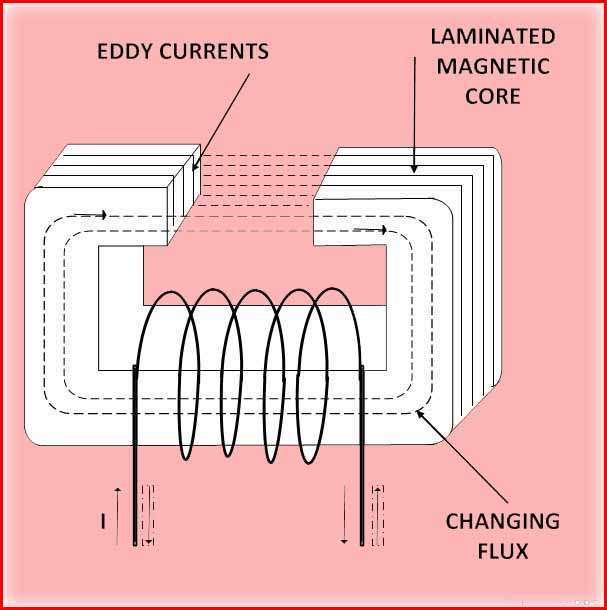
Difference between Hysteresis loss and eddy current loss can be simplified by understanding the types of losses. Hysteresis loss and eddy current loss are two distinct mechanisms of energy dissipation in different situations.

Learn how to calculate power factor in electricity bill using simple formulas, real-world examples, and practical steps to understand energy consumption and power charges.
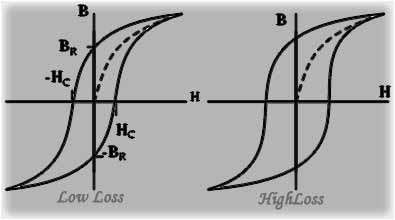
The derivation of the magnitude of hysteresis losses involves analyzing the energy dissipated during a complete cycle of magnetization and demagnetization of a ferromagnetic material.
Hysteresis loss, also known as magnetic hysteresis loss, is a phenomenon that occurs in ferromagnetic materials when they are subjected to cyclic magnetic fields. It refers to the energy dissipated in the form of heat as the magnetic domains within the material undergo repeated alignment and realignment with the changing magnetic field. Hysteresis is a significant factor to consider in various electrical and magnetic applications.
Eddy current loss, also known as Foucault or joule loss, is a phenomenon that occurs when a conductor is exposed to a varying magnetic field, resulting in the generation of circulating currents within the conductor. These circulating currents are known as Eddy currents and are responsible for the dissipation of energy in the form of heat. Eddy current loss can have significant implications in various electrical and magnetic systems.

SCR stands for Silicon Controlled Rectifier. It is a type of semiconductor device that belongs to the family of thyristors, which are widely used in power electronics. An SCR is a four-layer, three-terminal device with three pn-junctions. The three terminals of an SCR are the anode (A), the cathode (K), and the gate (G).
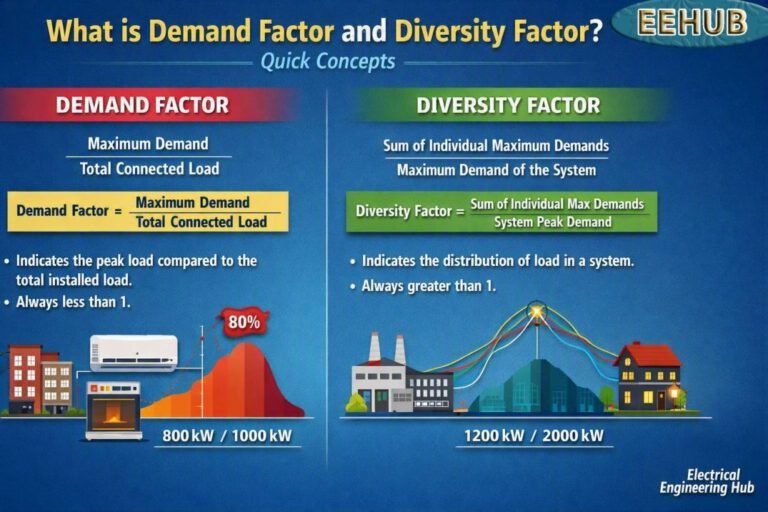
What is Demand Factor and Diversity Factor? Learn the key concepts, formulas, differences, and practical applications for accurate electrical load calculations and system design.