
Solar Insurance Coverage Types Explained: Complete Protection Guide for Homeowners & Businesses
Solar energy systems are a long-term investment, and protecting them with the right insurance is just as important as installing them correctly. Understanding Solar Insurance Coverage Types helps homeowners and businesses avoid unexpected financial losses caused by weather damage, theft, or technical failures. With solar adoption increasing rapidly, insurers now offer tailored policies that cover different risks associated with photovoltaic systems.
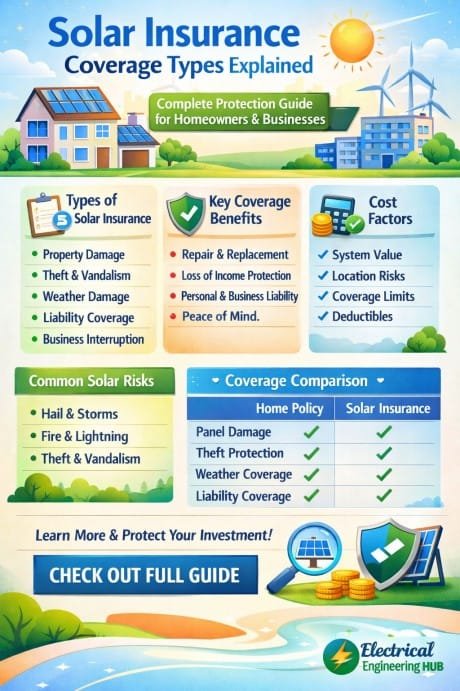
Table of Contents
Choosing the right plan is not always straightforward because every installation has unique risks based on location, system size, and usage. This guide explains everything in simple terms so you can make informed decisions and secure your solar investment effectively.
What Solar Insurance Really Covers
Before selecting a policy, it is important to understand how Solar Insurance Coverage Types work in real-world conditions. Most policies are designed to protect solar panels, inverters, mounting structures, wiring, and sometimes even battery storage systems.
Know more about How Much Does Solar Panel Insurance Cost?
Common risks covered include hailstorms, fire, lightning, accidental damage, vandalism, and theft. Some advanced policies also include loss of income if your solar system is tied to business operations or net metering.
Key Components Included in Coverage
| Component | Protection Details |
|---|---|
| Solar Panels | Damage from weather, impact, and defects |
| Inverters | Electrical faults, surge damage |
| Mounting Structure | Wind, corrosion, structural failure |
| Wiring System | Short circuits, fire hazards |
| Battery Storage | Overheating, malfunction (optional add-on) |
Understanding these components helps you evaluate Solar Insurance Coverage Types more effectively when comparing policies.
Main Types of Solar Insurance Policies
Different Solar Insurance Coverage Types are available depending on whether you are a homeowner or a business owner. Each type offers specific benefits based on risk exposure and installation scale.
1. Property Insurance Extension
This is the most common option where solar systems are included under standard home or commercial property insurance. It covers physical damage caused by natural disasters and accidents.
2. Equipment Breakdown Insurance
This type focuses on internal failures such as inverter breakdown, electrical faults, and performance issues not caused by external events. It is especially useful for large installations.
Use our free online tool here Solar Panel Insurance Cost Calculator
3. Comprehensive Solar Insurance
A more complete solution that combines property and equipment coverage. Many insurers recommend this option for long-term protection. This is one of the most preferred Solar Insurance Coverage Types for industrial users.
4. Liability Insurance
This protects you if your solar system causes damage to a third party, such as fire spreading to a neighboring property or installation-related accidents.
5. Business Interruption Coverage
For commercial solar setups, this policy compensates for income loss during system downtime. It ensures financial stability when energy production is affected.
Cost Factors That Affect Solar Insurance
The cost of insurance depends on several technical and environmental factors. Understanding these helps you choose the right Solar Insurance Coverage Types without overpaying.
| Factor | Impact on Premium |
|---|---|
| System Size | Larger systems cost more to insure |
| Location Risk | Hail, flood, or storm-prone areas increase cost |
| Installation Quality | Certified installers reduce risk and premiums |
| System Age | Older systems may have higher premiums |
| Coverage Level | Comprehensive plans cost more |
To estimate your expected premium, you can use this helpful tool: Solar Panel Insurance Cost Calculator.
Why Businesses Need Specialized Coverage
Commercial solar users face higher risks due to scale and continuous operation. Equipment failure or downtime can directly impact revenue. That is why tailored Solar Insurance Coverage Types for businesses often include performance guarantees, liability protection, and income loss coverage.
Industrial solar farms and agricultural solar tube wells also benefit from extended policies that cover maintenance-related risks and grid connection issues.
Common Exclusions You Should Know
Not everything is covered under standard policies. Many people assume full protection, but exclusions are an important part of Solar Insurance Coverage Types.
Typical exclusions include poor maintenance, intentional damage, manufacturing defects (covered by warranty instead), and normal wear and tear. Understanding these gaps ensures better claim approval in the future.
How to Choose the Right Policy
Selecting the right insurance depends on evaluating your system’s value and risk exposure. Here are some practical steps:
- Assess your system size and usage
- Compare at least three insurance providers
- Check claim settlement history
- Review exclusions carefully
- Consider add-ons like battery protection
A well-chosen plan ensures long-term financial security and peace of mind.
Use our online free tool Solar Panel Installation Cost Calculator
Solar Insurance and Risk Management Strategy
Insurance should be part of a broader protection strategy. Regular maintenance, surge protection devices, and proper installation reduce risks significantly. When combined with the right Solar Insurance Coverage Types, these practices maximize system lifespan and efficiency.
FAQs
1. What are the most common Solar Insurance Coverage Types available?
The most common options include property extension coverage, equipment breakdown insurance, comprehensive solar insurance, liability protection, and business interruption coverage.
2. Is solar insurance mandatory for homeowners?
No, it is not mandatory, but it is highly recommended to protect your investment from unexpected damage and losses.
3. Does solar insurance cover battery storage systems?
Some policies include battery coverage as an add-on, but it is not always part of standard plans.
4. How much does solar insurance typically cost?
Costs vary depending on system size, location, and coverage level. Tools like the Solar Panel Insurance Cost Calculator can help estimate premiums.
5. Can I add solar panels to my existing home insurance?
Yes, many insurers allow solar systems to be added to existing property insurance, but coverage details should be reviewed carefully.
Use our free online tool solar insurance premium calculator
Final Thoughts
Selecting the right Solar Insurance Coverage Types is essential for protecting your renewable energy investment. Whether for residential rooftops or large commercial installations, proper coverage ensures financial stability and operational continuity. With rising climate risks and increasing solar adoption, having the right insurance plan is no longer optional but a practical necessity for long-term security.
Follow Us on Social:
Subscribe our Newsletter on Electrical Insights for latest updates from Electrical Engineering Hub
#SolarInsurance,#SolarCoverage,#SolarProtection,#RenewableEnergy,#SolarPanelInsurance,#CleanEnergy,#EnergySecurity,#SolarInvestment,#GreenEnergy,#InsuranceGuide
