
WAGO vs IDEAL Push-In Wire Connectors: Which Is Better?
Choosing between lever-style connectors and push-in wire connectors can make a noticeable difference in electrical installation work. The wago vs ideal push-in wire connectors comparison comes down to more than brand preference. Connection method, conductor compatibility, reusability, installation speed, wire size, and the type of electrical work all matter.
I have worked as an electrical engineer for more than 15 years, including panel work, industrial automation, PLC systems, troubleshooting, and electrical installations. When I evaluate wire connectors, I pay close attention to how securely they handle conductors and how practical they are during real field work.
For electricians who want a flexible connector kit, the WAGO 221 lever nut assortment is particularly interesting because the transparent housing and lever mechanism make conductor insertion and inspection straightforward.
WAGO vs IDEAL Push-In Wire Connectors at a Glance
| Feature | WAGO 221 Lever Nuts | IDEAL Push-In Connectors |
|---|---|---|
| Connection style | Lever operated | Push-in |
| Reusable | Yes, when properly used | Depends on model/application |
| Visual inspection | Excellent | Varies by model |
| Wire removal | Easy with lever | Usually requires removal technique |
| Installation speed | Fast | Very fast |
| Flexible stranded wire | Excellent | Model dependent |
| Solid conductor | Yes | Yes |
| Best use | Residential, panels, control wiring | Fast permanent connections |
| Main advantage | Flexibility and reusability | Simple push-in installation |
The important difference is the connection mechanism. WAGO 221 connectors use a lever that opens the internal clamp, allowing the conductor to be inserted and secured. IDEAL push-in connectors generally rely on pushing a properly prepared conductor into the connector.
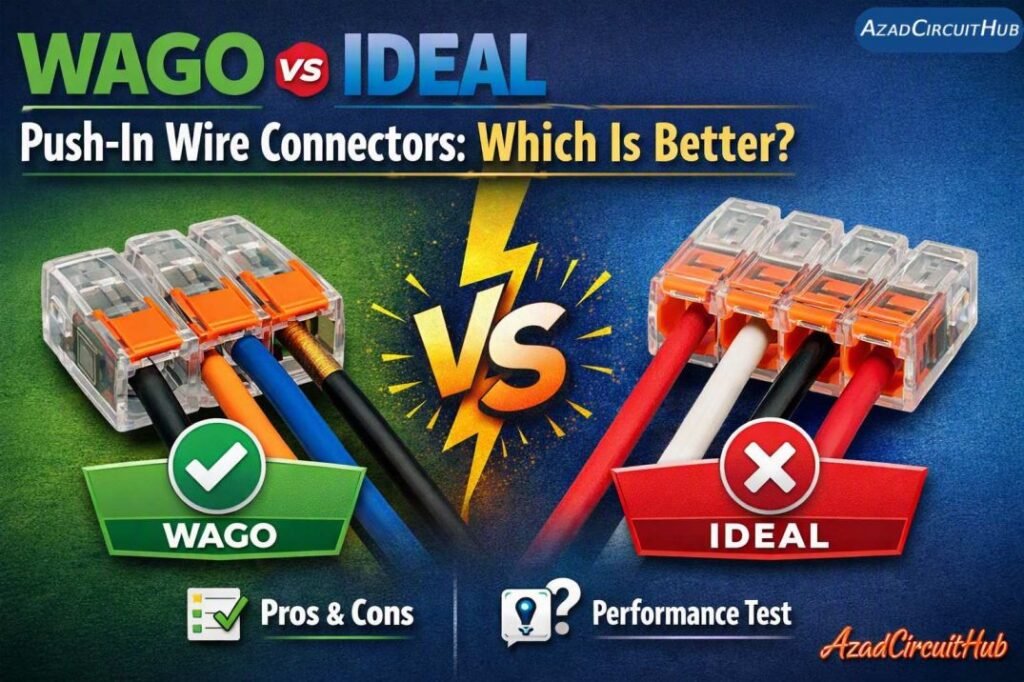
Table of Contents
Table of Contents
WAGO 221 Lever Nuts
The WAGO 221 series is one of the better-known lever connector designs for joining electrical conductors. Its biggest advantage is versatility. The lever can be opened when inserting or removing a conductor, which is useful during troubleshooting, modifications, and control-panel work.
The transparent connector body also allows the installer to see the conductor position. This is helpful when checking whether the stripped section has entered the connection area correctly.
The WAGO 221 assortment supplied for this article contains several connector configurations:
- 221-2401
- 221-412
- 221-413
- 221-415
- Compact carrying case
- 28-piece assortment
The different pole configurations make the kit useful for small wiring jobs where you may need two-, three-, or five-conductor connections.
Want the WAGO 221 assortment for your electrical toolbox? Check the WAGO 221 Lever Nuts on Amazon
IDEAL Push-In Wire Connectors
IDEAL push-in connectors are designed around a simpler installation approach. Instead of operating a lever, the installer prepares the conductor and pushes it into the connector.
This can be very convenient when making large numbers of straightforward connections. In repetitive wiring work, reducing the number of installation steps can save time.
However, push-in connectors are not all identical. Their permitted conductor types, wire ranges, temperature ratings, and application requirements vary by product. Always check the manufacturer's specifications for the exact connector being used.
For a professional installation, I would never choose a connector simply because it is faster to install. The conductor type, wire gauge, environment, and applicable electrical code should be considered first.
WAGO vs IDEAL Push-In Wire Connectors for Stranded Wire
Stranded wire is an important area where connector selection becomes more significant. Flexible conductors can be harder to terminate with some push-in designs because individual strands can spread during insertion.
WAGO 221 lever connectors are popular for this type of work because the lever-operated clamp accommodates suitable solid, stranded, and fine-stranded conductors within the manufacturer's specified range.
This can be especially useful in control panels and equipment wiring where flexible conductors are common.
For any connector, however, the manufacturer's approved wire range should be followed. Do not assume that a connector rated for stranded wire is automatically suitable for every type or size of flexible conductor.
WAGO vs IDEAL Push-In Wire Connectors for Installation Speed
If speed is the only consideration, a push-in connector can be very attractive. The conductor is prepared, inserted, and secured without operating a separate lever.
WAGO 221 connectors are also fast, especially once an electrician becomes familiar with the lever mechanism. The small levers are easy to operate and provide a clear indication that the clamp has been opened.
| Installation Factor | WAGO 221 | IDEAL Push-In |
|---|---|---|
| Insert conductor | Easy | Very easy |
| Remove conductor | Very easy | Model dependent |
| Rewire circuit | Excellent | Less convenient |
| Visual conductor check | Excellent | Model dependent |
| Repeated troubleshooting | Excellent | Varies |
| Speed in repetitive work | Fast | Very fast |
For maintenance work, I generally value easy removal almost as much as quick installation. Electrical systems rarely remain unchanged forever.
Which Connector Is Better for DIY Electrical Work?
For DIY users, WAGO 221 connectors can be appealing because the lever mechanism is easy to understand. The transparent body also helps the user visually confirm conductor placement.
The assortment format is another advantage. Instead of purchasing only one connector size, the WAGO 221 kit provides multiple configurations in a compact case.
That makes it useful for small electrical projects, lighting connections, control wiring, junction-box work, and other suitable applications.
However, DIY users should still understand local electrical codes. A connector being convenient does not automatically mean it is approved for every electrical application.
WAGO vs IDEAL Push-In Wire Connectors for Rewiring
Rewiring is where lever connectors can have a practical advantage. With a WAGO 221, the lever can be raised, the conductor removed, and another conductor inserted without cutting the connector apart.
That can save both time and materials during troubleshooting.
Push-in connectors are often excellent when the circuit is unlikely to need changes. They are particularly useful for fast terminations where the correct conductor has already been prepared.
For electricians working on control panels or equipment that may be modified later, a reusable connector can be more convenient.
Is the WAGO 221 Assortment Worth Buying?
For an electrician, technician, maintenance professional, or serious DIY user, the 28-piece WAGO 221 assortment offers useful variety in a small package.
The 221-412, 221-413, and 221-415 configurations cover common two-, three-, and five-conductor connection requirements, while the assortment format makes it easier to keep different connector sizes available.
The key advantage is not simply the WAGO name. It is the combination of a lever-operated connection, conductor visibility, compact design, and easy rework.
Amazon buying option: Buy the WAGO 221 28pc Lever Nut Assortment on Amazon
WAGO vs IDEAL Push-In Wire Connectors: Pros and Cons
| WAGO 221 Pros | WAGO 221 Cons |
|---|---|
| Reusable connection mechanism | Usually costs more than basic push-in connectors |
| Works with suitable stranded wire | Requires operating the lever |
| Easy conductor removal | Slightly more physical steps |
| Transparent housing | May be unnecessary for simple repetitive wiring |
| Compact design | Must stay within rated wire range |
| IDEAL Push-In Pros | IDEAL Push-In Cons |
|---|---|
| Very quick installation | Removal can vary by model |
| Simple operating method | Less flexible for some rewiring jobs |
| Good for repetitive connections | Connector specifications vary |
| Compact designs available | Correct conductor preparation remains important |
Safety and Installation Tips
Regardless of which connector you choose, good preparation matters.
- Turn off and verify the circuit before working.
- Strip conductors to the manufacturer's specified length.
- Use the correct wire size and conductor type.
- Do not exceed the connector's rated number of conductors.
- Inspect the connection before energizing.
- Keep copper conductors clean and undamaged.
- Follow applicable electrical codes and manufacturer's instructions.
- Never use a connector outside its listed application.
A properly installed connector is only one part of a safe electrical connection. The conductor, insulation, enclosure, circuit protection, and installation environment all matter.
WAGO vs IDEAL Push-In Wire Connectors: Final Verdict
The better choice depends on the job. IDEAL push-in connectors can be excellent when fast, straightforward connections are the priority. WAGO 221 connectors have a stronger practical advantage when flexibility, conductor visibility, stranded-wire compatibility, and easy rewiring are important.
For my own evaluation as an electrical engineer, I particularly like the WAGO 221 concept for troubleshooting and modification work. The ability to open the lever and remove a conductor without destroying the connector is useful in real maintenance situations.
If you frequently work with different conductor combinations, the 28-piece WAGO assortment is also more convenient than carrying only one connector size.
For electricians who want a versatile kit that can handle a range of suitable wiring tasks, check the WAGO 221 assortment price on Amazon before buying.
Frequently Asked Questions
Are WAGO connectors better than IDEAL push-in connectors?
Neither is universally better. WAGO 221 lever connectors provide excellent flexibility and easy conductor removal, while IDEAL push-in connectors can offer very fast installation for suitable applications.
Can WAGO 221 connectors be reused?
WAGO 221 lever connectors are designed to allow conductors to be inserted and removed using the lever. The connector should remain within its manufacturer's specified application and condition requirements.
Are WAGO 221 connectors suitable for stranded wire?
Yes, WAGO 221 connectors are designed for suitable solid, stranded, and fine-stranded conductors within their specified wire-size range. Always check the exact product specifications before installation.
Do push-in wire connectors make a secure connection?
A properly selected and correctly installed push-in connector can provide a secure electrical connection. The conductor must be prepared correctly and inserted according to the manufacturer's instructions.
Are WAGO connectors good for electrical panels?
Suitable WAGO connectors can be useful in electrical panels and control wiring, provided the specific connector is approved for the application, conductor type, enclosure, voltage, current, and applicable electrical requirements.
Get new guides in your feed. Follow Electrical Insights on LinkedIn for new electrical standards guides, calculators and design tips from Azad Circuit Hub.
#WAGOVsIDEAL, #WAGOConnectors, #IDEALConnectors, #PushInWireConnectors, #WireConnectors, #ElectricalConnectors, #ElectricalWiring, #WAGO, #IDEALElectrical, #ElectricianTools


