
Can WAGO Lever Nuts Be Used on Stranded Wire? Best Guide
Can WAGO lever nuts be used on stranded wire? The answer is Yes! provided the connector model is approved for the conductor type, size and the application. The WAGO 221 Series is designed to connect solid, stranded, and fine-stranded copper conductors within its specified wire range. Its lever mechanism makes it useful for electrical repairs, lighting circuits, junction boxes, and control wiring.
As an electrical engineer with hands-on experience in electrical panels, industrial wiring, and troubleshooting, I pay close attention to conductor preparation and terminal contact. A connector may look secure but still develop a poor connection if the wire is damaged, inserted incorrectly, or outside the manufacturer’s specifications.
Can WAGO Lever Nuts Be Used on Stranded Wire?: Quick Check
| Feature | WAGO 221 Series |
|---|---|
| Compatible conductors | Solid, stranded, and fine-stranded copper, within model limits |
| Connection method | Lever-operated spring clamp |
| Common models | 221-412, 221-413, 221-415 |
| 221-412 capacity | 2 conductors |
| 221-413 capacity | 3 conductors |
| 221-415 capacity | 5 conductors |
| Conductor preparation | Strip to the specified length |
| Reusable connection | Lever can be reopened |
| Typical applications | Lighting, junction boxes, control wiring |
| Main precaution | Follow the exact model’s ratings and instructions |
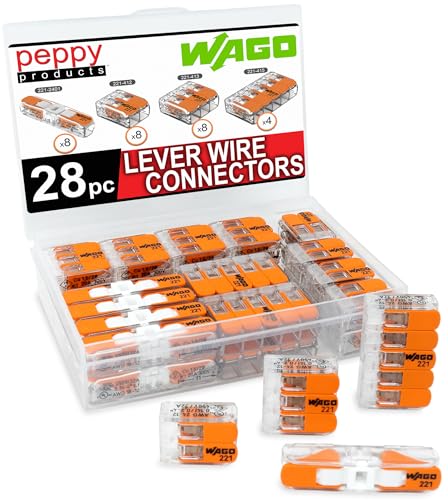
- Connect any combination of solid, stranded, and flexible copper wires faster and more reliably
- Terminates 24-12 AWG for 221-41x, 20-12 AWG for 221-2401 solid
- Genuine WAGO LEVER NUTS
The 221 Series is popular because it accommodates different conductor styles without requiring the installer to twist wires together. However, conductor material, cross-sectional area, voltage, current, and installation conditions must all remain within the product’s ratings.
Table of Contents
Table of Contents
Can WAGO Lever Nuts Be Used on Stranded Wire?
How Do WAGO Lever Nuts Work With Stranded Wire?
A WAGO 221 connector uses a spring-clamp mechanism. When you lift the lever, the clamp opens so you can insert the prepared conductor. Lowering the lever secures the wire and establishes electrical contact.
Unlike a traditional twist-on wire connector, the connection does not depend on twisting the conductors together. This can make installation and inspection easier, particularly inside electrical enclosures.
For stranded wire, the key is to insert the complete conductor into the terminal. No loose strands should remain outside the clamp, and insulation must not enter the contact area.
Recommended product: Buy the WAGO 221 Lever-Nuts assortment on Amazon for common two-, three-, and five-conductor connections.
How to Connect Stranded Wire to a WAGO 221
Follow these steps for a reliable connection.
- Isolate the circuit. Switch off the supply and verify that the conductors are de-energized using an appropriate tester.
- Check the connector. Confirm that the exact WAGO model accepts the conductor material, strand type, and wire size.
- Strip the insulation. Use the stripping length marked on the connector or stated in its instructions.
- Prepare the conductor. Ensure the copper strands are clean and undamaged. Do not cut off stray strands to make the wire fit.
- Open the lever. Lift it fully before inserting the conductor.
- Insert the wire. Push the stripped conductor fully into the terminal.
- Close the lever. Lower it completely and inspect the connection.
- Check the result. Confirm that no bare copper is exposed beyond the intended contact area and perform an appropriate gentle pull check.
Never work on an energized connection. For fixed building wiring, follow the applicable electrical code and use a qualified electrician where required.
Can You Use Fine-Stranded or Flexible Wire?
Yes, some WAGO 221 models accept fine-stranded conductors, but the permitted wire range depends on the exact model and its current technical documentation.
Fine-stranded wire is common in flexible power leads, equipment wiring, and control panels. Because its individual strands are small, poor preparation can leave strands outside the terminal or cause an incomplete connection.
Do not assume that every flexible cable is compatible simply because it fits into the opening. Check the conductor cross-section, conductor class, material, and applicable product approval.
Also, do not automatically add a ferrule to stranded wire. Use a ferrule only if the specific connector’s instructions permit that conductor termination. WAGO 221 terminals are designed to accept specified bare stranded conductors, so an additional ferrule may be unnecessary or unsuitable.
Common Mistakes to Avoid
From a wiring and troubleshooting perspective, these are the problems I would check first when inspecting a WAGO connection:
- Using wire that falls outside the permitted conductor range.
- Leaving loose copper strands outside the terminal.
- Failing to strip the correct insulation length.
- Inserting insulation into the electrical contact area.
- Reusing a damaged connector or conductor.
- Exceeding the connector’s voltage or current rating.
- Installing the connector where its environmental or enclosure rating is unsuitable.
- Connecting incompatible conductor materials without an approved method.
For code requirements and permitted applications, read Are WAGO Lever Nuts Allowed by NEC? before using them in permanent building wiring.
If you are deciding between connection methods, compare WAGO Lever Nuts vs Wire Nuts to understand the differences in installation, conductor compatibility, and inspection.
WAGO 221-412 vs 221-413 vs 221-415
| Model | Number of Ports | Suitable Use |
|---|---|---|
| 221-412 | 2 | Joining two conductors |
| 221-413 | 3 | Joining three conductors |
| 221-415 | 5 | Joining up to five conductors |
Choose the model based on the number of conductors and the electrical requirements of the circuit. Do not exceed the connector’s permitted conductor combinations or ratings.
For an alternative connection method, see WAGO vs IDEAL Push-In Wire Connectors. If you need several connector sizes for service work, the Best WAGO Lever Nut Assortment Kit guide can help you choose a suitable kit.
Frequently Asked Questions
Can WAGO Lever Nuts Be Used on Stranded copper Wire ?
Yes. Compatible WAGO 221 models accept stranded copper conductors within their specified wire-size and conductor-class limits. Check the exact model’s documentation before installation.
Do stranded wires need ferrules for WAGO lever nuts?
Not generally. The 221 Series is designed for specified bare stranded conductors. Use ferrules only when the manufacturer’s instructions permit them for the particular connector and conductor combination.
Can WAGO lever nuts connect solid and stranded wires together?
Yes, when the selected connector model permits both conductor types and all wires meet its specifications. Insert each conductor into its own port and close the corresponding lever fully.
Are WAGO 221 connectors reusable?
The lever mechanism can be opened to release a conductor. However, inspect the connector and wire before reuse, and replace any damaged component. Follow the manufacturer’s instructions for reuse.
Are WAGO lever nuts safe for household wiring?
They can be suitable for approved household wiring applications when the exact product is appropriately rated and installed according to its instructions and applicable electrical codes. Suitability depends on the circuit, enclosure, conductor type, and local requirements.
Final Verdict
WAGO 221 lever nuts can provide a secure and convenient connection for stranded copper wire when the correct model is selected and installed properly. Their lever-operated design simplifies conductor insertion and makes later inspection easier.
For electrical work, the most important factors are conductor compatibility, correct stripping, complete insertion, connector ratings, and compliance with local wiring requirements. Choose the WAGO 221-412, 221-413, or 221-415 according to the number of conductors and the manufacturer’s specifications, rather than selecting a connector based on appearance alone.
Get new guides in your feed. Follow Electrical Insights on LinkedIn for new electrical standards guides, calculators and design tips from Azad Circuit Hub.


