Motor Protection Circuit Breaker vs Overload Relay
Selecting the correct motor protection device is essential for equipment reliability, electrical safety, and compliance with NEC and IEC standards. Many engineers and electricians compare Motor Protection Circuit Breaker vs Overload Relay because both devices protect motors, but they perform very different functions. Understanding when to use each one helps prevent nuisance trips, costly downtime, and motor damage.
Motor Protection Circuit Breaker vs Overload Relay
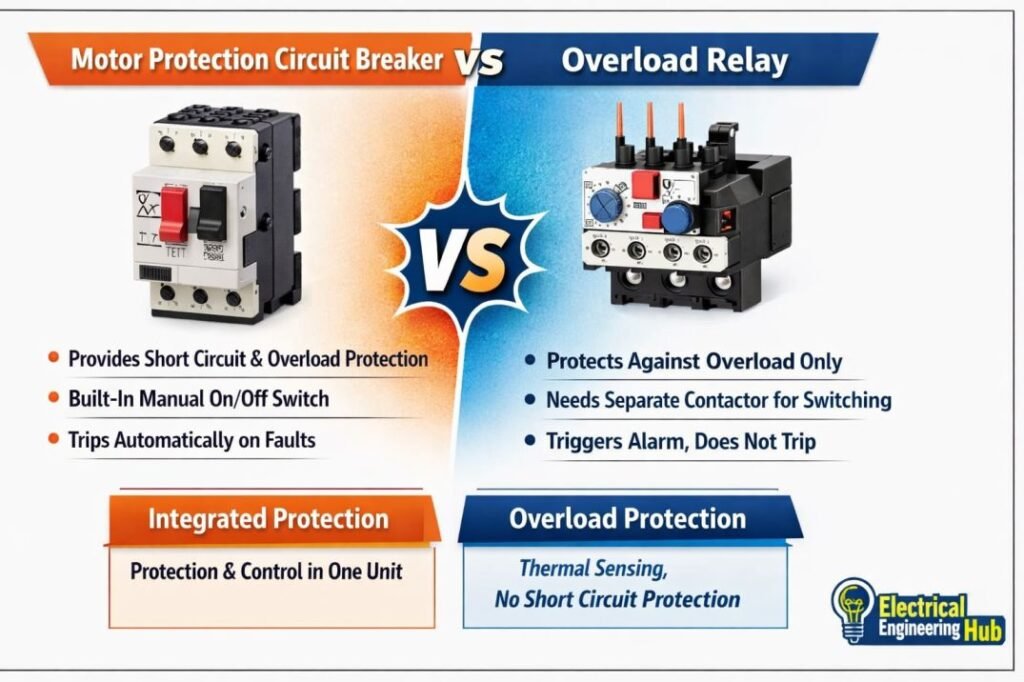
| Feature | Motor Protection Circuit Breaker (MPCB) | Overload Relay |
|---|---|---|
| Main Purpose | Short circuit and overload protection | Overload protection only |
| Protects Against Short Circuit | Yes | No |
| Protects Against Overload | Yes | Yes |
| Phase Loss Protection | Most models | Most thermal/electronic models |
| Manual Switching | Yes | No |
| Requires Contactor | Optional in some applications | Yes |
| Reset Type | Manual or automatic | Manual or automatic |
| Standard | IEC 60947-2 / IEC 60947-4-1 | IEC 60947-4-1 |
Quick Comparison Chart
| Choose MPCB When | Choose Overload Relay When |
|---|---|
| Complete motor protection is needed | A contactor is already installed |
| Short circuit protection is required | Branch circuit protection exists upstream |
| Compact motor starter is preferred | Motor starter panel already uses MCCB or fuse |
| Space inside the panel is limited | Fine overload adjustment is required |
What Is a Motor Protection Circuit Breaker?
A Motor Protection Circuit Breaker (MPCB) is a specialized circuit breaker designed specifically for electric motors. It combines thermal and magnetic protection in one device. The thermal mechanism protects against overload current, while the magnetic mechanism trips instantly during short circuits.
Unlike a standard circuit breaker, an MPCB is calibrated to handle the temporary inrush current that occurs during motor starting without unnecessary tripping.
Typical applications include:
- Pumps
- Compressors
- Conveyor systems
- Fans
- HVAC motors
- Industrial machinery
What Is an Overload Relay?
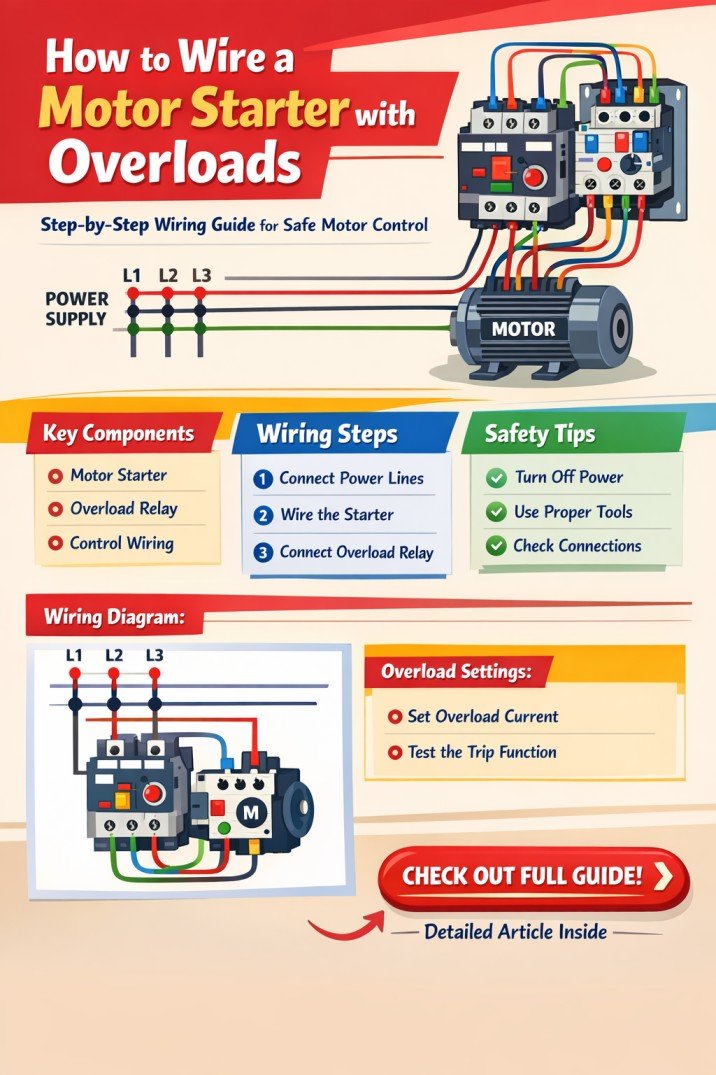
An overload relay is a protective device that monitors motor current and disconnects the motor when excessive current continues for a certain period. It does not interrupt short-circuit faults and must always work together with a circuit breaker or fuse.
The relay protects the motor windings from overheating caused by prolonged overload, phase imbalance, or phase loss.
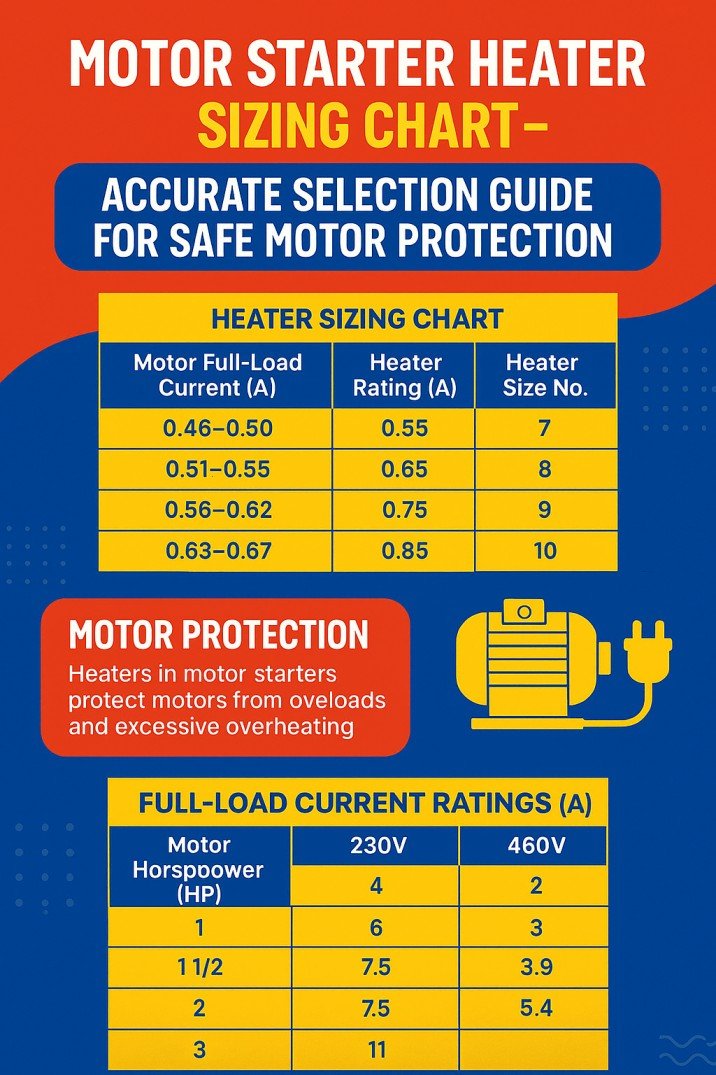
Before selecting the proper relay setting, use our Overload Relay Setting Calculator and motor overload adjustment guide to calculate the correct trip current according to NEC 430.32 and IEC 60947-4-1.
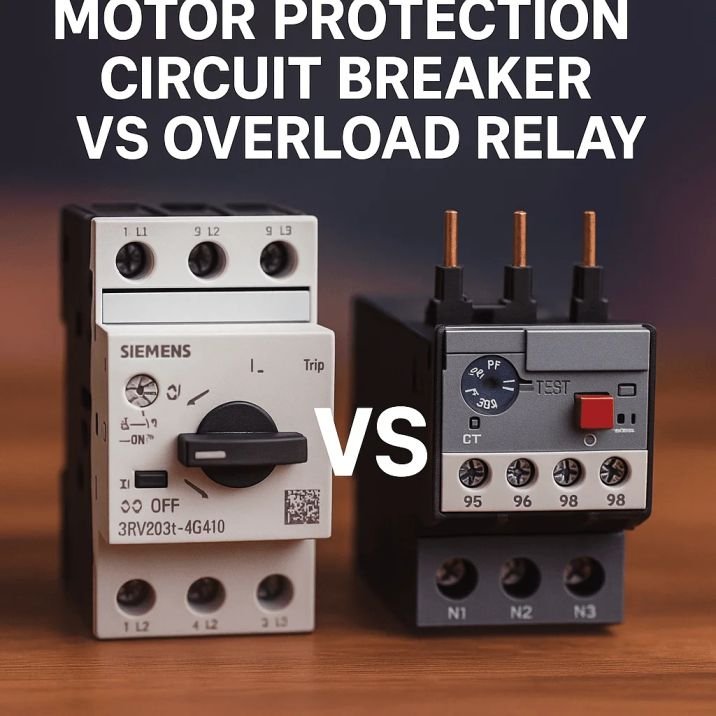
Motor Protection Circuit Breaker vs Overload Relay: Key Differences
Although both devices protect motors, they serve different purposes.
| Parameter | Motor Protection Circuit Breaker | Overload Relay |
|---|---|---|
| Protection Type | Thermal + Magnetic | Thermal or Electronic |
| Short Circuit Protection | Yes | No |
| Overload Protection | Yes | Yes |
| Isolation Switch | Yes | No |
| Motor Starting | Can start and stop motor | Requires contactor |
| Installation Cost | Higher | Lower |
| Panel Components | Fewer | More |
The biggest difference is that an MPCB can interrupt both overload and short-circuit currents, while an overload relay only detects overload conditions.
How Each Device Works
Motor Protection Circuit Breaker
An MPCB contains two protective elements:
- Thermal element responds to continuous overload.
- Magnetic element reacts instantly to high fault current.
When the current exceeds the preset limit, the breaker opens and disconnects the motor supply.
Overload Relay
An overload relay continuously monitors motor current flowing through the contactor.
When excessive current persists beyond the selected trip curve, the relay opens its auxiliary contact, causing the contactor coil to de-energize and disconnect the motor.
Because it relies on the contactor, the relay cannot interrupt fault current by itself.
Advantages of Motor Protection Circuit Breaker
Using an MPCB offers several benefits.
- Combines multiple protection functions
- Saves panel space
- Simplifies wiring
- Fast short-circuit interruption
- Manual isolation for maintenance
- Adjustable overload setting
- Reduced installation components
These advantages make MPCBs popular in modern motor control centers.
Advantages of Overload Relay
Despite requiring additional components, overload relays remain widely used because they provide:
- Accurate overload protection
- Lower replacement cost
- Excellent compatibility with contactors
- Easy coordination with MCCBs and fuses
- Available in thermal and electronic versions
Electronic overload relays also provide diagnostics, communication, and fault history in advanced industrial systems.
Typical Wiring Arrangement
| Protection Method | Components Required |
|---|---|
| MPCB Only | Supply → MPCB → Motor |
| Overload Relay System | Supply → MCCB/Fuse → Contactor → Overload Relay → Motor |
| Industrial Starter | MCCB → Contactor → Overload Relay → Motor |
This explains why overload relays are commonly found inside motor starter panels.
Which Device Provides Better Motor Protection?
The answer depends on the application.
For small standalone motors, an MPCB often provides the most practical solution because one device protects against overload and short circuits.
For large industrial motor control systems, overload relays are usually combined with MCCBs or molded case circuit breakers. This arrangement provides greater flexibility, easier maintenance, and better coordination between protective devices.
If you are setting an overload relay, our motor overload relay setting calculator helps determine the correct current setting for different motor ratings and service factors.
Applications Comparison
| Industry | Preferred Device |
|---|---|
| Water Pumps | MPCB |
| HVAC Systems | Both |
| Conveyor Systems | Overload Relay + Contactor |
| Manufacturing Plants | Overload Relay |
| Packaging Machines | MPCB |
| Industrial Process Plants | Overload Relay |
| Small Machines | MPCB |
Large process industries often use overload relays because they integrate easily with PLC-based motor control systems.
Cost Comparison
| Factor | MPCB | Overload Relay |
|---|---|---|
| Initial Cost | Higher | Lower |
| Installation Time | Lower | Higher |
| Maintenance | Simple | Moderate |
| Components Needed | Fewer | More |
| Overall Panel Cost | Competitive for small systems | Better for large installations |
The final project cost depends on the size of the motor control panel and the number of motors installed.
Selection Guidelines
Choose an MPCB if:
- Short-circuit protection is needed.
- A compact solution is preferred.
- The motor operates independently.
- Space inside the enclosure is limited.
Choose an overload relay if:
- A contactor-based starter already exists.
- Protection coordination is required.
- The system uses MCCBs or fuses.
- Large industrial motor control panels are installed.
Proper overload adjustment is equally important after device selection. You can verify the recommended trip current using the Overload Relay Setting Calculator before commissioning the motor.
Common Mistakes to Avoid
Many motor failures occur because of incorrect protection selection.
Avoid these common mistakes:
- Using only an overload relay without upstream short-circuit protection.
- Selecting an oversized MPCB.
- Ignoring motor service factor.
- Setting overload current above the motor nameplate rating.
- Choosing protection without considering motor starting current.
- Failing to test the protection settings after installation.
Following NEC and IEC recommendations significantly improves motor reliability.
Frequently Asked Questions
Can an overload relay replace a circuit breaker?
No. An overload relay cannot interrupt short-circuit current and must always be used with a circuit breaker or fuse.
Does an MPCB eliminate the need for an overload relay?
In many small motor applications, yes. Since an MPCB provides both overload and short-circuit protection, a separate overload relay may not be required.
Which device is better for industrial motors?
Large industrial motor starters usually use an overload relay with a contactor and upstream circuit breaker because this arrangement provides better coordination and easier maintenance.
Can both devices be installed together?
Yes. Many industrial motor control panels use both devices to achieve coordinated protection, improved selectivity, and enhanced system reliability.
Related Tools & Guides
- Overload Relay Setting Calculator according to NEC 430.32 & IEC 60947-4-1
- Differences in Bimetal Overload and Ambient-Compensated Overload Relays
- Overload Relay for Motor
- Overload Setting for Motor
- Overload Relay Amp Lists
Conclusion
Understanding Motor Protection Circuit Breaker vs Overload Relay helps engineers select the right protection for each application. An MPCB offers combined overload and short-circuit protection in one compact device, making it suitable for standalone motors and smaller installations.
An overload relay focuses on thermal motor protection and works alongside a contactor and upstream protective device, making it ideal for industrial motor control systems. Selecting the proper device, sizing it correctly, and adjusting the overload setting according to recognized standards ensures longer motor life, improved operational safety, and fewer unexpected shutdowns.
Get new guides in your feed. Follow Electrical Insights on LinkedIn for new electrical standards guides, calculators and design tips from Azad Circuit Hub.
MotorProtectionCircuitBreakerVsOverloadRelay, #MotorProtection, #OverloadRelay, #MPCB, #MotorControl, #ElectricalEngineering, #MotorSafety, #IndustrialAutomation, #NEC, #MotorProtectionDevices