Motor Overcurrent Protection Calculator
Electrical motors are the backbone of industrial and commercial systems. From pumps and compressors to HVAC units and conveyors, motors need proper protection to avoid costly failures. A Motor Overcurrent Protection Calculator helps electricians, engineers, and technicians quickly determine the correct protective device size based on motor full-load current and applicable electrical standards.
Choosing the wrong overcurrent protection can lead to nuisance tripping, overheating, or even severe equipment damage. That is why using a Motor Overcurrent Protection Calculator is one of the fastest and most reliable ways to size motor circuit breakers, fuses, and short-circuit protection devices.
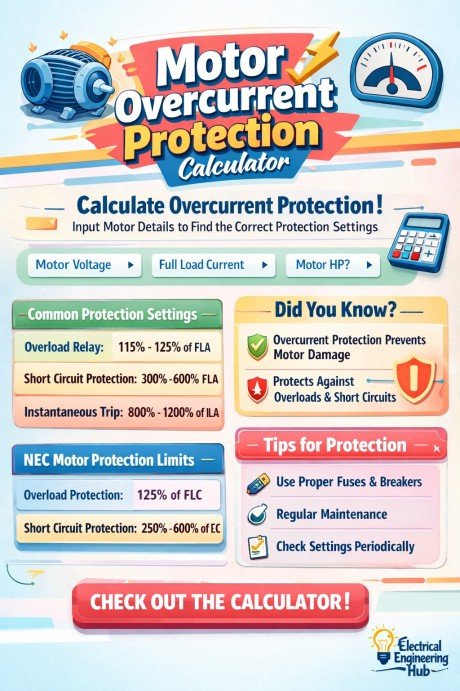
Table of Contents
Table of Contents
This guide explains how motor overcurrent protection works, how the calculator helps, and what factors you should consider before selecting the final protective device.
What Is Motor Overcurrent Protection?
Motor overcurrent protection is designed to protect motor circuits from excessive current caused by short circuits, ground faults, or abnormal operating conditions.
Unlike overload protection, overcurrent protection mainly handles sudden high-current events. It prevents conductor damage and minimizes fire risks.
Use our online tool Armoured Cable Size Calculator
A proper Motor Overcurrent Protection Calculator uses motor full-load amperes (FLA), motor type, and protection percentage to determine the correct breaker or fuse rating.
Motor Overcurrent Protection Calculator
Motor Overcurrent Protection Calculator
Overload relay range and branch-circuit short-circuit protection sizing for AC induction motors
Motor Nameplate Data
Branch Circuit Protection
Calculated Protection Values
| Parameter | Value | Basis |
|---|
How to Use
- Enter the motor full load current exactly as shown on the nameplate, not the calculated or estimated value.
- Select the service factor marked on the nameplate. If none is marked, use 1.0.
- Select the temperature rise class if marked on the nameplate; otherwise leave on the default option.
- Choose the starting duty that best matches the application, since high inertia loads typically need a higher short-circuit device setting.
- Select the type of short-circuit protective device you plan to install: fuse type or breaker type.
- Optionally enter an available standard device rating if you want the tool to check it against the calculated maximum.
- Optionally enter the feeder conductor ampacity to verify the protective device does not exceed conductor protection limits.
- Click Calculate Protection Sizing to view the overload relay range and the maximum permitted short-circuit protective device rating.
Technical Notes
Overload protection is sized to protect the motor windings from sustained overload heating, while short-circuit protection is sized only to clear a fault and is permitted to be set well above full load current because it does not need to respond to normal running or starting currents.
The overload relay range shown reflects common allowances for motors with a marked service factor of 1.15 or higher, or a temperature rise of 40 C or less, versus motors without these markings, which require a tighter overload setting.
The short-circuit protective device percentages applied reflect the typical maximum permitted values for each device type. Where the calculated value does not correspond to a standard manufactured rating, the next higher standard rating is generally permitted, except for instantaneous trip breakers and non-time delay fuses above defined limits, which are capped strictly.
High inertia or long acceleration loads, autotransformer starting, part-winding starting, and across-the-line starting can each justify selecting a higher permitted short-circuit device percentage within recognized limits, when the standard rating is insufficient to allow the motor to start without nuisance tripping.
This calculator provides sizing guidance for general reference. Final protective device selection should always be verified against the manufacturer instructions, the motor nameplate, and the applicable electrical code or standard enforced in your jurisdiction.
Find more Electrical Engineering Tools for easy electrical calculations and estimations.
Common protection devices include:
- Circuit breakers
- Motor protection circuit breakers (MPCB)
- Time-delay fuses
- Instantaneous trip breakers
- Thermal magnetic breakers
Know more about Electric Motor Polarization Index Test
Why Use a Motor Overcurrent Protection Calculator?
Manual calculations can take time and often lead to mistakes. A Motor Overcurrent Protection Calculator improves speed and accuracy.
Here are some practical benefits:
| Benefit | Description |
|---|---|
| Fast sizing | Calculates breaker or fuse size instantly |
| Code compliance | Helps follow NEC and IEC guidelines |
| Reduced errors | Avoids oversizing or undersizing |
| Better motor safety | Improves equipment lifespan |
| Easy troubleshooting | Simplifies maintenance planning |
For professionals handling multiple motor installations, this tool saves time and improves workflow efficiency.
How Does a Motor Overcurrent Protection Calculator Work?
The calculator uses motor full-load current and multiplies it by the allowed overcurrent protection percentage.
Basic formula:
| Formula | Description |
|---|---|
| Overcurrent Protection = FLA × Protection Percentage | Standard sizing formula |
For example:
Motor Full Load Current = 32A
Circuit Breaker Type = Inverse Time Breaker
Protection Factor = 250%
Know more about Electric Motor Core Loss Test
Calculation:
32 × 2.5 = 80A
The recommended overcurrent device would be 80A.
This method ensures proper short-circuit and ground fault protection.
Key Inputs Required in the Calculator
To get accurate results from a Motor Overcurrent Protection Calculator, you need correct motor data.
1. Motor Rated Current
This is the full-load current shown on the motor nameplate.
2. Voltage Rating
Motor voltage affects current draw and sizing.
Examples:
- 230V
- 400V
- 415V
- 480V
Know more about Best 7 Electric Motor Vibration Testers
3. Phase Type
Single-phase and three-phase motors have different current calculations.
4. Protection Device Type
Different devices allow different sizing percentages.
| Device Type | Typical Multiplier |
|---|---|
| Inverse Time Breaker | 250% |
| Non-Time Delay Fuse | 300% |
| Time Delay Fuse | 175% |
| Instantaneous Breaker | 800% |
Key Takeaways
Before selecting motor protection, keep these points in mind:
- Always use the motor nameplate current for better accuracy.
- Select the protective device according to code requirements.
- Overcurrent protection is different from overload protection.
- Use digital tools to reduce sizing errors.
- Verify conductor ampacity before final installation.
For accurate motor data, you can use the Nema Motor Data Calculator to check motor ratings quickly.
Motor Overcurrent Protection vs Motor Overload Protection
Many people confuse overcurrent and overload protection. They serve different purposes.
| Protection Type | Purpose |
|---|---|
| Overcurrent Protection | Protects against short circuits and ground faults |
| Overload Protection | Protects against prolonged excessive load |
If you want to calculate overload relay settings, check the Motor Overload Setting Calculator for precise motor overload adjustments.
Using both tools together gives better motor protection planning.
Use our online tool motor cable size calculator
Important Factors for Accurate Sizing
A Motor Overcurrent Protection Calculator is highly effective, but final selection should consider these factors.
Ambient Temperature
High temperatures can affect breaker performance.
Motor Starting Current
Motors draw high inrush current during startup. This must be considered to prevent unnecessary trips.
Know everything about 3 Phase Motor Overload Relay Setting
Duty Cycle
Continuous duty motors may require different settings than intermittent duty motors.
Cable Size
The conductor must match the selected overcurrent device.
Applicable Standard
Different regions follow different standards like:
Example Calculation Table
Here is a practical sizing reference.
| Motor HP | Voltage | FLA | Breaker Size (250%) |
|---|---|---|---|
| 5 HP | 400V | 8A | 20A |
| 10 HP | 400V | 15A | 40A |
| 20 HP | 400V | 27A | 70A |
| 30 HP | 400V | 40A | 100A |
| 50 HP | 400V | 65A | 175A |
This table gives a quick overview, but a Motor Overcurrent Protection Calculator provides more precise results.
Know more about What Are the Applications of Overcurrent Relays in Power Systems?
Where Is This Calculator Useful?
This tool is useful in many applications.
Industrial Plants
Used for pumps, compressors, and conveyor motors.
Commercial Buildings
Useful for HVAC motors and elevators.
Solar Systems
Important for solar water pumps and tracking motors.
Workshops
Helpful for machinery like lathes and drilling motors.
In all these cases, correct motor protection improves system reliability.
Common Mistakes to Avoid
Avoid these errors while sizing protection:
- Using estimated current instead of nameplate current
- Ignoring starting current
- Confusing overload and overcurrent settings
- Selecting oversized breakers
- Not checking local electrical codes
A Motor Overcurrent Protection Calculator helps reduce these mistakes significantly.
Know more about Motor Overload Protection Chart
Final Thoughts
A Motor Overcurrent Protection Calculator is an essential tool for anyone working with motor installations. It simplifies calculations, improves accuracy, and supports safer electrical systems.
Whether you are sizing protection for a small workshop motor or a large industrial machine, using the right calculator saves time and avoids expensive failures. Combine it with supporting tools like NEMA motor data lookup and overload setting calculators for complete motor protection planning.
Proper motor protection is not just about compliance. It is about reliability, safety, and long-term performance.
Know more about Motor Starter Types
FAQs
1. What does a Motor Overcurrent Protection Calculator do?
It calculates the correct breaker or fuse size based on motor full-load current and protection type.
2. Is overcurrent protection the same as overload protection?
No. Overcurrent protects against faults, while overload protects against excessive load over time.
3. Which standard is used for motor overcurrent sizing?
NEC Article 430 and IEC standards are commonly used.
4. Can I use a larger breaker than calculated?
Only if allowed by the applicable code and motor starting requirements.
5. Why does a motor trip during startup?
This usually happens due to high inrush current or incorrect breaker sizing. A Motor Overcurrent Protection Calculator helps prevent this issue.
Get new guides in your feed. Follow Electrical Insights on LinkedIn for new electrical standards guides, calculators and design tips from Azad Circuit Hub.
#MotorOvercurrentProtection,#OvercurrentProtectionCalculator,#MotorProtection,#ElectricalCalculations,#MotorSafety,#CircuitProtection,#ElectricalEngineering,#MotorCurrentCalc,#ProtectionRelay,#IndustrialAutomation
Motor Overcurrent Protection Calculator

Motor Overcurrent Protection Calculator helps you quickly calculate overload and short-circuit protection for motors with accurate results.
Price Currency: USD
Operating System: Web Browser
Application Category: UtilitiesApplication