Electric Motor Core Loss Test: Complete Industrial Motor Testing & Efficiency Analysis Guide
Industrial motors operate in demanding environments where efficiency, reliability, and energy performance directly affect production costs. One of the most important procedures used in motor diagnostics and quality assessment is the Electric Motor Core Loss Test. This testing method helps engineers identify magnetic core issues, overheating risks, insulation damage, and hidden efficiency losses before a motor returns to operation.
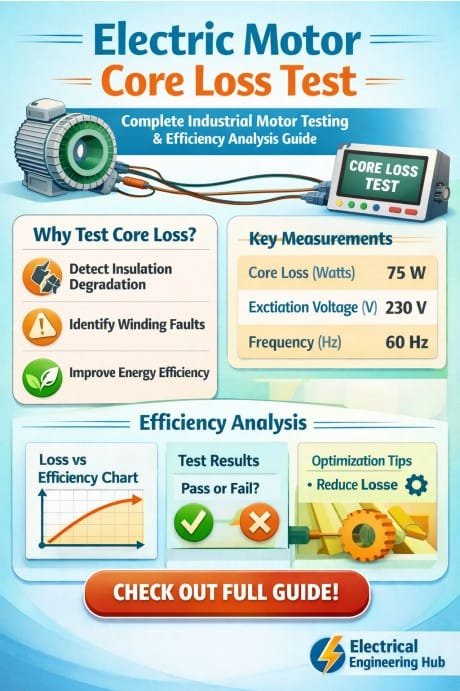
Table of Contents
In modern industries, electric motors consume a significant portion of total electrical energy. Even a small increase in iron losses inside the stator core can reduce efficiency, increase operating temperature, and shorten motor lifespan. That is why maintenance teams, motor rewind workshops, and industrial testing laboratories rely on the Electric Motor Core Loss Test to ensure motor cores remain in proper condition after manufacturing, repair, or rewinding.
What Is an Electric Motor Core Loss Test?
The Electric Motor Core Loss Test is a diagnostic procedure used to measure iron losses in the laminated steel core of an electric motor. The test determines whether the stator core has developed shorted laminations, insulation breakdown, localized heating, or excessive magnetic losses.
Know more about Motor Overload Protection Chart
The laminated core inside a motor is designed to minimize eddy current losses and hysteresis losses. If laminations become damaged during rewinding, overheating, or mechanical handling, the motor core begins to generate excessive heat. This reduces motor efficiency and may eventually lead to winding failure.
The test is commonly performed on:
- Induction motors
- High-voltage motors
- Synchronous motors
- Rewound industrial motors
- Large AC motors
- Generator stators
Why Core Loss Testing Is Important
Motor failures often begin with hidden magnetic core damage that cannot be identified through visual inspection alone. A damaged stator core may still allow the motor to run, but efficiency drops and heat generation increases rapidly.
Here are the main reasons industries perform this test:
| Purpose | Benefit |
|---|---|
| Detect shorted laminations | Prevent overheating |
| Verify rewinding quality | Ensure proper repair standards |
| Improve motor efficiency | Reduce energy consumption |
| Identify hot spots | Avoid insulation failure |
| Extend motor life | Reduce maintenance costs |
| Maintain reliability | Prevent unexpected shutdowns |
Industrial facilities that follow predictive maintenance programs often include Electric Motor Core Loss Test procedures as part of scheduled motor inspections.
Know more about Motor Starter Types
Working Principle of Core Loss Testing
The stator core consists of thin insulated steel laminations stacked together. These laminations reduce circulating eddy currents inside the core material. When insulation between laminations breaks down, electrical currents flow between sheets, producing heat and magnetic losses.
During the Electric Motor Core Loss Test, a temporary excitation winding is wrapped around the stator core. An AC voltage is then applied to create magnetic flux inside the core. The test equipment measures power consumption and identifies abnormal heating areas.
If localized hot spots appear, it usually indicates:
- Shorted laminations
- Core insulation damage
- Mechanical deformation
- Excessive magnetic flux density
- Manufacturing defects
Thermal imaging cameras are often used alongside the test to identify abnormal temperature rise patterns.
Types of Electric Motor Core Loss Testing Methods
Different industries use different testing methods depending on motor size, voltage rating, and testing standards.
Ring Flux Test
The ring flux method is one of the most common approaches. A temporary winding is wrapped around the stator core, and AC voltage is applied to magnetize the core.
Know more about What Are the Applications of Overcurrent Relays in Power Systems?
Advantages include:
- Accurate hot spot detection
- Suitable for large motors
- Reliable efficiency analysis
- Non-destructive testing
Loop Test
The loop test uses a conductor loop around the core to create magnetic flux. This method is generally used for smaller motors and workshop inspections.
EL CID Testing
Electromagnetic Core Imperfection Detection, commonly known as EL CID testing, is used in high-voltage generators and critical industrial machines. It detects core faults using low flux excitation and specialized probes.
| Testing Method | Common Application | Accuracy Level |
|---|---|---|
| Ring Flux Test | Industrial motors | High |
| Loop Test | Small motors | Medium |
| EL CID Testing | Generators | Very High |
Equipment Used for Electric Motor Core Loss Test
Several instruments are required for accurate testing and efficiency analysis.
Essential Testing Equipment
| Equipment | Function |
|---|---|
| Variable AC power supply | Provides excitation voltage |
| Temporary excitation winding | Creates magnetic flux |
| Wattmeter | Measures core losses |
| Thermal camera | Detects hot spots |
| Temperature sensors | Monitor heating |
| Insulation materials | Ensure safe testing |
Modern motor testing systems often include computerized data logging and thermal imaging integration for better diagnostics.
Use our online tool Motor Overload Setting Calculator for Single and Three Phase Motors
Step-by-Step Electric Motor Core Loss Test Procedure
A proper testing procedure ensures accurate results and protects the motor from unnecessary stress.
1. Visual Inspection
The stator core is cleaned and visually inspected for:
- Burn marks
- Lamination damage
- Mechanical dents
- Loose core sections
2. Install Excitation Winding
A temporary winding is wrapped evenly around the stator core. The number of turns depends on motor size and required magnetic flux density.
3. Apply Test Voltage
Controlled AC voltage is applied gradually to avoid overheating. The magnetic flux level is carefully monitored.
4. Measure Power Loss
Input power is measured using a wattmeter. Excessive power consumption may indicate abnormal core losses.
Know everything about 3 Phase Motor Overload Relay Setting
5. Monitor Temperature Rise
Thermal imaging equipment identifies localized hot spots. Uneven heating patterns usually indicate shorted laminations.
6. Analyze Results
Engineers compare readings with standard acceptable limits and manufacturer specifications.
Common Causes of High Core Losses
Several factors can increase iron losses inside industrial motors.
| Cause | Effect on Motor |
|---|---|
| Damaged laminations | Increased eddy currents |
| Poor rewinding practices | Core insulation failure |
| Overheating | Magnetic degradation |
| Mechanical vibration | Lamination movement |
| Moisture contamination | Insulation weakening |
| Incorrect assembly | Uneven magnetic flux |
Motor rewind workshops must use proper insulation techniques during repairs to avoid damaging the stator core.
Acceptable Core Loss Values
Acceptable loss values vary depending on motor size, design, and industry standards. Large industrial motors generally allow only a small increase in core loss after rewinding.
Typical evaluation factors include:
- Watt loss per kilogram
- Temperature rise limits
- Hot spot severity
- Flux density performance
- Efficiency reduction percentage
If losses exceed acceptable standards, corrective repairs may be necessary before the motor can return to service.
Learn more about difference between servo motor and induction motor
Benefits of Regular Core Loss Testing
Regular testing improves operational reliability and energy performance across industrial facilities.
Improved Energy Efficiency
Excessive iron losses increase power consumption. Detecting faults early helps maintain optimal motor efficiency.
Reduced Downtime
Preventive testing identifies hidden defects before catastrophic failures occur.
Better Repair Quality
Testing verifies whether motor rewinding or repair work has damaged the stator core.
Longer Equipment Life
Reduced heating extends insulation lifespan and overall motor durability.
Enhanced Predictive Maintenance
Condition monitoring programs benefit greatly from periodic Electric Motor Core Loss Test procedures.
Safety Precautions During Testing
Safety is critical because the testing process involves energized magnetic circuits and elevated temperatures.
Important Safety Measures
- Use insulated gloves and protective equipment
- Keep proper grounding connections
- Monitor temperature continuously
- Avoid excessive excitation voltage
- Restrict access to the testing area
- Follow industrial electrical safety standards
Technicians should always follow manufacturer recommendations and local electrical regulations.
Know more about Top 15 Motor Control Center Manufacturers in Malaysia – Trusted MCC Brands for Industrial Power
Industrial Applications of Core Loss Testing
The Electric Motor Core Loss Test is widely used across multiple industries where motor reliability is essential.
| Industry | Application |
|---|---|
| Manufacturing | Production motors |
| Oil and gas | High-power pumps |
| Power plants | Generator maintenance |
| Mining | Heavy-duty drive systems |
| Water treatment | Pump motors |
| Cement industry | Kiln and conveyor motors |
Large industrial facilities often include core loss analysis as part of annual shutdown maintenance programs.
Conclusion
The Electric Motor Core Loss Test plays a critical role in industrial motor testing, efficiency analysis, and preventive maintenance. By identifying damaged laminations, magnetic losses, and overheating risks, this testing method helps industries improve motor reliability while reducing energy consumption and unexpected downtime.
Know more about How to Size a VFD for a Motor
As industrial operations continue to focus on energy efficiency and equipment reliability, proper motor diagnostics become increasingly important. Routine core loss testing not only protects valuable assets but also ensures that repaired and rewound motors operate at maximum efficiency.
Whether used in manufacturing plants, power stations, or heavy industrial facilities, the Electric Motor Core Loss Test remains one of the most effective methods for evaluating stator core health and maintaining long-term motor performance.
Get new guides in your feed. Follow Electrical Insights on LinkedIn for new electrical standards guides, calculators and design tips from Azad Circuit Hub.
#ElectricMotorCoreLossTest,#MotorCoreLossTesting,#ElectricMotorTesting,#CoreLossAnalysis,#IndustrialMotorTesting,#MotorEfficiencyTest,#ElectricalMaintenance,#MotorDiagnostics,#TransformerCoreLoss,#MotorRepairServices
