IS 10810 Part 53 Explained: Essential Guide for Accurate Testing
Electrical cables are among the most critical components of any power distribution system. Their performance directly affects safety, reliability, and operational efficiency. To ensure that cables meet required quality standards, manufacturers and testing laboratories follow established testing procedures. One of the most important standards used in India for cable testing is IS 10810 Part 53.
Understanding IS 10810 Part 53 is essential for cable manufacturers, quality inspectors, electrical engineers, consultants, and procurement professionals. The standard provides a structured method for evaluating cable characteristics and ensuring compliance with industry requirements. Proper implementation of these testing procedures helps improve product reliability and reduces the risk of failures in electrical installations.
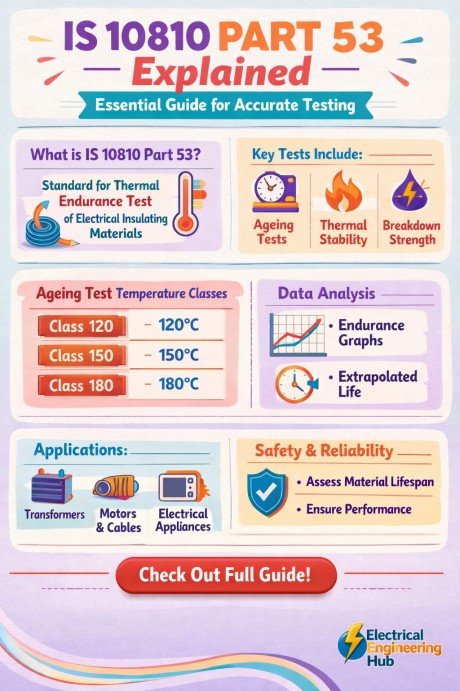
Table of Contents
In modern electrical infrastructure projects, compliance with recognized cable testing standards is often mandatory. Utilities, industrial facilities, renewable energy projects, and commercial buildings rely on tested cables to maintain safe and uninterrupted operation.
Whether you are involved in cable manufacturing, installation, quality assurance, or maintenance, learning the requirements of IS 10810 Part 53 can help you make informed technical decisions and maintain regulatory compliance.
Know more about IS 14255 Explained
Key Takeaways
- IS 10810 Part 53 defines specific testing procedures for electrical cables.
- The standard helps verify cable quality, durability, and performance.
- Accurate testing ensures compliance with industry regulations.
- Manufacturers use the standard to maintain product consistency.
- Proper testing reduces the risk of cable failures in service.
- Compliance improves confidence among utilities, contractors, and end users.
What Is IS 10810 Part 53?
IS 10810 Part 53 is a section of the IS 10810 series that specifies a test method used for evaluating particular performance characteristics of cables. The IS 10810 standards collectively cover various electrical, mechanical, thermal, and environmental tests applied to wires and cables.
The purpose of IS 10810 Part 53 is to establish a uniform testing methodology so that results remain consistent across different laboratories and manufacturers. Standardized testing eliminates ambiguity and ensures that cable products are assessed under controlled conditions. Find all about BS 7671 Wiring Regulations
The standard forms an important part of cable quality assurance programs and supports compliance with Indian electrical standards.
Find all about IS 1255 Cable Laying
Why Cable Testing Standards Matter
Cable failures can lead to power interruptions, equipment damage, safety hazards, and significant financial losses. Testing standards provide a framework for identifying defects before products are deployed in the field.
Some key benefits include:
| Benefit | Impact |
|---|---|
| Improved Safety | Reduces electrical hazards and failures |
| Product Reliability | Ensures consistent cable performance |
| Regulatory Compliance | Meets industry and utility requirements |
| Quality Assurance | Detects manufacturing defects |
| Customer Confidence | Enhances trust in cable products |
By following IS 10810 Part 53, organizations can establish repeatable testing procedures and maintain high manufacturing standards.
Explore all about IEEE Standard for Cable Insulation Resistance Test
Scope of IS 10810 Part 53
The scope of IS 10810 Part 53 includes testing procedures applicable to various cable types used in electrical installations. The standard outlines test conditions, equipment requirements, sample preparation methods, and acceptance criteria.
The test method is designed to evaluate cable performance under defined conditions. It helps determine whether a cable meets the specified technical requirements before approval for commercial use.
Manufacturers typically incorporate these tests into routine quality control and type-testing programs.
See our comprehensive guide on cable bending radius iec standard
Testing Procedure Under IS 10810 Part 53
Accurate testing requires strict adherence to the procedures defined in the standard. Although testing details may vary depending on cable design and application, the general process includes the following steps:
Sample Selection
Representative cable samples are selected from production batches. Proper sample selection is essential to obtain reliable and meaningful results.
Test Preparation
Before testing begins, samples are conditioned according to the requirements specified in the standard. Environmental conditions such as temperature and humidity may need to be controlled.
Equipment Calibration
Testing instruments must be calibrated and maintained regularly. Calibration ensures measurement accuracy and repeatability.
Test Execution
The cable sample undergoes the specified test according to the parameters outlined in IS 10810 Part 53. All measurements are recorded carefully during the process.
Know more about Wire Bending Radius NEC
Result Evaluation
The observed values are compared against the acceptance criteria. If the cable meets the required limits, it is considered compliant.
Common Applications of the Standard
The testing procedures described in IS 10810 Part 53 are commonly applied in:
- Power cable manufacturing
- Control cable production
- Instrumentation cable testing
- Utility approval processes
- Industrial quality assurance programs
- Third-party laboratory certification
Many organizations include compliance requirements in procurement specifications to ensure that supplied cables meet expected performance standards.
Relationship With Other Cable Standards
Cable testing does not rely on a single standard. Instead, multiple standards work together to evaluate different aspects of cable performance.
| Standard Category | Purpose |
|---|---|
| Electrical Tests | Verify electrical characteristics |
| Mechanical Tests | Assess strength and durability |
| Thermal Tests | Evaluate heat resistance |
| Environmental Tests | Determine environmental performance |
| Fire Performance Tests | Measure behavior during fire exposure |
For professionals involved in cable design and installation, understanding related requirements is equally important. You can also explore comprehensive guidance on underground cable installation standards to ensure proper cable deployment and long-term system reliability.
Importance for Cable Manufacturers
For cable manufacturers, compliance with IS 10810 Part 53 provides several operational advantages.
Better Quality Control
Standardized testing helps identify production issues before products reach customers.
Reduced Product Failures
Consistent testing minimizes the risk of defective cables entering service.
Enhanced Market Acceptance
Many customers prefer products tested according to recognized standards.
Easier Certification
Compliance simplifies certification and approval processes required by utilities and regulatory authorities.
Know more about Wire Sizing for Motors
Best Practices for Accurate Testing
Organizations can improve testing accuracy by following these best practices:
- Use calibrated testing equipment.
- Follow sample preparation requirements carefully.
- Maintain controlled environmental conditions.
- Train laboratory personnel regularly.
- Document all test results systematically.
- Conduct periodic internal audits.
Implementing these practices improves measurement consistency and strengthens overall quality assurance systems.
Challenges During Testing
Despite having a standardized procedure, testing can present several challenges.
| Challenge | Solution |
|---|---|
| Improper Sample Handling | Follow documented procedures |
| Equipment Drift | Perform regular calibration |
| Environmental Variations | Maintain controlled conditions |
| Human Error | Provide operator training |
| Incomplete Documentation | Use standardized records |
Addressing these issues helps ensure reliable and repeatable test results.
Use our online tool HV Cable Bending Radius Calculator
Conclusion
IS 10810 Part 53 plays a vital role in maintaining the quality and reliability of electrical cables. The standard provides a structured framework for testing, helping manufacturers and laboratories achieve consistent and accurate results. Compliance supports safety, product performance, and regulatory requirements while reducing the likelihood of cable failures in service.
As electrical infrastructure continues to expand across industrial, commercial, and utility sectors, adherence to recognized testing standards becomes increasingly important. Organizations that implement IS 10810 Part 53 effectively can improve quality assurance, strengthen customer confidence, and ensure long-term performance of their cable products.
Find all about 11kV Cable Bending Radius
Frequently Asked Questions
What is IS 10810 Part 53?
IS 10810 Part 53 is a testing standard within the IS 10810 series that specifies procedures for evaluating certain performance characteristics of electrical cables.
Why is IS 10810 Part 53 important?
It ensures consistent testing practices, improves cable quality, enhances safety, and supports compliance with industry standards.
Who uses IS 10810 Part 53?
Cable manufacturers, testing laboratories, quality assurance teams, utilities, consultants, and electrical engineers commonly use the standard.
How does IS 10810 Part 53 improve cable reliability?
The standard helps identify defects and performance issues during testing, ensuring that only compliant products are approved for use.
Is compliance with IS 10810 Part 53 mandatory?
Requirements depend on project specifications, customer requirements, and applicable regulations. Many utilities and organizations require compliance as part of their procurement and quality assurance processes.
Get new guides in your feed. Follow Electrical Insights on LinkedIn for new electrical standards guides, calculators and design tips from Azad Circuit Hub.
#IS10810Part53,#IS10810,#ElectricalStandards,#IndianStandards,#TransformerTesting,#PowerSystems,#EngineeringStandards,#ElectricalEngineering,#ComplianceTesting,#TechnicalSpecifications