IS 14255 Explained: Essential Guide for Better Compliance
Electrical installations require strict adherence to recognized standards to ensure safety, reliability, and long-term performance. Among the many standards used in the electrical industry, IS 14255 plays an important role in defining requirements related to electrical systems and associated practices. Engineers, contractors, consultants, inspectors, and facility owners often refer to IS 14255 when evaluating compliance and maintaining quality standards.
Understanding IS 14255 is not only important for regulatory compliance but also for minimizing operational risks. Organizations that follow the standard can improve system reliability, reduce maintenance costs, and enhance workplace safety.
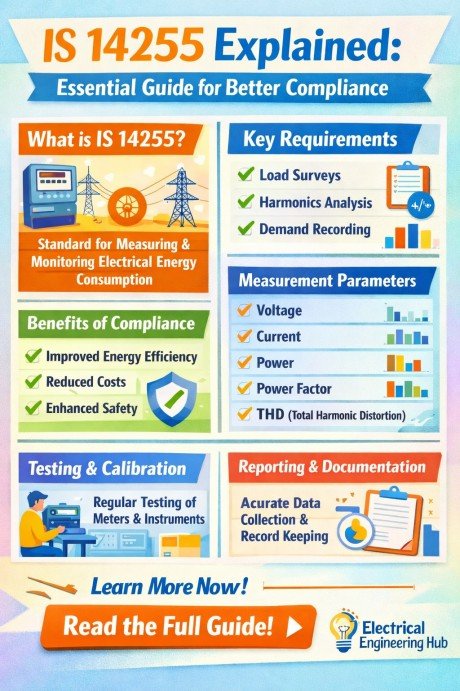
Table of Contents
As electrical infrastructure continues to expand across industrial, commercial, and utility sectors, compliance with established Indian Standards becomes increasingly critical. Proper implementation helps organizations avoid installation errors, equipment failures, and safety incidents.
Whether you are involved in project design, electrical inspections, procurement, or maintenance activities, learning the requirements of IS 14255 can help you make informed decisions and maintain compliance throughout the lifecycle of an electrical installation.
Learn more about earthing cable size as per iec
Key Takeaways
- IS 14255 provides guidelines that support electrical safety and quality compliance.
- Following the standard helps reduce operational and maintenance risks.
- Proper implementation improves system reliability and performance.
- Compliance supports regulatory requirements and industry best practices.
- Regular inspections and documentation are essential for successful adherence.
What Is IS 14255?
IS 14255 is an Indian Standard that establishes technical requirements and guidelines intended to improve safety, consistency, and quality in electrical applications. The standard serves as a reference document for professionals involved in the design, installation, testing, and maintenance of electrical systems.
The primary objective is to ensure that electrical components and installations meet defined performance criteria while maintaining adequate safety margins. By following these requirements, organizations can achieve greater operational efficiency and reduce the likelihood of failures.
Electrical projects often involve multiple stakeholders, including manufacturers, contractors, consultants, and end users. A common standard helps align expectations and ensures uniform implementation across all project phases.
Discover everything about cable bending radius iec standard
Why Compliance Matters
Compliance is not merely a regulatory requirement. It is a practical approach to improving the overall performance of electrical systems.
Some major benefits include:
- Improved electrical safety
- Reduced risk of equipment damage
- Better operational reliability
- Easier inspection and approval processes
- Enhanced asset lifespan
- Consistent installation quality
Organizations that prioritize compliance often experience fewer disruptions and lower long-term maintenance expenses.
Key Requirements Covered by the Standard
The exact requirements can vary depending on the specific application and project scope. However, several areas are commonly emphasized.
| Compliance Area | Purpose |
|---|---|
| Safety Requirements | Protect personnel and equipment |
| Material Quality | Ensure durability and reliability |
| Testing Procedures | Verify performance standards |
| Installation Practices | Maintain consistent workmanship |
| Documentation | Support audits and inspections |
| Maintenance Guidelines | Improve long-term performance |
These elements work together to create a comprehensive framework for electrical system management.
Find out more about iec 61439 busbar clearance
Importance in Electrical Infrastructure Projects
Modern electrical infrastructure requires careful planning and execution. From industrial plants to commercial buildings, compliance standards help maintain consistency and reliability.
When electrical systems are installed according to recognized standards, project owners gain confidence that the infrastructure can withstand normal operating conditions while maintaining safety.
For professionals working with cable systems, understanding related requirements is equally important. You can also explore our comprehensive guide on underground cable installation standards to understand broader industry practices that complement electrical compliance requirements.
Industries That Commonly Use IS 14255
A wide range of industries benefit from adopting the standard.
| Industry | Application |
|---|---|
| Manufacturing | Industrial electrical systems |
| Power Distribution | Network reliability and safety |
| Commercial Buildings | Facility electrical infrastructure |
| Renewable Energy | Solar and wind installations |
| Oil and Gas | Critical electrical operations |
| Infrastructure Projects | Large-scale electrical works |
Because these sectors depend heavily on uninterrupted electrical operation, adherence to recognized standards becomes a key success factor.
Explore details on iec standard for underground cable laying
Best Practices for Effective Compliance
Achieving compliance requires more than simply referencing a standard document. Organizations should establish a structured implementation strategy.
Conduct Regular Inspections
Routine inspections help identify issues before they become major problems. Scheduled evaluations can reveal installation defects, damaged components, or maintenance concerns.
Maintain Accurate Documentation
Documentation serves as evidence of compliance. Inspection reports, test results, maintenance records, and design documents should be properly maintained.
Train Technical Personnel
Employees responsible for installation and maintenance should understand the applicable requirements. Regular training improves compliance and reduces human error.
Use Quality Materials
Substandard materials can compromise system performance and safety. Procurement teams should ensure that components meet specified technical requirements.
Perform Periodic Testing
Testing validates system integrity and confirms that installations continue to operate within acceptable limits.
Get complete information about iec standard for busbar sizing
Common Compliance Challenges
Many organizations face obstacles when implementing standards effectively.
Some of the most common challenges include:
- Lack of technical awareness
- Inadequate documentation practices
- Use of non-compliant materials
- Insufficient inspection procedures
- Poor maintenance planning
- Limited employee training
Addressing these issues early can significantly improve compliance outcomes and reduce project risks.
Compliance Checklist
The following checklist can help organizations evaluate their readiness.
| Checklist Item | Status Review |
|---|---|
| Technical requirements understood | ✓ |
| Qualified personnel assigned | ✓ |
| Approved materials selected | ✓ |
| Installation procedures documented | ✓ |
| Testing completed | ✓ |
| Records maintained | ✓ |
| Periodic audits scheduled | ✓ |
Using a checklist approach makes compliance management more systematic and easier to track.
Understand better about nec 430.32
Benefits of Following the Standard
Organizations that align their operations with recognized standards often achieve measurable benefits.
Enhanced Safety
Electrical incidents can result in injuries, equipment damage, and downtime. Compliance reduces these risks by promoting safer practices.
Improved Reliability
Well-designed and properly installed systems tend to perform more consistently over time.
Reduced Maintenance Costs
Preventive measures and quality requirements help minimize costly repairs and unexpected failures.
Better Regulatory Readiness
Organizations are often better prepared for audits, inspections, and certification processes when compliance practices are already established.
Increased Asset Life
Electrical equipment operating under proper conditions generally experiences less wear and achieves a longer service life.
Dive deeper into instrument earthing iec standard
Future Importance of Electrical Standards
As electrical networks become more sophisticated, standards will continue to play an increasingly important role. Smart grids, renewable energy systems, industrial automation, and advanced monitoring technologies all require structured compliance frameworks.
Organizations that invest in compliance today are better positioned to adapt to future technological developments and evolving regulatory requirements.
Conclusion
IS 14255 serves as an important reference for maintaining safety, quality, and consistency in electrical installations and related operations. By understanding its requirements and implementing effective compliance strategies, organizations can improve reliability, reduce risks, and support long-term operational success.
Successful compliance depends on proper planning, qualified personnel, quality materials, regular inspections, and comprehensive documentation. When these elements work together, businesses can create safer and more dependable electrical systems while meeting industry expectations and regulatory requirements.
Read in detail about iec 61439 busbar calculation
Frequently Asked Questions
What is IS 14255?
IS 14255 is an Indian Standard that provides technical guidelines and requirements to improve safety, quality, and reliability in electrical applications and installations.
Why is compliance important?
Compliance helps reduce safety risks, improve system reliability, support regulatory requirements, and lower long-term maintenance costs.
Who should follow this standard?
Electrical engineers, contractors, consultants, inspectors, manufacturers, facility managers, and project owners should understand and follow applicable requirements.
How can organizations improve compliance?
Organizations can improve compliance through regular inspections, employee training, proper documentation, quality materials, and periodic testing.
Does compliance improve equipment lifespan?
Yes. Proper installation, testing, and maintenance practices help reduce stress on electrical equipment and contribute to longer operational life.
Get new guides in your feed. Follow Electrical Insights on LinkedIn for new electrical standards guides, calculators and design tips from Azad Circuit Hub.
#IS14255,#IS14255Standard,#IS14255Code,#ElectricalStandards,#PowerSystemDesign,#EngineeringCodes,#ElectricalEngineering,#ISCodes,#TechnicalStandards,#IndustrialStandards
