Chemical Earthing Material: Complete Guide to Electrodes & HSN Code
Electrical safety depends heavily on a reliable grounding system. In industries, commercial buildings, and residential projects, chemical earthing has become one of the most trusted solutions for stable and long-lasting grounding. Unlike conventional earthing methods, this system offers low resistance and better performance in difficult soil conditions.
Understanding the right Chemical Earthing material is important for selecting the best earthing setup. The quality of materials, the type of electrode, and compliance with standards can directly affect the safety of electrical installations.
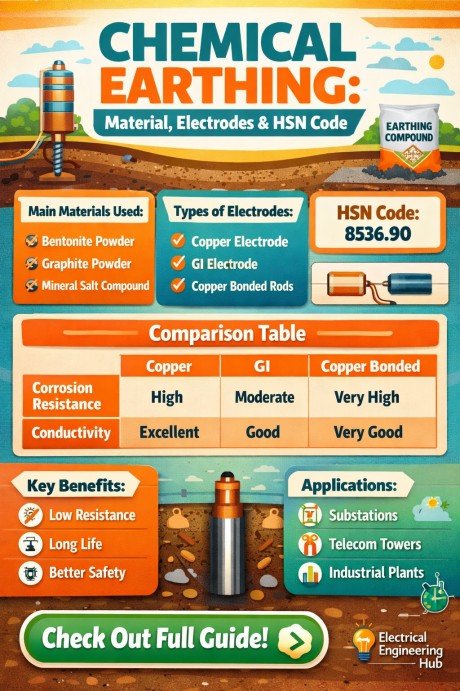
Table of Contents
Table of Contents
This guide explains chemical earthing materials, electrode types, HSN codes, and important selection points.
What is Chemical Earthing?
Chemical earthing is a modern earthing method where conductive compounds are used around the electrode to improve soil conductivity. It helps maintain low earth resistance over a long period.
Traditional earthing methods often fail in dry or rocky soil. Chemical earthing solves this problem by using moisture-retaining and conductive backfill compounds.
This method is commonly used in:
- Electrical substations
- Telecom towers
- Solar power systems
- Industrial plants
- Data centers
- Commercial buildings
The main goal is to safely discharge fault current into the ground.
Why Chemical Earthing is Important
A proper earthing system protects equipment and human life. Chemical earthing offers better reliability compared to normal GI pipe earthing.
Here are the major benefits:
| Feature | Chemical Earthing | Conventional Earthing |
|---|---|---|
| Resistance Stability | High | Medium |
| Maintenance | Low | High |
| Corrosion Resistance | Excellent | Average |
| Lifespan | 20–25 years | 5–10 years |
| Moisture Retention | High | Low |
The use of quality Chemical Earthing material improves conductivity and reduces voltage rise during faults.
Chemical Earthing Material Used
The performance of the system depends on the type of Chemical Earthing material used. Different manufacturers may use different compounds, but common materials remain almost the same.
1. Bentonite Powder
Bentonite is one of the most widely used earthing compounds. It absorbs moisture and helps in reducing soil resistivity.
Advantages:
- High water absorption
- Low cost
- Good conductivity
- Easy installation
2. Graphite Compound
Graphite-based compounds offer better conductivity than bentonite. They are commonly used where very low resistance is required.
Applications:
- Transformer earthing
- Generator grounding
- Lightning protection systems
3. Conductive Cement
Conductive cement is used to create a permanent conductive layer around the electrode. It also protects against corrosion.
4. Mineral Salts
Special mineral salts improve ion exchange and enhance soil conductivity.
Comparison of Chemical Earthing Materials
| Material | Conductivity | Moisture Retention | Cost |
|---|---|---|---|
| Bentonite | Medium | High | Low |
| Graphite | High | Medium | High |
| Conductive Cement | High | Medium | Medium |
| Mineral Salts | Medium | High | Medium |
Selecting the correct Chemical Earthing material depends on soil condition and fault current level.
Types of Chemical Earthing Electrodes
The electrode is the heart of the grounding system. Different materials are used depending on the application.
Copper Bonded Electrode
Copper bonded electrodes provide excellent conductivity and corrosion resistance.
Best for:
- Industrial installations
- Sensitive electronic systems
- Data centers
Learn more about earthing cable size as per iec
GI Electrode
Galvanized iron electrodes are affordable and commonly used.
Best for:
- Residential buildings
- Small commercial projects
Pure Copper Electrode
Pure copper electrodes offer the highest conductivity but are expensive.
Best for:
- Critical power systems
- Hospitals
- High-voltage substations
Electrode Comparison Table
| Electrode Type | Conductivity | Corrosion Resistance | Cost |
|---|---|---|---|
| GI Electrode | Medium | Medium | Low |
| Copper Bonded | High | High | Medium |
| Pure Copper | Very High | Very High | High |
Installation Process of Chemical Earthing
Proper installation is essential for good performance.
Step-by-Step Installation
- Dig a pit of required depth.
- Place the earthing electrode vertically.
- Fill the pit with Chemical Earthing material.
- Add water for activation.
- Connect earth strip or wire.
- Measure earth resistance.
Dive deeper into instrument earthing iec standard
Recommended Pit Dimensions
| Electrode Length | Pit Depth | Pit Diameter |
|---|---|---|
| 2 Meter | 8–10 feet | 4–6 inches |
| 3 Meter | 10–12 feet | 6–8 inches |
Correct installation helps maintain low resistance for years.
Key Takeaways
- Chemical earthing provides stable and low earth resistance.
- The right Chemical Earthing material improves conductivity and life.
- Copper bonded electrodes are widely preferred for industrial use.
- HSN codes are important for procurement and taxation.
- Regular testing ensures proper grounding performance.
For a deeper understanding of grounding standards and compliance, you can also read our detailed guide on iec 60364 earthing. It covers practical earthing methods, resistance limits, and inspection requirements.
Know more about IEC Standard for Earthing System
Chemical Earthing Resistance Value
The ideal resistance depends on the type of installation.
| Application | Recommended Resistance |
|---|---|
| Residential | Below 5 Ohm |
| Commercial | Below 2 Ohm |
| Industrial | Below 1 Ohm |
| Substation | Below 0.5 Ohm |
| Data Center | Below 1 Ohm |
Lower resistance means better fault current dissipation.
Chemical Earthing HSN Code
For taxation and commercial purposes, earthing products fall under different HSN codes.
Here is a common classification:
| Product | HSN Code |
|---|---|
| Copper Rods | 7408 |
| GI Pipes | 7306 |
| Earthing Compound | 3824 |
| Conductive Cement | 6810 |
The exact HSN code may vary depending on the product composition and supplier classification.
Know more about IEC Standard for Neutral to Earth Voltage
Always verify the code before purchase.
Factors to Consider Before Buying
Before selecting a chemical earthing system, consider these factors:
Soil Resistivity
High resistivity soil needs better conductive material.
Corrosion Level
In highly corrosive environments, copper bonded electrodes perform better.
Moisture Content
Dry areas may require moisture-retaining compounds.
Current Carrying Capacity
Heavy industrial loads need larger electrodes.
Compliance Standards
Ensure compliance with:
- IEC 60364
- IEEE 80
- IS 3043
Following these standards improves system safety.
Know more about Ground Fault Protection vs Earth Leakage Protection
Maintenance of Chemical Earthing
Although chemical earthing needs low maintenance, periodic checks are still important.
Maintenance tips:
- Measure resistance every 6 months
- Inspect earth connections
- Check corrosion signs
- Ensure pit remains sealed
Proper maintenance extends system life.
Know all the basics about earth conductor size calculation
FAQs
What is the best Chemical Earthing material?
Graphite and bentonite are the most commonly used materials. Graphite offers better conductivity, while bentonite is more affordable.
How long does chemical earthing last?
A good quality chemical earthing system can last 20 to 25 years depending on soil condition and maintenance.
What is the standard resistance for chemical earthing?
For industrial systems, it is usually below 1 ohm. Residential systems can be below 5 ohms.
Which electrode is better for chemical earthing?
Copper bonded electrodes are generally preferred due to their balance of conductivity, cost, and durability.
What is the HSN code for earthing compound?
The commonly used HSN code for earthing compound is 3824, but it should always be confirmed with the supplier.
Find all about substation earthing design
Final Thoughts
Chemical earthing is one of the most effective grounding solutions available today. It provides stable resistance, longer life, and better protection against electrical faults. Choosing the right Chemical Earthing material plays a major role in achieving reliable performance.
Whether you are installing a solar system, industrial plant, or home electrical setup, investing in quality chemical earthing can improve safety and equipment protection. Understanding materials, electrode types, and HSN codes helps make better purchasing and installation decisions. Find more about iec grounding standards
Get new guides in your feed. Follow Electrical Insights on LinkedIn for new electrical standards guides, calculators and design tips from Azad Circuit Hub.
#ChemicalEarthing,#EarthingSystem,#GroundingSolutions,#ElectricalSafety,#EarthingInstallation,#LightningProtection,#GroundResistance,#IndustrialSafety,#ElectricalEngineering,#SafeGrounding