Outlet Tester vs Voltage Tester: What’s the Difference?
Choosing between an outlet tester and a voltage tester can be confusing, especially if you are troubleshooting electrical problems for the first time. While both tools help identify electrical issues, they serve different purposes and are designed for different testing scenarios.
This detailed comparison explains Outlet Tester vs Voltage Tester, their working principles, advantages, limitations, and the best situations for using each tool. Whether you are a homeowner, electrician, maintenance technician, or DIY enthusiast, understanding the difference will help you purchase the right testing equipment and improve electrical safety.
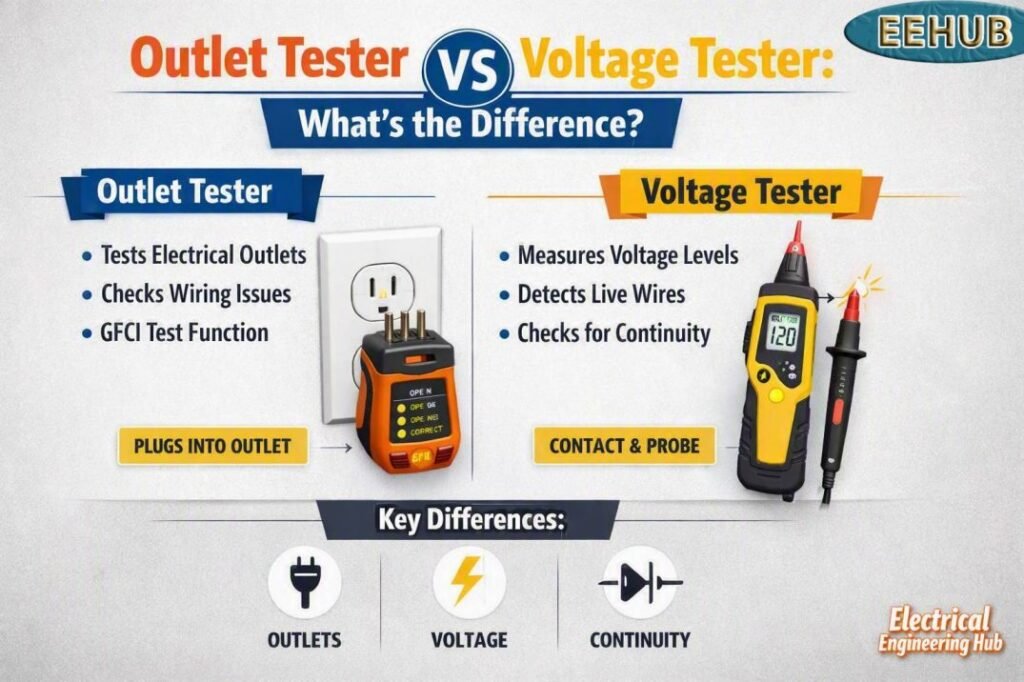
Table of Contents
Table of Contents
Outlet Tester vs Voltage Tester Quick Comparison
| Feature | Outlet Tester | Voltage Tester |
|---|---|---|
| Primary Purpose | Tests receptacle wiring | Detects presence of voltage |
| Contact Required | Yes | Contact and Non-contact models available |
| Checks Wiring Errors | Yes | No |
| Detects Live Wires | Limited | Yes |
| Tests GFCI Outlets | Yes (certain models) | No |
| Portable | Yes | Yes |
| Beginner Friendly | Excellent | Excellent |
| Best For | Outlet inspections | Live wire detection |
| Recommended Product | Klein Tools RT250 GFCI Outlet Tester | Klein Tools NCVT-2 |
The table above provides a quick overview of Outlet Tester vs Voltage Tester. Continue reading to understand when each tool is the better choice and why many professionals carry both.
What is an Outlet Tester?
An outlet tester is a plug-in electrical testing device designed to verify whether a receptacle has been wired correctly.
It quickly identifies common wiring faults without opening the electrical outlet. Most modern outlet testers also include a GFCI test button for checking Ground Fault Circuit Interrupter protection.
Common problems detected include:
- Open ground
- Open neutral
- Open hot
- Hot/neutral reverse
- Hot/ground reverse
- Correct wiring confirmation
The tester uses indicator LEDs that illuminate in different combinations depending on the wiring condition.
If you’re planning to buy a voltage detector, don’t miss our detailed guide on best non contact voltage detector. It compares top-rated models, explains key features, and helps you choose the right tester for your needs.
Recommended Product
Klein Tools RT250 GFCI Outlet Tester
If you regularly inspect household outlets, the Klein Tools RT250 is one of the most reliable choices available.
Key Features
| Feature | Details |
|---|---|
| GFCI Testing | Yes |
| Wiring Fault Detection | Multiple fault identification |
| Easy LED Display | Yes |
| Durable Construction | Yes |
| Suitable For | Residential and Commercial Use |
Pros
- Very easy to use
- Detects common wiring faults instantly
- Reliable GFCI testing
- Trusted Klein Tools quality
Cons
- Only works with standard receptacles
- Cannot locate voltage inside walls
Buy Recommendation
Looking for a dependable outlet tester? Check today’s Amazon price for the Klein Tools RT250 GFCI Outlet Tester and upgrade your electrical troubleshooting kit before your next project.
What is a Voltage Tester?
A voltage tester determines whether electrical voltage is present in a wire, outlet, switch, breaker, or electrical equipment.
Voltage testers come in several forms including:
- Non-contact voltage tester
- Two-pole voltage tester
- Digital voltage tester
- Multimeter
The most popular option for homeowners is the non-contact voltage tester because it detects energized conductors without touching exposed metal.
This makes it one of the safest electrical tools for beginners.
Recommended Product
Klein Tools NCVT-2 Non-Contact Voltage Tester
The Klein Tools NCVT-2 is widely used by electricians because it provides fast and reliable voltage detection.
| Feature | Details |
|---|---|
| Voltage Range | 12V–1000V AC |
| Non-Contact Detection | Yes |
| Audible Alarm | Yes |
| Visual LED Alert | Yes |
| CAT Rating | CAT IV 1000V |
Pros
- Safe non-contact testing
- Bright visual indicators
- Audible alerts
- Excellent sensitivity
Cons
- Does not identify wiring faults
- Cannot verify correct polarity
Buy Recommendation
Need a reliable voltage detector? Check the latest Amazon deals on the Klein Tools NCVT-2 and add a trusted safety tool to your toolbox before working on electrical circuits.
Outlet Tester vs Voltage Tester: Major Differences
Although both devices improve electrical safety, they perform different jobs.
| Comparison | Outlet Tester | Voltage Tester |
|---|---|---|
| Detects Live Voltage | Limited | Yes |
| Checks Wiring Configuration | Yes | No |
| Works on Switches | No | Yes |
| Works on Breakers | No | Yes |
| Finds Open Ground | Yes | No |
| Tests Extension Cord Outlets | Yes | Yes (Voltage Only) |
| Requires Contact | Yes | Not Always |
The biggest difference in Outlet Tester vs Voltage Tester is that an outlet tester evaluates the wiring condition of a receptacle, while a voltage tester simply determines whether electrical voltage is present.
When Should You Use an Outlet Tester?
An outlet tester is the best choice when you want to inspect receptacles after installation or during routine maintenance.
Ideal situations include:
- Buying a new home
- Renovating a house
- Replacing receptacles
- Testing GFCI outlets
- Checking rental property wiring
- Troubleshooting outlets that are not working correctly
It provides quick confirmation that the outlet is wired properly.
When Should You Use a Voltage Tester?
A voltage tester is essential before touching any electrical conductor.
Use it for:
- Verifying power is OFF
- Testing switches
- Checking breaker panels
- Inspecting light fixtures
- Identifying energized cables
- Confirming electrical isolation before repairs
Every electrician should test for the presence of voltage before beginning work.
Which Tool is Safer?
Both tools are safe when used correctly.
However, a non-contact voltage tester offers an extra level of protection because it detects voltage without making direct electrical contact.
For electrical repairs, professionals often follow this sequence:
- Turn OFF the breaker.
- Verify with a non-contact voltage tester.
- Confirm the outlet wiring using an outlet tester if necessary.
Using both tools together provides greater confidence and reduces the risk of accidental electric shock.
Before making your purchase, explore our in-depth non contact voltage detector reviews to compare performance, accuracy, durability, and value across the most popular models available today.
Which Tool Should You Buy?
The answer depends on your needs.
| Your Need | Recommended Tool |
|---|---|
| Testing home outlets | Outlet Tester |
| Detecting live wires | Voltage Tester |
| Electrical maintenance | Voltage Tester |
| GFCI inspection | Outlet Tester |
| DIY homeowner | Both |
| Professional electrician | Both |
If your budget allows, owning both tools is the smartest investment. They complement each other rather than replace one another.
Best Combination for Homeowners
For most homeowners, this combination covers nearly every basic electrical testing task.
| Tool | Best Choice |
|---|---|
| Outlet Tester | Klein Tools RT250 |
| Voltage Tester | Klein Tools NCVT-2 |
Together they allow you to:
- Test outlet wiring
- Verify GFCI protection
- Detect energized wires
- Improve electrical safety
- Troubleshoot common household electrical issues
Why Professionals Carry Both
Professional electricians rarely rely on a single testing device.
An outlet tester quickly confirms receptacle wiring, while a voltage tester helps verify that conductors are de-energized before work begins. Carrying both tools saves time during inspections, improves troubleshooting accuracy, and enhances job-site safety. Since each tester performs a different function, they complement one another instead of serving as replacements.
Buying Guide
Before purchasing either tool, consider these factors.
| Buying Factor | Outlet Tester | Voltage Tester |
|---|---|---|
| Safety Certification | ✔ | ✔ |
| Trusted Brand | ✔ | ✔ |
| Easy-to-Read Indicators | ✔ | ✔ |
| Compact Design | ✔ | ✔ |
| Battery Required | No | Yes |
| GFCI Test Button | ✔ | No |
Choosing products from established brands like Klein Tools ensures dependable performance and long-term reliability.
Still unsure which model is right for you? Visit our complete best non contact voltage detector guide for expert recommendations, feature comparisons, and buying tips tailored to homeowners and professionals alike.
Frequently Asked Questions
Is an outlet tester the same as a voltage tester?
No. An outlet tester checks whether a receptacle is wired correctly, while a voltage tester detects the presence of electrical voltage.
Can a voltage tester detect wiring faults?
No. A voltage tester only indicates whether voltage is present. It cannot identify reversed polarity, open ground, or open neutral conditions.
Do I need both an outlet tester and a voltage tester?
Yes. They perform different tasks, and owning both provides better safety and more effective electrical troubleshooting.
Which is better for homeowners?
For general home maintenance, having both the Klein Tools RT250 and Klein Tools NCVT-2 offers the most complete solution.
Can an outlet tester test GFCI outlets?
Yes. Models such as the Klein Tools RT250 include a built-in GFCI test function that allows you to verify proper operation of GFCI receptacles.
Final Verdict
When comparing Outlet Tester vs Voltage Tester, there is no single winner because each tool serves a different purpose. An outlet tester is ideal for verifying receptacle wiring and testing GFCI protection, while a voltage tester is essential for detecting energized conductors before beginning electrical work.
For the highest level of safety and convenience, keep both tools in your toolbox. The Klein Tools RT250 GFCI Outlet Tester and the Klein Tools NCVT-2 Non-Contact Voltage Tester are trusted options that provide accurate results, durable construction, and excellent value. Whether you are a DIY homeowner or a professional electrician, using the right tester at the right time will make electrical work safer, faster, and more reliable.
Get new guides in your feed. Follow Electrical Insights on LinkedIn for new electrical standards guides, calculators and design tips from Azad Circuit Hub.
#OutletTesterVsVoltageTester, #OutletTester, #VoltageTester, #ElectricalTesting, #DIYElectrical, #ElectricianTools, #HomeElectricalSafety, #CircuitTesting, #VoltageDetection, #ElectricalEngineering