Digital Frequency Counter IR Test: High-Precision Industrial Measurement & Electronics Diagnostic Solutions for Accurate Signal Testing
Accurate signal measurement has become a core requirement in modern electronics, automation systems, and industrial testing environments. Engineers and technicians rely on advanced tools to ensure stability, precision, and reliability in electrical circuits and communication systems. Among these tools, the Digital Frequency Counter IR Test has gained strong importance for delivering accurate frequency readings using infrared-based signal detection and digital processing techniques.
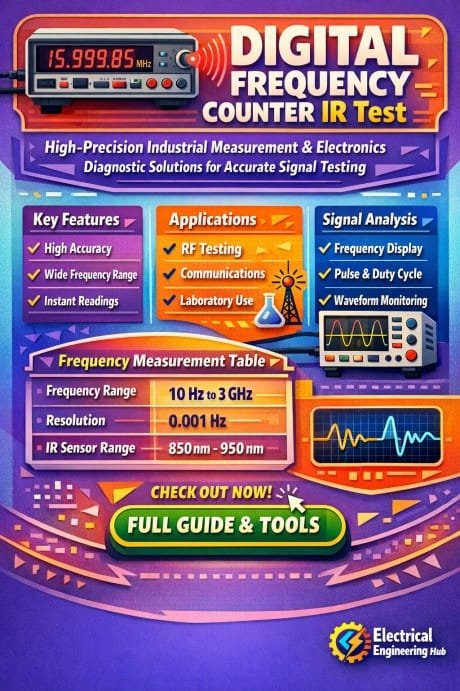
Table of Contents
This method is widely used in laboratories, production lines, and maintenance departments where even minor frequency deviations can affect system performance. With increasing demand for high-speed electronics and automation, precise frequency monitoring is no longer optional but essential for quality assurance and system validation.
A Digital Frequency Counter IR Test system provides a stable, non-contact way of measuring frequency signals using infrared sensing technology combined with digital counters. This makes it highly effective for environments where traditional probing methods may interfere with circuit performance or where high-speed signal tracking is required.
Know more about Insulation Resistance Testing: Step-by-Step Process
Understanding Digital Frequency Counter IR Test in Modern Electronics
The Digital Frequency Counter IR Test is a measurement technique used to determine the frequency of electronic signals using infrared sensors and digital counting modules. It captures pulse signals, converts them into readable digital data, and displays accurate frequency values in real time.
This technology is commonly used in RF testing, embedded systems diagnostics, and industrial equipment calibration. The infrared sensing element helps in detecting signal transitions without direct electrical contact, reducing interference and improving measurement reliability.
In many industrial applications, engineers prefer this method because it ensures safer testing conditions, especially in high-voltage or sensitive electronic environments. The system can measure a wide frequency range, making it suitable for both low-frequency control circuits and high-frequency communication systems.
Find all about Best Megger Insulation Testers 5000V
Working Principle of Infrared-Based Frequency Measurement Systems
The working principle behind a Digital Frequency Counter IR Test involves signal detection, pulse conversion, and digital counting. The infrared sensor detects variations in signal intensity or switching activity. These variations are converted into electrical pulses, which are then processed by a digital counter circuit.
The counter calculates the number of pulses per second, which directly represents the frequency of the input signal. Advanced models include microcontroller-based processing units that enhance accuracy and reduce measurement errors caused by noise or signal distortion.
Signal conditioning circuits play a crucial role in filtering unwanted noise and ensuring clean pulse generation. This results in stable and precise frequency readings even in complex industrial environments.
Key Features of Digital Frequency Measurement Systems
Modern frequency counters equipped with infrared testing capabilities come with advanced features designed for industrial use. These features enhance usability, accuracy, and durability.
| Feature | Description |
|---|---|
| High Precision Counting | Provides accurate frequency readings with minimal error margin |
| Infrared Signal Detection | Enables non-contact measurement for safer operation |
| Wide Frequency Range | Suitable for both low and high-frequency signals |
| Digital Display Output | Clear and real-time frequency visualization |
| Noise Filtering System | Reduces interference from surrounding electrical signals |
| Microcontroller Processing | Enhances speed and stability of calculations |
| Portable Design | Easy to use in field testing and laboratory environments |
These features make the system highly effective for engineers working in electronics manufacturing, repair services, and industrial automation setups.
Applications in Industrial and Electronics Testing
The use of Digital Frequency Counter IR Test technology extends across multiple industries where accurate frequency measurement is essential.
| Industry | Application Area |
|---|---|
| Electronics Manufacturing | Testing oscillators, microcontrollers, and circuit boards |
| Telecommunications | Measuring signal transmission frequency |
| Industrial Automation | Monitoring PLC and control system signals |
| Automotive Electronics | Diagnosing ECU and sensor signal outputs |
| Research Laboratories | Experimental signal analysis and calibration |
| Power Systems | Frequency stability monitoring in inverters |
These applications highlight the versatility of frequency measurement tools in maintaining system reliability and performance consistency across different sectors.
Advantages of Using Infrared-Based Frequency Counters
The growing adoption of Digital Frequency Counter IR Test systems is mainly due to their operational advantages in both industrial and technical environments.
Find more about Best Megger Insulation Tester for Industrial Motors
One of the key benefits is non-contact measurement, which eliminates the risk of circuit disturbance. This is especially important when working with delicate electronic components or high-voltage systems.
Another advantage is improved measurement stability. Since infrared sensing reduces direct electrical interference, the system produces more consistent readings compared to traditional probing methods.
Additionally, these devices offer fast response time, making them suitable for real-time signal monitoring in dynamic systems. Engineers can quickly identify fluctuations and take corrective actions without delay.
Industrial Use Cases and Practical Implementations
In real-world industrial environments, frequency measurement plays a crucial role in maintaining operational efficiency. The Digital Frequency Counter IR Test is commonly used in production lines to verify oscillator frequencies in embedded devices.
For example, in manufacturing of microcontroller-based systems, ensuring correct clock frequency is essential for proper device functionality. Any deviation can lead to system instability or failure.
In telecommunications, technicians use this method to verify signal transmission accuracy across RF modules and communication circuits. It helps maintain signal integrity and reduces data loss in high-speed networks.
Explore all about How to Use Megger BM5200 Insulation Tester 5kV
In automation systems, frequency monitoring ensures that motor controllers and sensor feedback loops are operating within expected parameters, improving system safety and efficiency.
How to Select the Right Frequency Counter System
Choosing the right frequency measurement device depends on application requirements and environmental conditions. Engineers should consider several factors before selecting a system.
Accuracy is the most important factor, especially in precision electronics testing. Devices with microcontroller-based processing usually offer better results.
Frequency range is another key consideration. Industrial applications often require wide-range measurement capability to handle different signal types.
Durability and build quality also matter, especially in harsh industrial environments where equipment may be exposed to dust, vibration, or temperature variations.
Ease of use and display clarity are important for field technicians who need quick readings without complex setup procedures.
Know more about How to Use Megger Insulation Tester MIT2500
Importance of Precision in Modern Signal Testing
As electronic systems become more advanced, the need for precise measurement tools continues to grow. The Digital Frequency Counter IR Test plays a significant role in ensuring signal integrity across various applications.
Even minor frequency deviations can affect system performance in communication devices, control systems, and embedded electronics. Therefore, reliable measurement tools are essential for maintaining operational stability.
With the integration of infrared sensing and digital processing, these systems provide a balanced combination of accuracy, safety, and efficiency, making them suitable for both research and industrial environments.
Conclusion
The Digital Frequency Counter IR Test represents a modern approach to frequency measurement, combining infrared sensing technology with advanced digital processing to deliver accurate and reliable results. Its wide range of applications across electronics manufacturing, telecommunications, automation, and research highlights its importance in today’s technology-driven industries.
Know more about How to Use Megger Insulation Tester 1000V
By offering non-contact measurement, high precision, and fast response times, this system ensures improved performance in critical testing environments. As industries continue to evolve, demand for more accurate and efficient signal testing solutions will only increase, making this technology a valuable tool for engineers and technicians alike.
Get new guides in your feed. Follow Electrical Insights on LinkedIn for new electrical standards guides, calculators and design tips from Azad Circuit Hub.
#digitalfrequencycounterirtest,#frequencycounter,#irtest,#electronicsmeasurement,#industrialtesting,#signalmeasurement,#testequipment,#digitalinstruments,#electricaltesting,#precisionmeasurement