
Difference Between GFCI and Overcurrent Protection
Electrical protection devices are designed for different purposes. Many people assume a Ground Fault Circuit Interrupter (GFCI) and an overcurrent protection device perform the same job, but they protect against completely different electrical hazards. Understanding the Difference Between GFCI and Overcurrent Protection helps electricians, engineers, homeowners, and maintenance teams choose the correct protection method for every circuit.
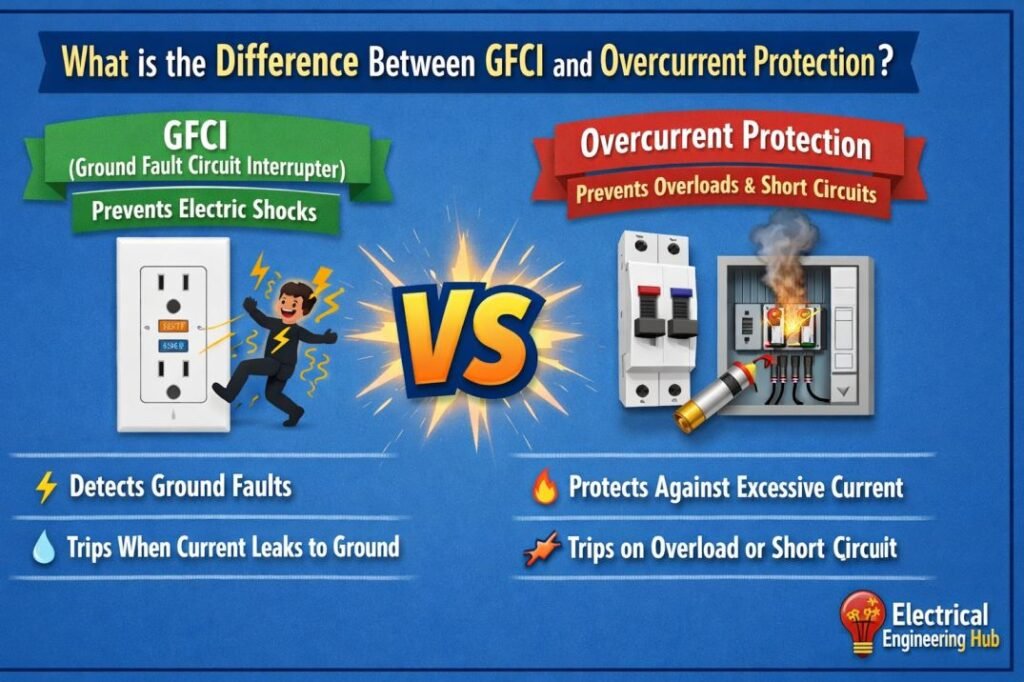
Difference Between GFCI and Overcurrent Protection: Quick Comparison
| Feature | GFCI | Overcurrent Protection |
|---|---|---|
| Primary Purpose | Protects people from electric shock | Protects wiring and equipment from excessive current |
| Detects | Ground fault leakage | Overload and short circuit |
| Typical Trip Level | Around 4–6 mA | Rated current of breaker or fuse |
| Protection Target | Human safety | Equipment and cables |
| Common Devices | GFCI outlet, GFCI breaker | MCB, MCCB, Fuse, Circuit Breaker |
| NEC Requirement | Wet and damp locations | All electrical circuits |
Quick Decision Chart
| Situation | Recommended Protection |
|---|---|
| Bathroom outlet | GFCI |
| Kitchen countertop | GFCI |
| Motor feeder | Overcurrent protection |
| Distribution panel | Overcurrent protection |
| Outdoor receptacle | GFCI |
| Industrial motor circuit | Both when required |
Electrical installations often require both devices because they solve different safety problems.
What Is a GFCI?
A Ground Fault Circuit Interrupter continuously compares the current flowing through the live conductor with the current returning through the neutral conductor. Under normal conditions, both values are equal.
If even a small amount of current leaks through a person or another unintended path to ground, the GFCI immediately disconnects the circuit.
Its main objective is protecting people against electric shock rather than protecting equipment from excessive current.
Typical installation locations include:
- Bathrooms
- Kitchens
- Garages
- Outdoor receptacles
- Swimming pools
- Basements
- Construction sites
A GFCI reacts within milliseconds, significantly reducing the risk of serious electrical injuries.
What Is Overcurrent Protection?
Overcurrent protection prevents conductors and electrical equipment from carrying more current than they are designed to handle.
An overcurrent condition usually occurs because of:
- Circuit overload
- Short circuit
- Equipment failure
- Insulation breakdown
Common overcurrent protection devices include:
- Miniature Circuit Breakers (MCBs)
- Molded Case Circuit Breakers (MCCBs)
- Fuses
- Air Circuit Breakers (ACBs)
These devices disconnect power when current exceeds their rated capacity, preventing overheating, insulation damage, and electrical fires.
If you are selecting proper trip settings for protective devices, use our comprehensive tool overcurrent relay settings calculator to determine suitable pickup values and coordination.
Difference Between GFCI and Overcurrent Protection Explained
The Difference Between GFCI and Overcurrent Protection becomes clear when their operating principles are compared.
| Parameter | GFCI | Overcurrent Protection |
|---|---|---|
| Detects leakage current | Yes | No |
| Detects overload | No | Yes |
| Detects short circuit | No | Yes |
| Prevents electric shock | Yes | Limited |
| Prevents cable overheating | No | Yes |
| Protects appliances | Partially | Yes |
| Required in wet areas | Yes | No |
Although both disconnect electrical power, they monitor completely different fault conditions.
How Does a GFCI Work?
A GFCI contains a differential current transformer that continuously measures the outgoing and returning current.
During normal operation:
Current leaving the circuit equals current returning.
During a ground fault:
Some current flows through an unintended path instead of returning through the neutral conductor.
Once the imbalance reaches approximately 5 mA, the GFCI trips almost instantly.
This rapid operation minimizes the chance of severe electric shock.
How Does Overcurrent Protection Work?
Circuit breakers and fuses monitor the total current flowing through a conductor.
When current exceeds the safe rating:
- Thermal elements respond to overloads.
- Magnetic elements respond instantly to short circuits.
- Fuses melt when excessive current produces enough heat.
Unlike GFCIs, these devices do not monitor current imbalance.
Instead, they focus only on the magnitude of current flowing through the circuit.
Why Both Protections Are Necessary
Many electrical installations require both protection methods.
For example:
A bathroom receptacle needs:
- GFCI for shock protection
- Circuit breaker for overload protection
Similarly, an outdoor power outlet requires protection against leakage current while also preventing wiring damage from excessive current.
Neither device replaces the other.
They work together to improve electrical safety.
Common Applications
| Application | GFCI Required | Overcurrent Protection Required |
|---|---|---|
| Bathroom | Yes | Yes |
| Kitchen receptacles | Yes | Yes |
| Bedroom outlets | Usually No | Yes |
| HVAC equipment | Sometimes | Yes |
| Industrial motors | Depends | Yes |
| Outdoor receptacles | Yes | Yes |
| Swimming pool equipment | Yes | Yes |
Always follow the latest NEC or local electrical code requirements.
Can One Replace the Other?
No.
This is one of the biggest misconceptions among homeowners.
A GFCI will not protect a cable from overheating caused by overload.
Likewise, a circuit breaker may allow dangerous leakage current to pass through a person because the current is too small to exceed the breaker rating.
For example:
A person receiving a 20 mA shock could suffer serious injury.
A 20 A breaker will never trip because 20 mA is far below its operating threshold.
However, the GFCI detects this leakage immediately and disconnects the circuit.
GFCI vs Circuit Breaker Trip Characteristics
| Condition | GFCI Response | Circuit Breaker Response |
|---|---|---|
| Ground fault | Trips immediately | Usually does not trip |
| Overload | Does not trip | Trips |
| Short circuit | Usually no | Trips instantly |
| Human contact with live conductor | Trips if leakage occurs | May not trip |
| Excessive motor current | No | Yes |
This comparison highlights why electrical codes often require multiple protective devices within the same installation.
For engineers designing coordinated protection systems, our detailed guide on the relay pickup and overcurrent protection settings explains how to calculate accurate relay values for reliable fault clearance.
Advantages of GFCI
- Excellent protection against electric shock
- Fast operating speed
- Reduces fatal electrical accidents
- Ideal for wet environments
- Easy testing using built-in test buttons
Advantages of Overcurrent Protection
- Prevents cable overheating
- Protects electrical equipment
- Reduces fire hazards
- Supports selective coordination
- Available for residential and industrial systems
Common Mistakes to Avoid
Many installation problems occur because users misunderstand the Difference Between GFCI and Overcurrent Protection.
Avoid these mistakes:
- Using only a breaker where GFCI protection is required
- Assuming GFCI protects against overload
- Installing incorrect breaker ratings
- Ignoring NEC requirements for wet locations
- Failing to test GFCI devices periodically
Proper installation and regular inspection ensure maximum electrical safety.
Related Guides & Tools
- Overload Relay Setting Calculator
- Types of Overcurrent Relays
- Earth Fault Relay Setting Calculator
- Differential Protection Relay Setting Calculator
Conclusion
Understanding the Difference Between GFCI and Overcurrent Protection is essential for designing safe electrical systems. A GFCI protects people by detecting dangerous ground fault leakage, while overcurrent protection safeguards conductors and equipment from overloads and short circuits.
Since these devices address different hazards, they are often installed together rather than used as alternatives. Whether working on residential wiring, commercial buildings, or industrial facilities, selecting the correct protection method improves reliability, complies with electrical codes, and significantly reduces the risk of electrical accidents.
Follow Us on Social:
Subscribe our Newsletter on Electrical Insights for latest updates from Electrical Engineering Hub
GFCI, #OvercurrentProtection, #ElectricalSafety, #CircuitBreaker, #GroundFaultProtection, #NECCode, #ElectricalEngineering, #Electrician, #PowerSystems, #ElectricalInstallation
