Causes of Overcurrent in Power System
Understanding the causes of overcurrent in power system is essential for designing reliable electrical networks, selecting the right protective devices, and preventing equipment failure. Overcurrent conditions occur whenever the current flowing through a conductor exceeds its rated capacity. If not detected quickly, excessive current can overheat cables, damage transformers, trip circuit breakers, and even create fire hazards.
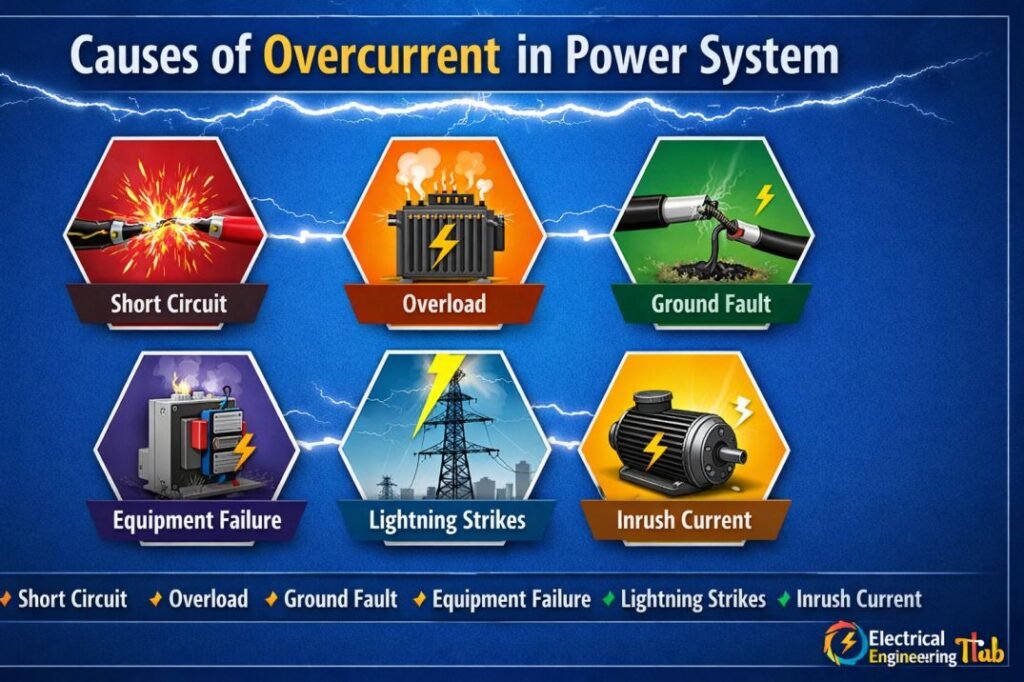
Table of Contents
Table of Contents
Causes of Overcurrent in Power System
| Parameter | Details |
|---|---|
| Main Issue | Current exceeds equipment rating |
| Primary Causes | Overload, short circuit, ground fault, motor starting, transformer inrush |
| Major Risks | Equipment damage, insulation failure, fire, production downtime |
| Protection Methods | Overcurrent relays, circuit breakers, fuses, proper coordination |
| Best Design Practice | Correct relay settings and coordination studies |
Common Overcurrent Causes at a Glance
| Cause | Current Level | Typical Duration | Protection Device |
|---|---|---|---|
| Overload | Moderate | Long | Thermal relay, overload relay |
| Short Circuit | Very High | Instant | Circuit breaker, overcurrent relay |
| Ground Fault | High | Instant | Ground fault relay |
| Motor Starting | High | Temporary | Time-delay relay |
| Transformer Energization | High | Temporary | Inrush restraint, relay settings |
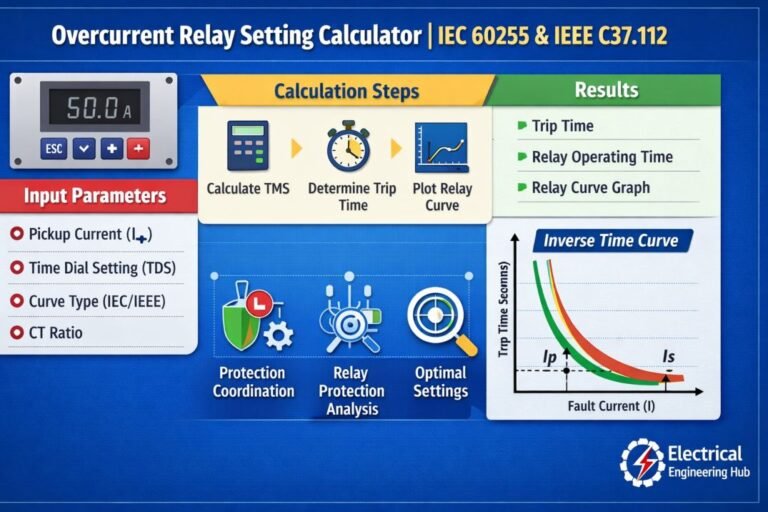
If you need accurate relay pickup values after identifying these faults, use our Overcurrent Relay Setting Calculator to calculate suitable protection settings for your system.
What Is Overcurrent in a Power System?
Overcurrent refers to any condition where electrical current exceeds the safe operating limit of conductors or electrical equipment. Every cable, transformer, motor, and switchgear component is designed to carry a specific amount of current. When this limit is exceeded, excessive heat is generated, which accelerates insulation aging and increases the risk of equipment failure.
Power utilities and industrial facilities rely on properly coordinated protection systems to detect abnormal current and isolate the faulty section before damage spreads.
Main Causes of Overcurrent in Power System
Several electrical and mechanical conditions can increase current beyond acceptable limits. Understanding each cause helps engineers select suitable protection devices.
Overload Conditions
Overloading is the most common reason for excessive current in electrical systems. It occurs when connected loads draw more current than the equipment is designed to handle.
Typical overload situations include:
- Adding extra machinery to an existing feeder
- Operating multiple heavy loads simultaneously
- Undersized cables
- Continuous operation beyond rated capacity
- Poor load management
Unlike short circuits, overload current usually rises gradually and may continue for several minutes or hours before protection operates.
Short Circuit Faults
A short circuit occurs when conductors of different potentials come into direct contact because of insulation failure or mechanical damage.
Common types include:
- Phase-to-phase fault
- Three-phase fault
- Phase-to-ground fault
- Double line-to-ground fault
Short circuits produce extremely high fault currents within milliseconds. Without fast protective devices, severe equipment damage can occur.
Ground Faults
Ground faults happen when a live conductor accidentally contacts earth or grounded metal parts.
Frequent causes include:
- Damaged cable insulation
- Moisture inside equipment
- Aging electrical insulation
- Loose wiring
- Contaminated switchgear
Ground fault current may vary depending on the grounding system used, but it still represents one of the most dangerous electrical faults.
Motor Starting Current
Large induction motors draw significantly higher current during startup.
Motor starting current may reach:
| Motor Condition | Approximate Current |
|---|---|
| Normal Running | 100% |
| Direct-On-Line Starting | 600–800% |
| Star-Delta Starting | 200–300% |
| Soft Starter | Lower than DOL |
Although this overcurrent is temporary, protection devices must distinguish it from genuine faults to avoid nuisance tripping.
Transformer Inrush Current
Transformer energization creates magnetizing inrush current that may be several times higher than rated current for a short period.
Factors affecting inrush include:
- Residual magnetic flux
- Switching angle
- Core material
- Transformer size
- Supply voltage
Protective relays generally include time delay or harmonic restraint to prevent unnecessary trips during energization.
Equipment Failure
Internal electrical failures often result in abnormal current flow.
Examples include:
- Bearing failure in motors
- Winding insulation breakdown
- Internal transformer faults
- Damaged capacitor banks
- Faulty busbars
Routine preventive maintenance reduces the likelihood of these failures.
Incorrect System Design
Poor engineering practices may indirectly create overcurrent conditions.
Examples include:
- Incorrect cable sizing
- Improper relay coordination
- Underrated circuit breakers
- Wrong transformer selection
- Inadequate fault level calculations
Proper system studies during the design phase help eliminate many of these problems.
For accurate protection coordination, engineers often verify relay pickup values using an overcurrent relay setting calculation tool before commissioning the system.
External Causes
Not every overcurrent originates within the electrical installation.
External factors include:
- Lightning strikes
- Utility switching operations
- Severe weather
- Falling trees on overhead lines
- Animal contact with conductors
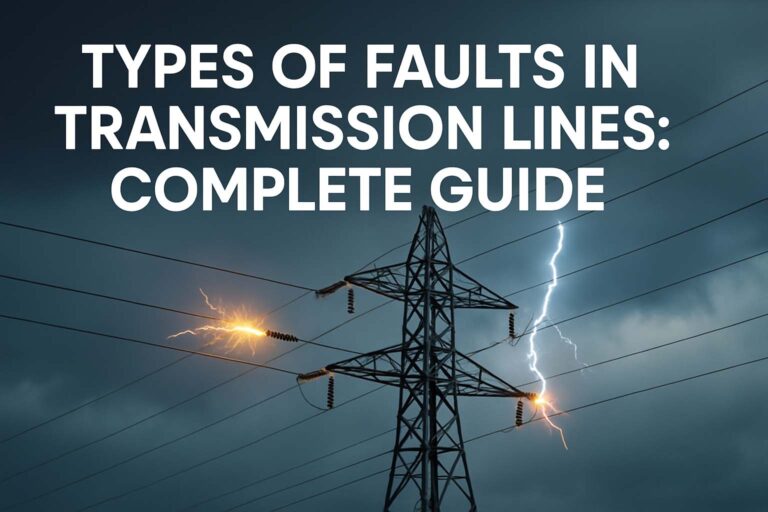
These events can create temporary or permanent faults that require immediate protective action.
Effects of Overcurrent
Excessive current can seriously affect system reliability and safety.
| Effect | Description |
|---|---|
| Cable Heating | Excessive temperature damages insulation |
| Motor Damage | Windings overheat and fail |
| Transformer Failure | Reduced insulation life |
| Circuit Breaker Trips | Interrupts production |
| Fire Risk | Overheated conductors may ignite nearby materials |
| Voltage Drop | Reduced system performance |
The severity depends on both the magnitude of current and the duration before protective devices disconnect the fault.
How Overcurrent Protection Prevents Damage
Modern protection systems continuously monitor current using current transformers and protective relays.
The protection sequence generally follows these steps:
- Current transformer measures line current.
- Relay compares measured current with the pickup setting.
- If the current exceeds the threshold for the specified time, the relay sends a trip command.
- The circuit breaker opens and isolates the faulty section.
- Healthy parts of the network continue operating.
Correct relay coordination minimizes unnecessary outages while protecting expensive electrical equipment.
Best Practices to Reduce Overcurrent Problems
Following good engineering practices significantly improves electrical system reliability.
| Best Practice | Benefit |
|---|---|
| Perform load calculations | Prevent overloads |
| Use properly sized cables | Reduce overheating |
| Conduct relay coordination studies | Improve selectivity |
| Inspect insulation regularly | Detect faults early |
| Maintain motors and transformers | Reduce equipment failures |
| Test protection relays periodically | Ensure reliable operation |
Regular maintenance combined with proper system design greatly reduces the probability of severe overcurrent events.
Before finalizing relay settings, engineers should validate pickup current and operating time using the Overcurrent Relay Setting Calculator to improve coordination and protection accuracy.
Related Guides & Tools
- Overcurrent Relay Setting Calculator
- Difference Between GFCI and Overcurrent Protection
- Types of Overcurrent Relays
Conclusion
The causes of overcurrent in power system range from simple overload conditions to severe short circuits, ground faults, transformer inrush, equipment failures, and external disturbances. Each condition produces different current characteristics, requiring properly coordinated protective devices for effective fault isolation.
By understanding these causes, performing regular maintenance, and selecting appropriate relay settings, engineers can improve system reliability, protect valuable electrical assets, and minimize downtime. Accurate protection coordination remains one of the most effective ways to ensure safe and efficient operation of modern power systems.
Get new guides in your feed. Follow Electrical Insights on LinkedIn for new electrical standards guides, calculators and design tips from Azad Circuit Hub.
#CausesOfOvercurrent, #PowerSystemProtection, #ElectricalEngineering, #OvercurrentProtection, #ElectricalSafety, #PowerSystems, #CircuitProtection, #FaultAnalysis, #ElectricalFaults, #PowerEngineering